
The Torres del Paine O Circuit is the undisputed crown jewel of Patagonian trekking. While thousands of day-trippers flock to the front side of the massif, committing to the full 130-kilometre loop takes you deep into the remote, rugged backcountry of southern Chile. It is a wildly demanding but infinitely rewarding adventure, featuring jaw-dropping glaciers, turquoise alpine lakes, and the infamous, wind-battered John Gardner Pass. However, successfully navigating the Torres del Paine O Circuit requires serious logistical preparation—from securing highly competitive campsite reservations months in advance to packing a reliable freestanding tent and a winter-capable sleeping bag to survive unpredictable alpine squalls.
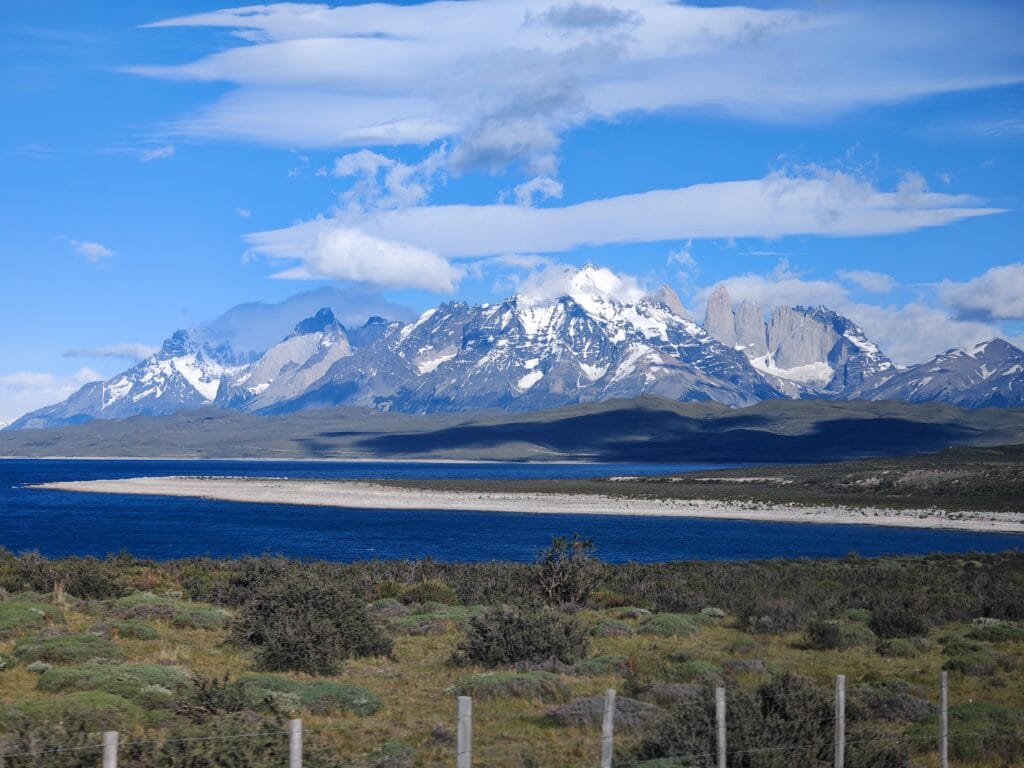
To help you conquer this bucket-list route, we have broken down our exact 8-day itinerary below, complete with daily distances and elevation gains. For an even deeper dive into the route, you can explore the entire Torres del Paine O Circuit on our interactive 3D globe via the TrekMind app, allowing you to visualise the terrain and track your daily stages offline!
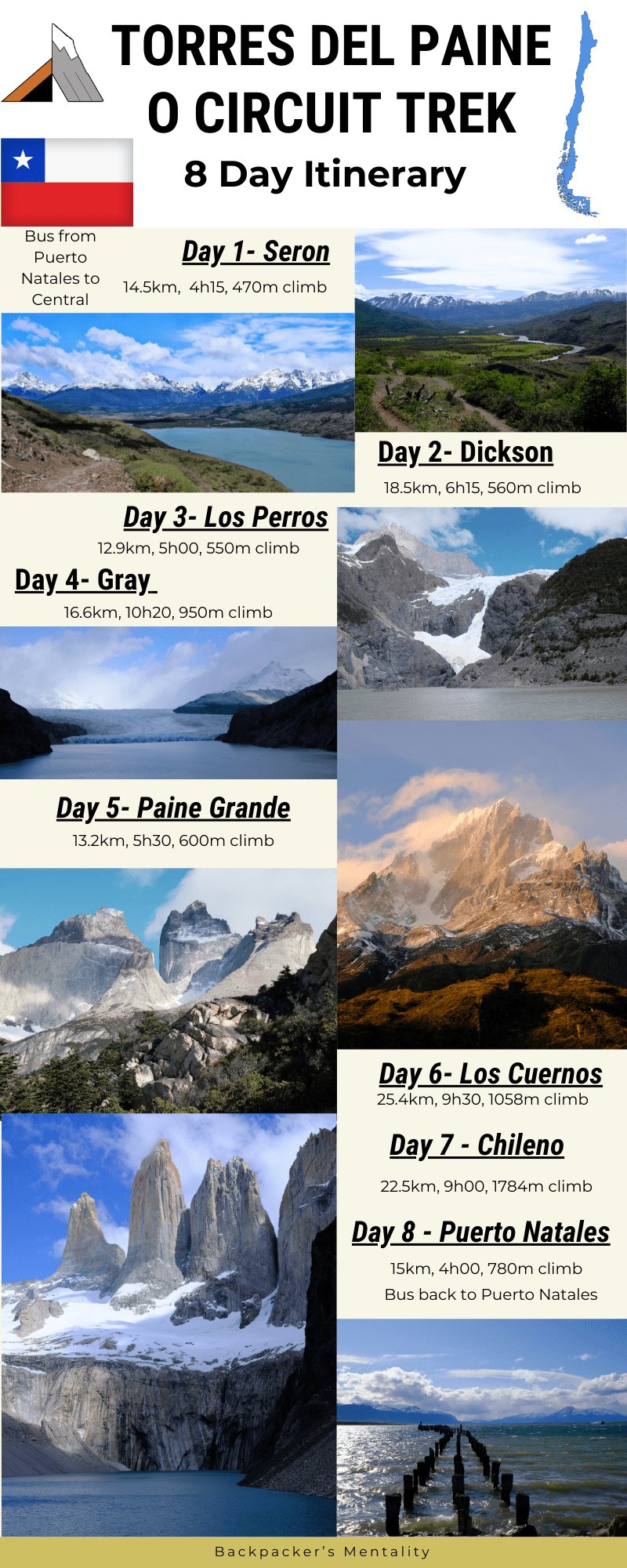
Why Torres del Paine & Patagonia?
After my first Solo Trekking experience on the Annapurna Circuit, I wanted a new challenge. The thought of camping in remote backcountry and trekking amongst beautiful Patagonian mountains seemed to fit the bill. Patagonia is known for its rugged terrain, challenging trails and unforgiving weather, famously the gale force winds battering the region from the southern tip of South America. Whilst El Chaletan in Argentina offered Fitz Roy and Cerro Torres (iconic mountains), for me, the striking Torres del Paine pillars at Mirador Base Torres are what attracted me most. The more I researched, the more excited I became about the challenge of solo travelling to Chile and Patagonia.
Torres del Paine (TDP for short) National Park is a recognised UNESCO Biosphere Reserve, highlighting it as one of the most beautiful places to visit. The imposing mountains, glaciers, rivers and turquoise lakes, along with the unique wildlife, make for a complete mountain adventure. The Park is 154km from Puerto Natales and has convenient transport links back to the town. It allows visitors to enjoy trekking, photography or hiking day trips in one of nature’s purest and most authentic regions.
Torres Del Paine O Circuit: Overview
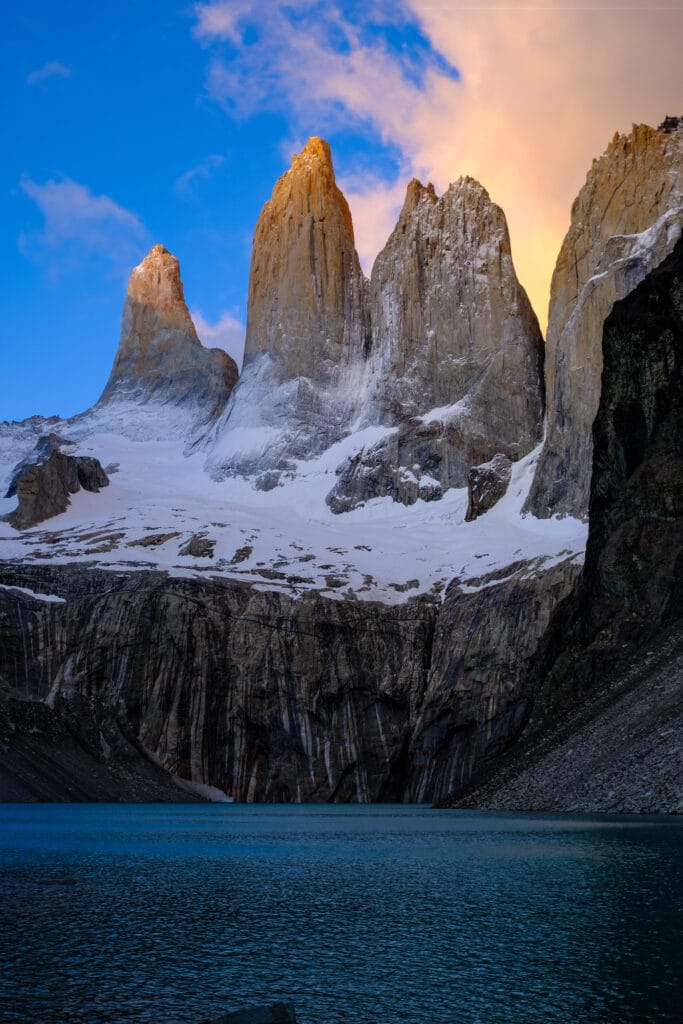
The Torres Del Paine O Circuit is one of the world’s most iconic multi-day treks. It has even been included on the Lonely Planet‘s 10 Best Hikes in the World, especially for photographers. It offers a complete circumnavigation of the Cordillera del Paine (Paine Massif), combining the highlights of the shorter W Trek with remote backcountry trails, fewer crowds, and unparalleled views. The Torres del Paine O Circuit (also called Paine Massif Circuit) is more remote than the W, requiring full commitment, proper planning, and reservations at designated campsites or refugios.
The additional 34km adds 3 compulsory campsites (Seron, Dickson and Los Perros) and rewards trekkers with more untouched beauty and a chance to get off the grid with no internet for several days. This route is open from the 1st of November to April, compared to the W-Trek, which is open earlier and later in the season. Is the O Circuit worth it over the W Trek? If you have the time and fitness, then the Torres del Paine O Circuit gives you solitude, more rugged and varied landscapes and a true wilderness feeling away from the crowds.
Torres Del Paine O Circuit
Torres del Paine O Circuit vs W Trek
Plan smarter
with TrekMind
Most trek planning tools are built for tourists. I built TrekMind because nothing else let me properly compare routes before committing — interactive 3D globe, 100+ routes, full itineraries, and elevation data for the world’s best trails.
Torres del Paine O Circuit Itinerary
Torres del Paine O Circuit Highlights
Mirador Base Torres
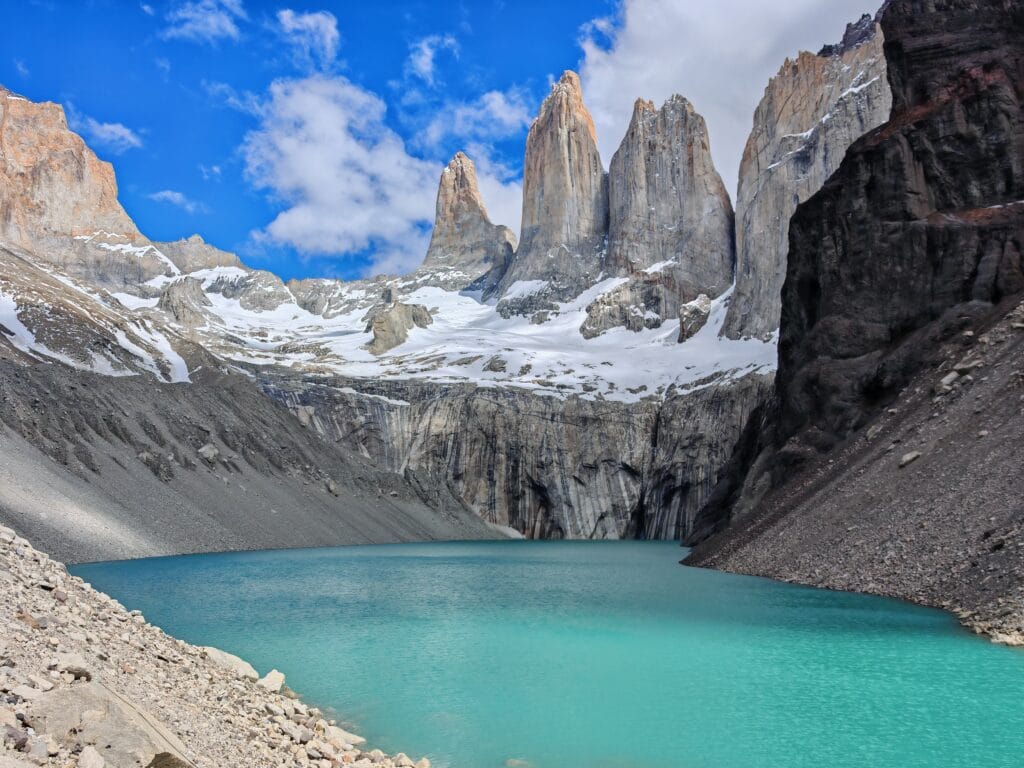
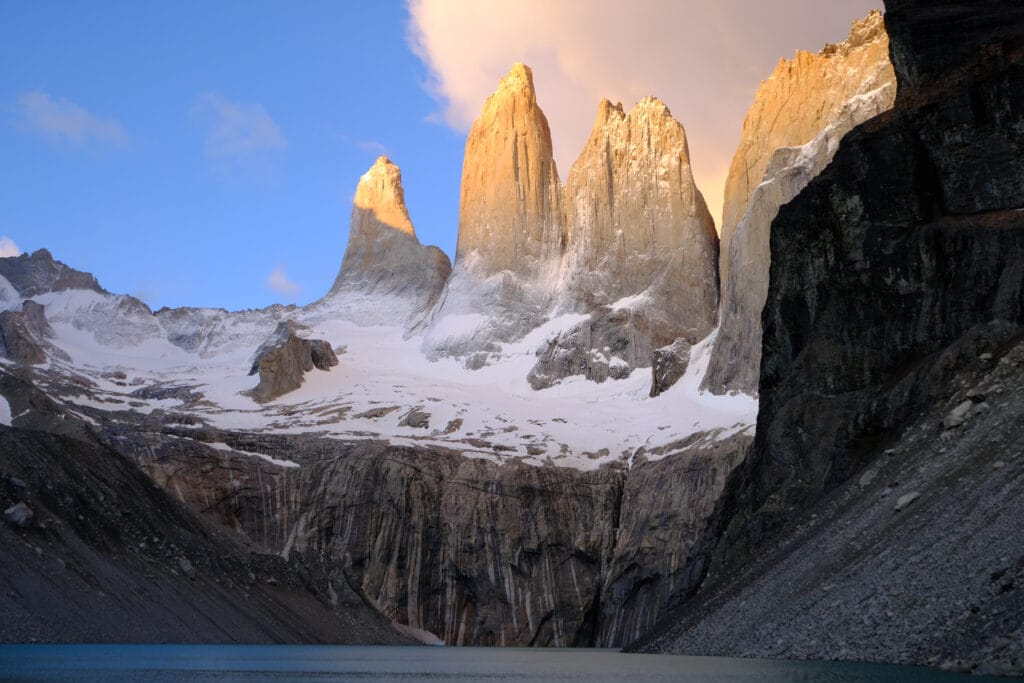
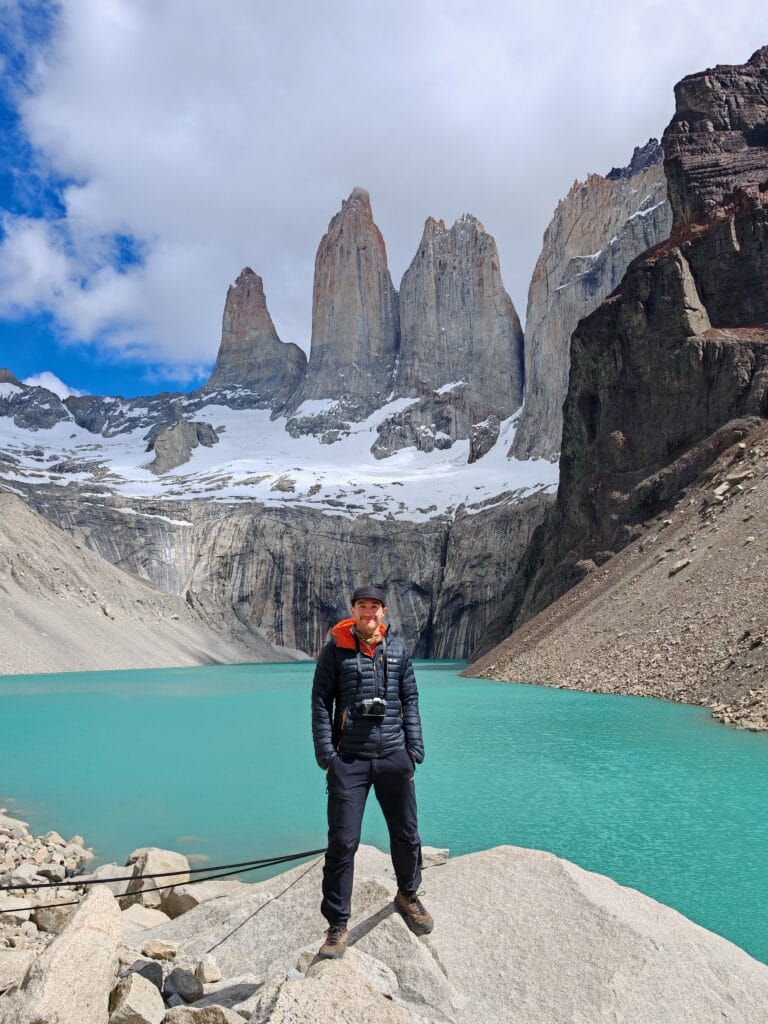
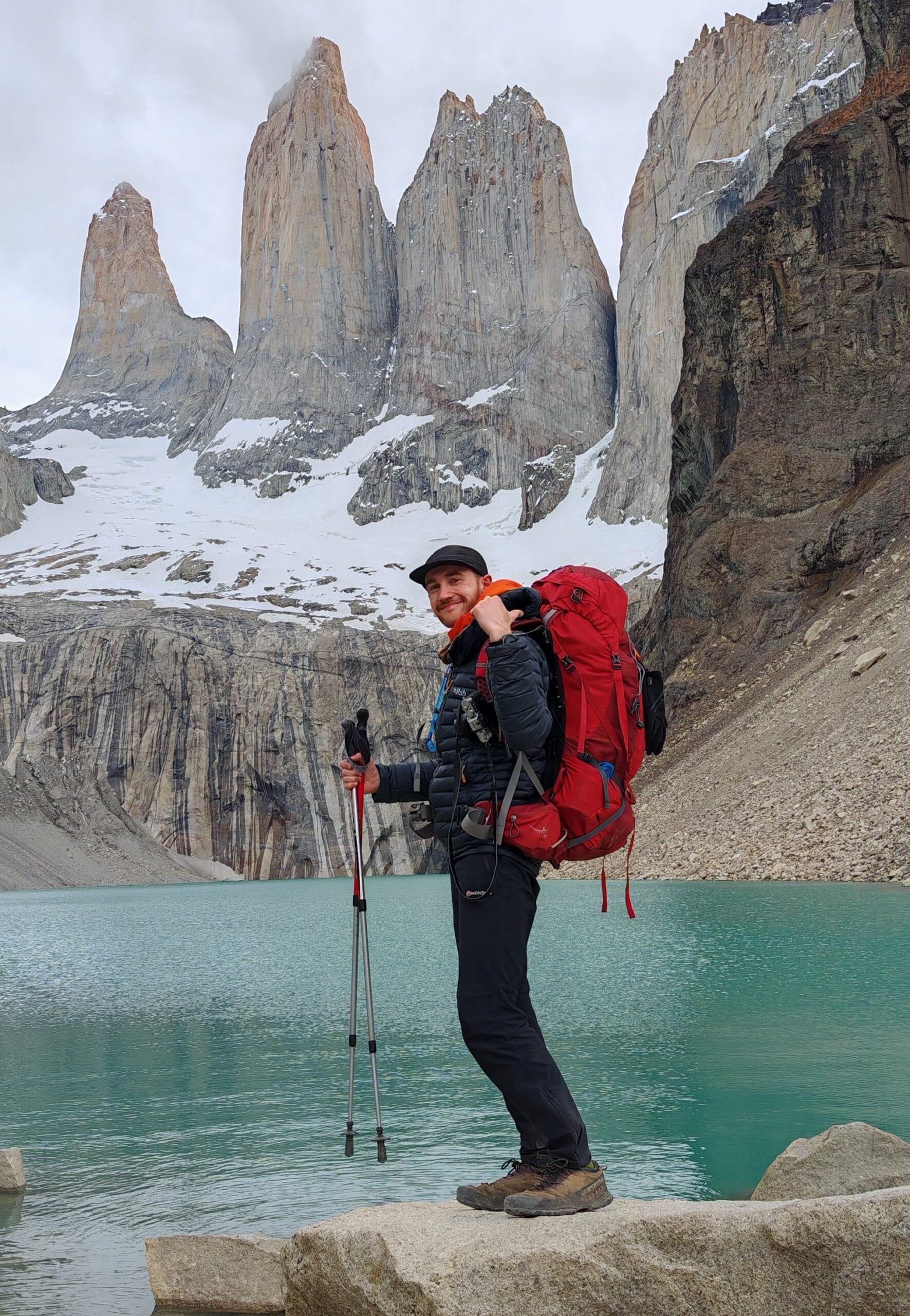
The main attraction is Mirador Base Torres, where the magical 3 towers loom over the aqua waters. And for the Torres del Paine O circuit, what makes it more special is that after 7 days of long, hard trekking, you are rewarded with a memorable viewpoint. The hike up to Mirador Base Torres is by far the busiest day with many day hikers, W trekkers and a few O trekkers. Despite the hard scramble and crowds, the view is truly special, and if staying at Chileno campsite, then it’s worth doing the sunrise hike back to the towers.
Mirador Britannico
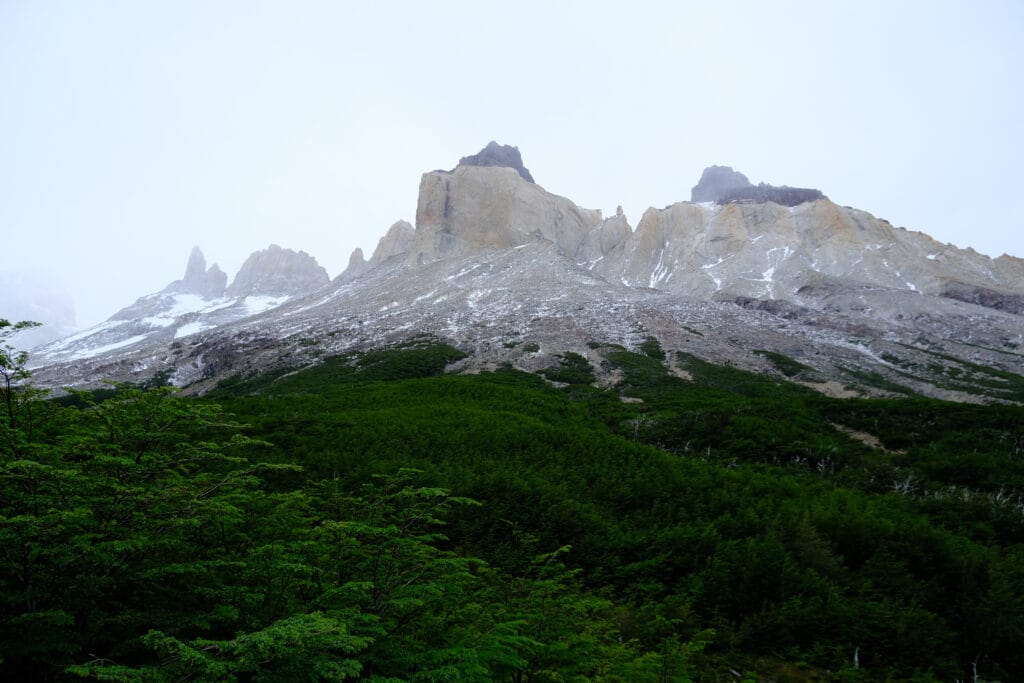
The W trek shape is defined by the 2 excursions to Base Mirador Torres and Mirador Britannico in French Valley. Mirador Britannico, on a good day, offers a great panoramic view of the mountains encompassing the viewpoint. The hike to the viewpoint is hard going, but passes via Mirador Francis, which is more impressive.
Los Cuernos
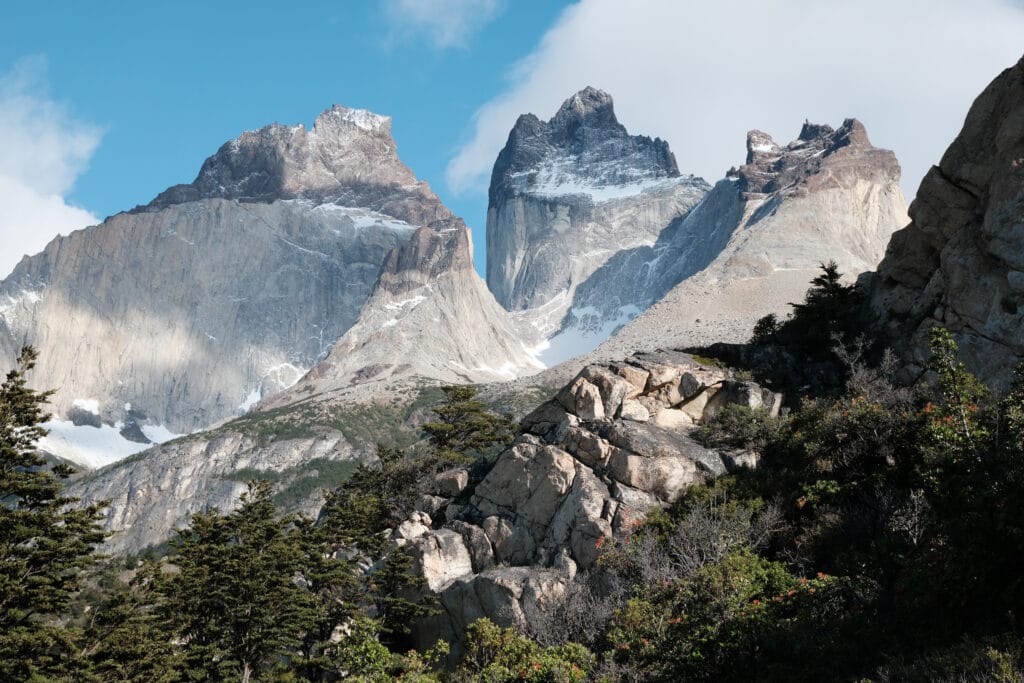
The second most iconic attraction in Torres Del Paine is Los Cuernos, the Bull Horns. Best seen from Mirador Cuernos, which is not on the W or O Treks, but staying at Los Cuernos campsite gives a great view still. The sheer vertical rocks with a gap in between represent the horns from afar. The trail up Frenches Valley also provides a great view of Los Cuernos, as well as from the Paine Grande campsite.
John Gardener Pass
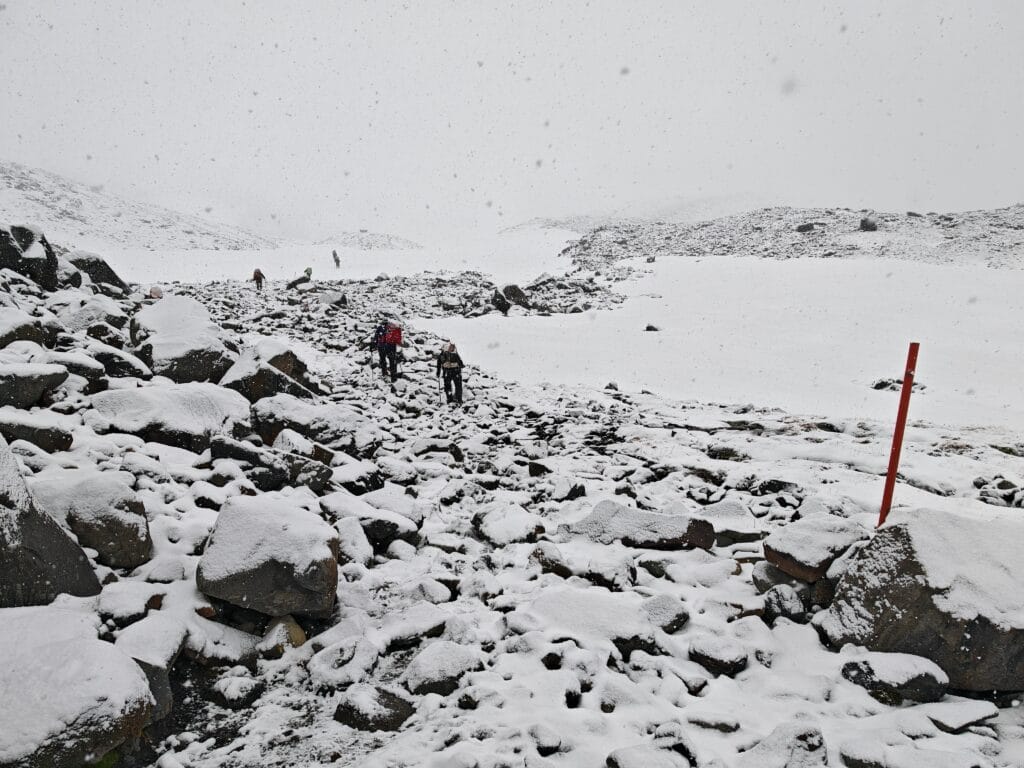
The Southern Patagonian Icefield is one of the highlights of the Torres del Paine O Circuit. The view from atop John Gardener Pass spreads across the valley with a glacial field spanning the valley. Instead of a great view, I was met with snow on the tricky ascent and clouds, but it’s also the highest point of the Circuit at 1200m. I was gutted not seeing the magnificent sight; it gives a great reason to return!
Grey Glacier
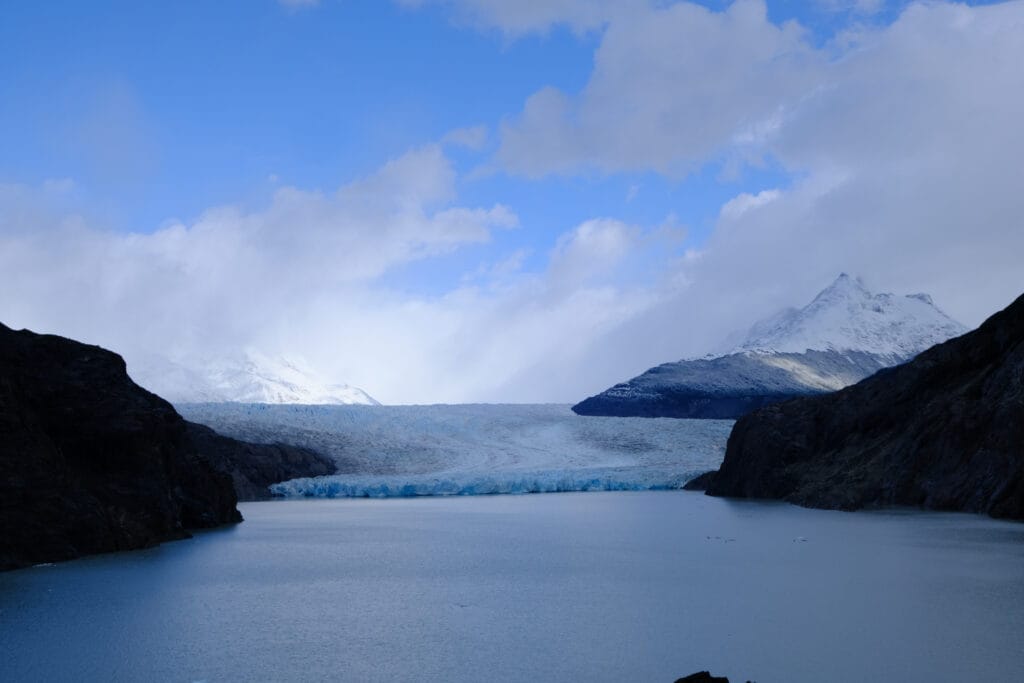
The end of the Southern Patagonian Icefield is Grey Glacier, with the Vertice Campsite near the Mirador Grey. It’s at Grey Glacier where the W trek begins, and the O Circuit joins the trekking route. The best view for W trekkers is from Mriador Grey. However, a perk of trekking the harder Torres del Paine O Circuit is enjoying the views of the glacier for hours as you trek side by side.
Mirador Glacial Los Perros
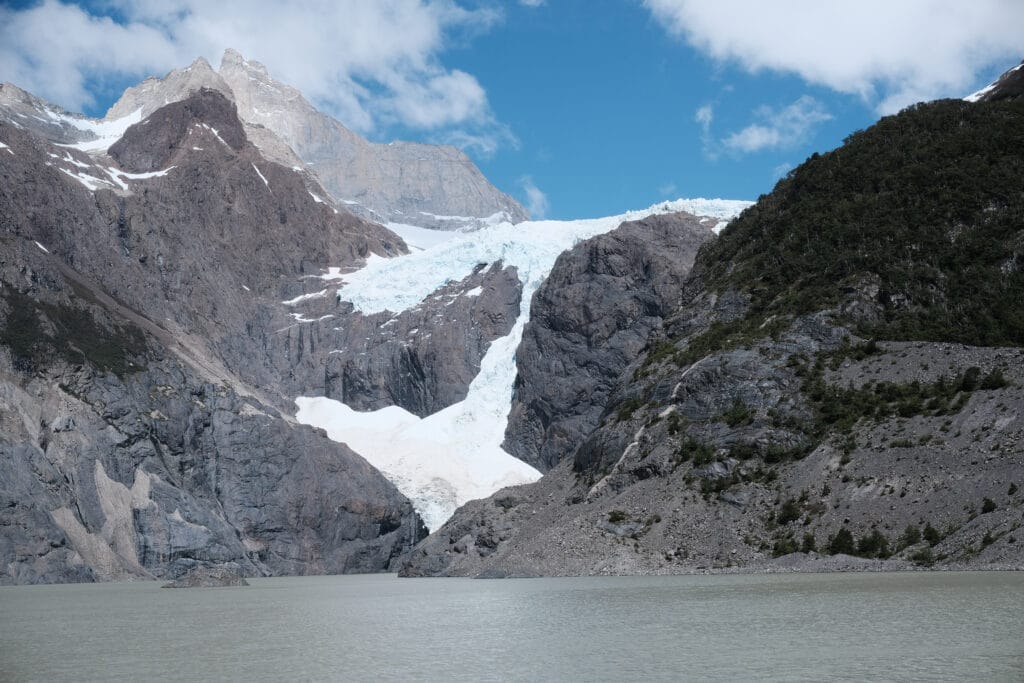
A treat for the O Trekkers on Day 3, the Los Perros Glacier hangs from the plateau above with a great Laguna below. This must-see sight is next to the Los Perros Campsite and makes for a good afternoon walk back to. It is the first of the proper Glaciers to see in Torres del Paine and has icy blue colours to enjoy.
Lago Paine
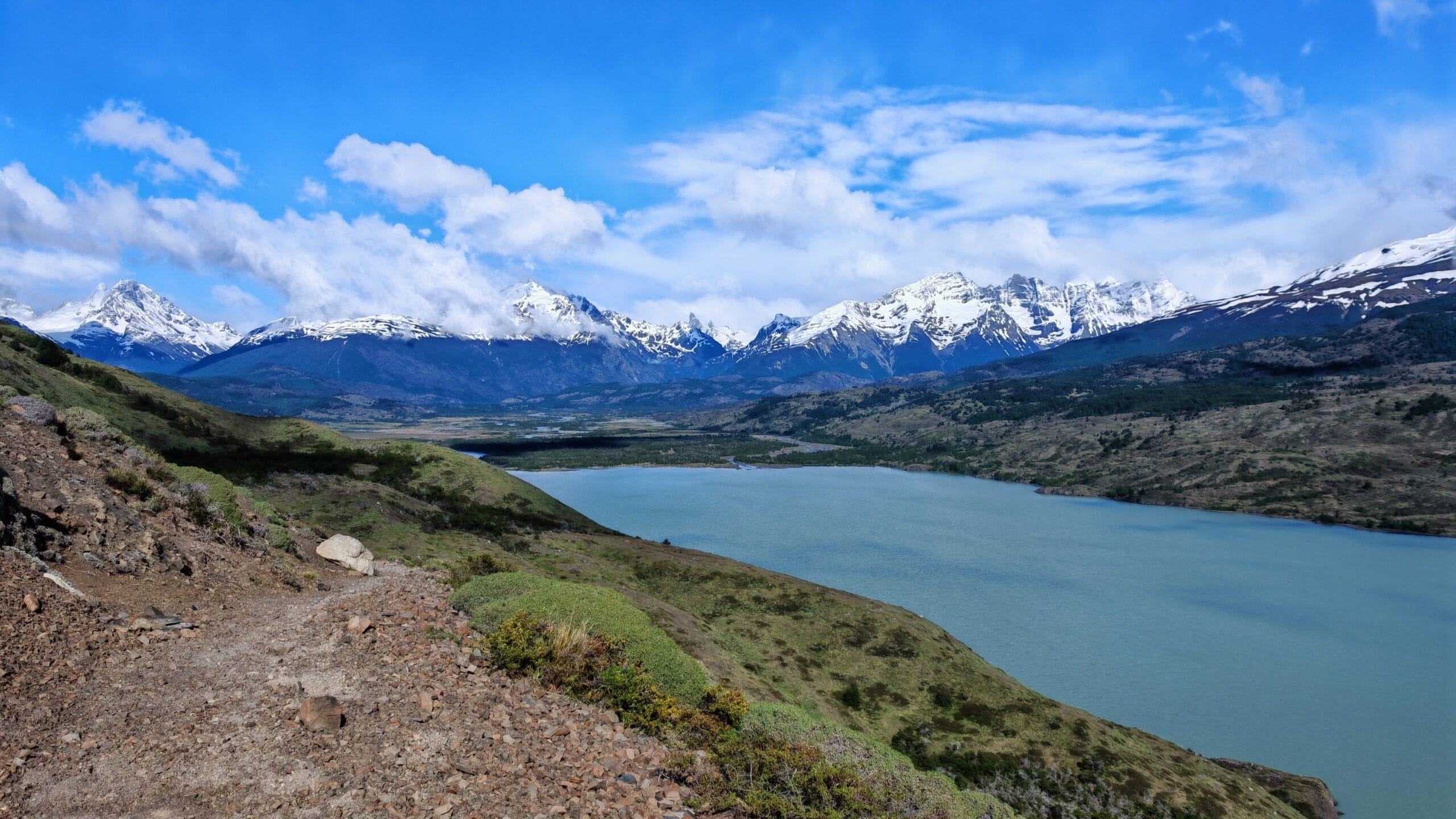
The first wow moment for me on the Torres del Paine O Circuit was at Lago Paine. The vast remote mountains in the distance and long Lago Paine below made for a great photo. For the next few hours, the view slowly changes as you hike closer to the epic snow-capped mountains near Dickson Campsite. This viewpoint, after the steep climb, is incredibly windy once finishing Sector Seron.
Dickson Lake
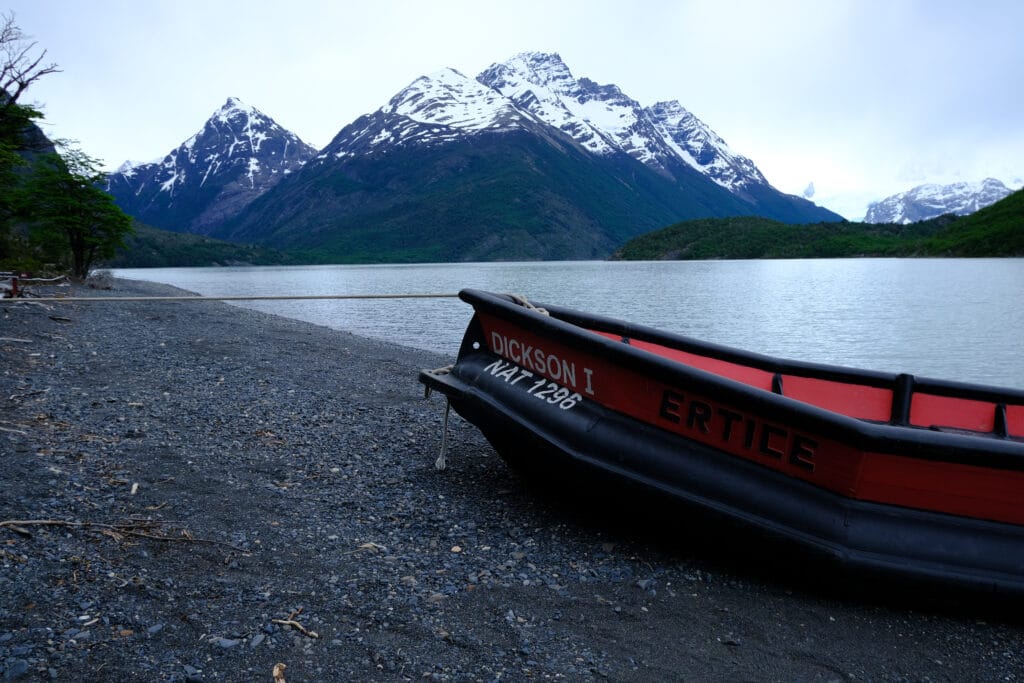
One of the nicest campsites on the Torres del Paine O circuit is Dickson, located next to the great Lake Dickson. Which, in fact, flows from Argentina in the distance! It’s a peaceful campsite with a pebbly beach to explore and soak up the quiet nature surrounding the campsite.
Paine Grande
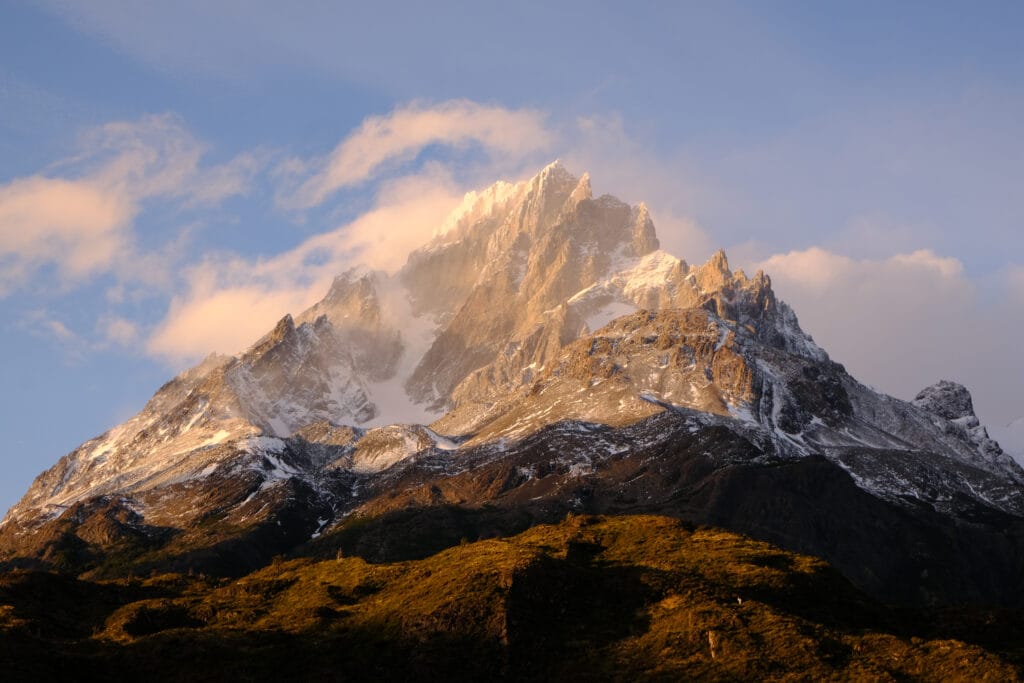
Once the Torres del Paine O Circuit joins the W trek, the campsite facilities become much nicer, and Paine Grande had the best! With a ferry port nearby, it’s a popular place for trekkers to save money by going from Paine instead of Grey. The views are stunning, with Paine Grande seen in all its beauty and Los Cuernos in the distance.
Mirador Francis
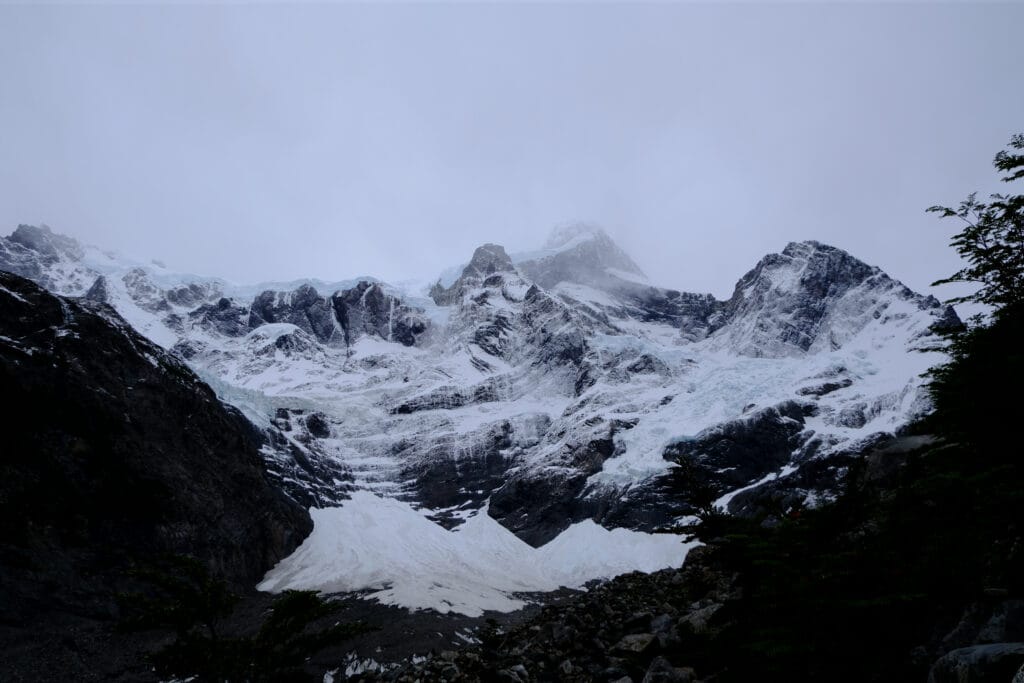
The underappreciated Mirador of French Valley is Francis, due to its proximity to the trail. Whereas, Britannico risks low cloud and hidden views. The spot is popular with hikers not wanting to push onto Britannico, but the vertical rock, ice and snow make for a formidable and daunting mountain. You can leave the heavy backpacks at Italiano Camp at the bottom of the valley before the climb up.
Puerto Natales
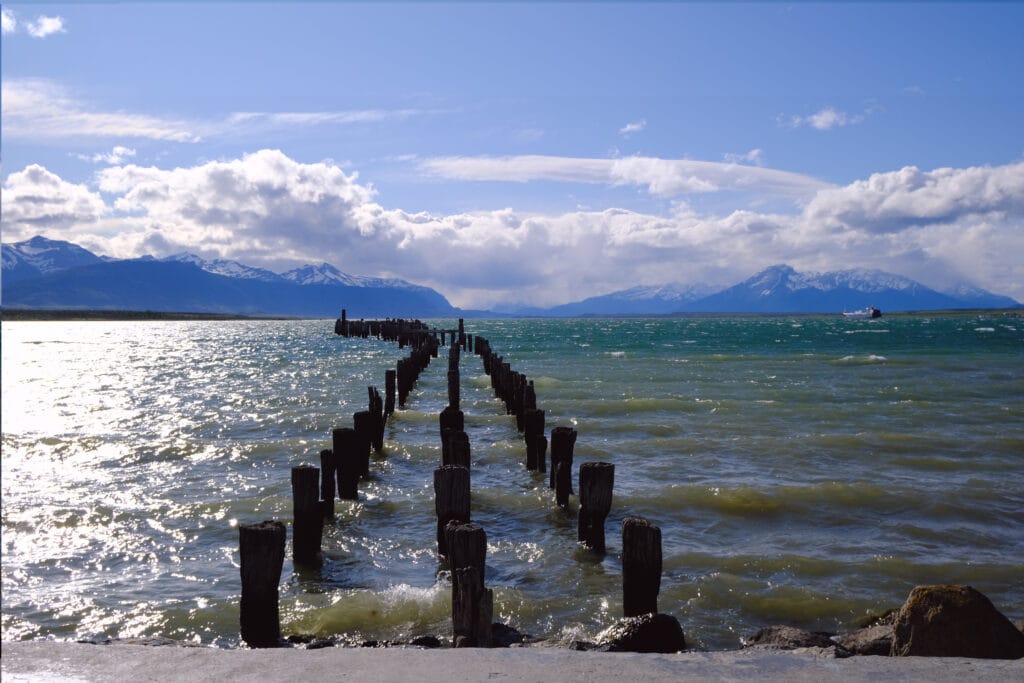
Even though this is not in Torres del Paine National Park, Puerto Natales is the central hub for people entering the park. With an airport and bus terminal, visitors will often spend the night before and after a trip to Torres del Paine in the small, charming town. With an impressive waterfront with a mountainous backdrop, there are many shops and restaurants. It’s easy to spend an afternoon in Puerto Natales grabbing last-minute supplies or souvenirs after a trek.
Torres Del Paine O Circuit Route Map
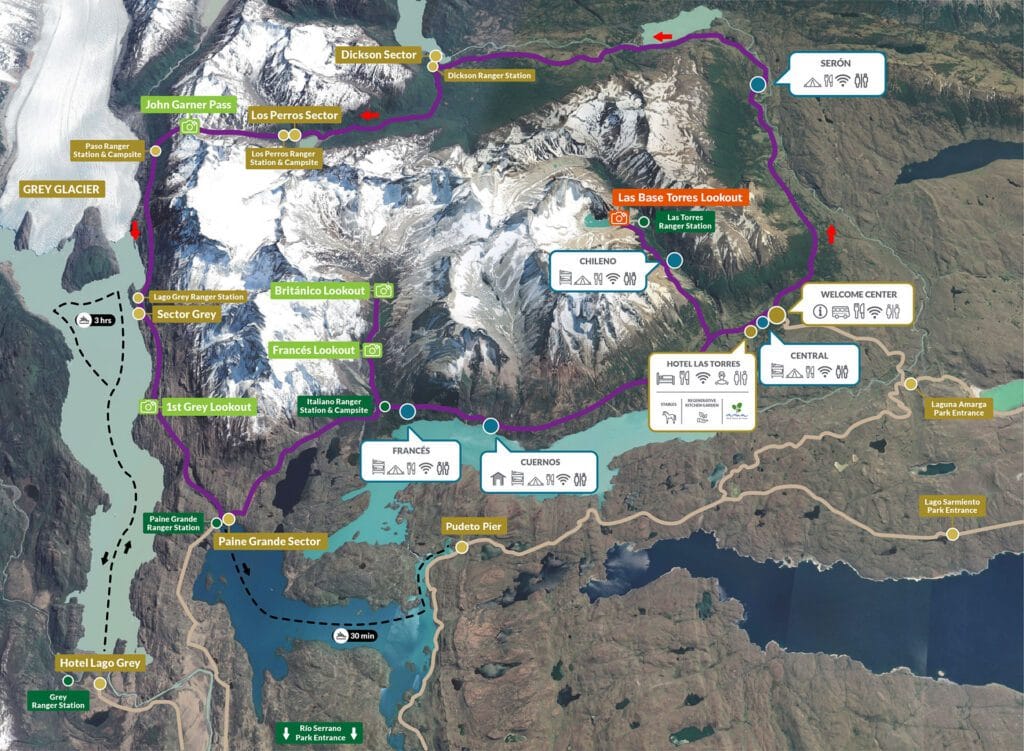
The Torres del Paine O Circuit differs from the W trek by having a mandatory direction of trekking. Additionally, there are 3 campsites that can’t be skipped either. Finally, there are only around 50 trekkers permitted to hike on each leg per day, which makes the trail much quieter. You can enjoy hours alone in stunning nature without any other humans. When compared to the W trek, which can have hundreds of people heading in both directions, it makes for a more peaceful and enjoyable trekking experience, in my opinion. The difficulty with the limited trekkers allowed is booking the campsites, which is covered later.
The O Circuit (Circuito O in Spanish) starts at Laguna Armarga/ Central, then heads to Serón first in a counter-clockwise direction. The next day is to Dickon and then Los Perros before tackling the John Gardener pass on Day 4, which ends at Grey. Now the Torres del Paine O Circuit joins the W trek to Paine Grande. However, there are more options available over the next few days. On Day 6, it’s possible to stay at either Los Cuernos or Frances campsites.
I would recommend Los Cuernos, but it’s a longer day from Paine Grande if hiking to Mirador Britannico as well. Then try to get a reservation at Chileno, as it allows the option for a sunrise hike to Mirador Base Torres over Central on Day 7. A tip is to start early each day as the strong winds pick up in the afternoon, and it’s wise to get a strategic camping spot.
Torres del Paine O Circuit Planning
Transport
Torres Del Paine National Park is 129km from Puerto Natales, the most popular town to depart from. There is a small airport 7km from town with flights from Santiago (3 hours direct) operated by LATAM or SKY Airline. I would heavily recommend LATAM over SKY, as I had a positive experience and have heard SKY, despite being cheaper, has more complaints. Alternatively, you can fly 2hours to Puerto Montt (Chile), then 2 hours to Puerto Natales.
The Santiago flights are twice a week, whereas the Puerto Montt flights are daily, so factor this in when booking flights and campsites. There are cheap taxis for $8000CLP (flat rate of $8.30) and an airport shuttle into the town for CLP 4,000 ($4). Otherwise, there are buses from El Calafate (Argentina) that arrive at the Bus Station to get to Puerto Natales before entering the National Park.
The bus from Puerto Natales to TDP National Park is operated by Bus-Sur, where tickets cost CLP$ 15.000 per journey. It’s best to book an early 7am bus departing from Puerto Natales Bus Station (Terminal Rodoviario) to give plenty of time for the journey and to start trekking. On the return journey, it’s possible to use Chileno or Central WiFi to transfer bus times to avoid waiting until 5-6pm and get an afternoon bus back to Puerto Natales instead.
The first buses depart 6:45am to Laguna Amarga and take 2hours. From Laguna Amarga, there is a cheap Shuttle that can be pre-booked or paid upon arrival to take you from there to Central. No one skips the shuttle and does the extra few Km hike.
Campsite Reservations
The most difficult part of planning the Torres del Paine O Circuit trek is securing the campsite reservations! In summary, there are 2 companies which operate the campsites in the TDP National Park. Vertice Patagonia operate Dickson, Los Perros, Grey and Paine Grande. These campsites were much cheaper, thanks to the single tent pitch costing only $11-13 a night! In comparison, Las Torres operates Central, Seron, Frances, Los Cuernos and Chileno campsites.
Las Torres campsites cost US$65 per spot, with the premium campsite at Chileno at $165. Both the W and O treks sell out quickly for high season, so book 4-6 months in advance to get your dates when the booking systems open around May. The hard part is that the booking systems open at different times, which makes organising flights and dates tricky. Luckily, there is a fantastic website called TorresHike, which acts as a middle person. The Torres del Paine O Circuit is very popular, especially in December and January; therefore, it’s best to book as soon as possible. TorresHike allows you to choose the dates, accommodation and meals in an easy booking system.
In 2024, the campsites opened in June time around 4 months before the trek started. Both Las Torres and Vertice were rolling out new booking systems, hence there were limited dates last year. If booking on your own, then check both travel agencies for availability and double-check that the dates align. There is a strict No Wild Camping policy, so you must stay at the designated campsites in TDP. You need the camping reservations printed off or available to check in at every campsite upon arrival.
Puerto Natales Accommodation
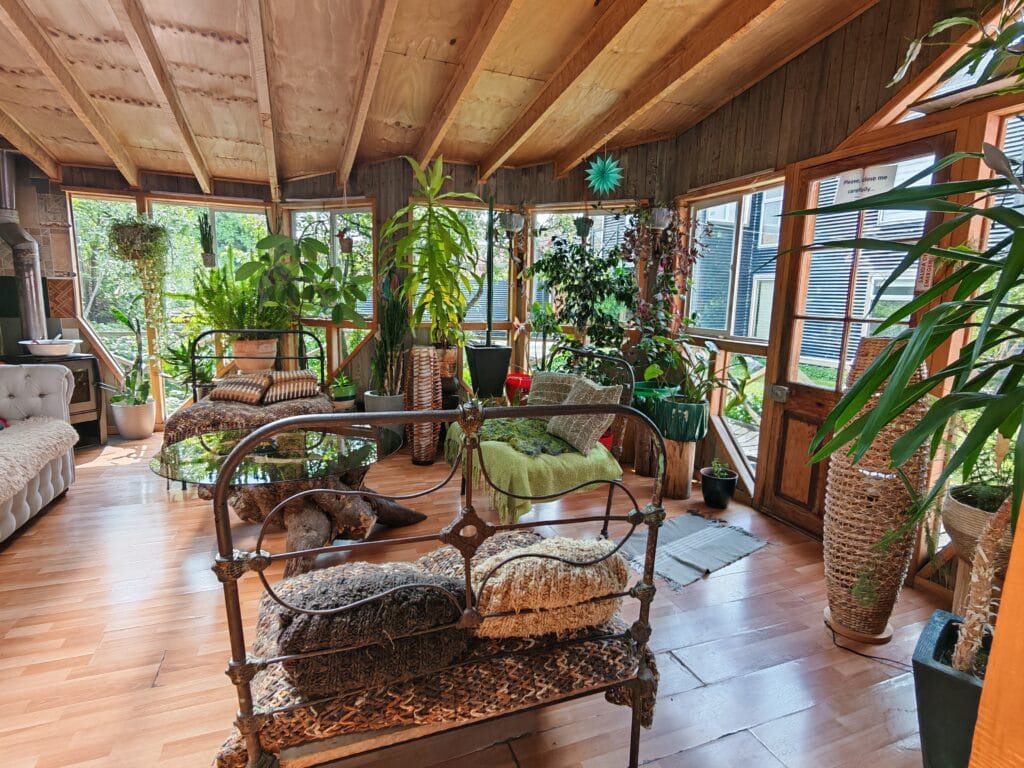
Puerto Natales is a hub for backpackers, hikers and outdoor lovers coming and going to Torres del Paine. There is a wide variety of accommodations in the town, with budget options to high-end hotels. I used HostelWorld to book 2 different hostels before and after the trek. First, I stayed at the highly rated and popular Hostel Last Hope, where Diego is a great host, and it was easy to get tips from other trekkers before going to the Park.
The rooms were 4-bed bunks costing only USD$13 a night! After completing the Torres del Paine O Circuit, I stayed at Yaganhouse Hostel (dorms for $24 per night), which was much quieter with a fantastic breakfast and much-needed hot showers.
Permits
Torres Del Paine National Park requires a park entrance ticket to enter. The 3 entrance points where tickets are checked are Laguna Amarga, Laguna Sarmiento, and Serrano, with most people arriving through Laguna Amarga. The tickets issued by CONAF must be booked in advance using this Park Tickets link. The tickets cost from $32,400 CLP for a foreign adult ticket up to 3 days (for day hikes), but for the O Circuit, a foreign adult ticket for over 3 days is required, costing $46,200 CLP (USD $49 / £36).
Season & Weather
The TDP National Park is usually open from the 1st of October to April, which is the equivalent of Spring through summer to Autumn. The southern hemisphere seasons mean you can enjoy Christmas trekking around Patagonia! The shoulder season is cheaper and quieter, with better wildlife spotting opportunities yet trickier weather. The Torres del Paine O Circuit officially opens on November 1st at Seron, then Dickson and Los Perros opening the next days.
I started my epic trek on the 2nd of November, so I was one of the first groups of the season to complete the Paine Massif Circuit. Whilst some of my dates were dictated by availability and costs, the early season meant I experienced all the weather Patagonia had to offer. Be prepared for sun, rain and snow throughout the trekking season, even in summer.
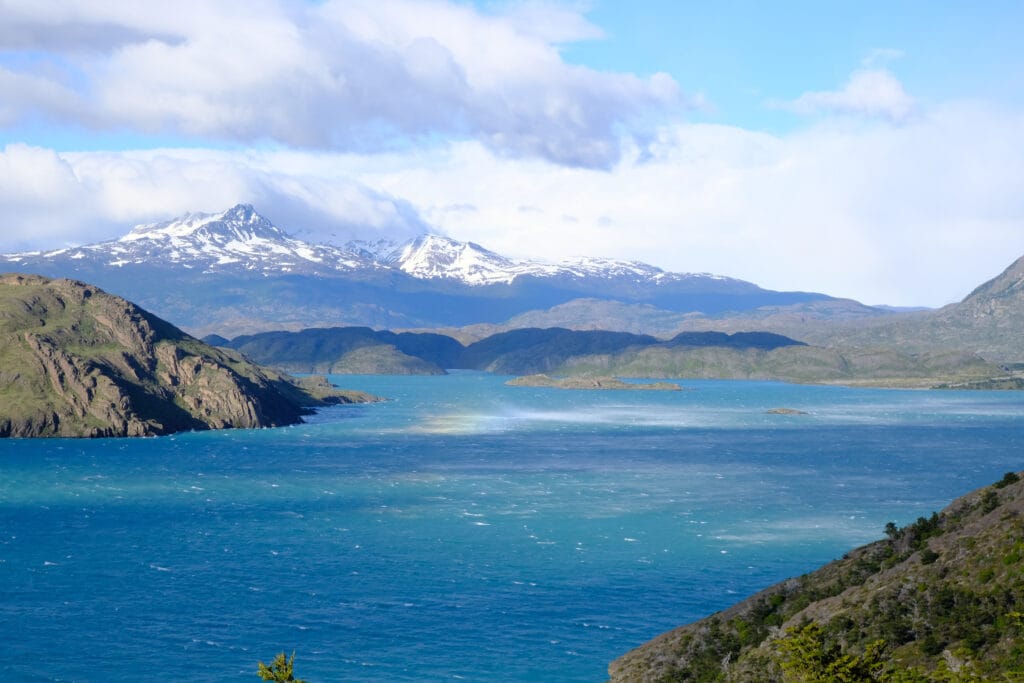
The geography of Patagonia, being at the southern tip of South America, means it is battered with strong winds travelling around the continent between Antarctica. The winds are famous and can exceed 120km/h (74mph), which will knock you off your feet when hiking! The worst days were near Lago Paine, the approach to Paine Grande and hiking alongside Lake Nordenskjöld. Some advice for tent pitching: always pick a sheltered spot for protection.
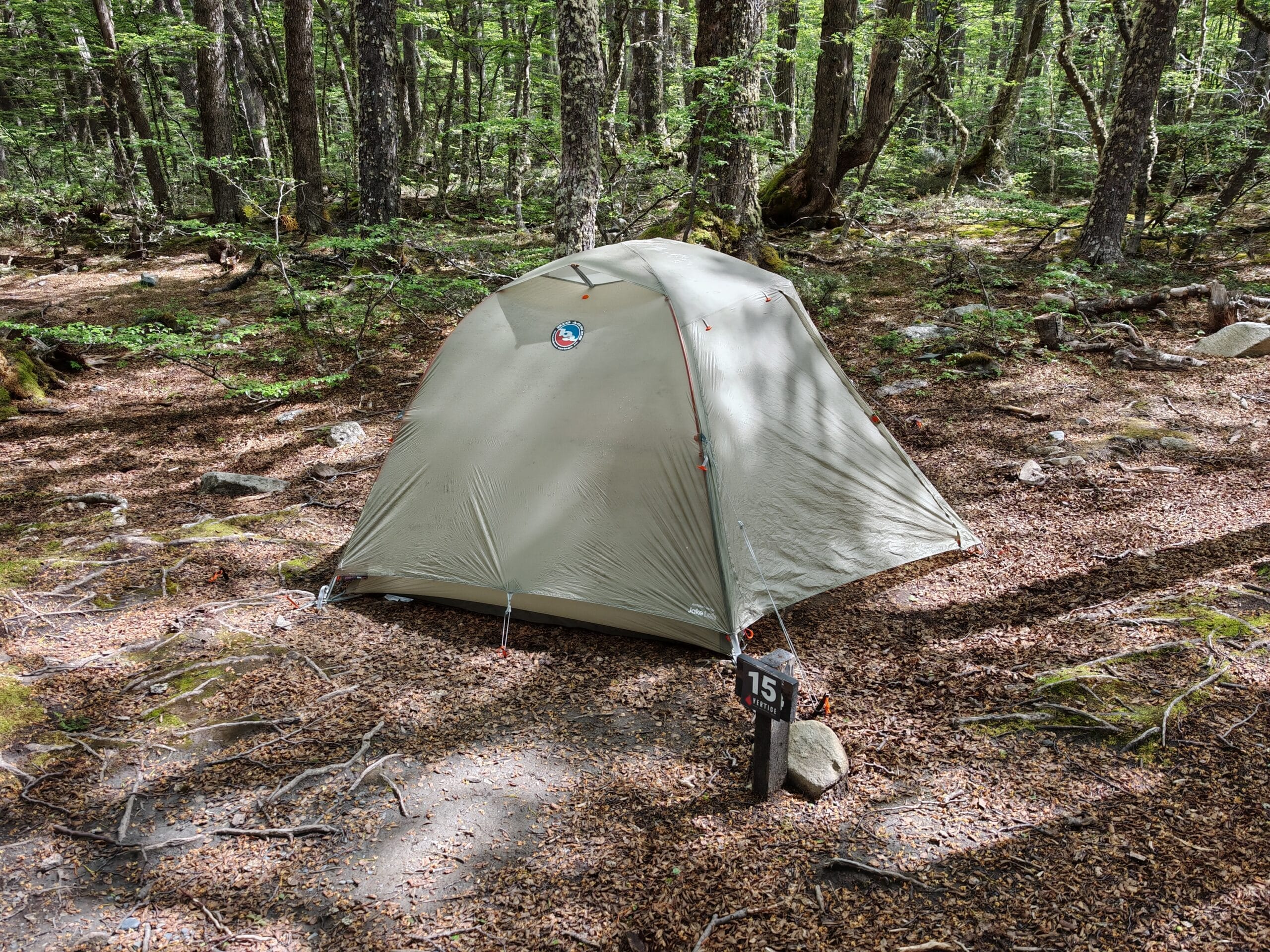
I had my Big Agnes Copper Spur Tent tested with over 60mph winds at night, forcing me to pack away in pitch black and set up in the forest. Some days had lovely sunny weather, whereas other days had low cloud blocking the views. The worst day for weather for me was also the hardest going over John Gardner Pass, where a snowstorm had happened the night before. This meant no views of the Southern Patagonia Icefield, and instead, battling with deep snow and slippery surfaces.
Fitness & Difficulty
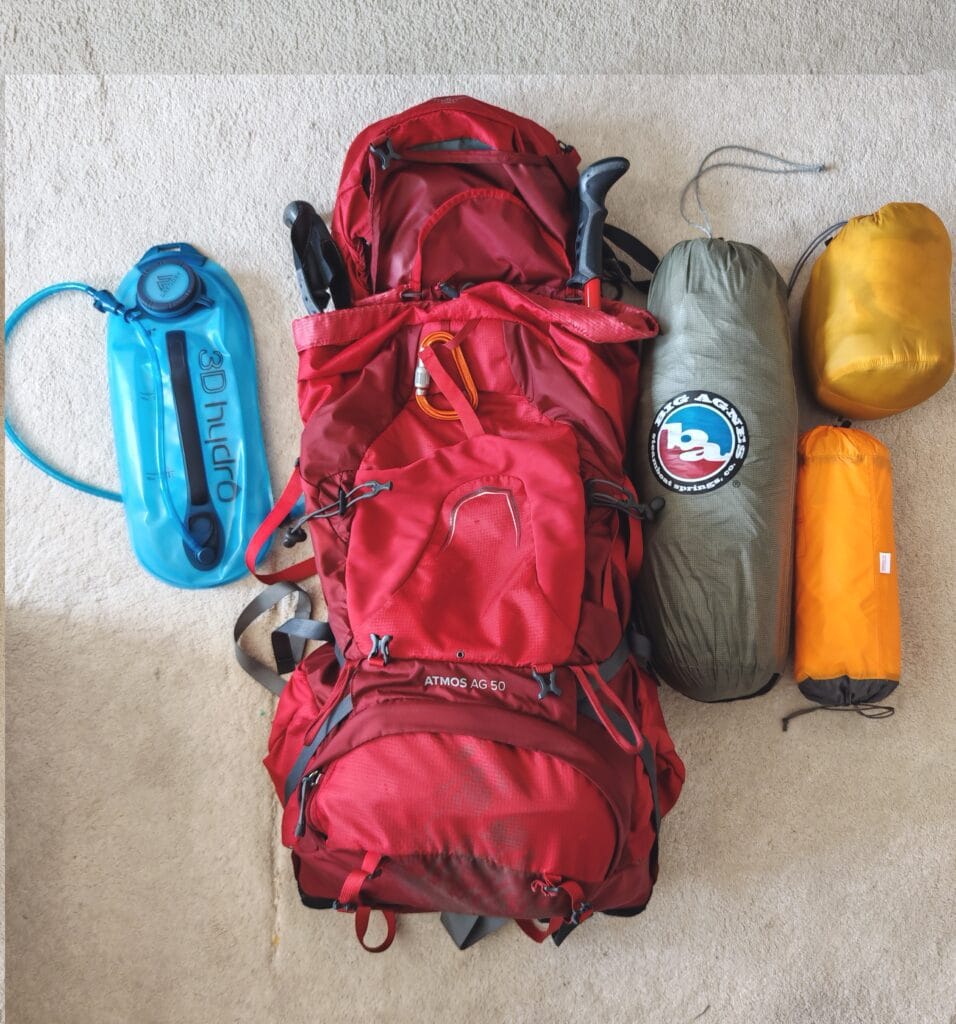
The Torres Del Paine O Circuit trek is a challenging hike compared to most due to the remote nature and unpredictable weather. Whilst it might not have the altitude of a Himalayan trek or the climbing required in the Dolomites, Patagonia still requires good fitness due to the camping style. The Torres del Paine O Circuit took me 8 days of consecutive hiking on varied terrains whilst carrying an 18kg Osprey Atmos Backpack.
The Torres del Paine O Circuit requires camping, so the weight of a tent, sleeping bag, clothes and snacks adds up. Therefore, you should be able to hike up to 25km and over 1000m of climbing whilst carrying a 15kg pack as trekking preparation. Regular hiking and camping experience beforehand will make it more enjoyable than testing unfamiliar camping equipment out when on the trek. The hardest day is the John Gardener Pass with a very steep climb, exposed to strong winds and weather prone to snow and rain (see pics above).
The Torres del Paine O Circuit trail is very well marked with signposts at each Sector. It doesn’t give distances or times between campsites on the signs, but there are maps around the Park showing these hiking stats. Despite its remote nature with a lack of phone signal or internet, it’s hard to get lost in the park with so many trekkers, especially on the W Trek sections. A Map or GPS is useful but not crucial in my opinion.
The hardest day of the Torres del Paine O circuit is over the John Gardener Pass, where poor weather and snow can make navigation more difficult. Also, it’s best to be prepared for long days between Seron to Dickson, John Gardener Pass and the days hiking up to Mirador Base Torres and Mirador Britannico.
Equipment and Kit List
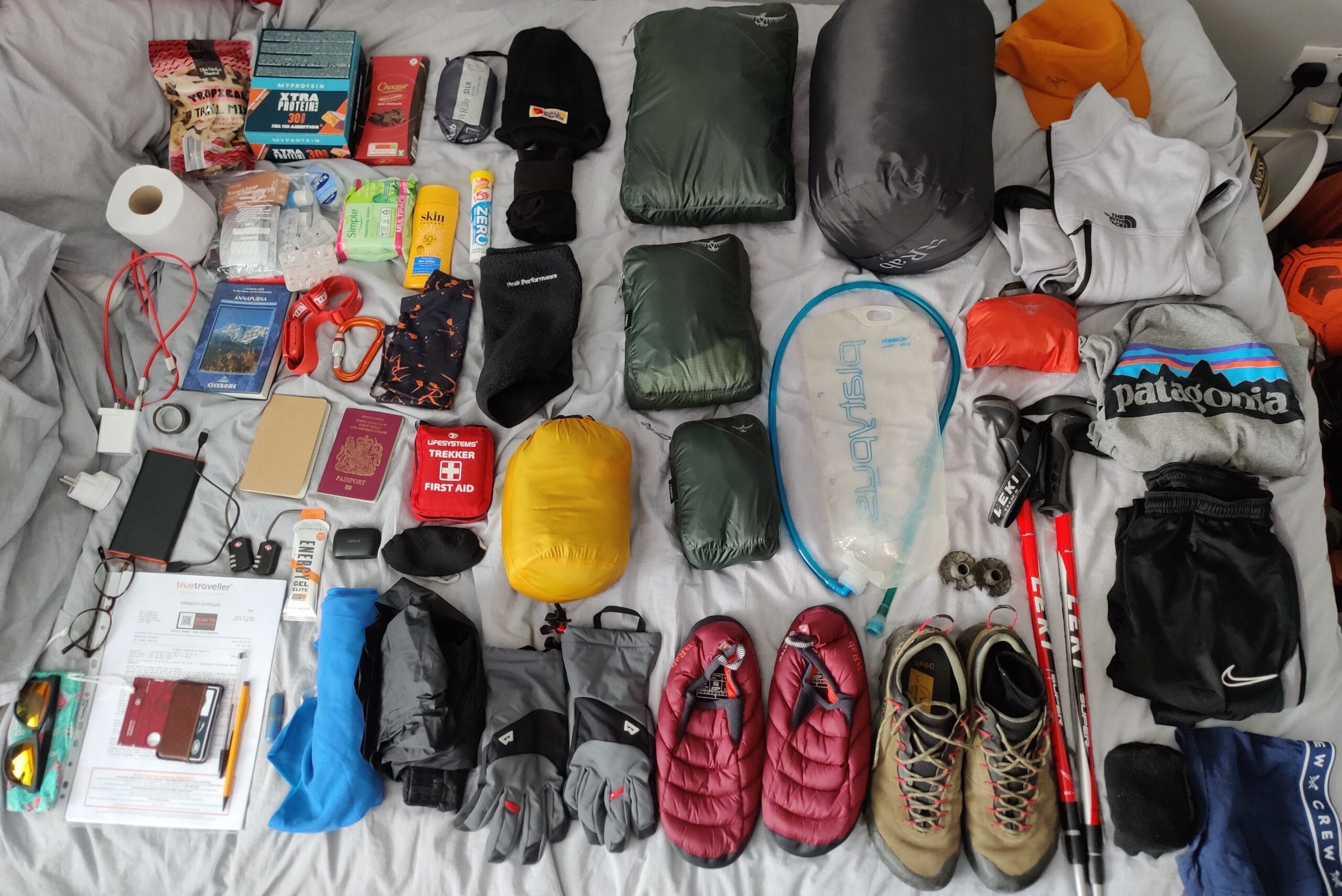
For the Patagonia Trek and Torres del Paine O Circuit, I used my Trekking Packing List from my Annapurna Circuit Trek. Then replaced the cold-weather gear with additional camping gear from this Camping Packing List. The heaviest weight was my Big Agnes Copper Spur tent; however, this did exceptionally well against the strong winds, whereas other cheaper tents broke and bent. As with any trek over rugged mountains, it’s best to invest in lightweight, good-quality equipment to avoid a heavy backpack.
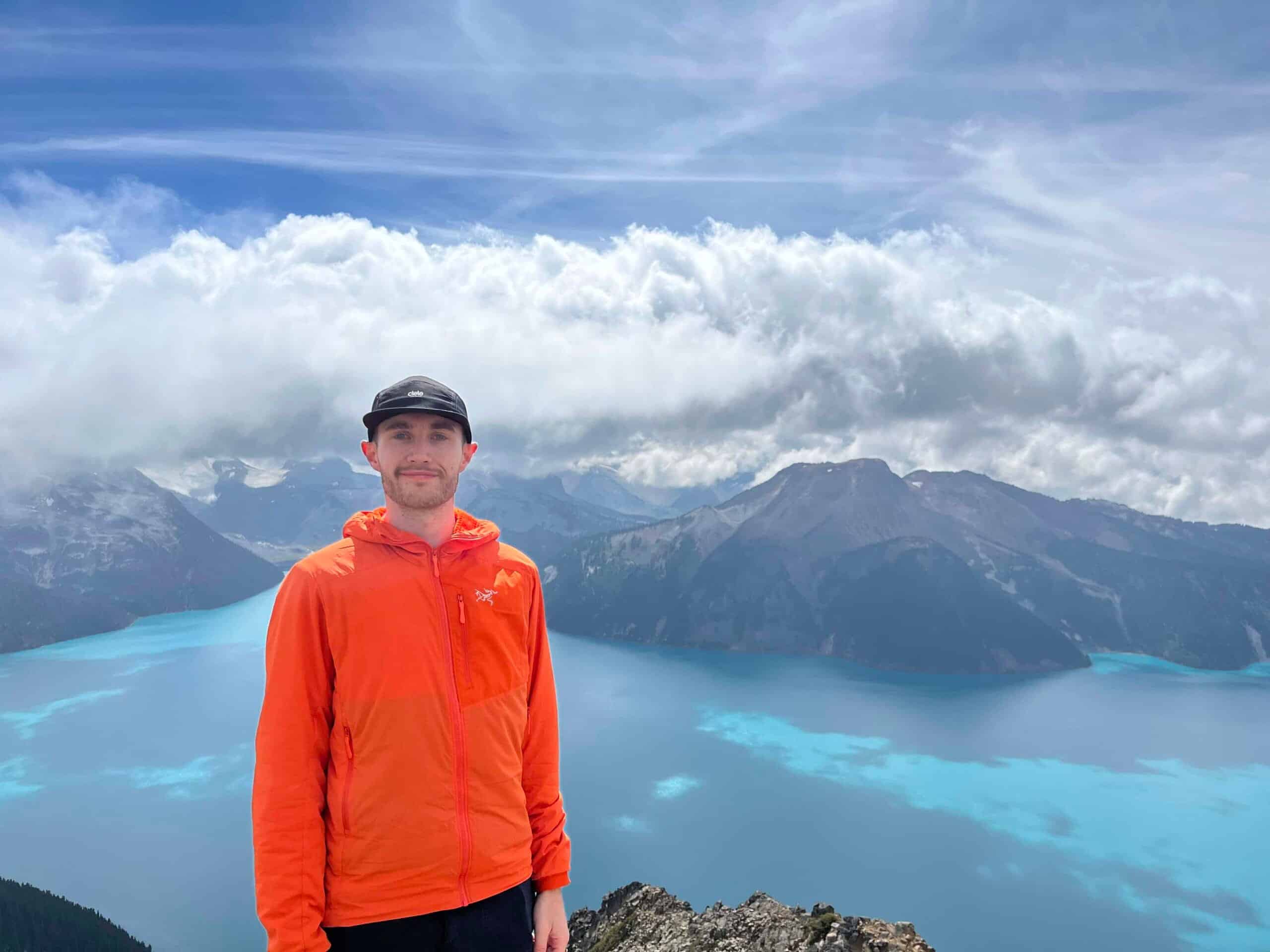
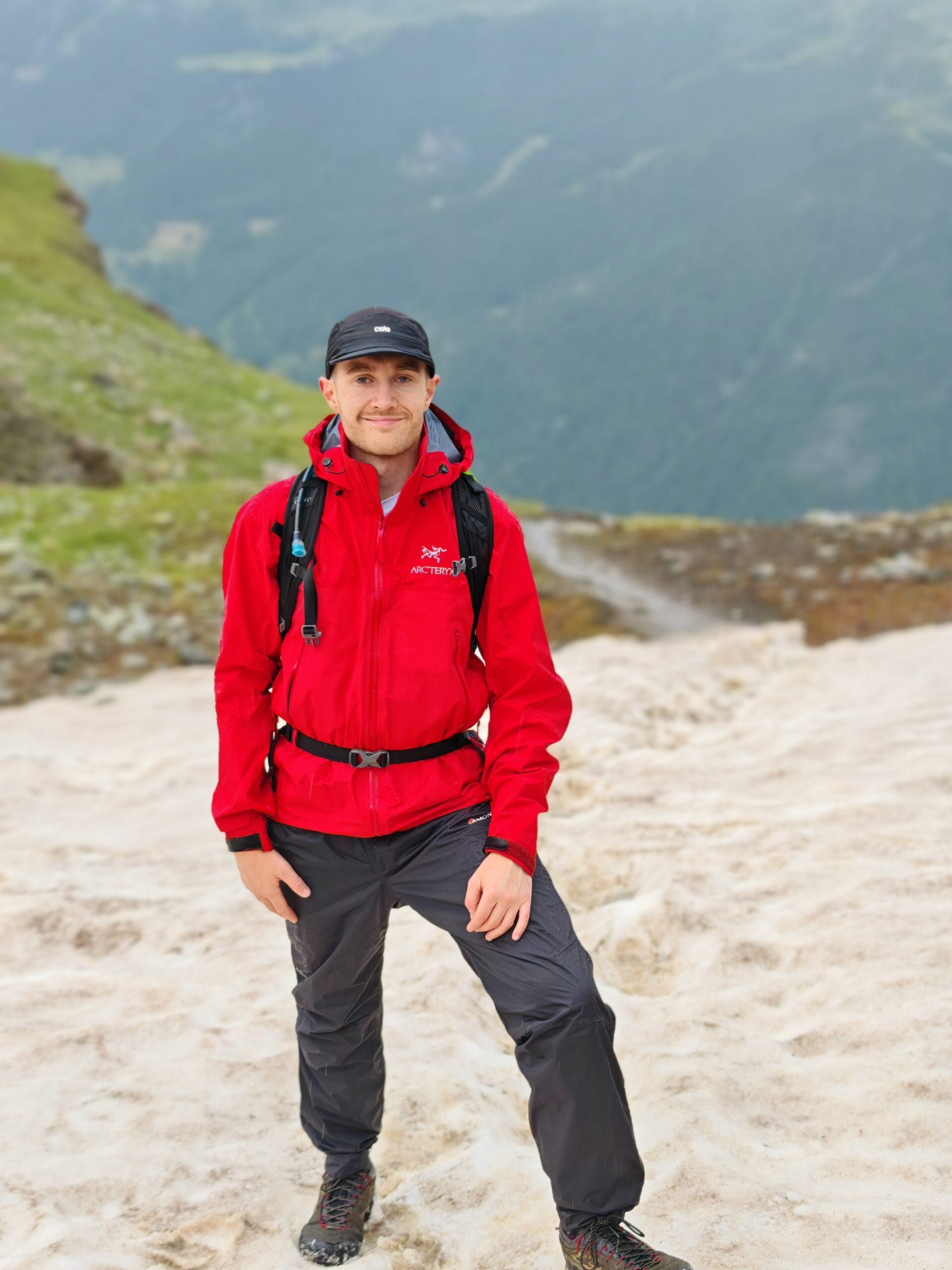
In particular with Patagonia, the variable weather meant I needed my Arc’teryx Beta AR Waterproof often, as well as Down Jackets and other layers when snowing or around camp. Trekking poles are definitely helpful on the John Gardener Pass and venturing to Mirador Base Torres & Britannico. It’s worth noting that there is no phone signal in the park, but I used an e-SIM in Santiago and Puerto Natales for internet to help with navigation and finding food spots.
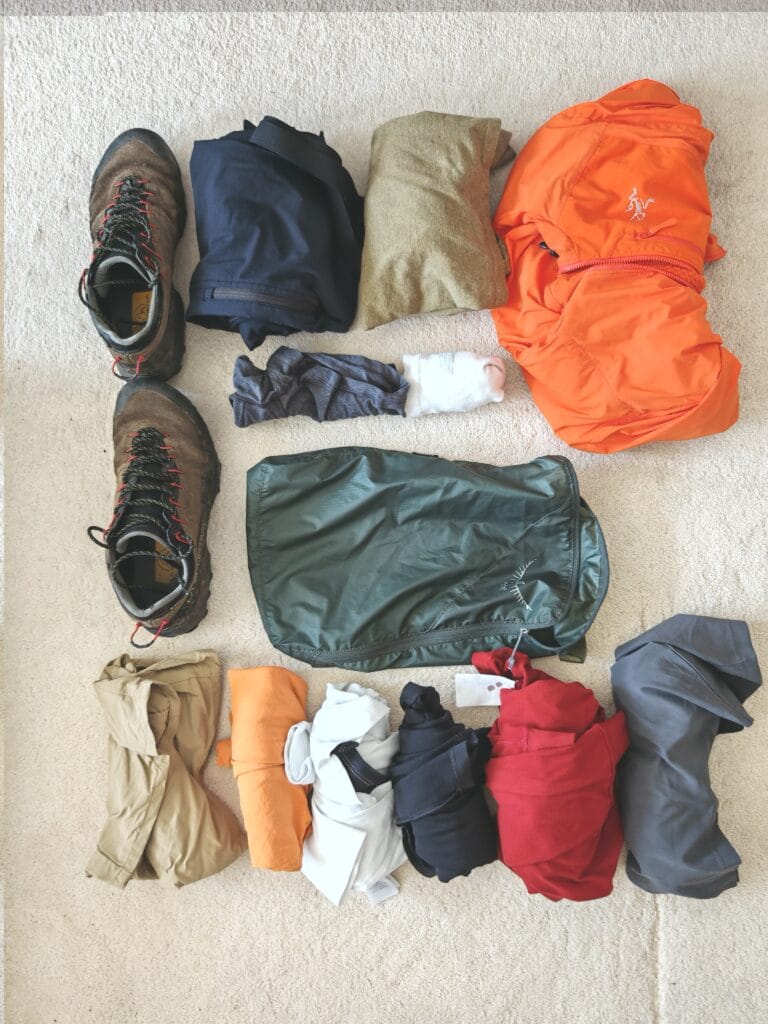
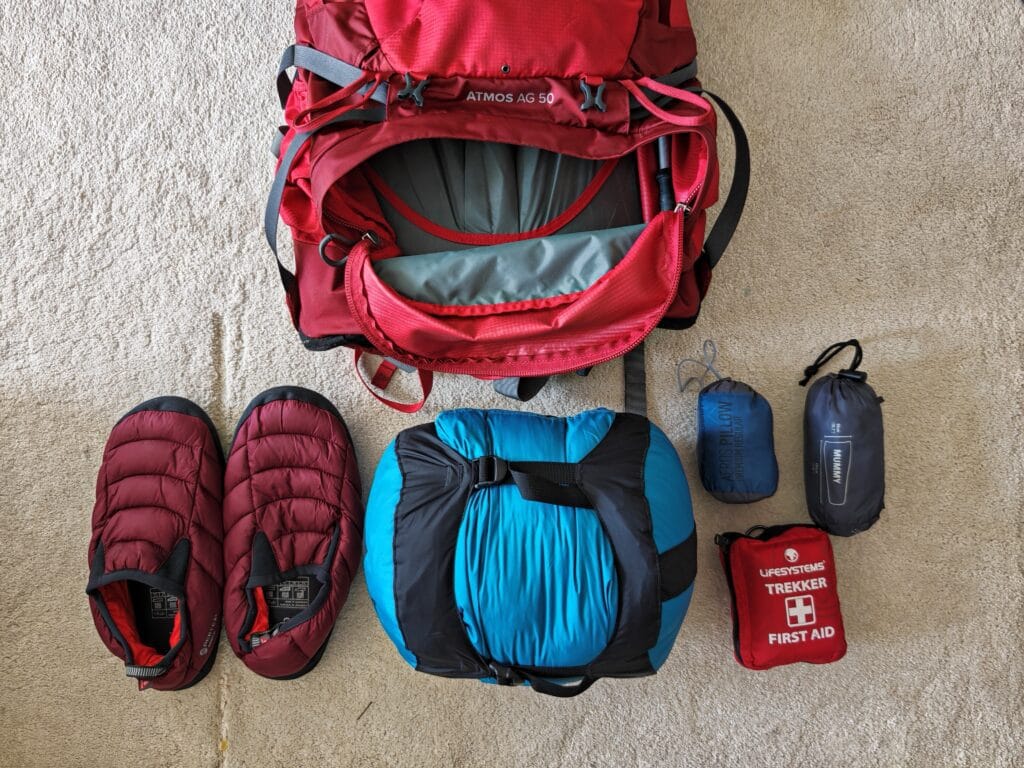
Gear I used on the Torres del Paine O Circuit
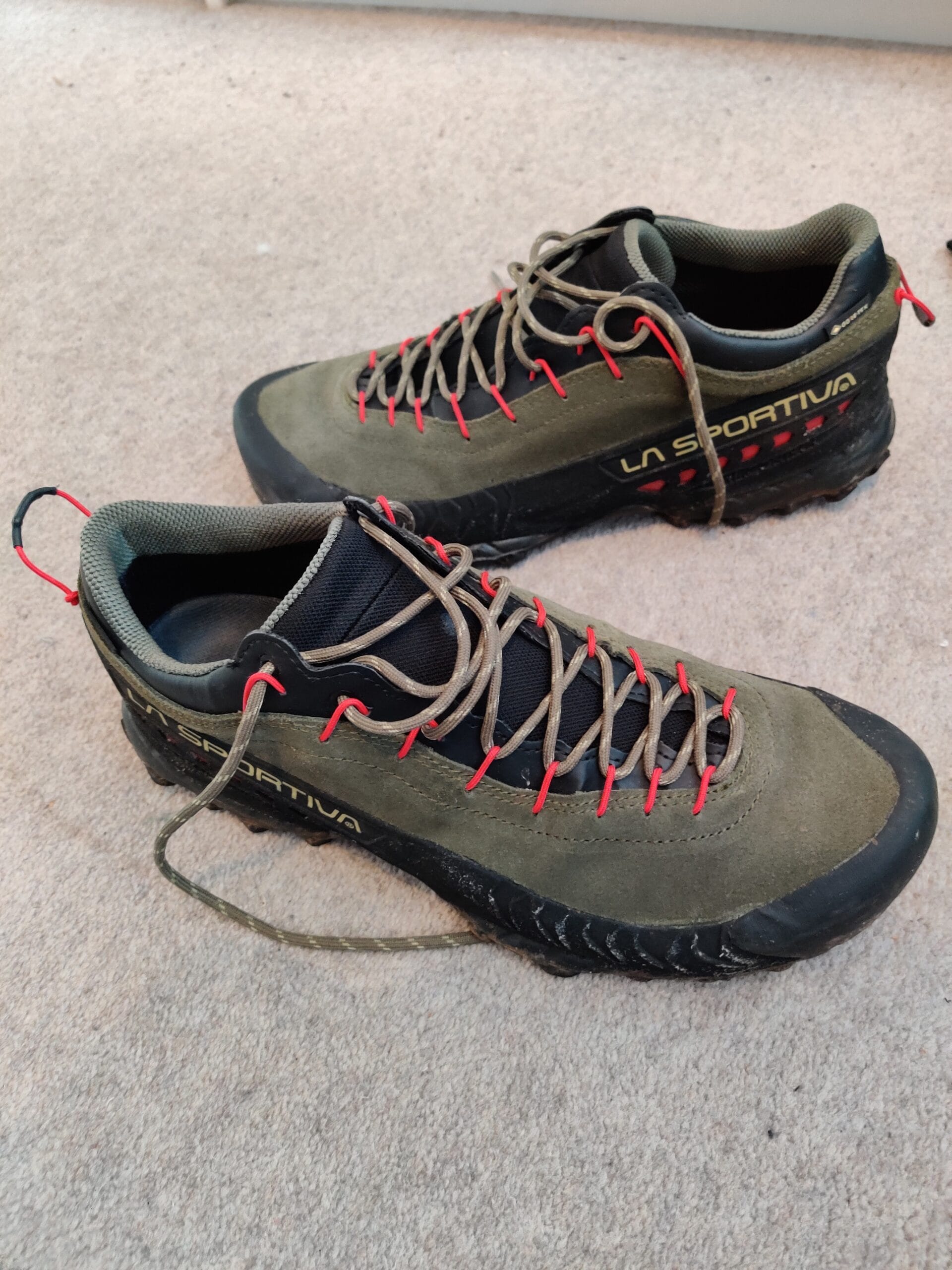
Patagonia O Circuit Itinerary: My Complete 8-Day Trek
Looking for a detailed breakdown of each stage of the O Trek? Follow my complete Patagonia O Circuit itinerary covering Serón, Dickson, Los Perros, John Gardner Pass, Grey Glacier, Paine Grande and the iconic Torres viewpoint. Perfect if you're planning campsites, daily distances or simply want to see what each day on the trail is really like.
Read the O Circuit Itinerary
FAQs
Can you hike the O Circuit in either direction?
No. Unlike the W Trek, park regulations strictly mandate that the O Circuit must be hiked counter-clockwise. This prevents massive bottlenecks on the steep, dangerous descent of the John Gardner Pass.
How far in advance do I need to book O Circuit campsites?
You must book your campsites 4 to 6 months in advance. Because the sites are split between three different operators (CONAF, Las Torres, and Vertice), the logistical puzzle is notoriously difficult, and spots sell out almost immediately when the season opens.
Is the O Circuit dangerous?
While the trail is incredibly well-marked, the danger lies in the volatile Patagonian weather. Fierce winds exceeding 100 km/h, sudden snowstorms on the pass, and freezing nights are common even in peak summer. You must be prepared with high-quality, 4-season gear.
Torres Del Paine O Circuit Artwork
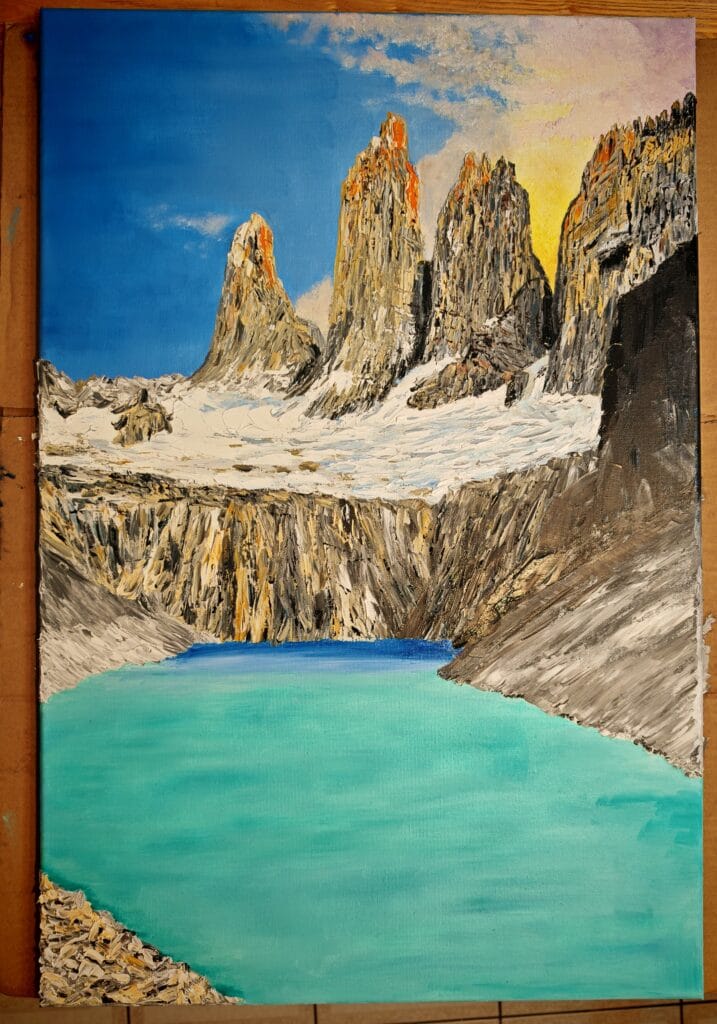
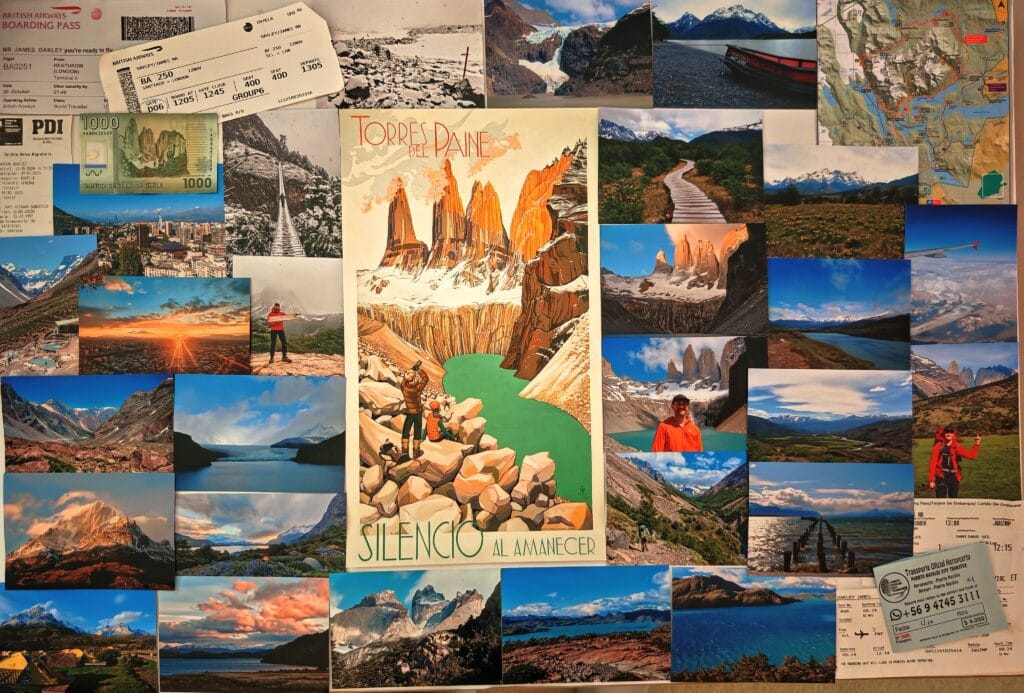
Are you ready to tackle the Torres del Paine O Circuit?
The Torres del Paine O Circuit is the ultimate Patagonia trekking experience – longer, harder, and wilder than the W Trek. It combines world-famous highlights with remote valleys and the thrilling John Gardner Pass. With good planning, gear, and preparation for Patagonia’s extreme weather, it’s one of the most rewarding multi-day treks on Earth. The Torres del Paine O Circuit is still one of my favourite ever trips and holds special memories for me.