
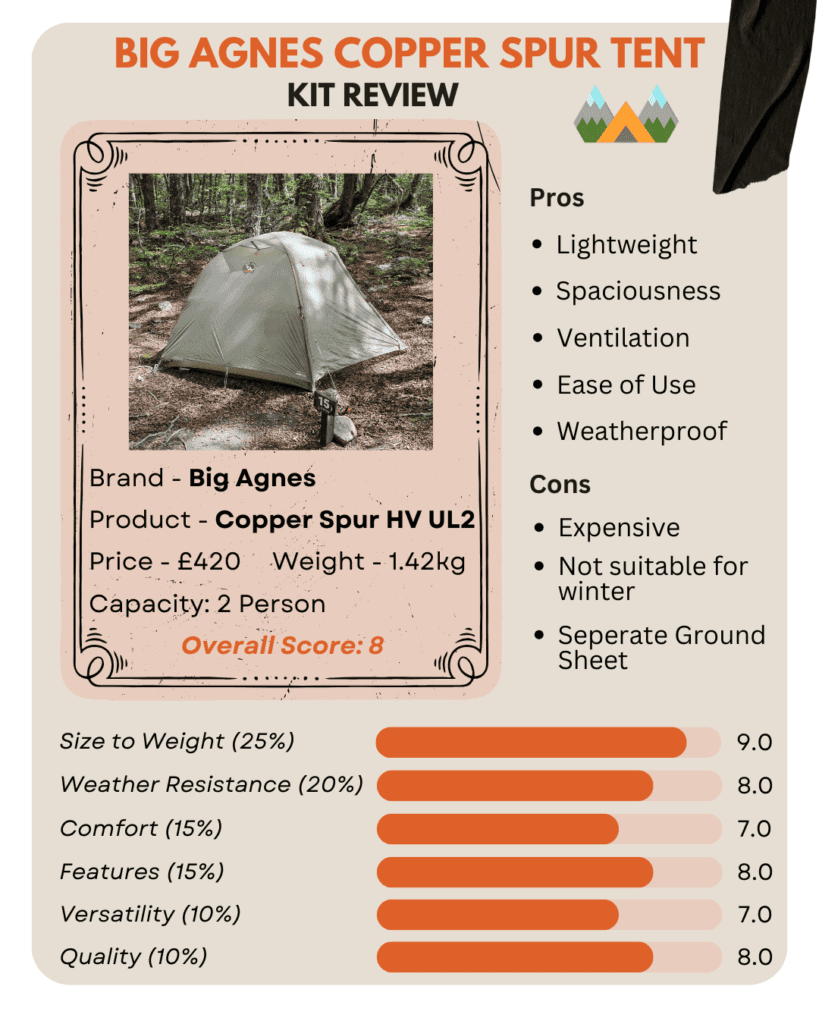
The Big Agnes Copper Spur HV UL2 is widely considered one of the absolute best lightweight 2-person tents on the market today. It is a fully-featured, freestanding shelter that boasts an amazingly spacious interior volume alongside a robust construction built for maximum weather protection. For any backcountry adventure, a top-quality tent is the ultimate deciding factor between waking up refreshed or suffering through a miserable, sleepless night.
Back in 2024, I desperately needed to upgrade my old Vango Spectre to something more suited for serious multi-day trekking and ultralight backpacking. With hundreds of tents flooding the market, it can be incredibly difficult to decipher all the minor differences and pinpoint the absolute best option. However, after extensive field-testing, this award-winning shelter stands out as a genuine masterpiece. In this comprehensive Big Agnes Copper Spur HV UL2 review, I will explain exactly why this trekking tent is a must-consider for your gear closet.
Field Note: This guide contains affiliate links. If you purchase gear through these links, I may earn a small commission at no extra cost to you. I only recommend equipment I have personally mountain-tested and trust.

Introducing the Big Agnes Copper Spur UL2
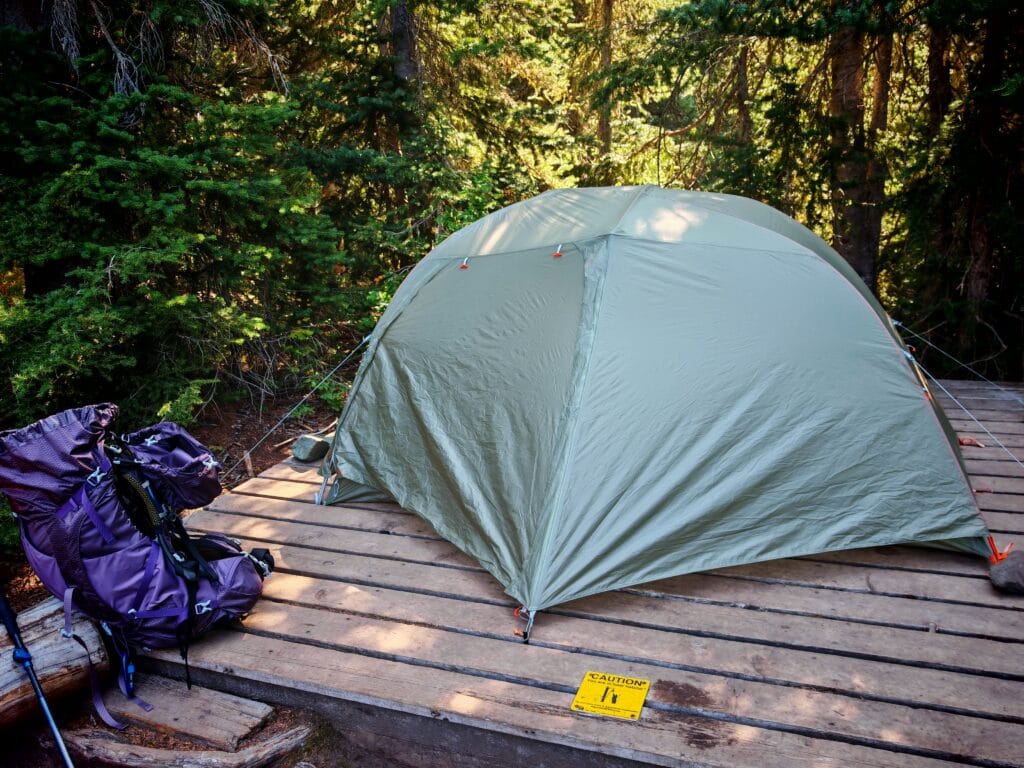
The Big Agnes Copper Spur series is widely regarded as the ultimate tent for backpacking, but understanding its name is the key to knowing exactly why it is so beloved. UL2 stands for Ultralight 2-Person, meaning it provides enough floor space for two backpackers while utilising hyper-light materials to keep the total packed weight at a staggeringly low 1.4kg (3.13 lbs). The HV stands for High Volume. Unlike older tent designs that aggressively slope inward, the Big Agnes Copper Spur HV UL2 uses a proprietary, pre-bent hubbed pole architecture that physically pushes the walls outward and upward.
This creates a steep, tub-style design that maximises your interior living space and head clearance without adding a single ounce of extra weight. The resulting footprint, high ceiling, and dual awning-style vestibules give you plenty of room to sit up, stretch out, and store your gear. Even with these ultralight, hard-wearing materials engineered to handle unpredictable 3-season weather, what constantly amazes me is how fast and foolproof it is to pitch and pack away.
As a true freestanding tent, it relies on a primary 4-pole alloy structure and a cross-beam pole rather than the trekking poles used in more complicated ultralight setups (see the detailed explanation below). Out of the box, it comes complete with the waterproof rainfly, inner fly sheet, guy lines, and stakes. (Note: Big Agnes also makes a dedicated Bikepack version with shorter pole segments tailored specifically for two-wheel touring!)
A quick tip on buying: Big Agnes released a major update to the Big Agnes Copper Spur HV UL2 line in early 2025, featuring new HyperBead fabric. Since we are now well into the 2026 season, this is actually fantastic news for buyers! It means you can often find the phenomenal 2023 and 2024 HV models on steep clearance, or choose to invest in the brand-new, upgraded current versions.
Freestanding vs. Trekking Pole Tents: What is the Difference?
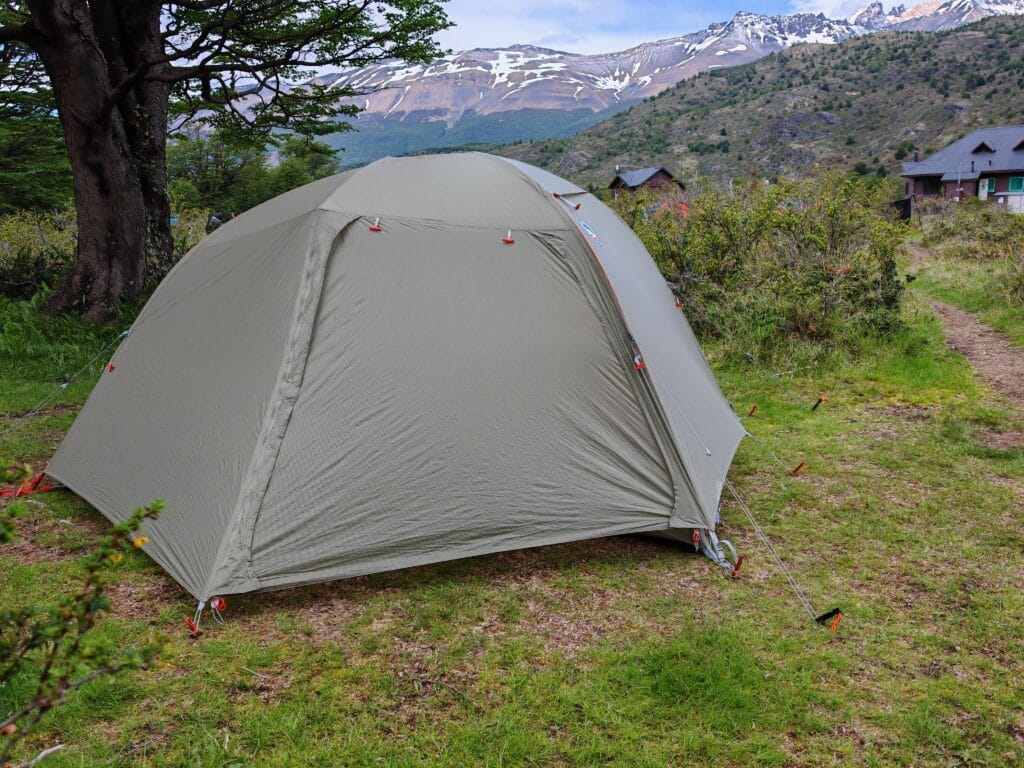
Before diving into the competitors, it is crucial to understand what makes the Big Agnes Copper Spur HV UL2 so universally loved: its freestanding architecture. A freestanding tent comes with a dedicated set of hubbed poles that construct the skeleton of the shelter. Once the poles are snapped into the corners, the tent body holds its shape entirely on its own. You can literally pick it up and move it around camp before staking it down. This is an absolute lifesaver when camping on hard rock slabs, wooden tent pads, or loose sand where driving stakes into the ground is nearly impossible.
On the other hand, trekking pole tents (often used by ultralight purists) do not come with tent poles. Instead, you use the hiking poles you carry in your hands all day to prop up the roof, relying entirely on tensioned guy-lines and perfectly placed stakes to keep the tent from collapsing. While trekking pole tents are significantly lighter because you leave the heavy tent poles at home, they have a much steeper learning curve and can be incredibly frustrating to pitch on rocky alpine terrain. The Copper Spur trades a few extra ounces of weight for the sheer convenience of a rapid, foolproof setup.
Key Features
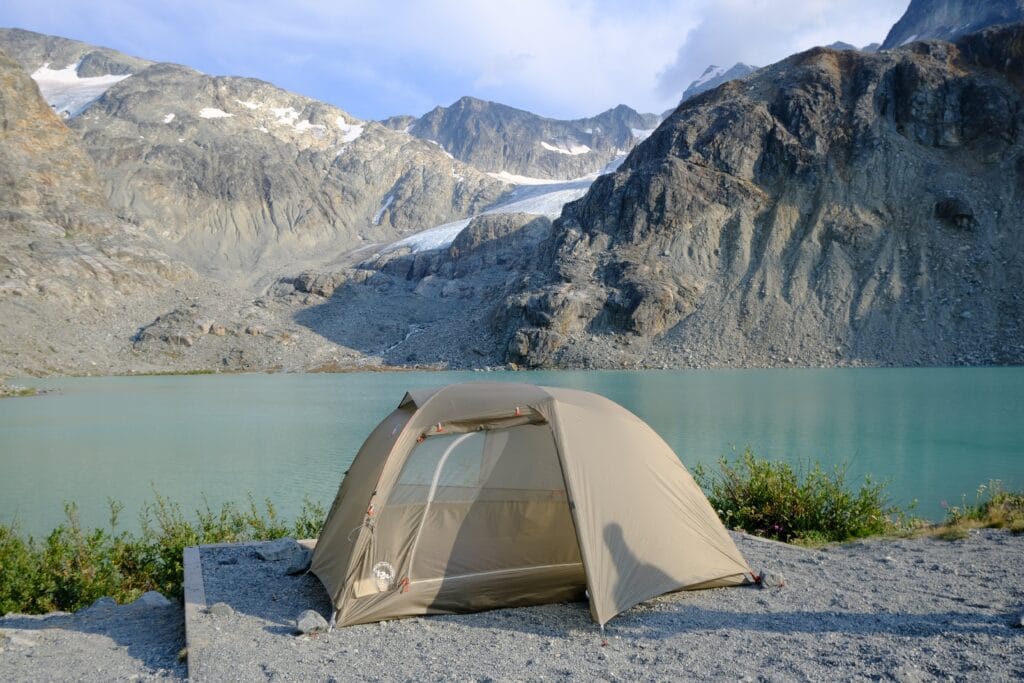
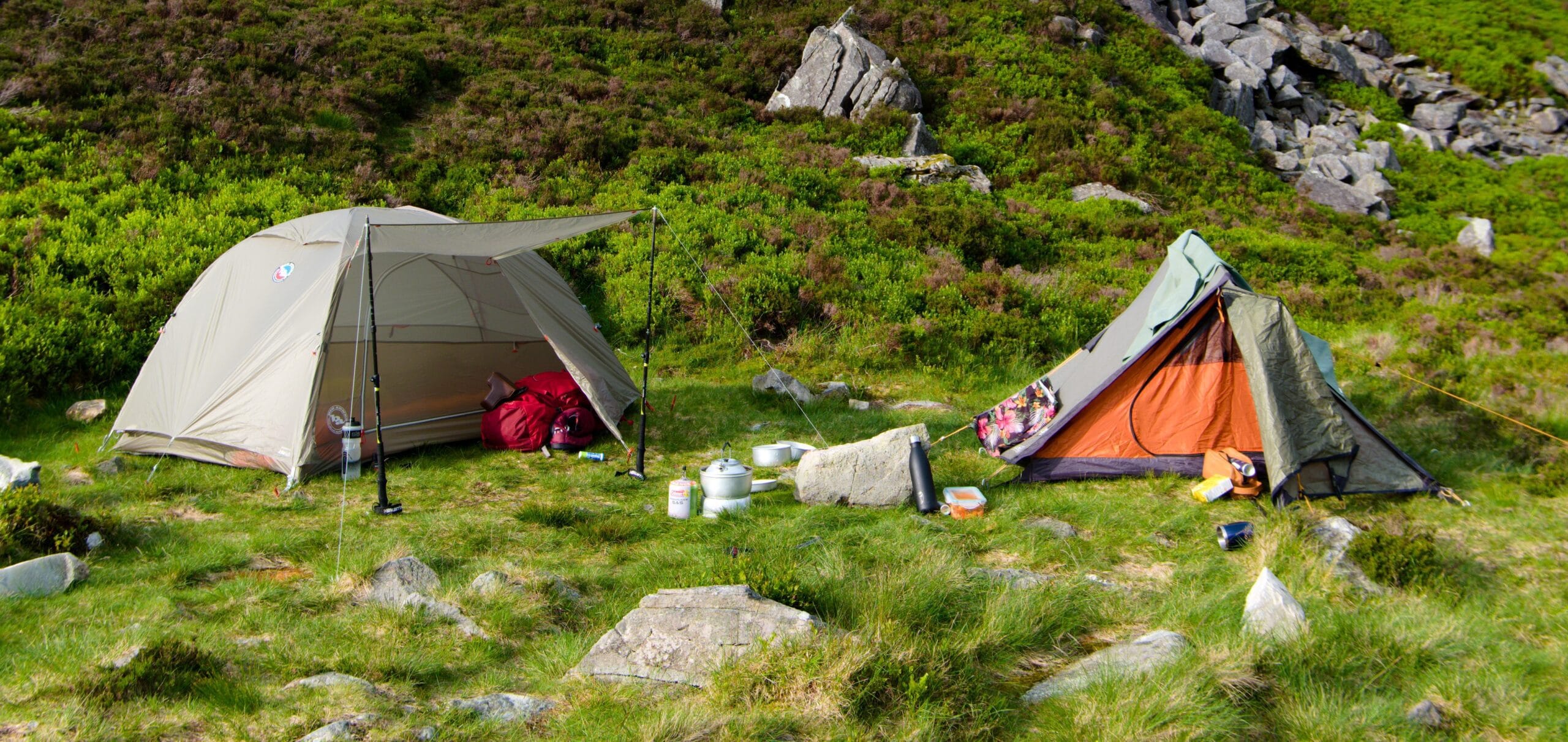
- Dual Door Vestibules – The 2 doors expand thanks to the awning-style vestibules held up by trekking poles. This feature offers a cover for sunshine or light rain when at camp.
- High Quality Materials – The Ultralight nylon double ripstop mixed denier fabric outer and floor means it’s durable and offers puncture resistance. The DAC Poles have a 4-way top hub for maximum strength and stability for strong winds (perfect for Patagonia!)
- Door zips – The doors have dual zippers for easy entry/exit and have a Quick Stash feature. However, I usually pack the unzipped door between the rainfly outer and the tent body inner.
- Inner Storage – The Big Agnes Copper Spur HV UL2 has 2 oversized ceiling pockets ideal for head torches, tech and small items. There is expandable storage due to the interior loops to attach accessories, lights or bins.
- Guy-Lines – Reflective guy-lines with easy-to-adjust tensioners help ensure the tent is in tension and stable.
- Pole attachment – Big Agnes TipLok™ Tent Buckle™ makes it quick to clip the poles to the inner, rainfly and the stakes. There are also hooks and loops to attach the pole to the fly for extra stability.
- Tent Ventilation – The high fly vent and low vents on the doors create good airflow and reduce condensation build-up
Big Agnes Copper Spur HV UL2
Why I Chose the Copper Spur UL2
Before Patagonia, I needed to buy a lightweight 2-man tent for the Torres Del Paine O Circuit Trek. After reading too many kit reviews and watching useful YouTube videos for a change, I narrowed it down to the Big Agnes Copper Spur HV UL2, Nemo Dagger Osmo, MSR Hubba Hubba MX, Durston X-Mid 2P & Sierra Design Meteor 3000 2P. All strong contenders with varying weights, budgets and strengths to consider. My main criteria were to be lightweight but free-standing, which removed the Durston and Sierra Design.
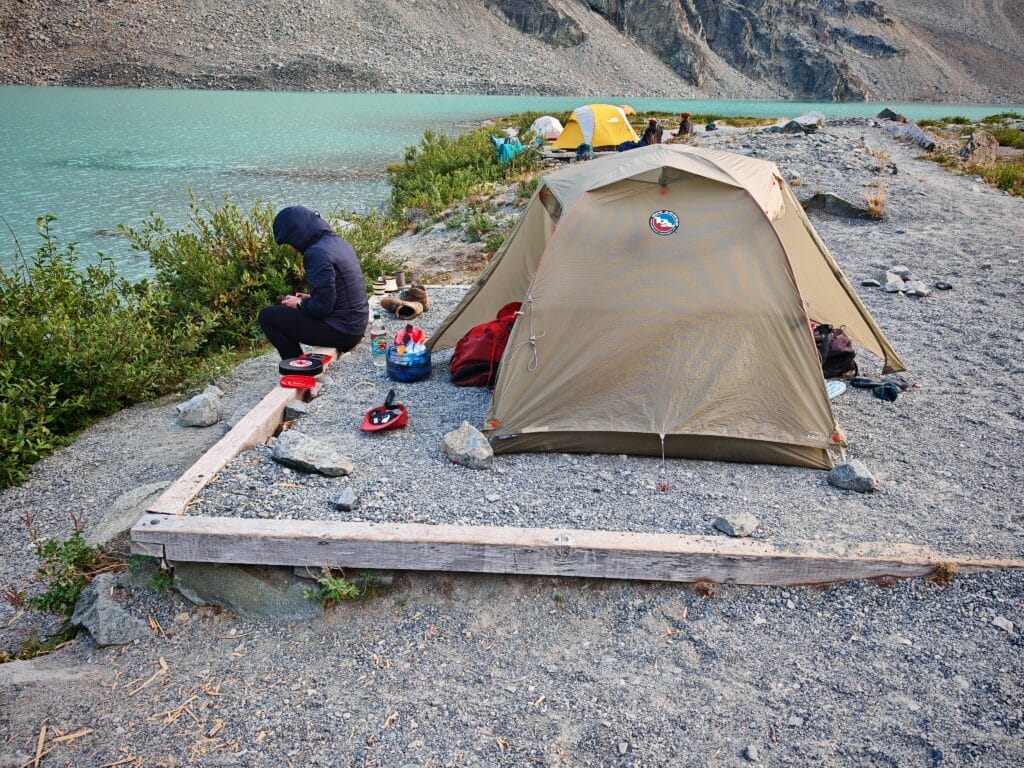
Then, to have maximum roominess and features to have a comfortable living environment. And finally, robust stable construction to withstand the famous Patagonian gale force winds. I opted for the popular Big Agnes Copper Spur HV UL2 Tent, which was outside my initial budget, but I decided that with care, it could last years of camping and trekking trips. I loved the dual door access and large footprint & height, making it feel spacious inside. The tent could be pitched in 5 minutes, and the stuff pack made it easy to roll up, which should not be underestimated.
The Big Agnes Copper Spur HV UL2 had to handle heavy rain and snow, which it kept out well, but the 70mph winds were almost too much on an exposed hillside. There were cheaper tents on the market, but the quality material used and abundance of smart features meant there was a level of comfort while camping in the wilderness. The Big Agnes Copper Spur HV UL2 was used along with my Trekking Kit List, and there will be a Camping Kit List published soon!
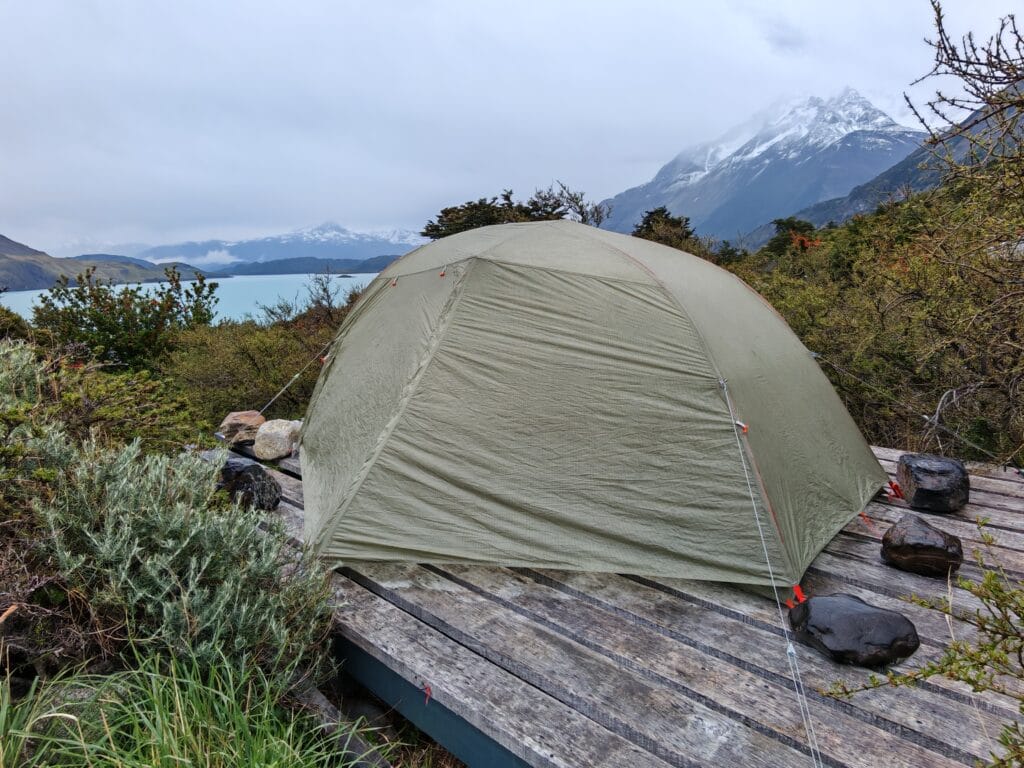
Big Agnes Copper Spur UL2 Best Features
- Lightweight – Coming in at 1.42kg, the Big Agnes Copper Spur HV UL2 is a lightweight Champion but misses out on the Ultralightweight category. However, the additional grams mean a stable and stronger tent to handle heavy rain and winds.
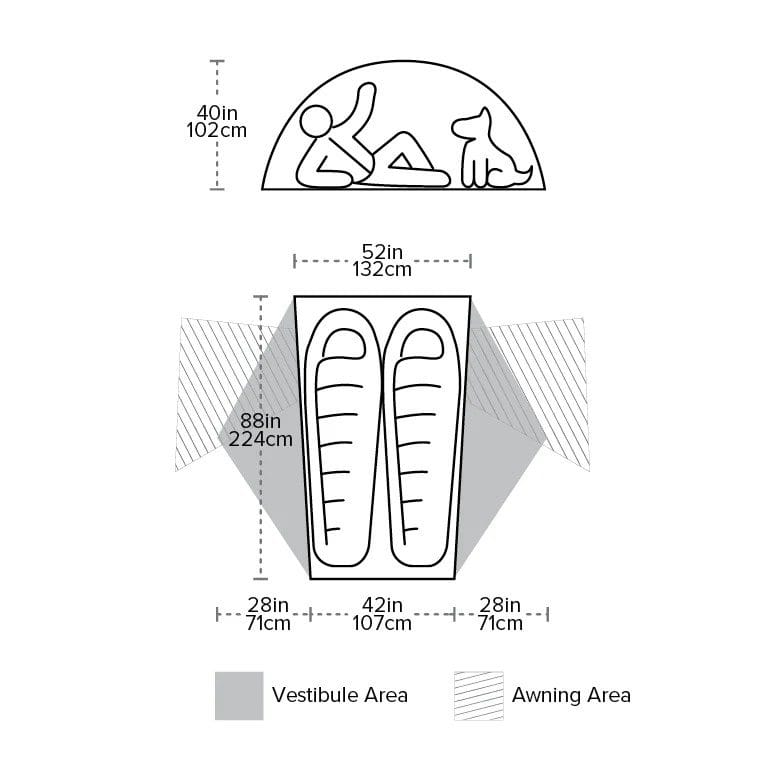
- Spacious – One of the stand-out features is the headroom and large layout. With a single main compartment, you could fit 2 adults side by side, but with little space for packs. For solo trekking, this was great to spread out and unpack the Backpack once pitched up.
- Speed to Pitch & Pack – After a few pitches, it becomes second nature and is pretty self-explanatory. There are instructions in the stuff sack, and it takes around 5 mins to pitch. To get the best tension and stability, ensure all the clips, buckles and hooks are connected.
- Ventilation – Not a feature I brought the tent for, but the top roof vent is very effective at regulating the airflow and preventing the build-up of condensation.
- Storage and features – There are innovative straps, pockets and bins around the Big Agnes Copper Spur HV UL2 to help customise the living space. The awning-style doors are perfect to expand the footprint, and the vestibules were sufficiently large for shoes, packs, and poles to be stored.
- Weather Resistance – The DAC alloy poles provide strong stability to withstand poor weather. The 4-way Cross pattern is a tested design, and the additional cross-beam that clips into the tent body adds the final strength needed. The Big Agnes Copper Spur HV UL2 did a great job, apart from when I was battered by 70mph winds in Patagonia and even then, no poles snapped! Not many 3-season tents would withstand those forces with no tree/wind protection. The Waterproofing was impressive against heavy UK rain and snow in Patagonia.
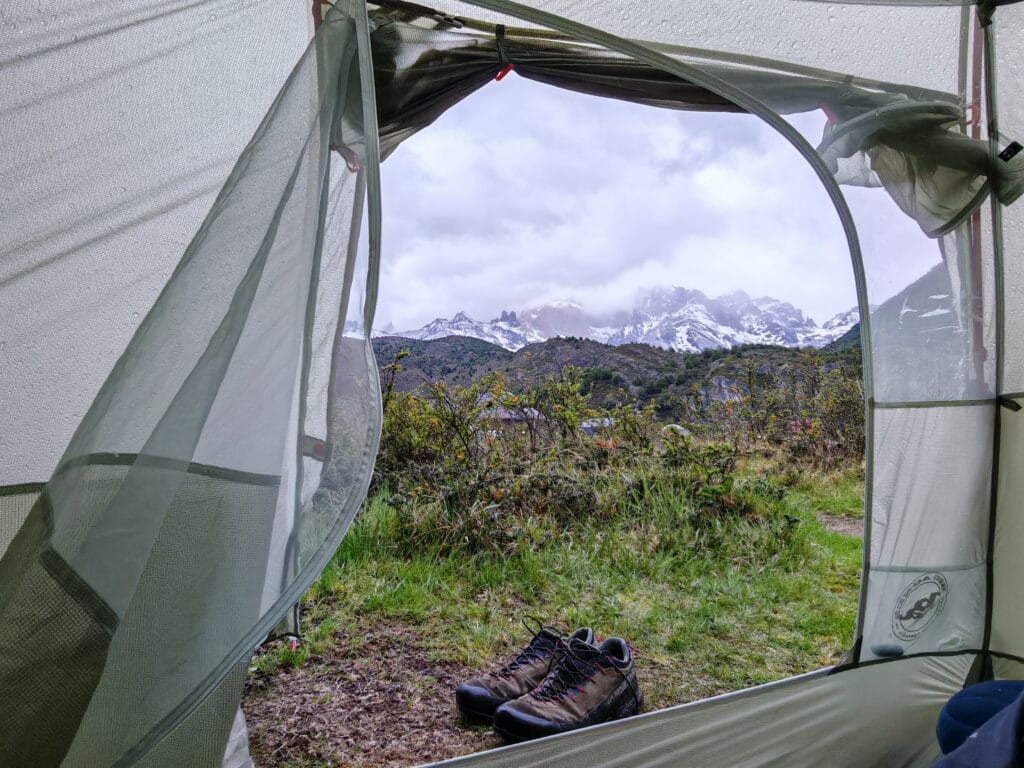
Big Agnes Copper Spur UL2 Considerations
- Expensive – The biggest detractor for buying the Big Agnes Copper Spur HV UL2 tent is the price tag. Coming in at £420 RRP ($530), it’s an investment considering the amount of good tents available for half the price. The competition of MSR, Nemo and others are similarly priced, and it’s the ultralightweight performance and free-standing features that bump the price up.
- Only 3-season Tent – The Copper Spur is designed for 3-season camping from Early Spring to Late Autumn (Fall), so it is not engineered for winter camping. A specific mountaineering tent would provide the
- Separate Ground Sheet – One minor bug was that there is a separate ground sheet/ footprint designed for the Copper Spur, but it is not included. With a price tag of over £400, it would be nice to have it as a default, but many companies do bundle deals at least. It’s easy to find a deal on the Big Agnes Copper Spur HV UL2, so be patient to find a bargain!
Competitors Comparison
While the Big Agnes Copper Spur HV UL2 is a dominant force, the ultralight 2-person tent market is packed with incredible engineering. Depending on your priority for weight, durability, or budget, here are four heavy-hitting alternatives to consider:
1. MSR Hubba Hubba NX 2
- The Verdict: The legendary, hyper-durable competitor.
- The Details: If the Copper Spur has a direct rival, it is the MSR Hubba Hubba. The Hubba Hubba utilises slightly thicker, more durable fabrics (especially on the floor), making it a favourite for trekkers who are notoriously tough on their gear and want a tent that will survive a decade of abuse. It is fully freestanding and offers fantastic headroom, but the trade-off for that extra durability is weight—it is noticeably heavier than the Big Agnes Copper Spur HV UL2.
2. Big Agnes Tiger Wall UL2
- The Verdict: The semi-freestanding weight-saver.
- The Details: If you love Big Agnes but want to shave off even more weight without moving to a full trekking pole tent, the Tiger Wall is the answer. It is a semi-freestanding tent, meaning the pole structure forms a “Y” shape that supports the front and middle of the tent, but you must physically stake out the two back corners to give the foot-box its shape. It saves considerable weight compared to the Copper Spur, but sacrifices a bit of interior volume and freestanding convenience.
3. NEMO Dragonfly OSMO 2P
- The Verdict: The eco-friendly, massive-vestibule alternative.
- The Details: NEMO’s Dragonfly is a brilliant freestanding option that uses their proprietary OSMO poly-nylon ripstop fabric, which is made from 100% recycled yarns and stretches significantly less when wet than traditional nylon. The Dragonfly features a uniquely tapered floorplan (wider at the head, narrower at the feet) and boasts absolutely massive, asymmetrical vestibules that offer slightly more covered gear storage than the Copper Spur.
4. Durston X-Mid 2
- The Verdict: The trekking pole king for the ultralight purist.
- The Details: If you are willing to abandon freestanding convenience to drastically lower your base weight, the Durston X-Mid 2 is a marvel of modern tent design. Designed by a fellow Canadian hiker, this trekking pole tent uses an innovative diagonal floorplan that allows for an incredibly simple, 4-stake pitch with absolutely massive living space and dual vestibules. It is much lighter and significantly cheaper than the Copper Spur, but again, it requires trekking poles and good ground for staking.
Rankings
Big Agnes Copper Spur HV UL2
Final Thoughts
In summary, the Big Agnes Copper Spur HV UL2 remains one of the absolute best lightweight 2-person tents on the market. Since originally purchasing it in 2024, I have relentlessly tested it across the damp, rugged hills of Snowdonia and the Lake District, all the way to the fierce winds of the Patagonian backcountry—and it has passed every single test with flying colours.
The top reasons I continuously recommend the Big Agnes Copper Spur HV UL2 tent are its unparalleled space-to-weight ratio, its incredibly intuitive ease of use, and its steadfast stability and waterproofness in harsh weather. If it falls within your budget, the Big Agnes is an amazing investment that guarantees comfort and livability, ensuring you never have to worry about a bad night’s sleep in the wilderness. I have absolutely loved relying on my Big Agnes Copper Spur HV UL2 for mountain camping trips and look forward to putting it through its paces on upcoming late-summer routes in the Yukon and Yosemite!
What is your favourite tent to use in the backcountry? And what is the best place you have ever set up camp? I would love to hear your thoughts, and please feel free to share this post with any fellow hikers looking to upgrade their shelter this season!
FAQs
Is the Big Agnes Copper Spur HV UL2 completely freestanding?
Yes, the Copper Spur HV UL2 is a fully freestanding tent. This means the pole structure holds the tent body up completely on its own without requiring any stakes. This is a massive advantage when camping on hard rock slabs, wooden tent pads, or sandy ground where staking is difficult. However, you will still need stakes to pull out the vestibules and secure the rainfly against high winds.
What does “HV” mean in the Big Agnes Copper Spur?
“HV” stands for High Volume. Big Agnes uses a proprietary 4-way, pre-bent hubbed pole design that pulls the walls of the tent outward and upward. This creates steeper, nearly vertical walls, significantly increasing the internal living space and headroom so two people can sit upright side-by-side without bumping heads.
Does the Big Agnes Copper Spur come with a footprint?
No, the footprint (groundsheet) is sold separately. Because ultralight tents achieve their low weight by using very thin materials (the Copper Spur uses a proprietary ultralight double rip-stop nylon), it is highly recommended to purchase the footprint to protect the tent floor from sharp rocks and pine needles, greatly extending its lifespan.
How do the awning-style vestibules work?
One of the best features of the Copper Spur HV UL2 is its dual vestibules. You can unzip the vestibule doors and use your trekking poles (along with the included guylines) to prop the doors up like a porch awning. This provides a massive, shaded area to cook or hang out while still being protected from the sun or a light drizzle.

Pingback: What Are the Best Tips for Backpacking for Beginners - Backpacker's Mentality
Pingback: Ultimate Guide to the Torres del Paine O Circuit - Backpacker's Mentality