Nepal is famously home to the mighty Himalayas, offering endless opportunities for high-altitude adventure. But if you are looking for one of the world’s truly great hikes, the Annapurna Circuit in central Nepal takes you on an unforgettable journey over two weeks. The ultimate Annapurna Circuit itinerary is incredibly diverse: you start in lush, green subtropical villages, climb through dense alpine forests, and eventually push your limits up to the snow-covered, 5,416-meter summit of Thorong La Pass. From there, the trail drops into a barren, Tibetan plateau-style landscape before ending with a breathtaking sunrise hike up Poon Hill for panoramic views of the entire mountain range.
This trek was a life-changing experience where I fully immersed myself in Nepalese culture and connected with incredible backpackers from around the globe. It was my very first major trekking experience and my first time travelling outside of Europe—a massive step into the unknown, especially doing it solo. But I was eager to explore and physically challenge myself, and what better place to do that than in the highest mountain range in the world?
Planning for Nepal can seem incredibly daunting at first. That is exactly why I put together this comprehensive Annapurna Circuit Trek Guide. It covers all the essential planning, preparation, and budgeting you need, alongside the hard-earned lessons and trail tips I picked up along the way to make your own epic Himalayan adventure as smooth as possible.
Annapurna Circuit Stats
Nepal is world-renowned for its Himalayan giants, which include 8 of the 14 8000-meter peaks. Mountaineers, climbers and hikers worldwide flock to see and tackle the mystic Himalayan mountains. There is a massive tourism industry which makes planning very simple with hundreds of options for transport, tours and accommodation packages. Before 2022, I hadn’t travelled further afield than Europe, so why not start with the highest mountain range on Earth? Nepal seemed easier to book a trip compared to Pakistan, Bhutan, India or China and much more affordable! The obvious trek was Everest Base Camp (EBC), but the higher prices and crowded trails did not appeal to me.
Why Trek Annapurna?
After my friend talked about the Annapurna Base Camp trek in Nepal, I was intrigued by the Annapurna Region. Annapurna 1 (8091m) is one of the deadliest mountains with a 25% survival rate for summit attempts. Don’t worry, this blog isn’t about climbing Annapurna! The Annapurna Circuit is normally a 2-week trek with a reputation for being one of the world’s best multi-day treks. The Annapurna Massif is in Central Nepal and close to Pokhara (a 6-hour drive from Kathmandu). The trek starts in the jungle, up through alpine forests & lakes to arid villages and up into the snow-capped peaks.
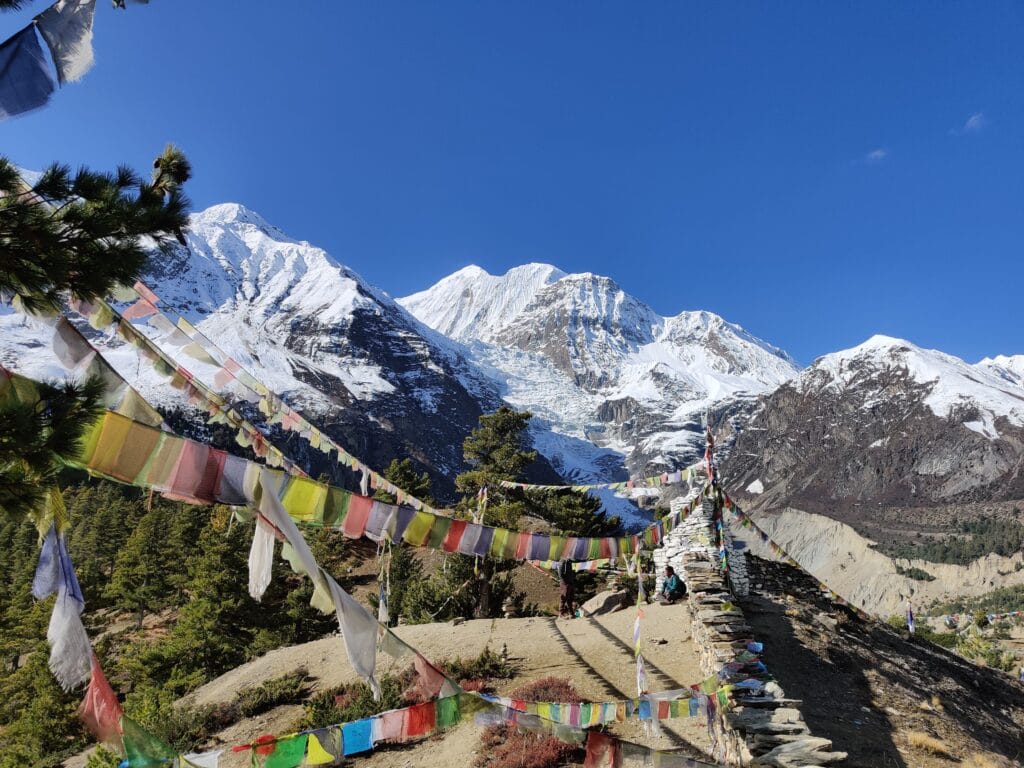
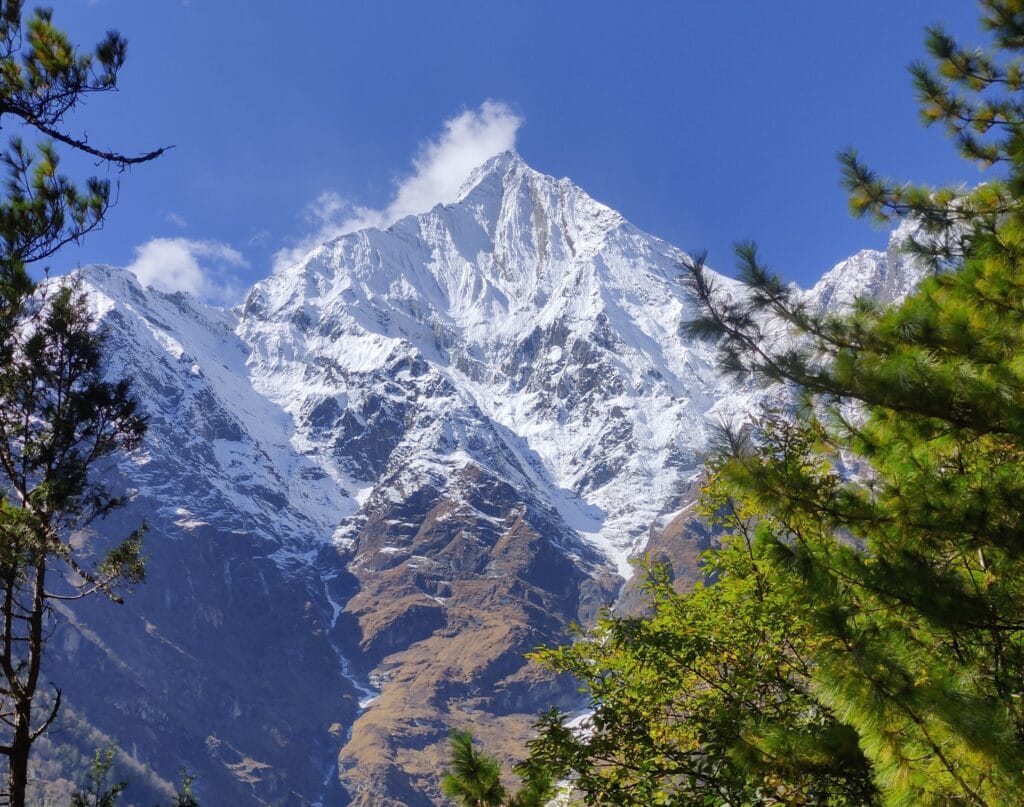
The route allows you to hike around Himalayan giants looming overhead and through colourful villages. I chose the Annapurna Circuit over Annapurna Base Camp (ABC, also called Sanctuary) because of the challenge of Thorong La Pass compared to Base Camp at 4130m. As well as seeing Annapurna 1, other highlights included seeing 2 other 8000m peaks in Manaslu (8163m) and Dhaulagiri (8167m). Most of the trek will pass under Annapurna 2 (7937m) up the Marsyangdi Valley, seeing Annapurna 3 & 4 (7555m & 7525m), Gangapurna (7,455m) and the Chulu range.
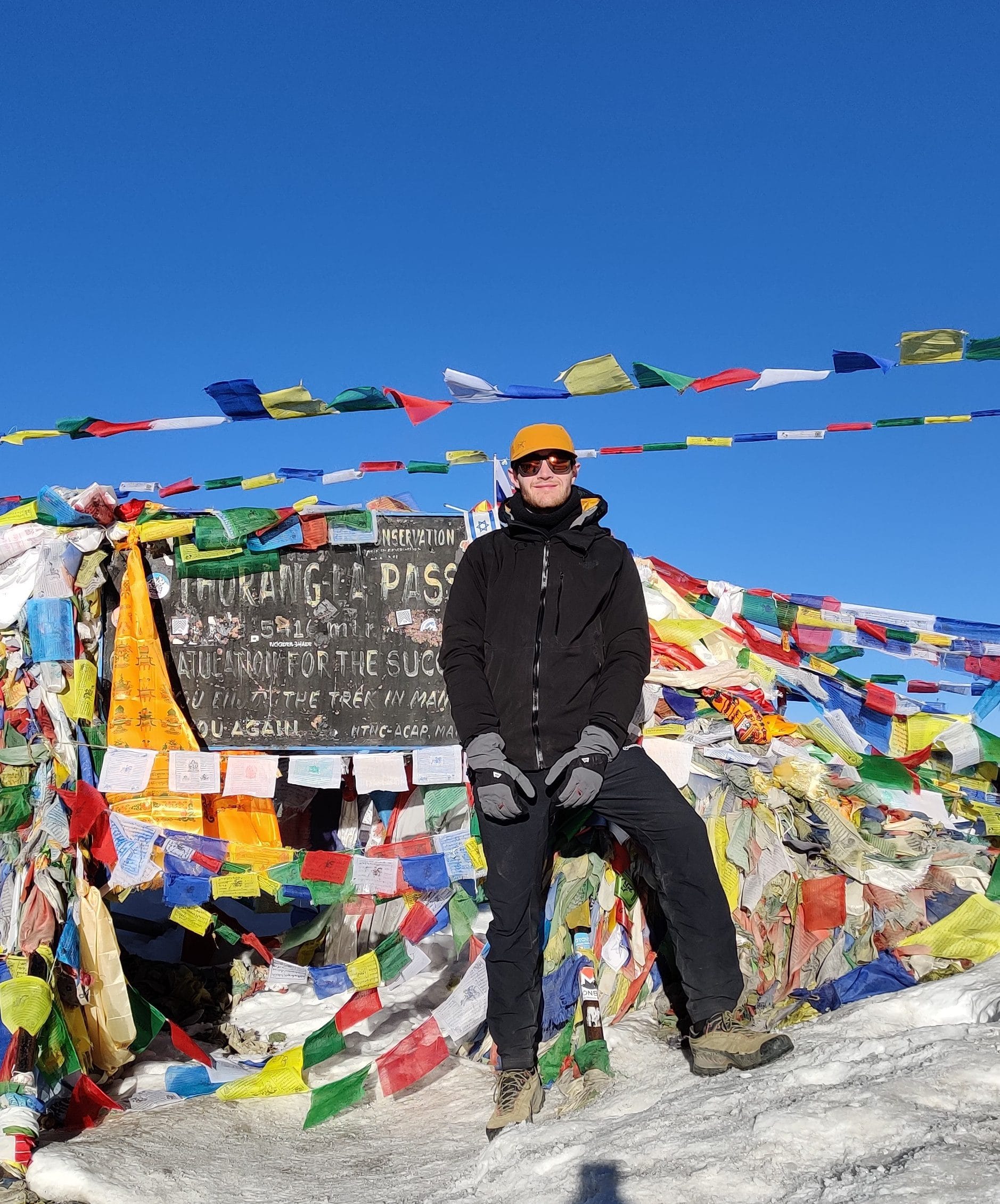
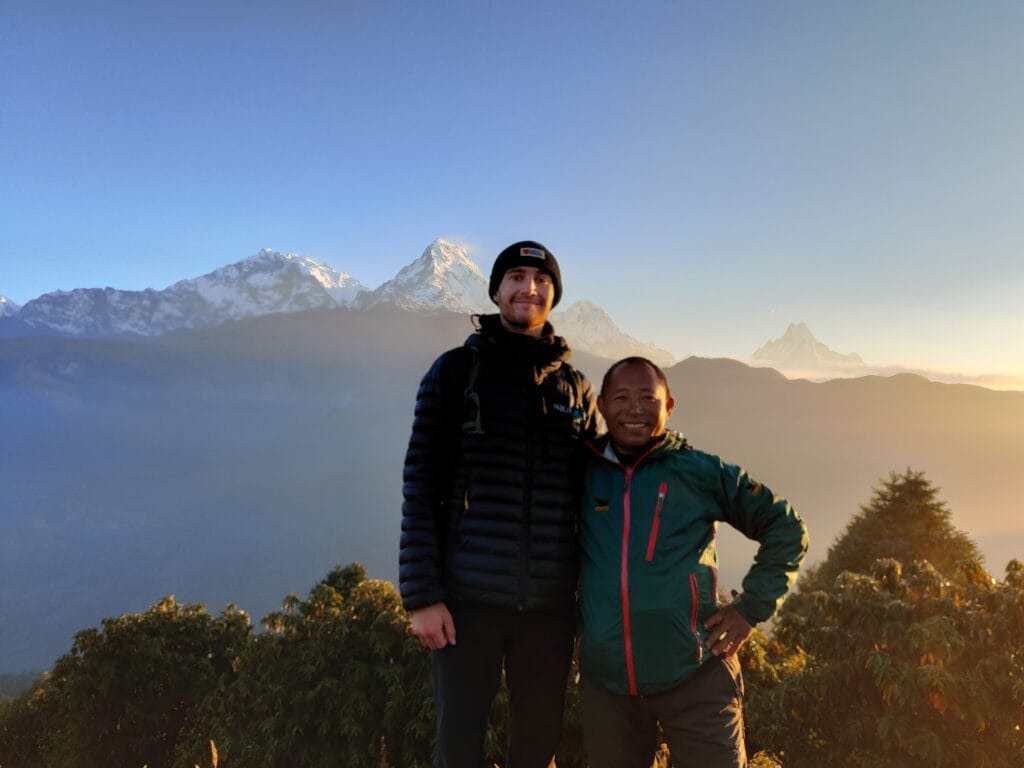
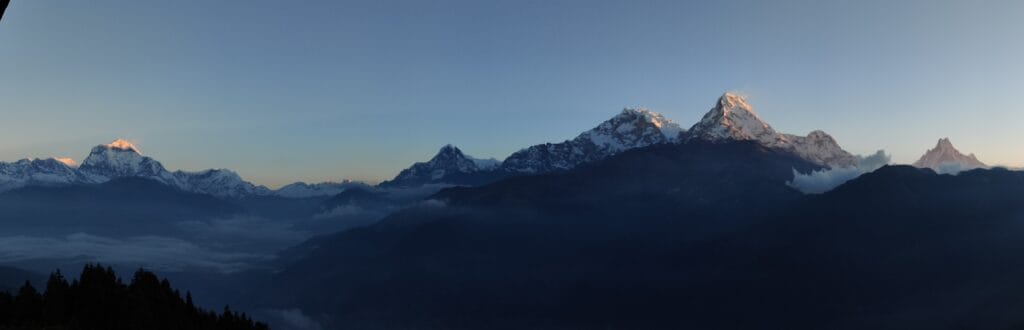
The crowning jewel of the Annapurna Circuit trek is Thorong La Pass, the highest trekking pass in the world at 5416m, which is higher than Antarctica and Oceania and nearly all of Europe (apart from Mount Elbrus and Kilimanjaro). It would be a physical and mental challenge to tackle the 150km and high altitudes. And the icing on the cake is the Poon Hill Sunrise, which was one of my favourite moments. The view from Poon Hill will showcase Machhapuchhare (6993m) and Dhaulagiri and Annapurna 1 in full beauty.
Annapurna Circuit Map
The complete Annapurna Circuit starts in Besisahar and ends in Nayapul, trekking for 260km/181 mi, but very few people do this route. Nowadays, the normal route starts around Jagat and ends around Jomson, with some adding in Tatopani and Poon Hill to extend the Annapurna Circuit with the Poon Hill highlights (136km/84mi). Pokhara is a vibrant city along Fewa Lake that is bustling compared to the peaceful mountains.
There is an airport with flights to Kathmandu, which is the faster but more expensive option compared to the chaotic bus journey. The Annapurna Circuit is anti-clockwise in direction due to the days needed to acclimatise before Thorong La Pass, which is not advised ascending 1700m from Muktinath to the pass in a day.
Annapurna Circuit Itinerary
This Annapurna Circuit itinerary 15 days in Nepal includes 2 additional days for flights. The 2 weeks felt like a month, and the only changes I would make would be to include either Tilicho Lake or Ice Lake excursions. I can’t strongly recommend finding a tour that includes hiking to Poon Hill at sunrise from Ghorepani. It was one of the best moments of my life, and so memorable that I got the mountain panorama tattooed.
For a more in-depth itinerary, check out Annapurna Circuit Trek – The Trip that Changed My Life. Most of my research came from the Lonely Planet books about Nepal and Trekking in Nepal, and the Cicerone Annapurna guide. For more inspiration, be sure to check out my Book Reviews and Annapurna Stories in the Bookshelf Page.
Planning
When to go and how long for?
The most popular months to trek the Annapurna Circuit are either side of the monsoon season in spring and autumn. March to May, then October to early December, are the busiest times on the Circuit, being generally clear and dry. The springtime has moderate temperatures, low chances of rain and great hiking conditions. The summer months are hotter, but due to the monsoon, expect a lot of rain. There is lower visibility of the peaks due to the rain clouds, and the paths will be muddy and slippery.
Autumn is very similar to Spring conditions, and it was then that I started my trek in early October. The post-monsoon season has very clear days, which means blue skies and no haziness. The weather was perfect in October for trekking the Annapurna Circuit, with no rain on the Annapurna Circuit, clear skies to see all the mountain summits and pleasant temperatures. Thorong La Pass is very challenging, with the temperatures in the prime seasons already being very cold (-20°C).
The Winter conditions are another level of freezing, plummeting to -30°C. Depending on the itinerary, it usually takes between 2 and 3 weeks to trek the Annapurna Circuit. I chose a 15-day tour package which had a drive from Muktinath (after the Pass) to Tatopani via Jomson to save a few days of trekking. Trekking at the end of the season will mean quieter trails and teahouses compared to the larger organised groups during peak months.
The tricky part of going independent is getting the bus from the chaos of Kathmandu to Besisahar. The roads are slow with lots of traffic jams and no lanes. You will take a full day to escape Kathmandu and drive to the start of the trek (Besisahar), taking between 7-8hours. The transport is not expensive (£7), but it is odd having all the luggage on the roof and the driver doing delivery jobs as well. On the return from Muktinath, the treacherous and narrow roads through the mountain pass over deep river-filled gorges, as the bus tiptoes on the edge. Don’t be scared; the drivers are very skilled and patient- just don’t look down!
Accommodation – Teahouse Trekking
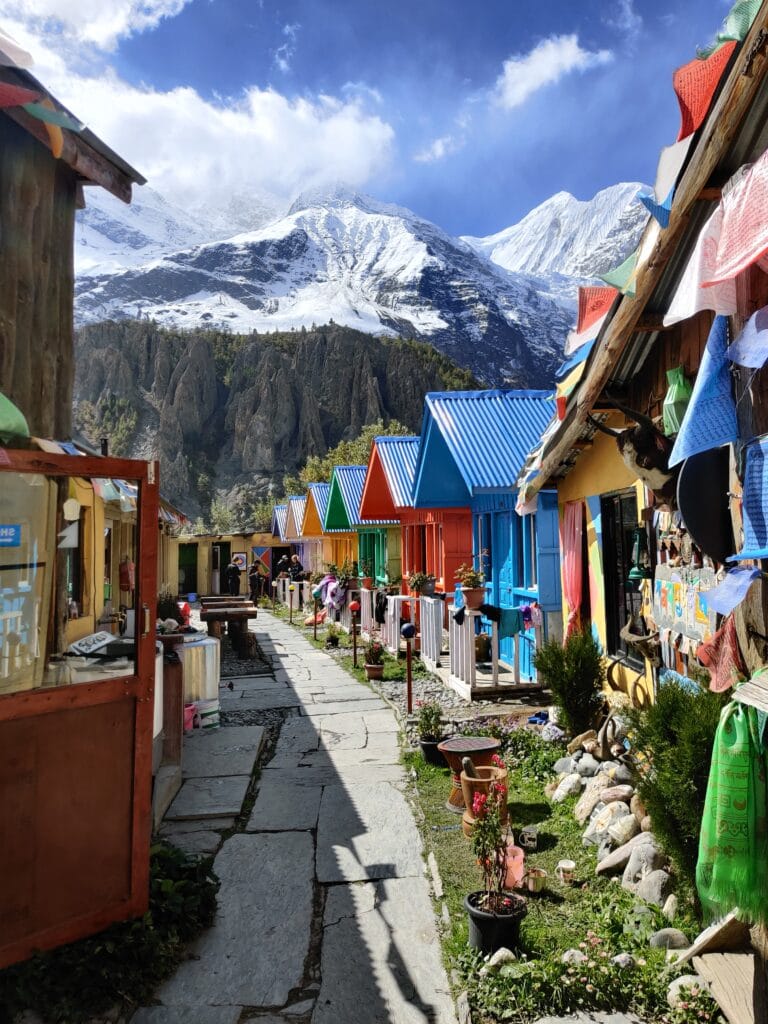
The Annapurna Circuit is a Teahouse trek, which means staying in small, cosy teahouses along the trail. Teahouses are lodges with private rooms that accommodate trekkers along the route and offer food & drink. Nearly all the Teahouses had WiFi and Hot Water, but not always hot showers. They are simple and don’t expect luxury; instead, you’ll have a warm and hearty meal, a cosy log fire lounge and a comfy bed for the night.
Locals run the teahouses and serve as a place to recharge and meet fellow trekkers. Not everywhere has flush toilets, and many have squat toilets instead, which take some practice… The smell is a reminder of the developing world. As you venture to higher altitudes, the tea houses get more basic, and any shops are more expensive due to the cost of transporting goods on mules. There are no camping options on this trek for reference.
Guided or Solo?
It was a hard decision when planning the Annapurna Circuit, as most people use a tour company. And then selecting one is a nightmare, as there are hundreds of companies advertising attractive packages. There are so many variables to balance, such as duration, excursions, food, transport, permits, airport transfer and obviously the price. I used TourRadar to research tour companies and read reviews for their services, with the packages ranging from £500 to £2000. But now there is a better way to discover treks using TrekMind.
Plan smarter
with TrekMind
Most trek planning tools are built for tourists. I built TrekMind because nothing else let me properly compare routes before committing — interactive 3D globe, 100+ routes, full itineraries, and elevation data for the world’s best trails.
In the end, I chose Sherpa Expedition and Trekking because I preferred a Nepalese company that had a competitive price (£832) with hundreds of 5* reviews. I highly recommend Sherpa Expedition and Trekking as the Annapurna Circuit Tour ran perfectly smoothly with my Guide, Dawa, and Ram (Boss), who were very accommodating in the planning and brief beforehand. I will use them again to do the Everest 3 Passes Trek next time in Nepal.
While I met solo trekkers, as of 2023, it is compulsory to trek with a licensed guide in Nepal. Most people opted for a Sherpa to help with logistics, finding good teahouses, checking for altitude sickness and sharing local knowledge. The second question is whether to hire a porter to carry your pack. The Sherpa guide costs approximately double the cost of hiring a porter, and it was 50:50 whether tours had porters or not. It’s a balance of cost vs weight, but I wanted the physical challenge of carrying my own pack.
Visa Process
The VISA application was relatively easy to do online before flying out, but it is possible to sort it out at Tribhubhan International Airport (TIA), Kathmandu airport. The fees at arrival points: 15 days=$30.00 (£24), 30 days=$50.00 (£39) and 90 days=$125.00 (£98), with most people able to do the 15-day Visa. For the Visa on arrival, you will require 2 passport-sized photographs as well as American dollars in cash (Cards are possible too, but cash is preferred). The online application can be done up to 15 days before arrival, and the application receipt can be used to collect and pay for the Visa.
Trekking Permits
There are 2 important permits you need for the Annapurna Circuit, which are the TIMS (Trekkers Information Management System) and the Annapurna Conservation Area Project (ACAP) Permit. TIMS is for all trekkers in Nepal and costs about £15, whereas the ACAP (£25) is specific to the Massif. There are checkpoints in villages around the Annapurna Circuit route where it’s obligatory to check in. The permit costs get put back into preserving wildlife and the environment, with the permits being available in Kathmandu & Pokhara.
Tip – You will need 4 passport photos for the permits, and bring 2 for the Visa
Trekking Insurance
Trekking is normally a safe activity where you can adventure into the challenging landscapes, but when going into high altitude ranges and with changeable weather, accidents are possible. Having the right level of cover is very important, especially as the maximum altitude of the Annapurna Circuit at Thorong La Pass is 5416m. This is above the normal travel insurance limit. The cost of a helicopter rescue or air ambulance can be around £5000 and will only be sent once valid insurance has been proven. All trekking companies require high-altitude trekking insurance (up to 7000m) as a requirement. There are numerous companies offering insurance, and I chose TrueTraveller due to their competitive pricing and highly rated reviews.
Vaccinations
Nepal has no required vaccinations, but the following are recommended: Hepatitis A, Typhoid and Tetanus. I got the Hepatitis A vaccine before going due to the higher risk of contaminated water (where I used Chlorine Dioxide purification tablets). And Typhoid for the same reason as water pollution. Check out the latest government-recommended vaccines and book them plenty in advance, as availability can be limited.
Nepalese Culture & Language
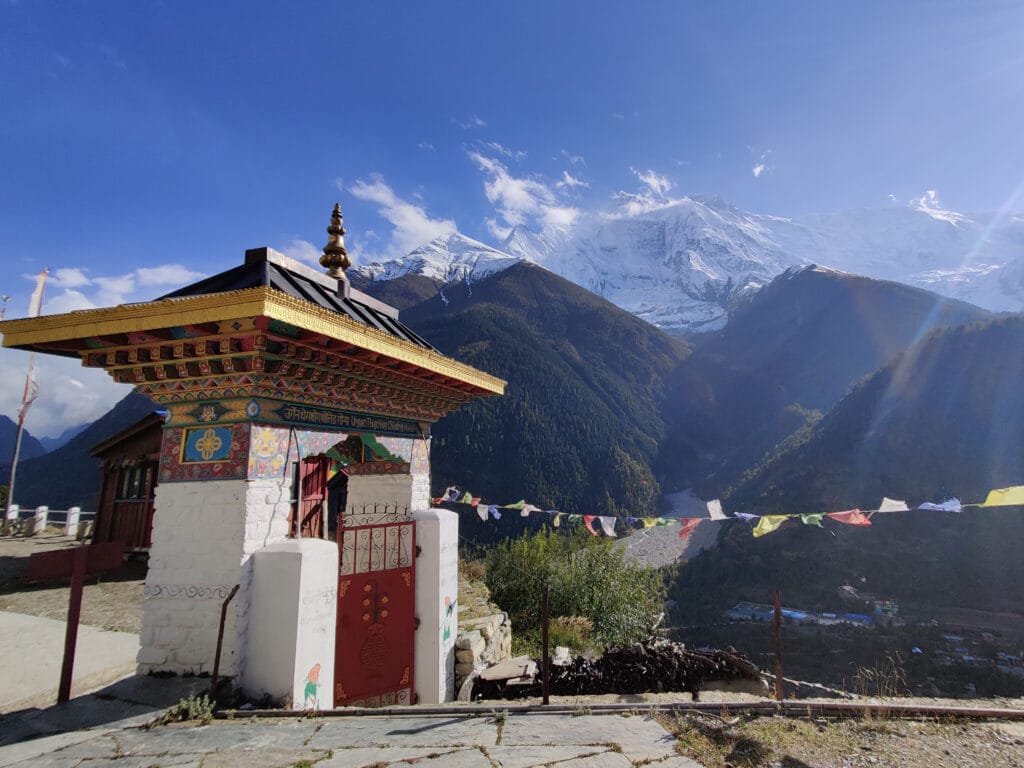
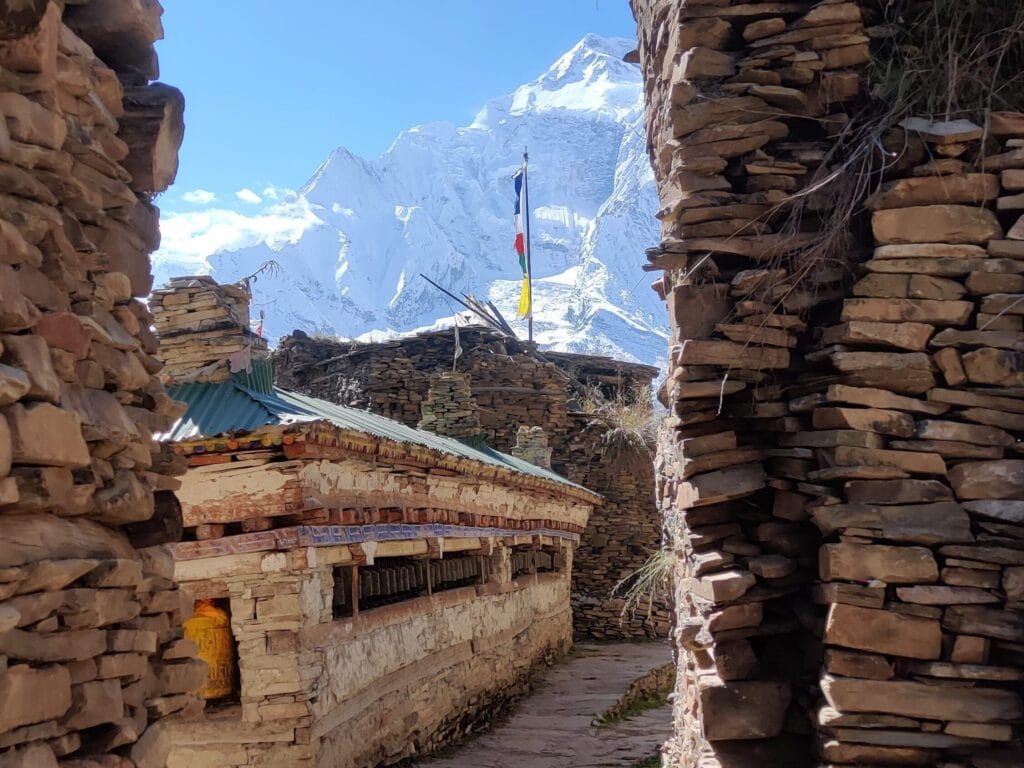
Yes, the scenery is stunning, but I equally remember the culture and religions I learnt about, which added a spiritual dimension to the Annapurna Circuit trek. The Nepalese are very hospitable and friendly with a fantastic sense of humour; it’s easy to find peace and friendships. The 2 main religions are Hinduism and Buddhism, with the Annapurna Region being heavily Tibetan Buddhist-influenced. You’ll see prayer flags hung in the villages, and hike past Stupas, plus it is worth visiting the monasteries.
It is commonplace to see people begging and street selling, which is a reminder of the poverty in Nepal and is pretty humbling. The Sherpa community was fascinating to learn about and get to know the Guides and Porters over tea and cards. The Guides all spoke adequate English; however, the porters spoke little. I only learnt a few phrases in Nepalese, which the locals really appreciated.
How difficult is the Annapurna Circuit?
Annapurna Circuit is a moderately challenging long-distance trek. It is not a technically difficult trek compared to the Dolomites Alta Via 4, with various options for how fast you want to complete the trek, from 2 weeks to 3 weeks. And if you want to reduce your load, then hiring a porter will mean only carrying a daypack on the trail. The harder bit is the acclimation to the altitude and reduced Oxygen.
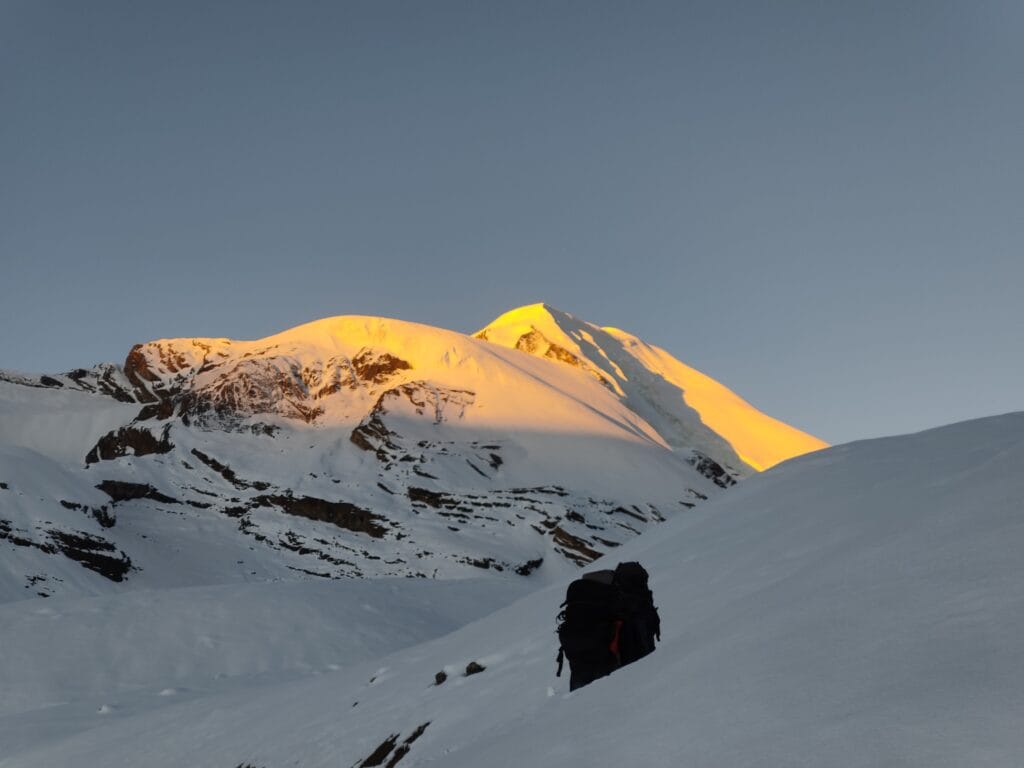
Having a general level of fitness will help reduce the chances and effects of Altitude Sickness. The hardest day was Thorong La Pass, which has a 1000m climb starting at 4 am in freezing conditions and slowly trekking through snow to the pass before it gets too windy, then a 1700m descent on scree into Muktinath.
Training Plan – Preparing for the Annapurna Circuit
For Training, I did a few months of preparation, with most weekends doing a long 15-20km training hike. This was with a full 18kg backpack and as much climbing as possible around the Midlands in the UK. I would run and play sports, so the cardio was there, but I started a HIIT workout plan a few times a week to improve upper body strength and core. Unless you live somewhere with higher altitudes nearby, it’s difficult to train for this aspect.
The Magnificent Mountain Landscape
The main attraction of the Annapurna Circuit is the stunning Himalayan mountains. The Annapurna Massif contains massive, jaw-dropping snow-capped peaks towering above deep valleys. The Annapurna Circuit trek allows you to experience different climates and terrains as you ascend to high altitude. It means you will need to pack for hot, dry days to freezing snow hiking, and all the changeable weather.
The Annapurna Circuit trail is a joy to hike as you walk over Tibetan bridges, along dirt trails and up rocky paths before tackling the Thorong La Pass. There is a road leading up to Manang, which makes it easier for Jeeps and tourism further up the Circuit. However, there were not too many days when you were on the gravel road.
Water Purification – Don’t get ill
Unfortunately, water contamination is an issue in Nepal, and the last thing you want on a trip is to get ill due to polluted water. Hygiene and sanitation are not fantastic, so it’s necessary to bring some form of water purification. Most Tea-houses allow you to use tap water, but it will still need sterilising. A lot of people use Steripens or LifeStraws (around £80), but a cheaper alternative is to use Chlorine or Chlorine Dioxide tablets or droplets.
Without a chemistry lesson, the difference is that Chlorine is more dependent on PH levels, whereas Chlorine Dioxide is more versatile and highly effective against a wider range of bacteria. My recommendation is Life Systems Chlorine Dioxide Tablets, which treat 30L of water, take 30 minutes to purify and are safe to drink. It’s easier than mixing droplets from my experience, and it weighs much less!
Tip– Add an electrolyte tablet into your purified water to hide any aftertaste
Altitude Sickness – Hike High, Sleep Low
The hot conversation topic on the trek is the Altitude! The lack of Oxygen can affect anyone from marathon runners to casual hikers at any altitude above 2500m. It’s not something to be ignored, so it’s best to listen to the Guides for signs and advice to best acclimatise. Symptoms include headaches, dizziness, fatigue and poor sleep at Extreme Alitudes. It’s recommended to drink 3-4 litres of water a day to help combat the symptoms, as well as take acclimatisation days by climbing high and sleeping lower.
It’s worth buying Diamox (medication) and hiking slowly so you don’t elevate your heart rate. I first noticed the Altitude at Yak Kharka around 4000m and started medication, then with plenty of water and tea. Despite the terrible sleep and freezing conditions at Thorong Pedhi, the climb to Thorong La was fast thanks to the preparation.
Tip- Drink ginger tea and Garlic soup, as these help reduce any symptoms
Currency – Show me the money
Nepal has a closed currency, which means you can only exchange money within its borders and are not allowed to take it out of the country. This means it’s not possible to pre-order or take Nepalese Rupee before arriving. The exchange rate for £1 is 171Rs, and you’ll be shocked to see how far that gets you! After Besisahar, there are no cash machines on the trek before crossing Thorong La Pass, so ensure you have plenty of cash for food, lodgings and drinks.
Trekking Kit List
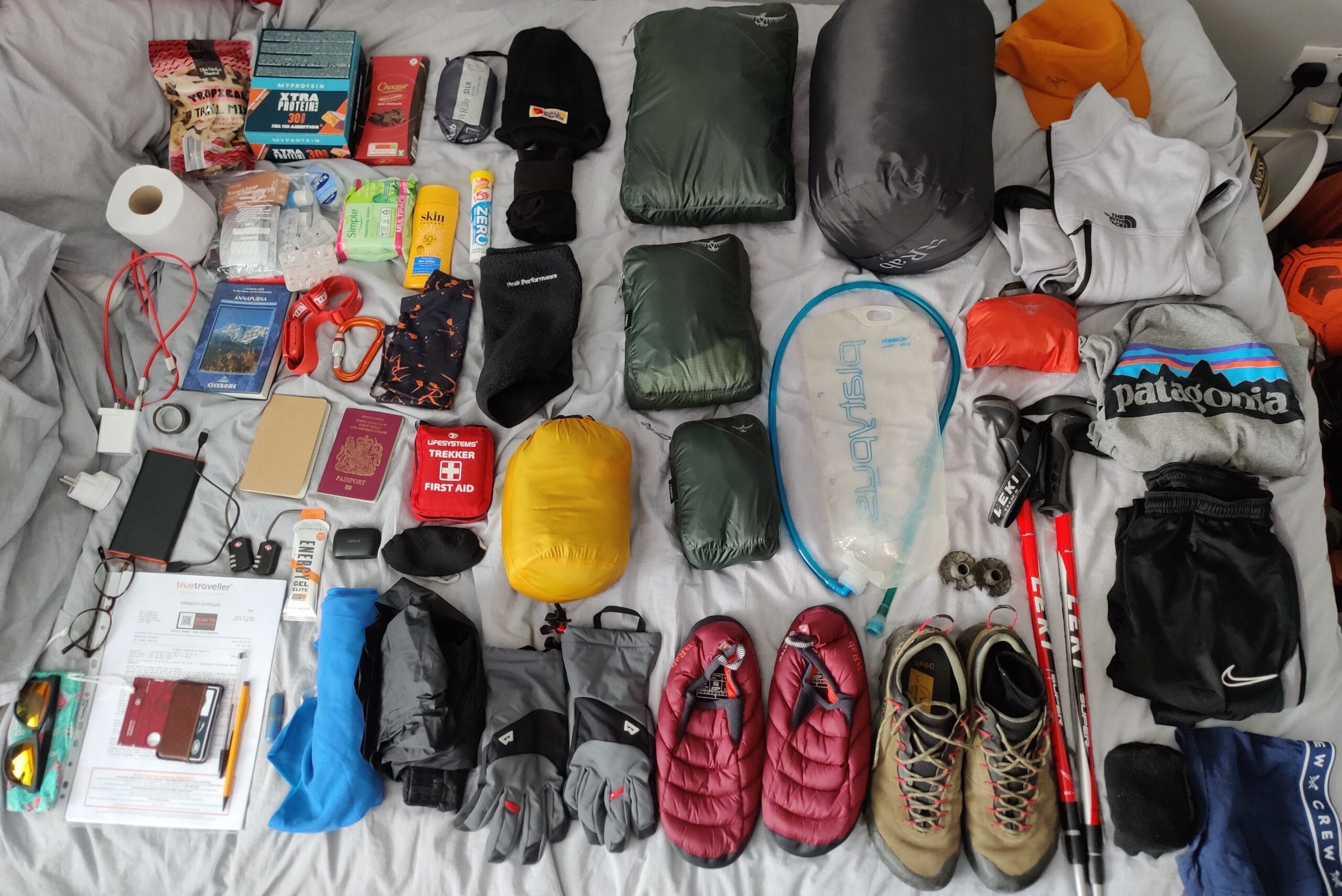
This was my first trekking adventure, which meant I spent months researching what kit to bring. And in particular, what is needed to tackle the Nepalese Himalayas? Even though picking the perfect season helps minimise poor weather, you never know in the mountains! So it’s wise to pack wet weather gear and have a layering system, as it is pretty changeable! The mornings are crisp and cool before the sun enters the valley and warms you up.
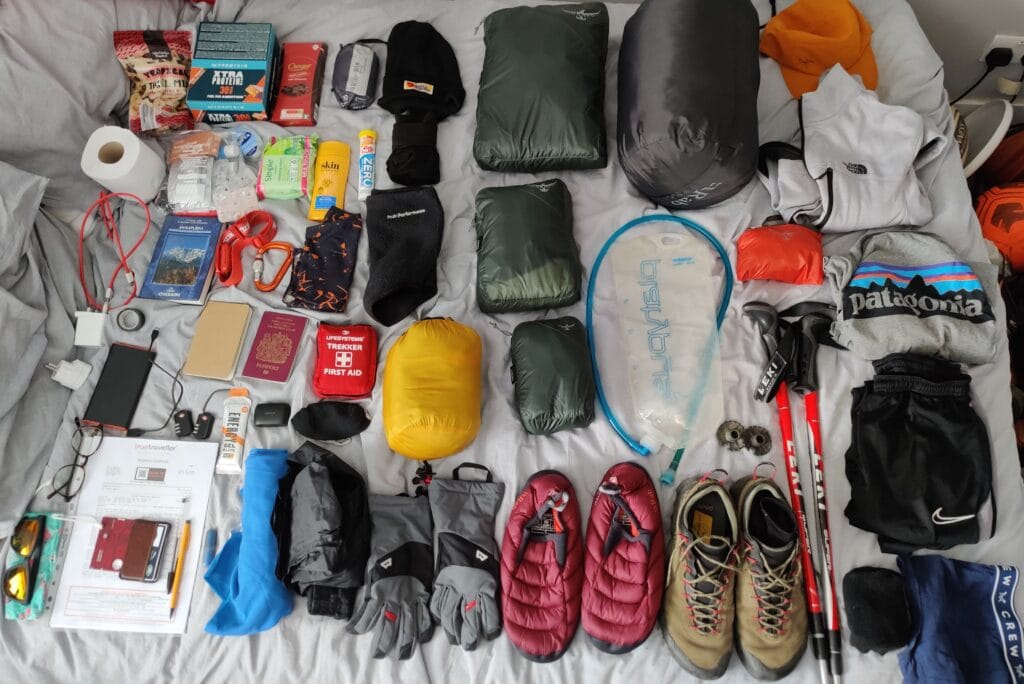
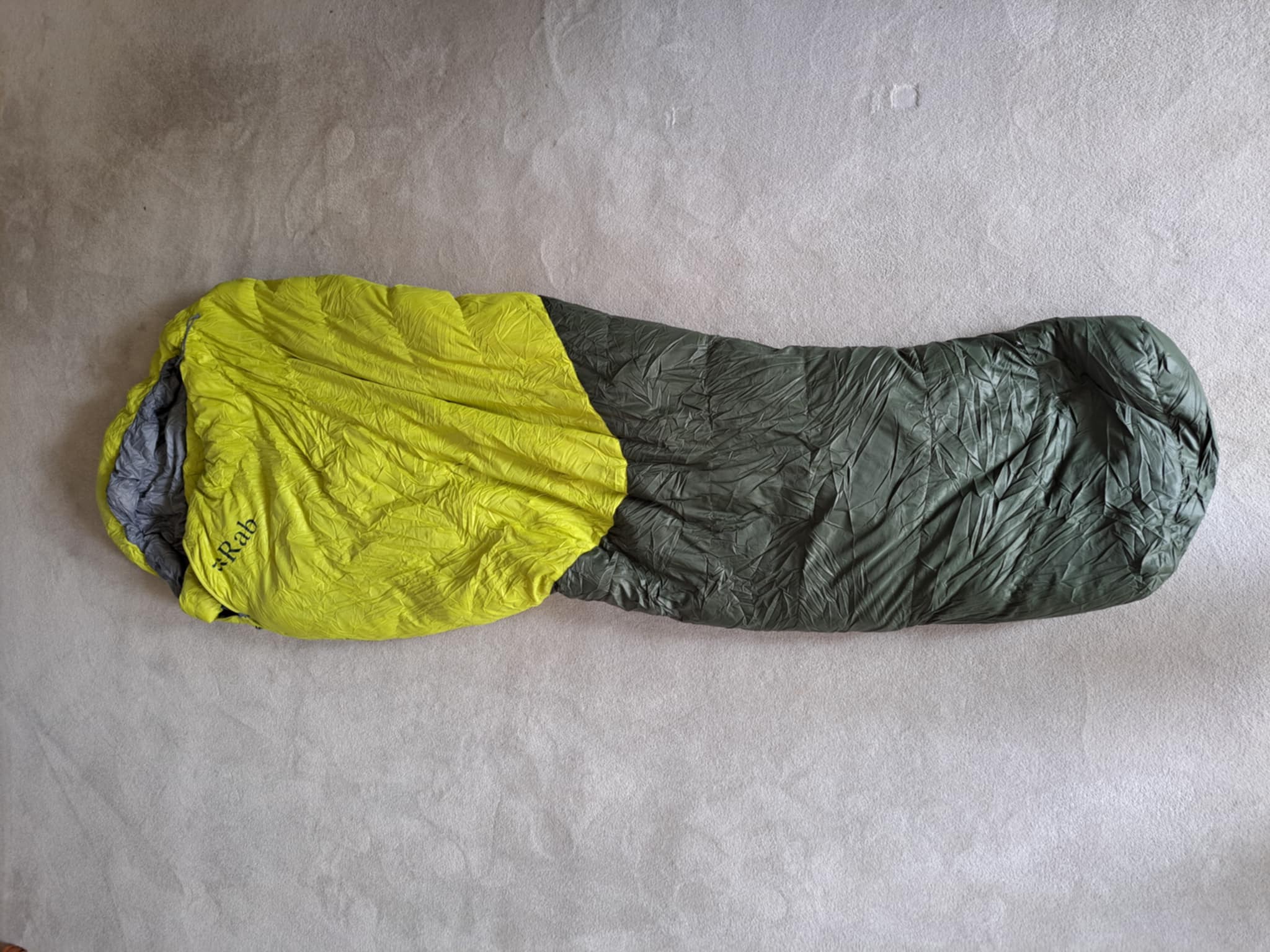
The main kit to purchase was the trekking backpack, where I chose the Osprey Atmos AG 50 (review here). The rest of the kit was for cold weather, such as a 4-season sleeping bag like the Rab Alpine 800 Down Sleeping Bag (review here), merino wool base layers, winter gloves and medicines such as Diamox and Water purification tablets. All this kit was tested on the Annapurna Circuit and the Ultimate Trekking Kit List was created.
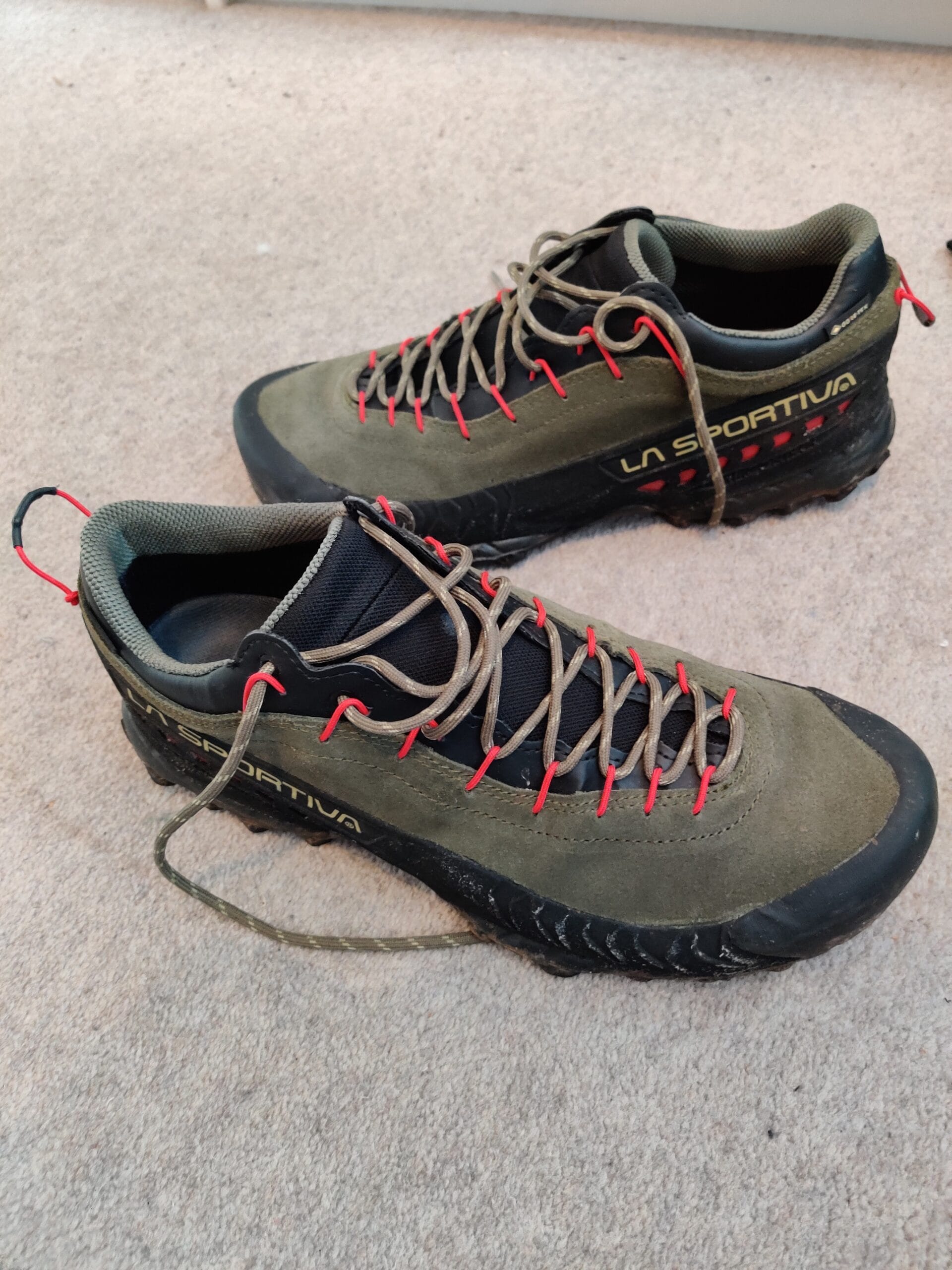
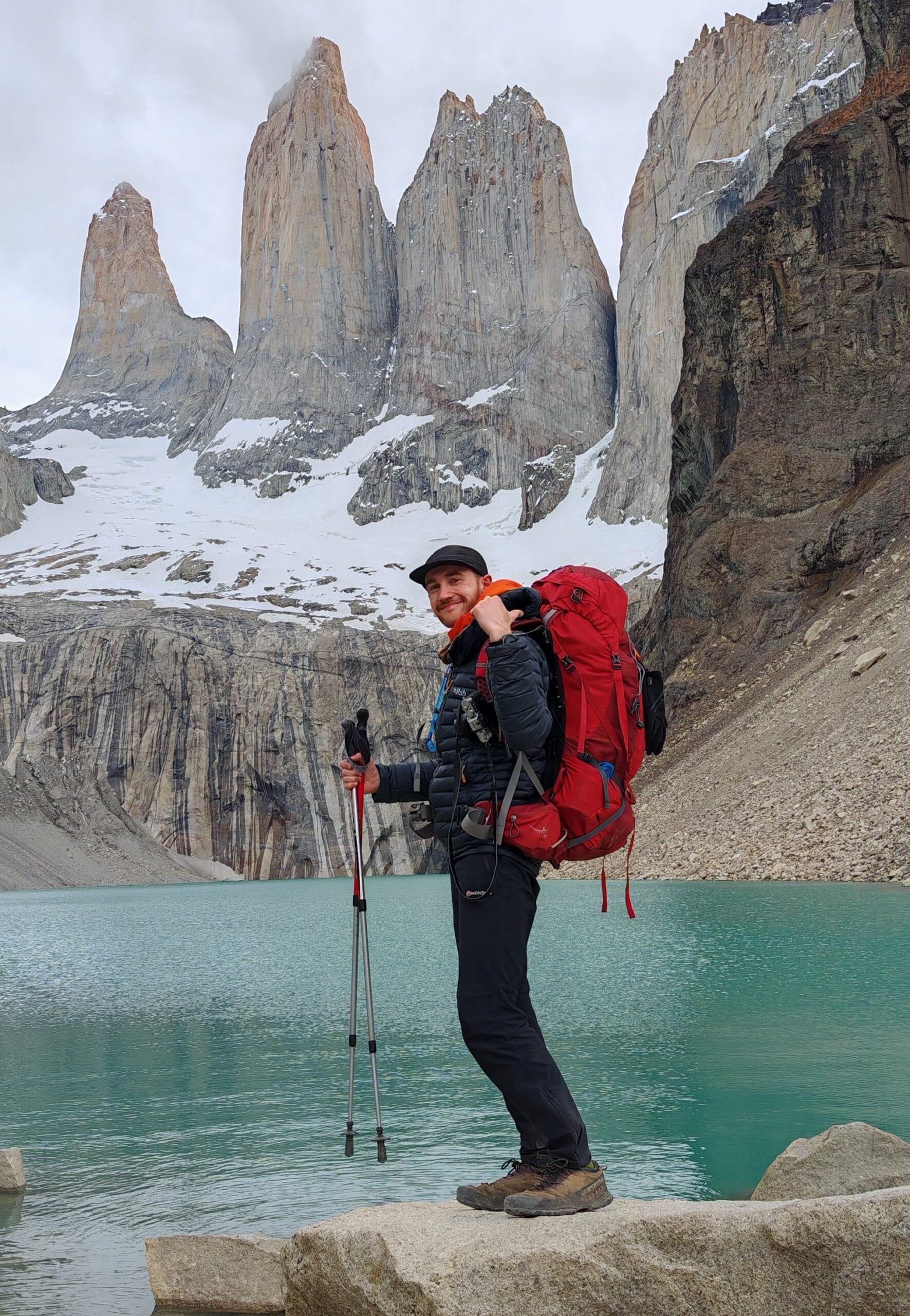
Gear we used on this route
Annapurna Circuit Cost
A 2-week trip was not a cheap holiday, with the flights & tour making most of the cost. However, spending money was limited to drinks (not included in the Tour package) and souvenirs. Nepal is a cheap country with prices much lower than those in other trekking destinations. A Dal Bhat meal and chai tea (the normal dinner) cost 250 rupees to 700 rupees (£1.50 – £4) for Dal and up to 100 rupees (£0.50) for tea.
At Manang and above 3500m, the prices for food & drink increase up to 3 times (Dal Bhat costing almost 700Rs). And any Western-style food, such as Burgers, Pizza, and pasta, will cost much more than Nepalese food. As mentioned, the tour package covers food, accommodation and transport, with the overall cost including flights being around £2100. Any kit rental will add to the overall cost, whereas I brought all my gear beforehand (price not included for the kit in the list).
Tip: Get all your cash before Kathmandu, as there are no ATMs/ Cash machines on the trail
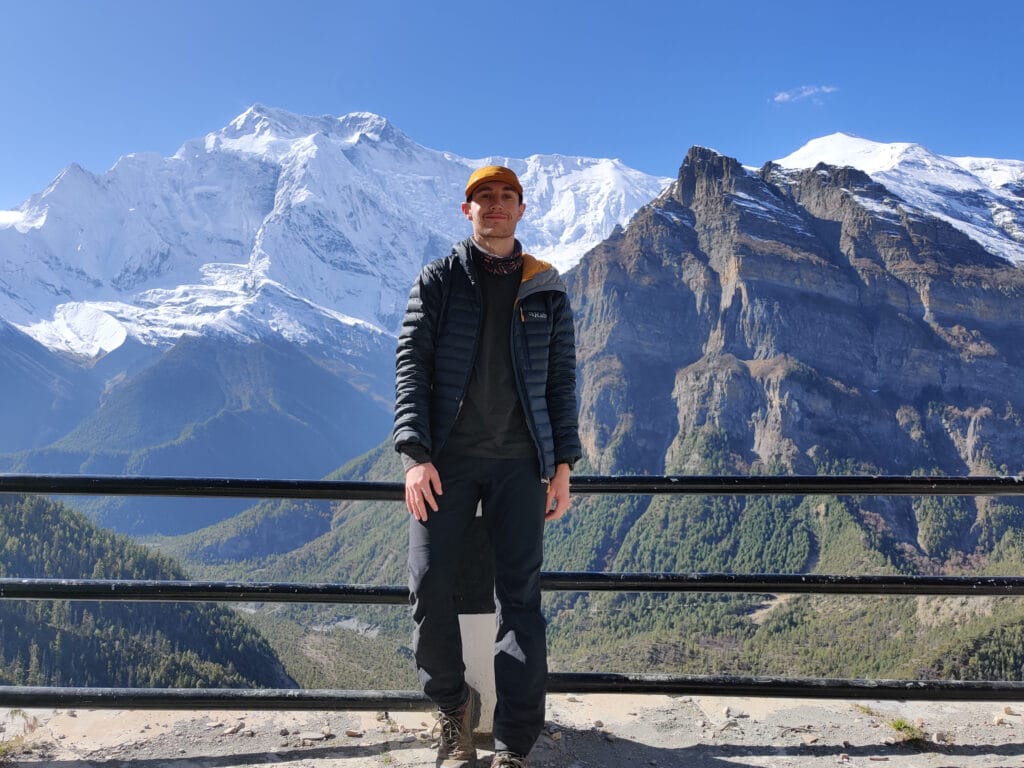
What to Expect on the Annapurna Circuit Trek
While the daily walking paths are highly accessible for fit hikers, the real challenge lies in the sheer duration (typically 12 to 15 days) and the extreme altitude. Over the course of the trek, you will walk through four distinct climate zones, swinging from sweaty t-shirt weather in the jungle lowlands to freezing, sub-zero winds at the high pass. It is a physical endurance test, a cultural immersion, and an absolute visual feast all rolled into one.
Before diving into the massive mountain peaks and trail highlights, it helps to understand exactly what navigating the Annapurna Circuit looks like day-to-day. Unlike a technical mountaineering expedition, this is a classic “teahouse trek.” This means you won’t be carrying heavy camping tents or cooking your own food; instead, you hike from village to village, sleeping in family-run guesthouses and eating hot, local meals—like endless plates of Dal Bhat—along the way.
Annapurna Circuit Summary
Annapurna Circuit Highlights
- Poon Hill sunrise hike
- Thorong La Pass climb
- Mindful trekking and connection to nature
- Dal Bhat every meal
- Tea House cards and social side
- Clear, warm and dry weather
- Ghkyaru viewpoint
- Tatopani Hot Springs
- Buddhist Monasteries & influence
- Pokhara street dancing
- Stargazing at Upper Pisang, seeing galaxies
Annapurna Circuit Lessons
- High Altitude acclimatising with slow pace, ginger tea and hydration
- Traffic & Bus journeys
- Trekking backpack & organisation
- Trekking kit and packing list worked well to not over-pack
- Unlimited Dal Bhat and variation
- Hiking in different terrains and climates, including in the snow!
- Confidence from a solo expedition
- Tihar celebrations in Pokhara and Kathmandu
Next Time in Nepal
- Acclimisation hike to Ice Lake from Manag
- Side excursion to Tilicho Lake
- Spend a day in Kathmandu and visit Durbar Square & Pashupatinath Temple
- Day trip to visit Swayambhunath
- A harder physical challenge, such as the Everest 3 Passes Trek
- Start the trek earlier in the rice fields and jungle closer to Besisahar
- Trek Annapurna Base Camp / Sanctuary or Manaslu
How difficult is the Annapurna Circuit trek?
The Annapurna Circuit is considered a moderate-to-challenging trek. While the daily walking trails are mostly well-defined and don’t require technical climbing skills, the sheer duration (10–15 days) and the extreme altitude make it physically demanding. The hardest day is crossing Thorong La Pass at 5,416 meters, which requires excellent cardiovascular endurance and proper acclimatisation.
What is the best time of year to hike the Annapurna Circuit?
The best times to hike the Annapurna Circuit are during the pre-monsoon spring (March to May) and the post-monsoon autumn (September to November). Autumn offers the clearest mountain views and stable weather, while spring brings blooming rhododendron forests, though it can be slightly hazier.
Do you need a guide for the Annapurna Circuit?
As of recent updates to Nepal’s trekking regulations, solo trekking without a guide is no longer permitted in many of Nepal’s national parks, including the Annapurna Conservation Area. You must hire a licensed guide or join a registered trekking agency to obtain the necessary TIMS (Trekkers’ Information Management System) card and permits.

Pingback: Annapurna Circuit Trek: The Trip that changed my Life - Backpacker's Mentality
Pingback: Poon Hill: The Best Himalayan Mountain Sunrise Hike - Backpacker's Mentality
Pingback: Annapurna Adventure: Preparing for the trek of a lifetime - Backpacker's Mentality
Pingback: Annapurna Himalaya Trek: Kathmandu to the Annapurna Massif - Backpacker's Mentality
Pingback: Manang: The Best Annapurna Viewpoint and Acclimatisation Day - Backpacker's Mentality
Pingback: Manang Annapurna Circuit: How to Best Acclimatise - Backpacker's Mentality
Pingback: Dolomites Via Ferrata: Best Highlights of the Alta Via 4 - Backpacker's Mentality
Pingback: Thorong La Pass: Tales from the World's Highest Pass - Backpacker's Mentality
Pingback: Rab Alpine 800 Down Sleeping Bag: The Ultimate Kit Review - Backpacker's Mentality
Pingback: Poon Hill Nepal: The Most Dramatic Mountain Sunrise - Backpacker's Mentality
Pingback: Osprey Aura AG 50: The Best Women's Trekking Backpack - Backpacker's Mentality
Pingback: Ultimate Guide to the Torres del Paine O Circuit - Backpacker's Mentality