
Trekking the Annapurna Circuit is a masterclass in extreme weather management and logistical packing. When you are crossing the legendary Thorong La Pass at 5,416m (17,769 ft), your gear is the only thing standing between the trip of a lifetime and a dangerously cold retreat. The biggest challenge? You are trekking through four distinct climate zones—starting in sweltering subtropical jungles and ending on sub-zero alpine glaciers—all while living out of a single duffel bag and a daypack.
Having dialled in my kit on rugged routes worldwide and refined it on the Annapurna trail, this is the exact, field-tested Annapurna Circuit packing list required to safely and comfortably navigate a Himalayan teahouse trek. Find out exactly what you need, what you can confidently leave at home, and how much it will cost to build out your ultimate kit.
Field Note: This guide contains affiliate links. If you purchase gear through the Backcountry.com links, I may earn a small commission at no extra cost to you. I only recommend equipment I have personally mountain-tested and trust.

Himalayas vs. European Treks: Why the Annapurna Circuit Packing List is different
If you have done hut-to-hut trekking in Europe (like the Alta Via in the Dolomites or the Tour du Mont Blanc), you might assume Himalayan teahouses offer a similar experience. They do not. In Europe, alpine rifugios are highly modernised. They are usually centrally heated, heavily insulated, and provide thick, warm blankets, allowing you to hike incredibly fast and light with a 30L pack. A very different Annapurna Circuit Packing List is needed to enjoy all a Nepalese teahouse trek has to offer.
Himalayan teahouses, however, are beautifully rustic but entirely uninsulated. While the communal dining room is usually heated by a central yak-dung stove, your individual bedroom is little more than plywood or stone. At 4,000m, the temperature inside your room will drop well below freezing overnight.
The Golden Rule of Teahouse Trekking: You do not need to carry a tent, a sleeping pad, or a cooking stove, but you must carry winter-grade sleeping bags and heavy down insulation to survive the nights. Hence, this Annapurna Circuit Packing List differs due to the high altitude compared to a European or North American trek.
4. Key Essential Items for an Annapurna Circuit Packing List
The “No-Tent” Sleep System
- The Sleeping Bag: Even with a basic bed and blanket provided, you need a heavy-duty safety net. The Rab Alpine 800 Down Sleeping Bag is my ultimate go-to here, providing crucial thermal protection down to -16°C when the thin teahouse blankets inevitably fail to keep the freezing drafts out. This was especially apparent in Manang, Yak Kharka and Thorong Phedi where overnight temperatures plummeted to well below freezing.
- Silk Sleeping Bag Liner: Essential for hygiene, and it traps an extra few degrees of vital heat inside your sleeping bag.
High-Altitude Layering
- Down Jacket: Once the sun dips behind the Himalayas, the temperature drops instantly. The Rab Infinity Alpine Jacket is absolutely vital for sitting in freezing dining rooms at night or stepping outside for astrophotography.
- Breathable Headwear: The UV intensity at 4,000m+ is punishing and will burn your scalp quickly. The Ciele ALZCap provides UPF +40 protection for the gruelling ascents while breathing efficiently enough to keep you from overheating.
- Merino Wool Baselayers: Because you have no laundry facilities and will be sweating daily, merino wool is non-negotiable. It naturally fights odour and retains its insulating properties even when damp.
Teahouse & Trail Essentials
- Water Purification: Bottled water becomes incredibly expensive (and environmentally damaging) the higher you climb. Lifesystems Chlorine Dioxide Tablets or a UV purifier like a SteriPen are mandatory for safely drinking from teahouse taps.
- High-Capacity Power Bank: Charging your phone or camera at high elevations costs money (usually $2 to $5 an hour), and power cuts are frequent. A robust 20,000mAh Anker power bank guarantees your GPS and camera stay alive.
- Hut Slippers/Camp Shoes: Taking off your heavy boots after a 15km day is pure bliss, but the teahouse floors are freezing. Down-filled booties or thick socks paired with lightweight Crocs are the perfect solution for shuffling to the communal bathrooms.
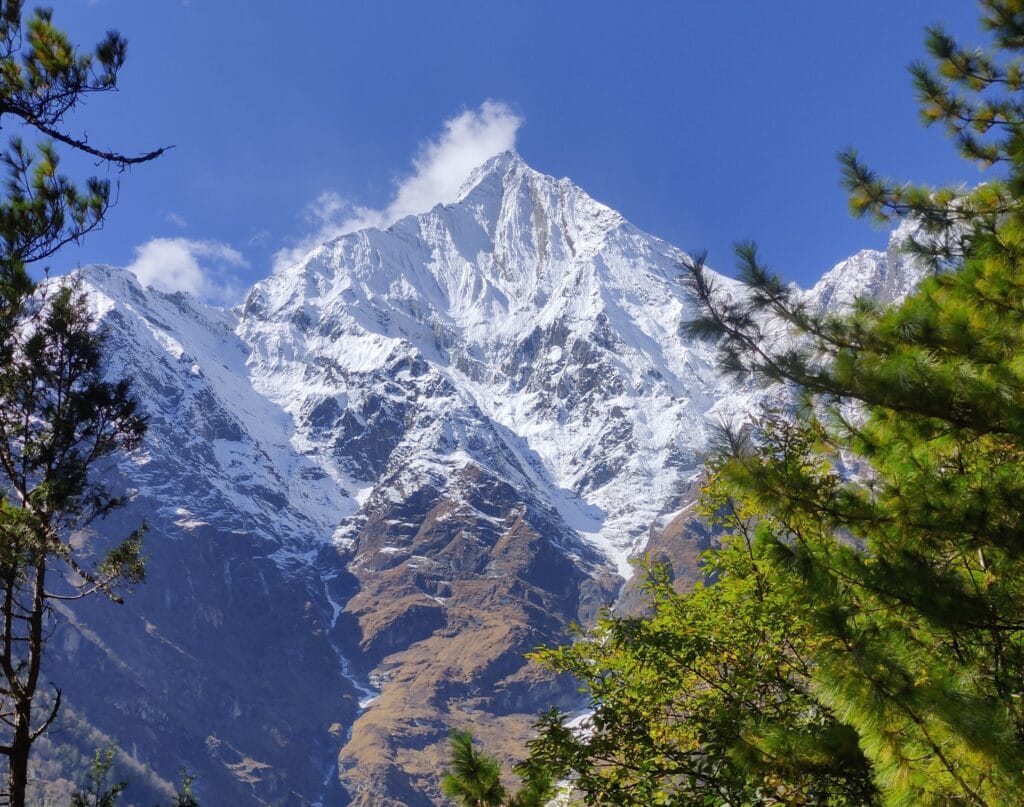
Annapurna Circuit Packing List: Essential
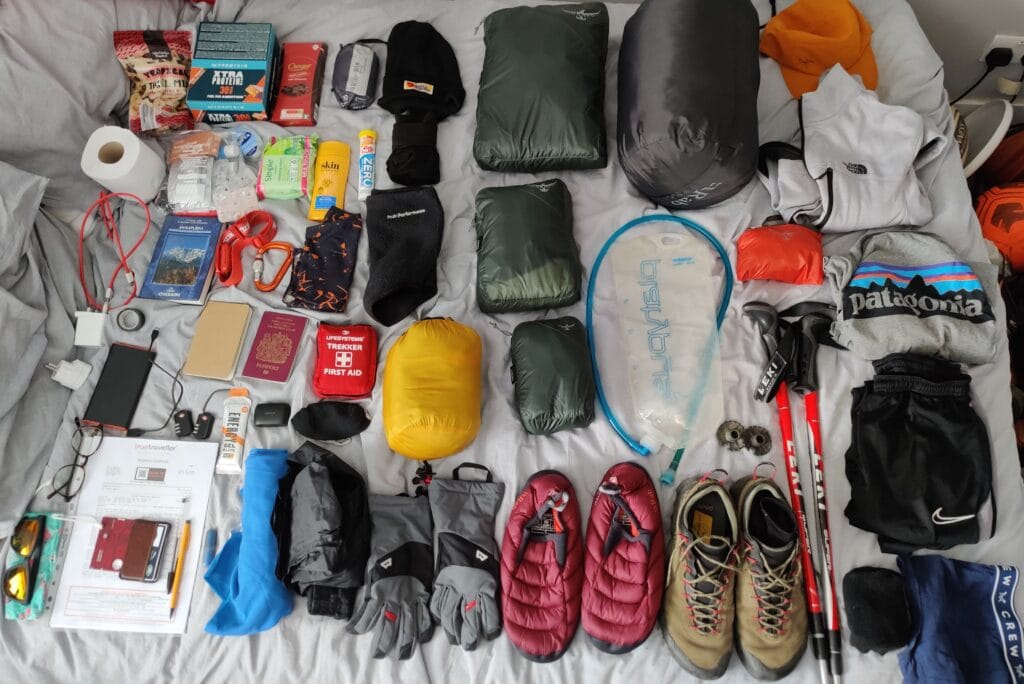
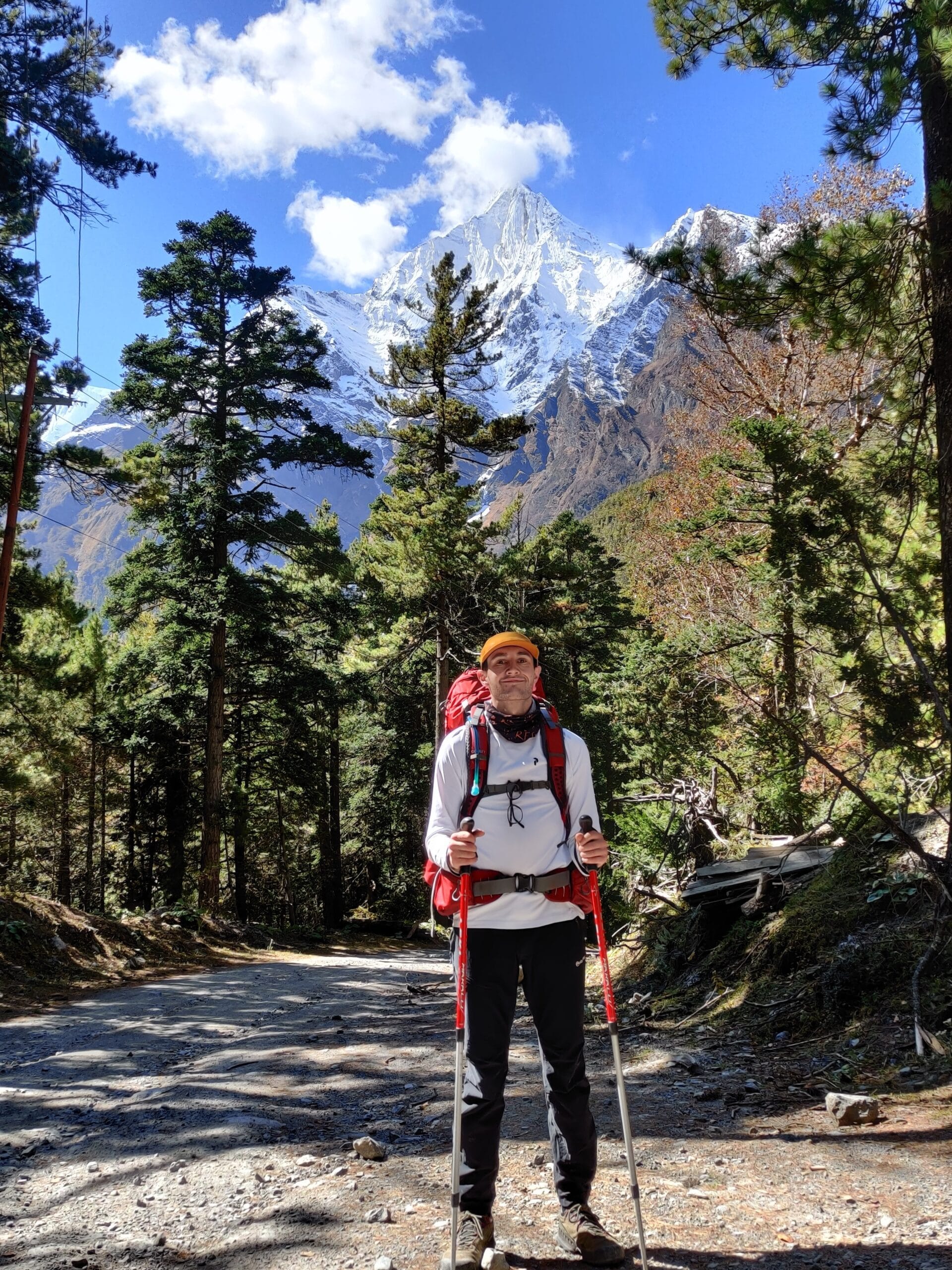
- Backpack – Osprey Atmos 50 AG
The main kit for the Annapurna Circuit Packing List is your backpack, and finding the right size and features for you is key. Depending on the length of your trek and what accommodation/meals are chosen will influence the capacity needed. I decided on 50 litres as it would hold everything for up to 2 weeks and minimise overpacking. After weeks of research, the Osprey Atmos had glowing reviews for the Anti-Gravity system, which is incredibly effective. See full review for the Osprey Atmos 50 AG Backpack - Sleeping Bag – Rab Alpine 800 Sleeping Bag
This sleeping bag excels in cold and winter conditions in the mountains, especially at altitude on the Annapurna Circuit. It is not the lightest or most compact, but for a 4-season sleeping bag, it’s a great mix of Down feather quality and comfort. I have brought a Sea to Summit compression sack to help store it inside the Osprey backpack. After the Backpack and hiking footwear, the Sleeping bag is the next most important piece of equipment in the Annapurna Circuit Packing List. See the full Rab Alpine Sleeping review here. - Hydration Bladder – Gregory 3D 3L Bladder
I prefer a bladder to a water bottle due to the easier hydration on the trail, and it is lighter than a metal 2L bottle. Naturally, a bladder lasts longer even if it can warm up quicker than a bottle. Recently, I upgraded to the Gregory 3D Hydro 3 litres for more capacity, better valve control and easier cleaning. - Sleeping Bag Liner – Rab Silk Ascent
Unfortunately, the Rab Silk Sleeping bag liner is not available, with the replacement being a cotton liner. The silk adds a few degrees of additional warmth and a silky texture. - Hiking Poles – Leki Makula AS or Black Diamond Distance FLZ Trekking Poles
Trekking or hiking poles will make long days climbing and descending feel much easier on the knees and legs. These Leki have soft anti-shock suspension to absorb the force, comfortable grips and a good locking system. I would recommend buying rubber tips as they add another level of absorption. The Black Diamond poles have the advantage of being collapsible with a Z fold to make it easier to pack, and are much lighter than the Leki, which I’d pick for an Annapurna Circuit Packing List. See the full Black Diamond Trekking Pole Review here. - First Aid Kit – Life Systems Trekker
Absolutely essential for an Annapurna Circuit Packing List or any outdoor adventure. Luckily, I have not used the 1st Aid Kit much, so this compact kit sits in the backpack’s bottom. It includes a space blanket, bandages, scissors, plasters, medicine, burns and blister plasters. - Sunglasses – Prescription or Goodr OG Running Sunglasses
I always pack sunglasses to help with the increased UV levels when hiking. There are high UV levels on the Annapurna Circuit and at Altitude, so quality eyewear is essential in an Annapurna Circuit packing list. I use the Goodr sunglasses without a prescription when wearing contacts; they have a great, stable fit and look great. - Head torch – Petzl Tikkina
Especially for sunrise or night-time hikes, this compact 300-lumen single-banded headtorch with great battery life has saved me on a few pitch-black trails. For the Poon Hill sunrise hike and Thorong La Pass crossing, it’s mandatory for safety to have a headtorch as part of your Annapurna Circuit Packing List. - Pen-knife – Victorinox Swiss Card Lite
Similar to the 1st Aid kit, it is not used very often but is a handy tool to carry. It has a torch, pen, scissors, knife and tweezers. Occasionally, I use a Victorinox Hiker Swiss Army Knife as it has a screwdriver, a larger blade, a saw and a better bottle opener. However, it does weigh more than the Card Lite. - Packing Cubes & Organiser – Osprey Ultralight Packing Cube Set
These have been a game-changer in the Annapurna Circuit Packing List! Buying the Osprey cubes meant I had better clothing organisation and general backpack weight distribution. You can fit a surprising amount into the cubes thanks to the 40D Nylon and J-Zip. Personally, I use the largest cubes for trousers and jumpers, the medium cube fits tops and T-shirts and the smallest for underwear. Additionally, I use an Osprey Organiser for small items and toiletries. See the full Osprey Packing Cubes Review here. - Collapsible Daypack – Osprey Ultralight Dry Stuff Sack
I brought this collapsible backpack to have a bag for day trips and around cities instead of carrying the Atmos 50 everywhere. Being a dry sack, it’s 100% waterproof and has 20L storage while packing down to the size of an apple. I appreciate the chest strap, which helps when hiking on the trail and the front zip pocket. It’s been an underrated part of my Annapurna Circuit Packing List. See the full Osprey Stuff Sack Review here. - Microfibre towel – Mountain Warehouse Microfibre Medium Towel
Normal cotton towels are not efficient when trekking and take up too much space. Microfibre towels are great at compacting down and drying off very fast. - Maps / Navigation – I download AllTrails (premium subscription required) and use GPS to track location and navigate, but relied on my guide Dawa for navigation. Currently, I use the Garmin InReach Mini 2 Satellite Communicator for GPS and connection for SOS emergencies.
- Passport & VISA Documents – it’s pretty difficult to leave a country or enter another without a passport, so don’t forget it!

Annapurna Circuit Packing List: Optional
- Mountain Gloves – Mountain Equipment Guide
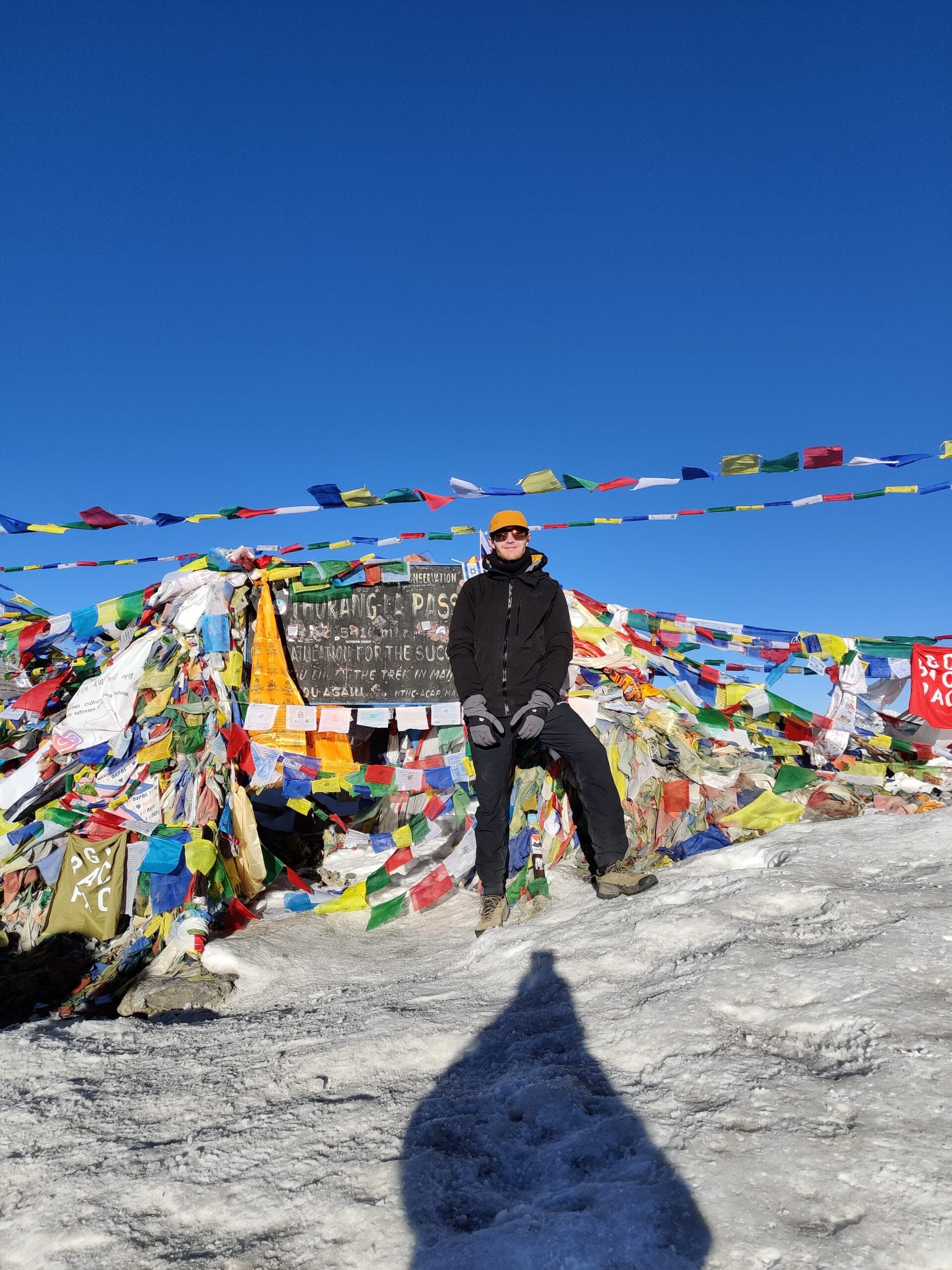
These are especially useful if you will be in freezing conditions or at higher altitudes, thanks to the fleece lining and thick layers. They have good dexterity to use poles still. For the Thorong La Pass crossing, I used a cheaper pair of gloves to add extra warmth to my hands in the -25degrees Celcisu condtiions. - Neck Gaiter / Buff – Peak Performance
I bought this Peak Performance Neck Gaiter in Copenhagen in winter because it was uncomfortably cold, and this turned out to keep the Baltic breeze from my neck and has joined me on many treks since. Additionally, I relied on a buff to help wick moisture away in the lower altitudes. - Crampons – I bought these in Nepal on the Annapurna Trail for around £10, and they definitely came in handy on the snow-covered Thorong La Pass and made running down snow very fun. Recently, I’ve added a cheap pair of Decathlon crampons to the arsenal for the shoulder season treks.
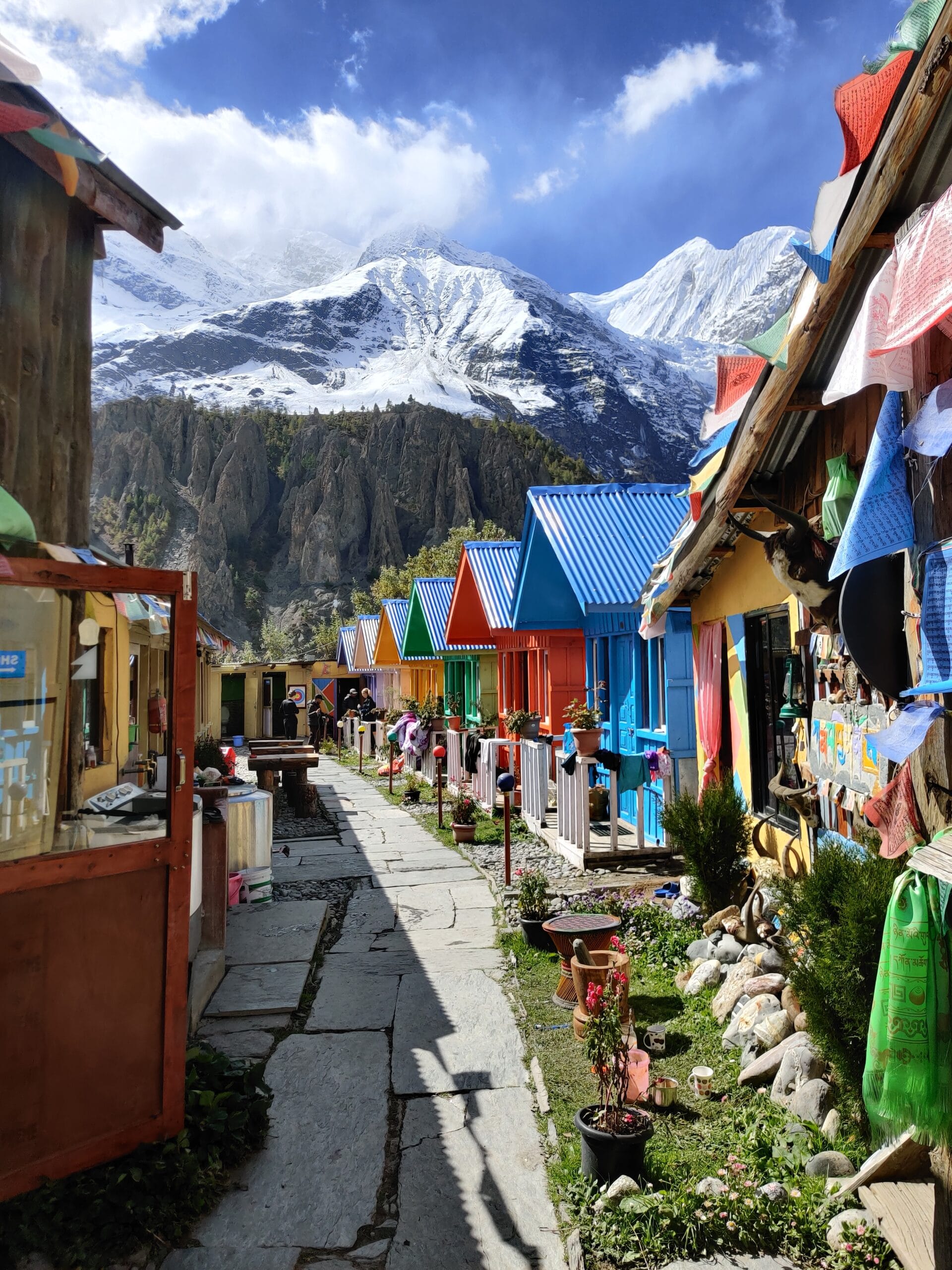
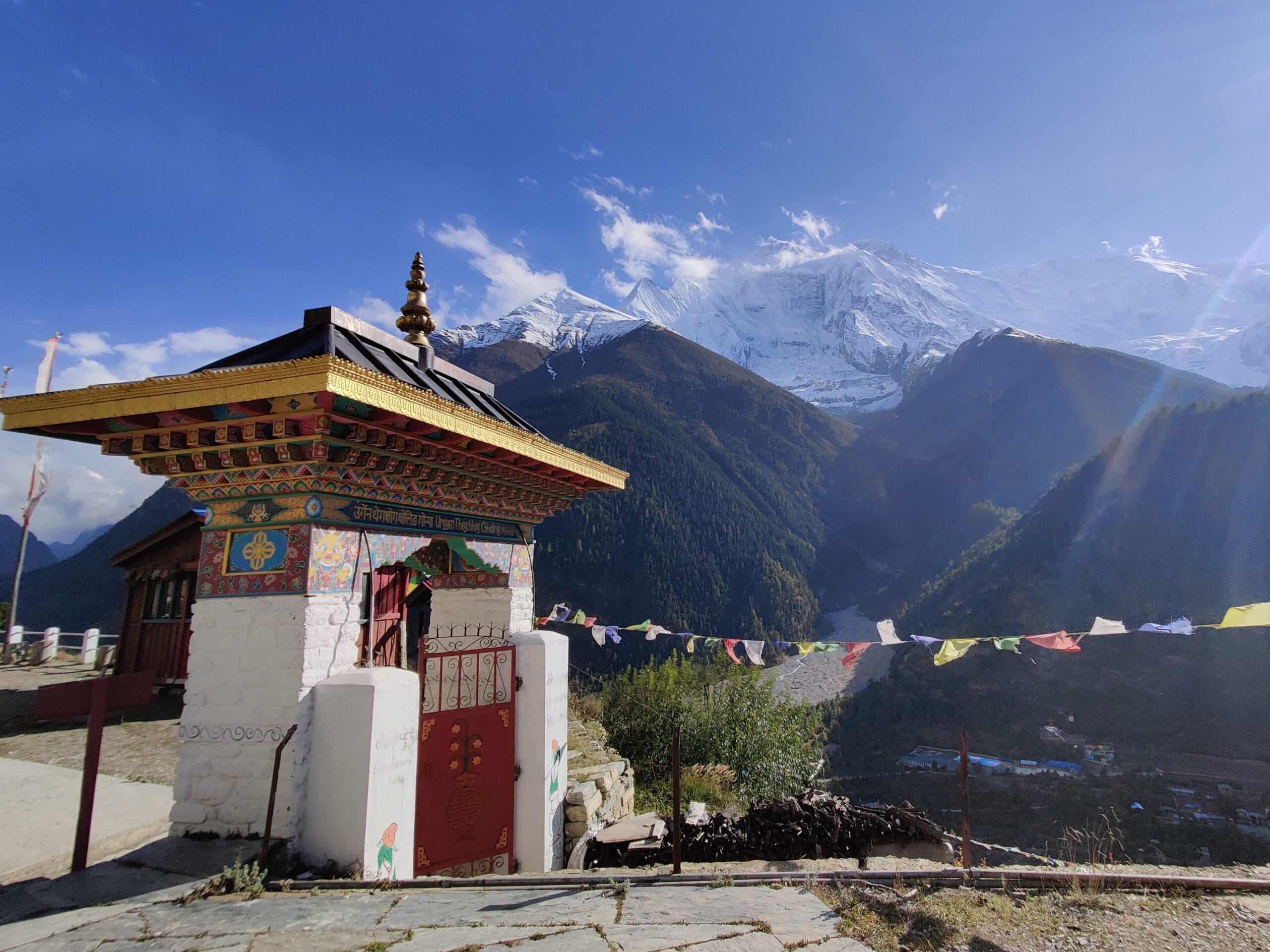
Where this kit was actually used
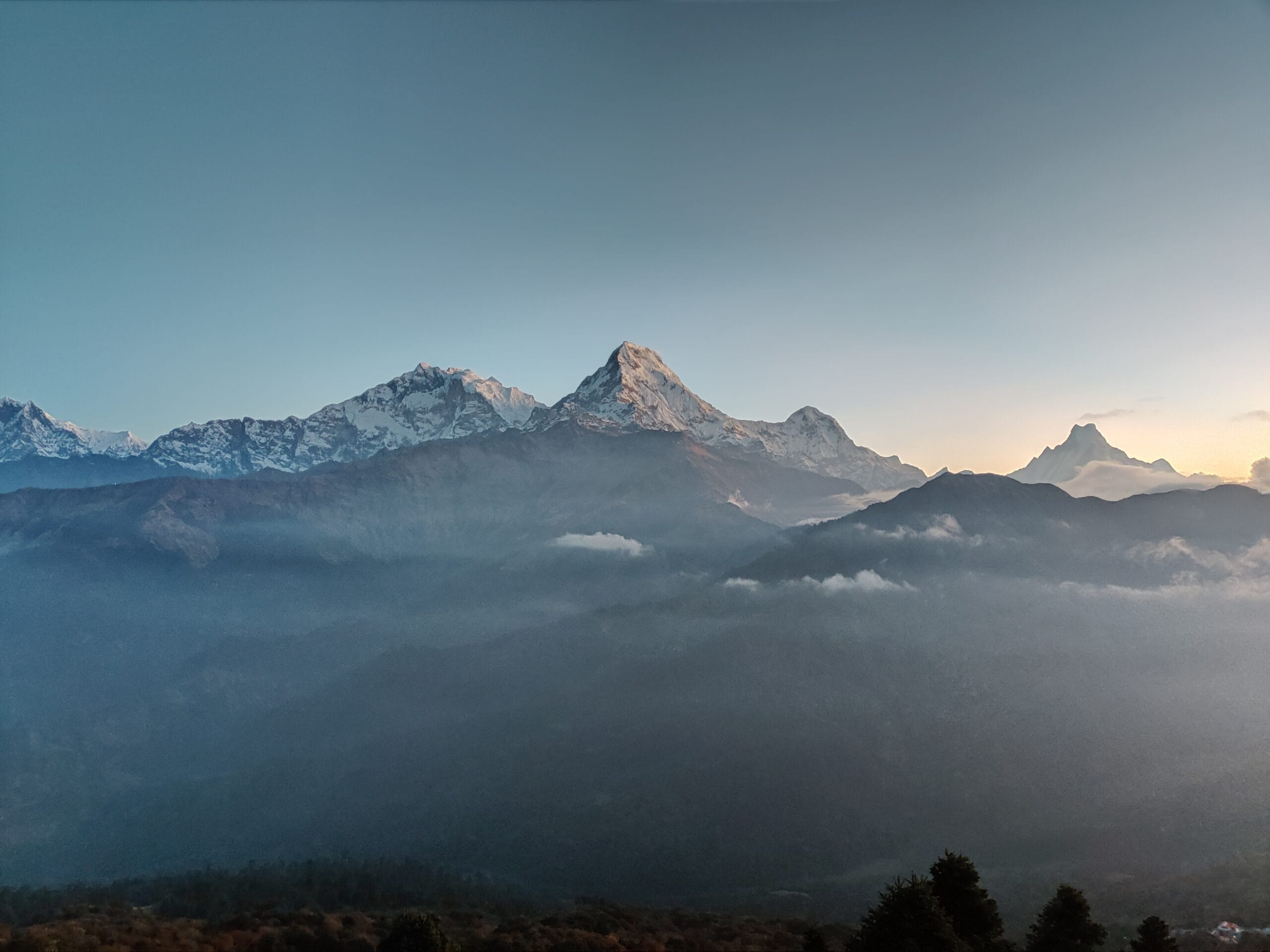
This isn’t theory — every piece of gear in this Annapurna Circuit packing list was tested across high altitude passes, teahouse villages, and long trekking days in Nepal. Dive into the full route breakdowns below.
Annapurna Circuit Packing List: Clothing
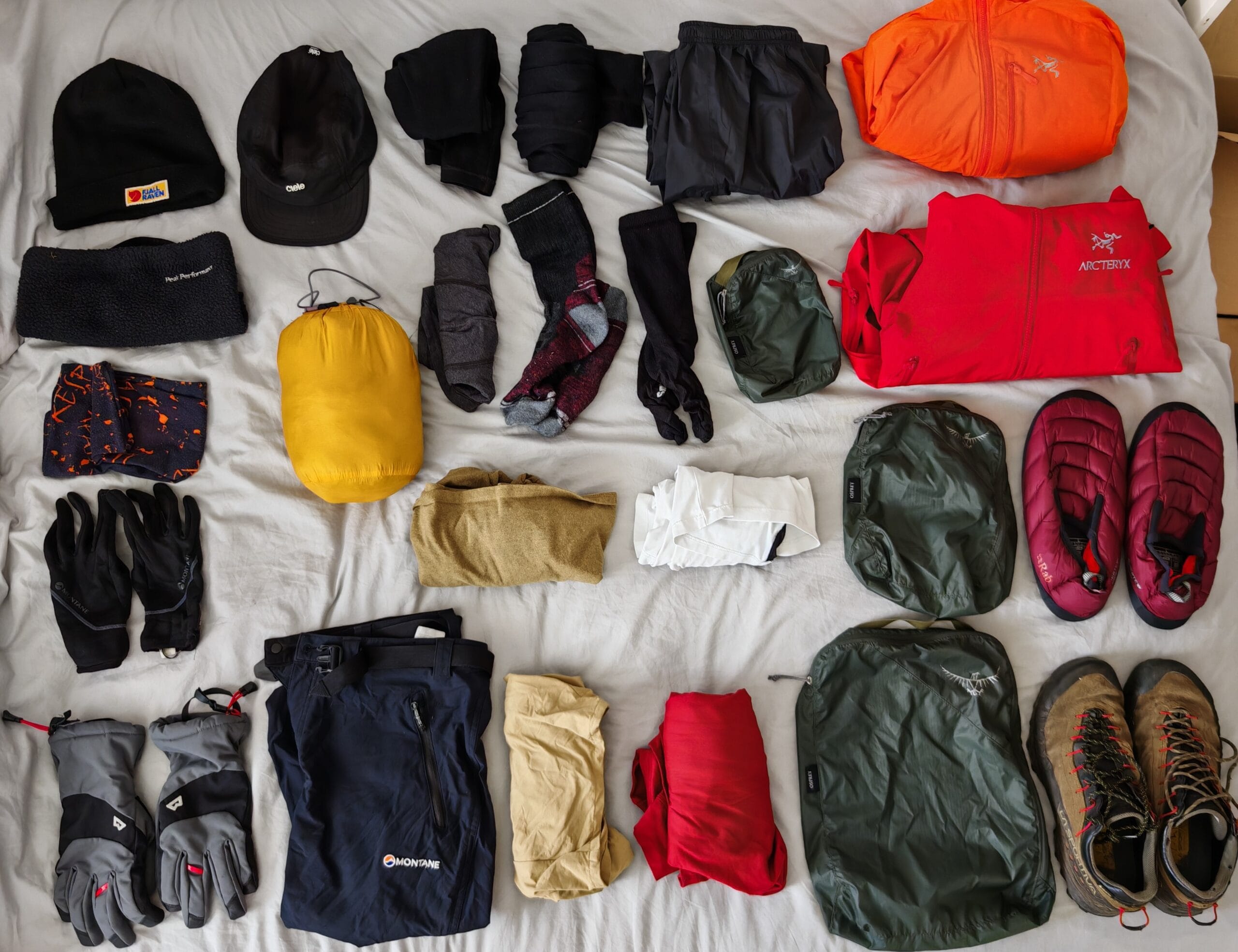
- Hiking Footwear – La Sportiva TX4 Approach Shoes
Simply the best-engineered shoes I own and the first item on my Annapurna Circuit Packing List, along with the backpack! I love these approach shoes and have never been let down by them. Amazing on rock, Gore-Tex waterproofing, great lace system, incredibly comfortable and look fantastic too. Whether it’s approach shoes or traditional boots, having hiking footwear is a MUST. Ideally, a Vibram sole helps with grip and protects your soles. See the full popular La Sportiva TX4 Approach Shoes review here. - Hut Slippers – Rab Cirrus Hut Slippers
I have tried using sandals or sliders as my 2nd shoes, but the down hut slippers are much cosier and grippier. They compact well to fit next to the sleeping bag, and I have had multiple people compliment them. See the full Rab Cirrus Review here. - Waterproof Jacket – Arc’teryx Beta AR
Having recently replaced my North Face Apex Flex Gore-Tex jacket, the Arc’teryx is an expensive upgrade but worth the investment so far. The Beta AR is a lightweight, packable, highly versatile GORE-TEX PRO shell with a hybrid construction. For any hiking, a good quality waterproof is essential as the mountains are unpredictable. See the full Arc’teryx Beta AR Jacket Review here - Hiking Trousers – Montane Terra Route
For years, I only wore shorts for hiking, but these Montane trousers changed my opinion. They offer comfortable, robust and lightweight trousers that can handle what the mountain throws at them. Perfect for walking, hiking and rock scrambling. Plus, the DWR coating beats off light rain but is not fully waterproof. See the full Montane Terra Route Review here. - Hiking Shorts – Patagonia Quandry Shorts
I picked these up in Vancouver, and they are my favourite hiking shorts as they are super lightweight and have great zipped pockets. Otherwise, I use lightweight running shorts for warmer days as part of my trekking kit list. - Waterproof Trousers – Montane Dynamo
Less essential than a jacket, but they can stop you from having wet legs. I prefer to wear pull-over trousers instead of fully waterproof trousers next to the skin. These Montanes are super lightweight, breathable, packable, waterproof trousers. - Mid Layer– Arc’teryx Proton Lightweight Hoody
The key to comfortable hiking is layers, and a good mid-layer helps you manage heat and the weather. For years, I used Trespass micro-fleeces as these were light and warm, then a North Face full zip fleece jacket. Now this Arc’teryx has a synthetic down with a water-resistant outer and the comfiest inner lining! It’s designed to be a lightweight, insulated, air-permeable softshell for summer alpine and rock climbing. It’s my go-to outer for hiking and my trekking kit list! See the full Arc’teryx Proton Hoody Review here. - Jumper – Arc’teryx Rho LT Zip Neck
This replaced my much cheaper Trespass fleece as a multi-purpose top that offers warmth and breathability. Even though it is designed for low-output activities, I find it works well for hiking and trekking. I often wear this Arc’teryx or a Patagonia crew jumper when in the accommodation or camp to keep warm in the evening. - Down Jacket – Rab Microlight Alpine Jacket
The lightweight down jacket balances warmth and packability perfectly. I mainly use it for cold hiking days or cool evenings. It fits very well and has a great, clean look for casual outfits. See the full Rab Microlight Alpine Review here. - Hiking Tops – Peak Performance Longsleeve
It’s easy to overpack on tops, and my advice is to take 3, then rotate and wash on the trail when you can. I always take my long-sleeved Peak Performance and 2 lightweight moisture-wicking t-shirts. - Cotton T-Shirts – Patagonia Long Sleeve P-6 Logo Responsibili-Tee®
After a day of hiking in sweaty clothes, it’s refreshing to change into a comfy and warm top. Also, it’s much nicer to wear in airports or on transport than hiking tops. - Cap – Ciele Athletics ALZCap
I recommend a hat or baseball cap to help keep the sun off your face or neck. I like the Ciele hats because of the high breathability, UV protection, foldability and clean design. See the full Ciele ALZCap Review here. - Gloves – Montane Power Stretch Pro
Even in summer, it can get cold in the mountains if the wind picks up or at higher elevations. Gloves also help when using hiking poles, too. - Buff – Trespass Neck warmer
A versatile item which can act as a neck warmer, bandana, wristband, balaclava or cap. - Hiking Socks – Smartwool Hike Light Cushion Crew Socks
My go-to hiking socks are Smartwool because the Merino wool structure helps with breathability, prevents blisters and provides a good level of cushion without your feet overheating when trekking. - Sock Liner – Smartwool Hike Classic Edition Zero Cushion Liner Crew Socks
I brought sock liners just before trekking in Nepal, and despite the additional thickness and slight warmth, they prevented me from having any blisters over the 180km length. - Underwear – Boxers, many pairs to keep rotating.
- Base Layers – Icebreaker Merino Wool 260 Long Sleeve, Icebreaker Merino Wool 200 Leggings (Optional)
Synthetic base layers are fine for sports, but when the conditions get tough, you’ll be grateful you invested in Merino wool. These Merino base layers are a lifesaver when the temperature plummets below freezing! - Beanie – Fjällräven Vardag Classic Beanie
A beanie is a must, as well as a cap, as it can cool off very quickly when the sun sets and evening approaches. I used this beanie to keep my head warm when hiking, and it has a classic look
Annapurna Circuit Packing List: Technology
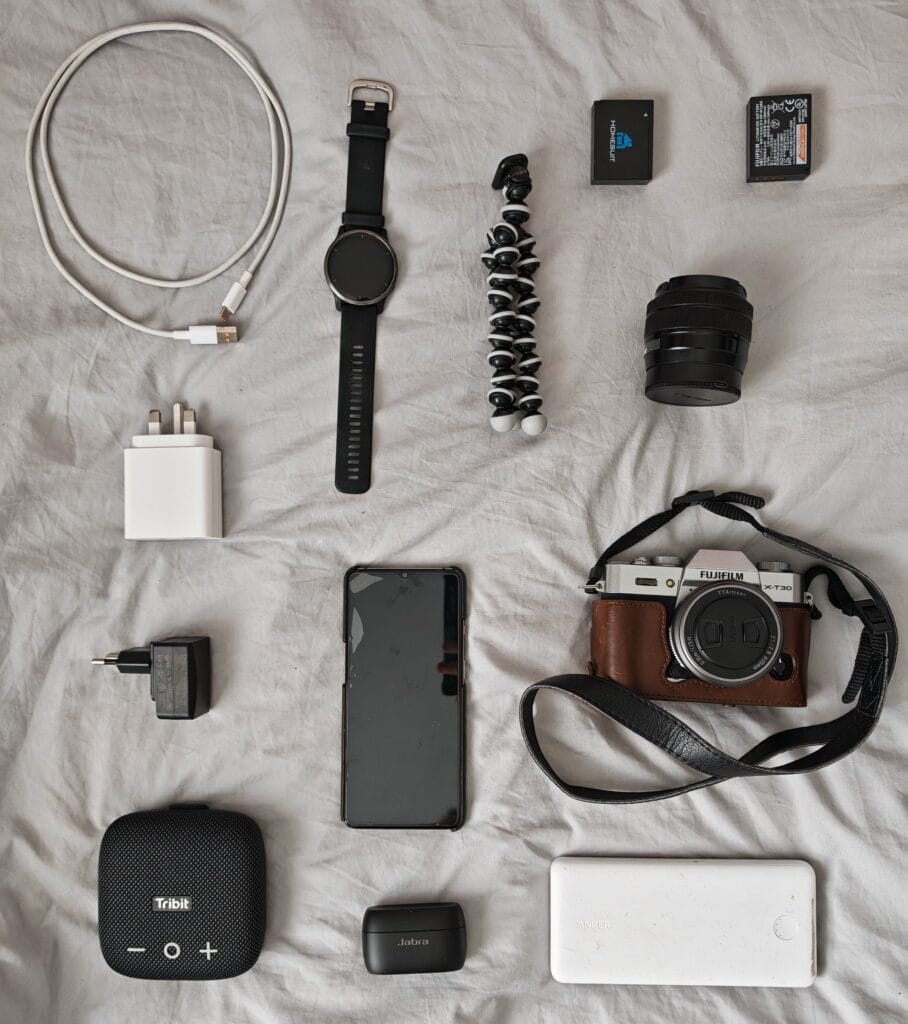
- Camera – Fujifilm X-T30 Mirrorless
For years, I used my phone as my primary camera, with some incredible photos from Nepal and Canada. However, I’ve recently enjoyed using a Mirrorless camera to capture my travels. The Fujifilm X-T30 is a fantastic compact travel camera that I use with a 15-45mm lens. See the full Fujifilm X-T30 Camera Review here. - Spare Batteries & Camera Accessories –
In comparison, one disadvantage of Mirrorless cameras vs DSLR cameras is the reduced battery life, so it’s worth keeping an extra battery with you to swap out. - Power Bank – Anker 325
You never know when you might need a charger to top up a phone, watch or camera. It adds some weight, but the Anker can give 4 full charges. A smaller 1 charge powerband would be better with a heavy backpack. - Phone – I love hiking to escape technology and be out in nature. But let’s be honest, it’s unlikely we will be leaving our phones at home for a whole day. My main uses on a day hike are for the camera, emergency calls and for checking transport to and from the trailhead.
- Headphones – Jabra Elite Active 75t (upgraded to Elite 8 Active)
Originally, I brought these primarily for running, but these wireless noise-cancelling earbuds come with me everywhere. For trekking, they have a small case which holds multiple full recharges and is handy when on planes, buses or wanting some downtime in the evening. - Smart GPS Watch – Garmin Venu 2
I have been converted to a smartwatch thanks to the activity tracking and health stats features. The Venu 2 combined an active watch with lifestyle. The battery easily lasts a few days when using GPS for 7/8 hours a day to track the trek. - Adapter, Charger and USB Cables – Most likely, I will take a European 2-pin plug, which has worked in Nepal and Canada too. A Universal plug would be useful too, and I always take my Fast Charger for my phone, which I can plug a USB-C or USB-B cable into, depending on the device.
Annapurna Circuit Packing List: Food & Drink
On a teahouse trek with a guide, lunches and dinners generally consist of Dal Bhat eaten at teahouses en route. This means no need to bring cooking equipment or food supplies. The bonus is that your weight for your Annapurna Circuit Packing List will be much lighter!
- Energy Bars & Gels – Nature Valley bars are my go-to snack in my trekking kit list. Additionally, I have tried MyProtein bars to give additional Protein on the trail. I usually carry an energy gel in an emergency if a boost is needed. Fruit and nuts in a small container are another good way to keep your energy up.
- Hydration Tablets and Water – I use High 5 Zero electrolyte tablets in the Hydration Bladder to maintain hydration throughout the day. I tend to drink 2 litres on average a day, but more at higher altitudes. To minimise the risk of Altitude sickness.
Annapurna Circuit Packing List: Misc
Annapurna Circuit Packing List: Toiletries
- Shampoo & Soap Bar– I have used the mini bottles as well as the Travel Soap Bar, which combines hair, body, face, hands and laundry into a scented bar.
- Mini Deodorant – To help with the sweat and smell
- Toothpaste & Toothbrush – I use a collapsible travel toothbrush to minimise space taken.
- Sun cream & Lip balm – Blistex Ultra SPF50 helps keep your lips from dryness and sunburn.
- Muscle Pain Relief – Tiger Balm Red is my new favourite to help ease pains and aches on a trek
- Paracetamol/Ibuprofen – In the 1st Aid kit and ideally not required.
- Altitude Sickness Medication – Diamox is a must to have when trekking above 3000m.
- Bite cream – Getting bitten by insects can be very annoying, so a small bite cream is worth carrying.
- Hand sanitiser – Useful when toilets are infrequent and before eating food to keep up good hygiene.
- Water purification tablets – Life Systems Chlorine Dioxide Tablets are more expensive than Chlorine ones, but more effective in killing bacteria and viruses.
Annapurna Circuit Packing List: Other items
- Wallet & Cash – I only take a small leather card holder for credit cards (Revolut), Cash, and ID.
- Prescription Glasses / Contact lenses – For vision
- Travel Journal – Moleskine Cahier Journals were first used in Nepal to document my travels, and now are brought on each trip to sketch and journal. These initial journals are what inspired the blog to share my travels!
- Book – Fiction or Guidebook: I enjoy reading about the area I’m exploring or bringing a not-too-heavy fiction book.
- Earplugs and Face Mask – Very handy when staying in a hostel or dorm, and people snore or keep the lights on. Sleep is a priority on a trek!
- Playing Cards – When you meet fellow backpackers, playing cards is a fun way to spend the evening and get to know each other
- Padlocks – 2 small padlocks with flexible cables give peace of mind to secure your stuff when flying or on buses.
Annapurna Circuit Packing List: Budget
The Annapurna Circuit requires a highly specific, thoughtful approach to gear. By striking the perfect balance between extreme cold-weather safety and strategic packability, you ensure that you aren’t shivering through the nights or unnecessarily exhausting yourself during the days. Remember, the Himalayas are wildly unpredictable—investing in a premium sleeping bag, relentless wind protection, and reliable water purification is the best insurance policy you can buy for your trip.
The cost of an Annapurna Circuit tour with a Guide is relatively cheap comapred ot Europe, but the quality of clothing and equipment needed can increase the price. It’s possible to rent kit in Kathmandu, but I prefer to have tried and tested kit as part of my Annapurna Circuit Packing List that I’ve used when training instead of risking used equipment.
Explore the Himalayas in 3D
Stop guessing elevation gains from flat paper maps. Discover the Annapurna Circuit and over 150 global trekking routes on TrekMind. Spin the globe, analyze daily stage data, and save your itineraries offline.
Launch TrekMind App
Annapurna Circuit Packing List: Summary
Planning a trek in Nepal? This Annapurna Circuit packing list covers everything you need for a safe and comfortable journey through one of the most iconic routes in the Himalayas. Whether you’re heading out on a full circuit or a shorter teahouse trek, having the right teahouse trekking gear in Nepal is essential for managing high-altitude conditions, freezing temperatures, and long hiking days.
This Annapurna Circuit Kit List guide breaks down exactly what to pack for Annapurna, including cold-weather clothing, altitude essentials, and lightweight trekking gear designed for teahouse stays—no camping equipment required. From insulating layers and waterproof shells to trekking poles and a reliable backpack, this Himalayas trekking kit ensures you stay warm, dry, and well-prepared from start to finish.
If you’re unsure what to bring, this teahouse trekking gear Nepal list simplifies your preparation with tried-and-tested gear recommendations specifically tailored for Annapurna Circuit conditions. Pack smart, respect the altitude, and enjoy one of the most culturally rich and visually staggering trekking routes on the planet!
Annapurna Circuit Packing List: FAQs
What is the most important item on an Annapurna Circuit packing list?
Layering is the most important—especially a warm down jacket and a waterproof shell. Temperatures drop significantly at higher elevations.
Do I need camping gear for the Annapurna Circuit?
No. Most trekkers rely on teahouses, so your teahouse trekking gear in Nepal should focus on lightweight clothing and personal essentials instead of tents or cooking equipment.
How cold does it get on the Annapurna Circuit?
Temperatures can fall below freezing, especially around Thorong La Pass. Proper cold-weather gear is critical in your Himalayas trekking kit.
What backpack size is best for Annapurna trekking?
A 40–60L backpack is ideal if you’re carrying your own gear. Smaller daypacks work if you have a porter.
Are trekking poles necessary for Annapurna?
Not mandatory, but highly recommended. They improve stability on steep descents and help conserve energy at altitude.
Can you rent gear in Kathmandu for your Annapurna Circuit packing list?
Yes, you can rent many items in Kathmandu to complete your Annapurna Circuit packing list, including down jackets, sleeping bags, and trekking poles. However, quality varies, so for critical gear like boots or base layers, it’s best to bring your own.
Do you need crampons on your Annapurna Circuit packing list?
Crampons are not usually required on a standard Annapurna Circuit packing list, but they can be useful in winter or if there is heavy snow around Thorong La Pass. In most seasons, trekking poles and good traction footwear are enough.
How heavy should your Annapurna Circuit packing list be?
Your Annapurna Circuit packing list should ideally stay under 10–12 kg if you are carrying your own gear. Since this is a teahouse trek, you don’t need cooking equipment, allowing you to keep your load light and manageable.