
Finding the right pair of winter mountain gloves can be surprisingly difficult. They need to be warm enough for freezing temperatures, dexterous enough to handle trekking poles and climbing equipment, and durable enough to survive years of use in harsh alpine environments. After testing countless models over the years, the Mountain Equipment Guide Glove has become one of my go-to choices for winter hiking, mountaineering and cold-weather adventures.
Designed as a premium all-round mountain glove, the Mountain Equipment Guide Glove balances warmth, protection and dexterity better than many heavily insulated alternatives. Whether navigating snowy trails, scrambling over alpine terrain, or facing strong winds on exposed ridgelines, they aim to provide the protection needed without sacrificing too much feel and movement.
In this kit review, I’ll cover everything you need to know about the gloves, including fit, comfort, durability, waterproofing, warmth, and where they perform best in real-world mountain conditions.
Field Note: This guide contains affiliate links. If you purchase gear through these links, I may earn a small commission at no extra cost to you. I only recommend equipment I have personally mountain-tested and trust.

Mountain Equipment Guide Gloves: Introduction
The Mountain Equipment Guide Gloves are one of the most popular hiking cold-weather gloves available. I chose these before trekking the Annapurna Circuit due to the high altitude and freezing temperatures I would experience crossing Thorong La Pass. The Guide glove has repeatedly gotten high reviews for its mix of warmth, dexterity and relative affordability, given its waterproofing without the Gore-Tex price tag. The glove is great for hiking and trekking adventures where temperatures and winter conditions are severe, but these are not technical alpine climbing gloves.
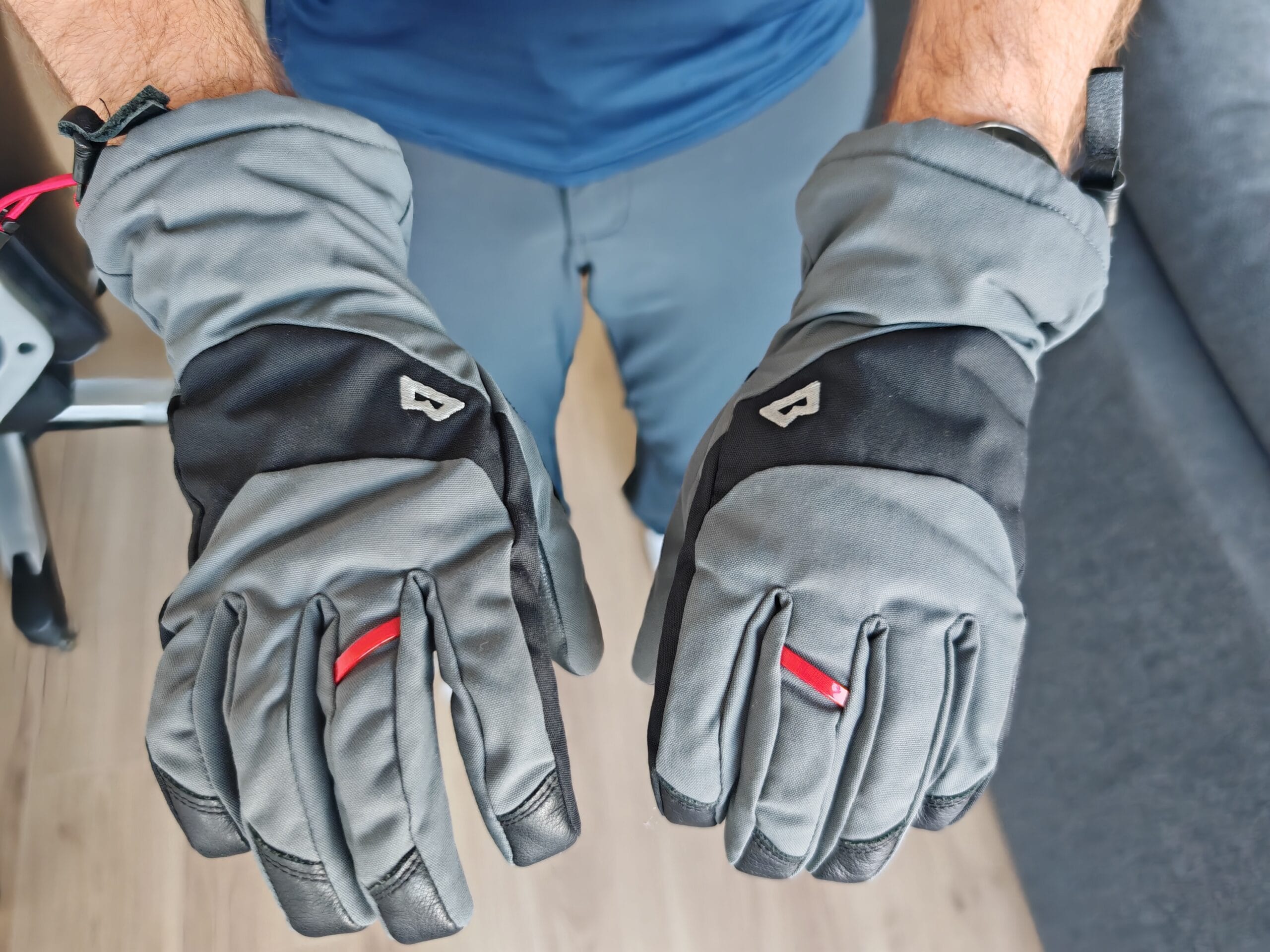
Primarily targeted at winter mountaineering and alpine use, these gloves also serve high-altitude trekking and winter hiking exceptionally well due to the all-day comfort and mobility provided. The Mountain Equipment Guide Glove uses Primaloft Gold insulation, a Gore-Tex insert (not fully Gore-Tex) and a 160D Outer Fabric with leather on the palms.
Mountain Equipment Guide Glove
- Category Winter mountaineering & alpine glove
- Insulation PrimaLoft® Gold insulation
- Waterproofing GORE-TEX® waterproof insert
- Outer Fabric Durable softshell with reinforced leather palm
- Best For Winter hiking, mountaineering, alpine scrambling, snowshoeing and general cold-weather mountain use
- Pros Excellent warmth-to-dexterity ratio, highly weather resistant, durable leather construction, comfortable all-day fit
- Cons Premium price, can feel warm during high-output activities, not designed for extreme expedition conditions
- Overall Verdict One of the best all-round mountaineering gloves for winter hillwalking and alpine adventures.
Key Specifications
- Outer Fabric: 160D Nylon Oxford (highly abrasion-resistant).
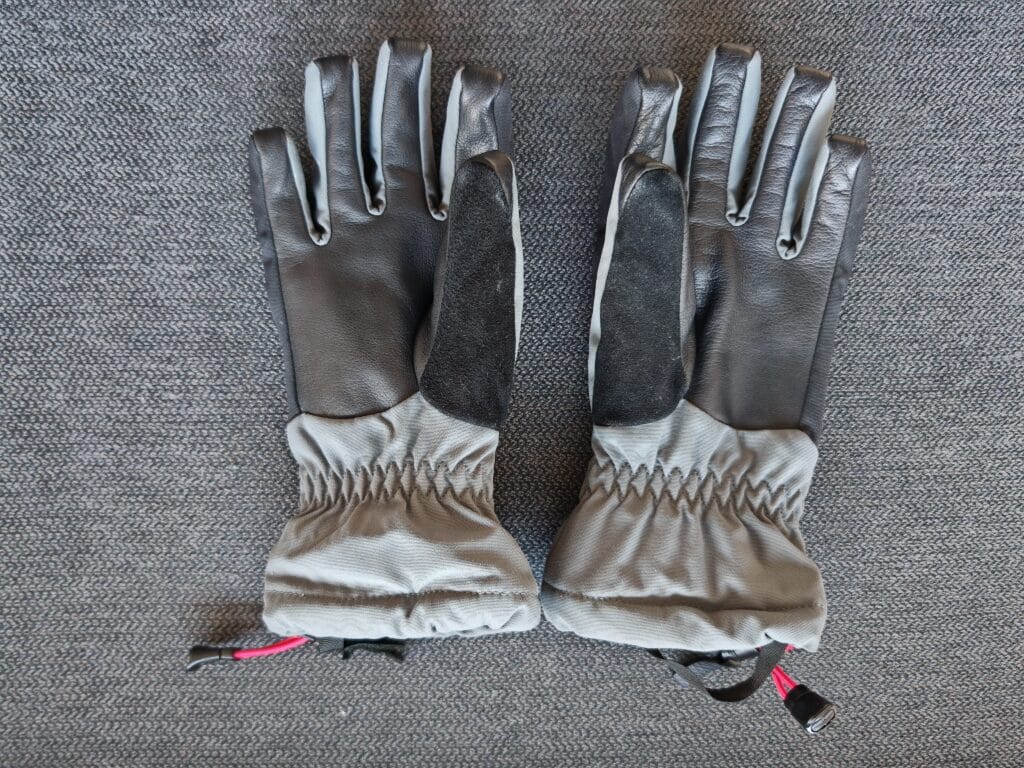
- Palm: Water-resistant Goatskin leather with reinforced overlays.
- Waterproof Insert: DRILITE® membrane (waterproof and breathable).
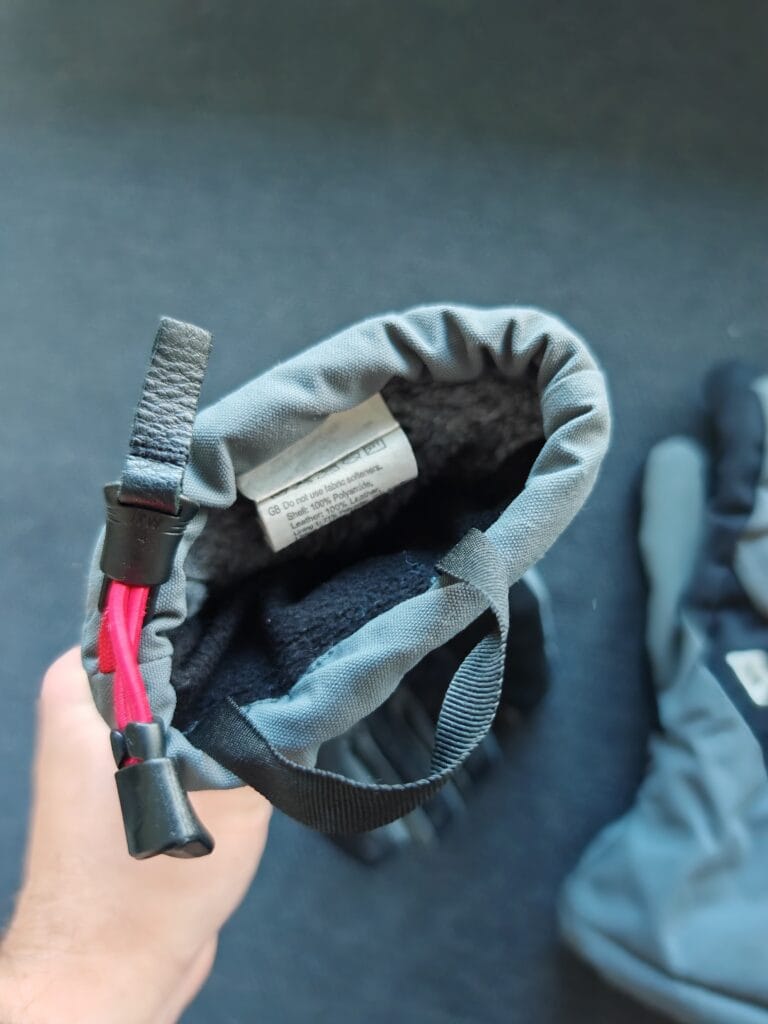
- Insulation/Lining: Fibre pile lining on the back of the hand (warmth) and microfleece lining on the palm (dexterity).
- Weight: Approximately 180g / 6.3oz (Pair, Size L).
- Fit: Pre-curved “Mountain Fit” for natural grip.
- Key Features: Single-handed drawcord closure, removable wrist tethers, carabiner carry loops, and a reversed suede nose wipe.
My Experience
The first test of the Mountain Equipment Guide Glove was in Nepal on the challenging trek over Thorong La Pass in -25 °C temperatures. I was hiking over snow-covered tracks in darkness with a biting wind in the high-altitude terrain. This was where the soft lining of the gloves added warmth and comfort, whilst the glove articulation allowed me to confidently use my trekking poles on the slippery snow.
At least I was exercising on this Himalayan test compared to a winter trip to Reykjavik in Iceland. The city was hovering around freezing all day, and on the Golden Circle Tour, I lived in my Mountain Equipment Guide Gloves apart form the take photograph with my Camera. Whilst standing around admiring the attractions in Icelandic winter gave a good stationary test. I even used Rab glove liners for added heat, but the gloves were doing a great job in keeping my fingers and hands warm.
Mountain Equipment Guide Gloves: The Strengths
1. Great Dexterity
Usually, a glove is either a thin liner or a bulky “oven mitt.” The Guide Glove strikes a rare balance that allows you to have great mountain versatility for many uses. By using high-loft fibre pile on the back of the hand to trap heat and thinner microfleece on the palm, Mountain Equipment has ensured you can actually feel your ice axe, trekking pole or ski poles without losing circulation. From experience, the glove doesn’t feel stiff and allows all the fingers to be articulated. Obviously, a winter mountaineering glove won’t be as effective for phones and cameras.
2. Bombproof Durability
The goatskin leather palm isn’t just for show; it’s designed for functionality and longevity. It wraps around the fingertips (a “roll-top” design) to eliminate seams at high-wear points. Whether you’re handling frozen ropes or scrambling over sharp rock, these gloves are built to take a beating that would shred lighter softshell alternatives. So far, the Mountain Equipment Guide Gloves have easily dealt with snow, rocks, as well as days using poles on the trail.
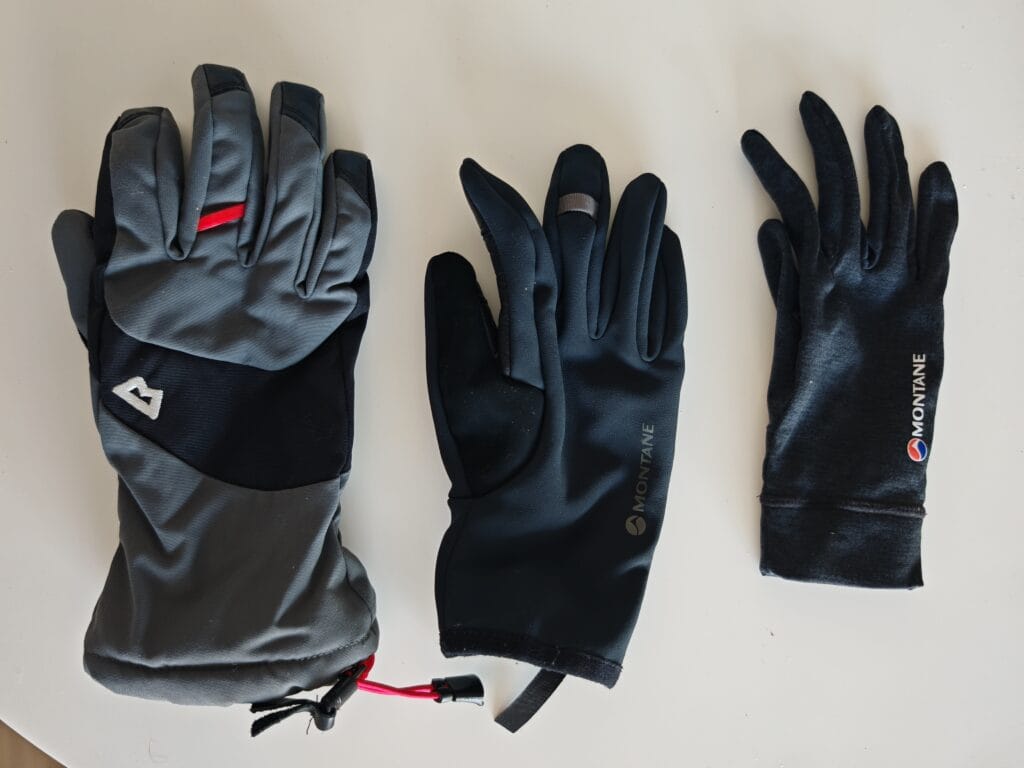
These are not lightweight gloves designed solely for fast-and-light adventures like my Montane Windmaster Gloves. The leather palm, reinforced fingers, and robust outer materials stand up well to using Trekking poles, ice axes, scrambling, and in snowy conditions. After years of use, durability remains one of their standout features compared to many synthetic alternatives, and they look good as new!
3. Thoughtful “Field” Features
The removable wrist tethers are a lifesaver; you can pull your gloves off to take a photo or adjust your boots without worrying about them blowing off a ridgeline. They feature carabiner loops on the fingers, and this allows you to hang them upside down on your harness so they don’t fill with snow. And finally, the nose wipe feature is very handy when the weather is awful. Mountain Equipment have added smart features that directly help outdoor mountain activities without adding weight or annoyance.
4. All-Day Comfort & Warmth
The biggest strength of the Mountain Equipment Guide Gloves is their warmth. The combination of PrimaLoft Gold insulation, a fleece lining, and a substantial construction makes them ideal for winter hiking, mountaineering, and cold alpine conditions. I found they handled Icelandic winter temperatures, Early Himalayan mornings on the Annapurna Circuit, Snow-covered trails around Vancouver, and freezing mountain summits. The pre-curved design and leather construction create a glove that feels natural when gripping axes, poles, and backpacks and doesn’t feel excessively stiff.
5. Exceptional Weather Protection
The Gore-Tex insert performs exceptionally well during snow, sleet, wet winter weather, and windy exposed trails. They’re not expedition mitts built for large Himalayan Adventures or scaling alpine climbing objectives. But for most winter mountaineering and hiking scenarios, I’ve rarely felt exposed to the elements. The Gloves have a long cuff that helps keep snow out and allows them to be over a jacket cuff.
6. Versatile Mountain Glove
One reason I keep reaching for them is their versatility as an All-Mountain glove. They sit in a useful middle ground where they’re suitable for Winter hiking, Snowshoeing, Easy Mountaineering, Alpine scrambling, and general travel in cold climates. Instead of owning multiple specialist gloves, these can comfortably cover most mountain adventures. I use Montane Windjammers for shoulder season adventures, then break out the Mountain Equipment Guide Gloves when winter sets in. This versatility for hiking, climbing and trekking helps justify the slightly higher price-tag but saves paying for a fully Gore-Tex glove.

Mountain Equipment Guide Gloves: The Considerations
1. Breathability Limits
While the DRILITE® membrane is excellent at keeping external water out, it isn’t quite as breathable as high-end Gore-Tex. If you are high-exertion (e.g., heavy skinning or fast uphill trekking), your hands may get slightly clammy from internal sweat. These are designed very much for winter activities instead of autumn or spring hikes in milder temperatures.
2. The “Cold Soak” Factor
Because the outer is a mix of nylon and leather, once the leather becomes fully saturated in a heavy downpour, the gloves can feel heavy and cold. They stay waterproof internally, but the “evaporative cooling” on the outside can make your hands feel chilled if you aren’t moving fast. These gloves are not fully Gore-Tex, so expect to pay a higher premium for this luxury if you need complete hand waterproof protection.
3. Not a “Deep Freeze” Glove
These are active mountaineering gloves. If you are standing still at a belay station in -15°C (5°F) for an hour, you will likely need to swap these for a heavy-duty mitt. And whilst the dexterity is very good for easy ice axe work, trekking and hiking, it’s not a technical alpine glove for tying knots or for use with phones or cameras. When using my Fujifilm camera, I’ve had to remove my Guide gloves and only use glove liners for a few minutes.
So ideally, the Mountain Equipment Guide Gloves are not designed for very high altitude expeditions, 6000m+ peaks, arctic travel and extreme sub-zero environments. I would recommend looking at expedition gloves or mitts such as the Outdoor Research Alti or Black Diamond Guide Gloves offering greater insulation.
4. Bulky for Travel
Compared with lighter softshell gloves, they take up a noticeable amount of space in a backpack. This is not preferable when trying to keep the backpack lightweight and keep the backpack weight down. There are more compact and warmer options such as Rab Down Gloves or expedition-style glove alternatives; however can cost more. I tend to use my Montane Windjammer for any summer treks or hikes, but as soon as the temperature drops, the Guide Gloves are worth the packing space.

Best Alternatives to the Mountain Equipment Guide Glove
While the Mountain Equipment Guide Glove is one of the best all-round options I’ve used for winter hiking and mountaineering, several excellent alternatives are worth considering depending on your priorities, budget, and intended use.
Rab Guide 2 GTX Gloves
The Rab Guide 2 GTX is probably the closest competitor to the Mountain Equipment Guide Glove. Featuring a GORE-TEX waterproof membrane, leather palm, and PrimaLoft insulation, it offers a similar balance of warmth, weather protection, and dexterity. If you’re a fan of Rab equipment or prefer a slightly softer fit, the Guide 2 GTX is an excellent alternative for winter hillwalking and mountaineering.
Black Diamond Guide Gloves
The Black Diamond Guide Gloves are renowned for their exceptional warmth and durability. Built for harsh winter conditions, they feature a removable insulated liner and a highly weather-resistant outer shell. While they are bulkier than the Mountain Equipment Guide Gloves, they excel in extremely cold environments and are a popular choice among winter mountaineers and ski tourers.
Outdoor Research Alti Gloves
For those tackling high-altitude objectives or severe winter conditions, the Outdoor Research Alti Gloves offer expedition-level protection. Designed for mountaineering in some of the world’s coldest environments, they provide significantly more warmth than the Guide Gloves, although this comes at the expense of dexterity and packability.
Arc’teryx Fission SV Gloves
The Arc’teryx Fission SV is a premium alpine glove that focuses on weather protection, comfort, and refined construction. Lightweight for its warmth level and exceptionally well-made, it performs well during technical mountain activities where dexterity is important. The downside is the premium Arc’teryx price tag, which places it among the most expensive options in this category.
Where these gloves earned their keep
I don’t review gear straight out of the packaging. The Mountain Equipment Guide Gloves have been tested through Icelandic winters, Himalayan trekking routes, European city breaks, and countless rainy days in British Columbia.




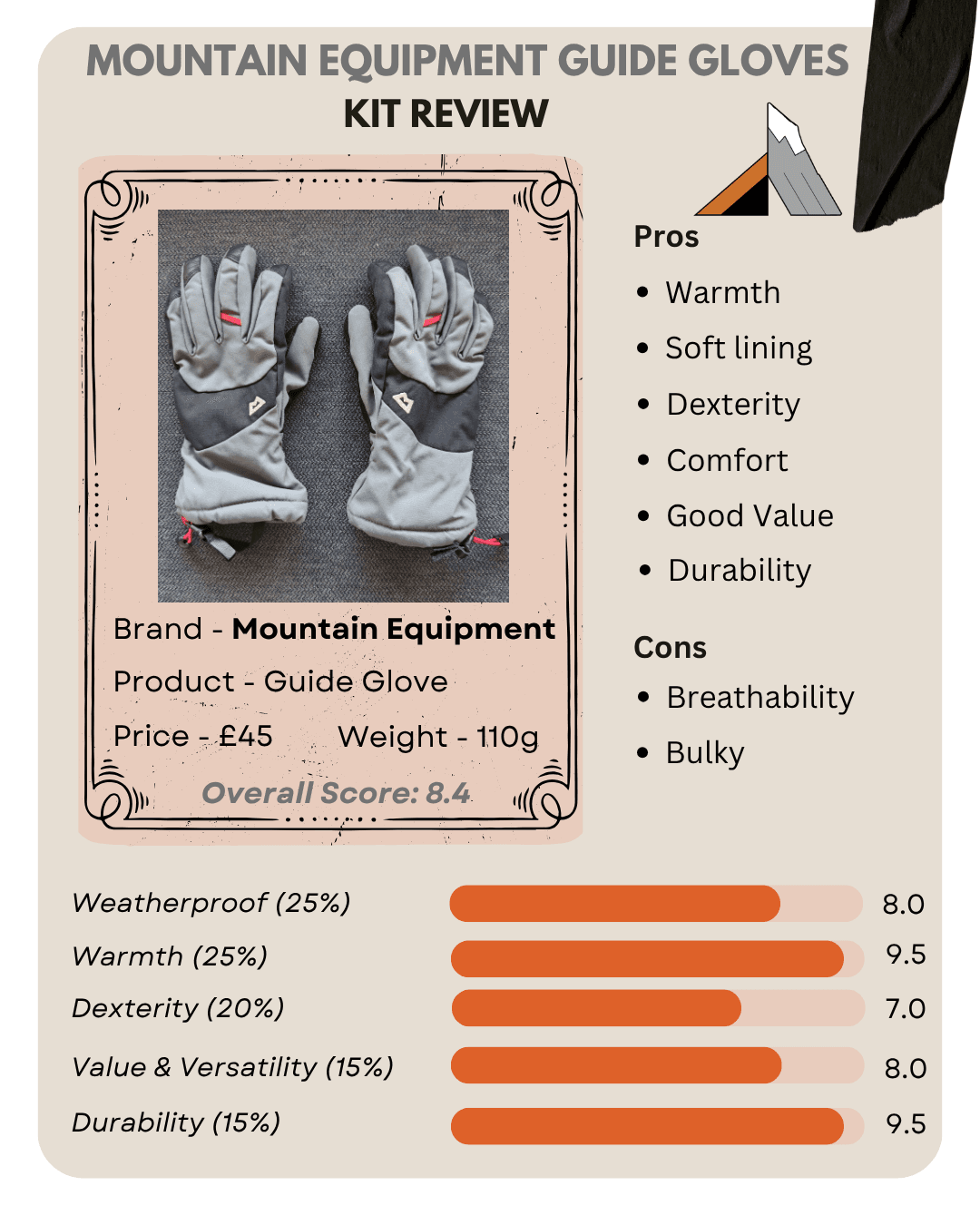
Mountain Equipment Guide Gloves: Kit Ratings
Based on our field testing, here is how the Mountain Equipment Guide Gloves stack up on the Backpacker’s Mentality scale. As this is the first Gloves Review, I chose Weatherproofing and Warmth as the most highly weighted categories, as keeping out wind, cold, and rain is the main objective of a glove. Next, Dexterity for holding poles and any hand use is important. And then the normal Value, versatility, and durability, as you want any hiking item to last years and have a wide range of use cases.
Mountain Equipment Guide Glove Summary
The Mountain Equipment Guide Glove strikes an excellent balance between warmth, durability and functionality. While it may not be the lightest glove available, it delivers the protection and reliability needed for serious winter adventures without becoming overly bulky. It has reliably served me in the high-altitude Himalayas on the Annapurna Circuit and a city trip to Reykjavik, Iceland, in the depths of winter.
What impressed me most was the versatility. These gloves perform equally well during winter hiking, alpine scrambling and general mountaineering, making them a dependable choice for anyone spending extended time in cold mountain environments. As I plan to do more winter hiking and learn mountaineering in the next year, I know the Mountain Equipment Guide Gloves will be tested further.
If you’re searching for a pair of mountaineering gloves that can handle everything from windy ridgelines to sub-zero winter conditions, the Mountain Equipment Guide Glove remains one of the strongest options currently available. They aren’t cheap, but after extensive use, they’re the type of piece of gear that justifies the investment, especially with the excellent durability.
Mountain Equipment Guide Glove FAQs
Are the Mountain Equipment Guide Gloves waterproof?
Yes. The Mountain Equipment Guide Gloves use a waterproof insert designed to keep hands dry in snow, sleet and wet winter conditions while maintaining breathability during active use.
Are the Mountain Equipment Guide Gloves warm enough for winter mountaineering?
Yes. They are specifically designed for cold mountain environments and provide enough insulation for most winter hiking and mountaineering conditions while remaining practical for technical tasks.
What are the Mountain Equipment Guide Gloves made from?
The gloves combine durable outer materials with reinforced palms and synthetic insulation, creating a balance between weather protection, durability and dexterity.
Are the Mountain Equipment Guide Gloves good for trekking poles?
Yes. One of the strengths of the Guide Gloves is their dexterity compared to heavily insulated expedition gloves. They work well with trekking poles, ice axes and general winter hiking equipment.
Are the Mountain Equipment Guide Gloves suitable for ice climbing?
For general winter climbing and easier ice routes, yes. However, dedicated technical climbers may prefer a more specialised glove designed specifically for ice climbing performance.
How do the Mountain Equipment Guide Gloves fit?
Most users find the fit true to size. The gloves are designed with a slightly technical fit that balances warmth with hand movement and grip performance.
Are the Mountain Equipment Guide Gloves worth the money?
If you’re regularly hiking, mountaineering or spending time in winter mountain environments, the Guide Gloves offer excellent durability, warmth and weather protection, making them a worthwhile long-term investment.