
The Dolomites are unlike any other mountain range in the Alps. Their pale limestone towers, jagged ridgelines and dramatic valleys create a landscape that feels almost lunar, with scenery that attracts hikers, climbers and adventure travellers from all over the world. In recent years, the Dolomites have become more popular than ever, but there are still wild and rewarding ways to experience them beyond the busiest viewpoints.
For hikers looking for something more adventurous, a Dolomites Via Ferrata route is one of the best ways to explore these mountains. The region is famous for cable-protected climbing routes, exposed ridges and historic First World War trails, making the via ferratas of the Italian Dolomites some of the most exciting in Europe. They combine the freedom of trekking with the thrill of climbing, without requiring full technical mountaineering experience.
That is why Alta Via 4 is such a special route. Instead of simply road tripping between viewpoints or completing short day hikes, the Dolomites Alta Via 4 takes you deep into the mountains, linking remote rifugios, dramatic passes, famous peaks and some of the best via ferrata Dolomites. From Tre Cime di Lavaredo and Cadini di Misurina to Lago Sorapis and the tougher ferrata sections later in the route, this trek offers a proper adventure through the heart of the Dolomites.
This guide covers the best highlights from Alta Via 4, including the most memorable views, rifugios, via ferrata sections, route moments and planning tips. If you are researching a Dolomites ferrata adventure and want a route that blends hiking, scrambling, exposure and classic mountain hut culture, Alta Via 4 is one of the best options in the Italian Dolomites.
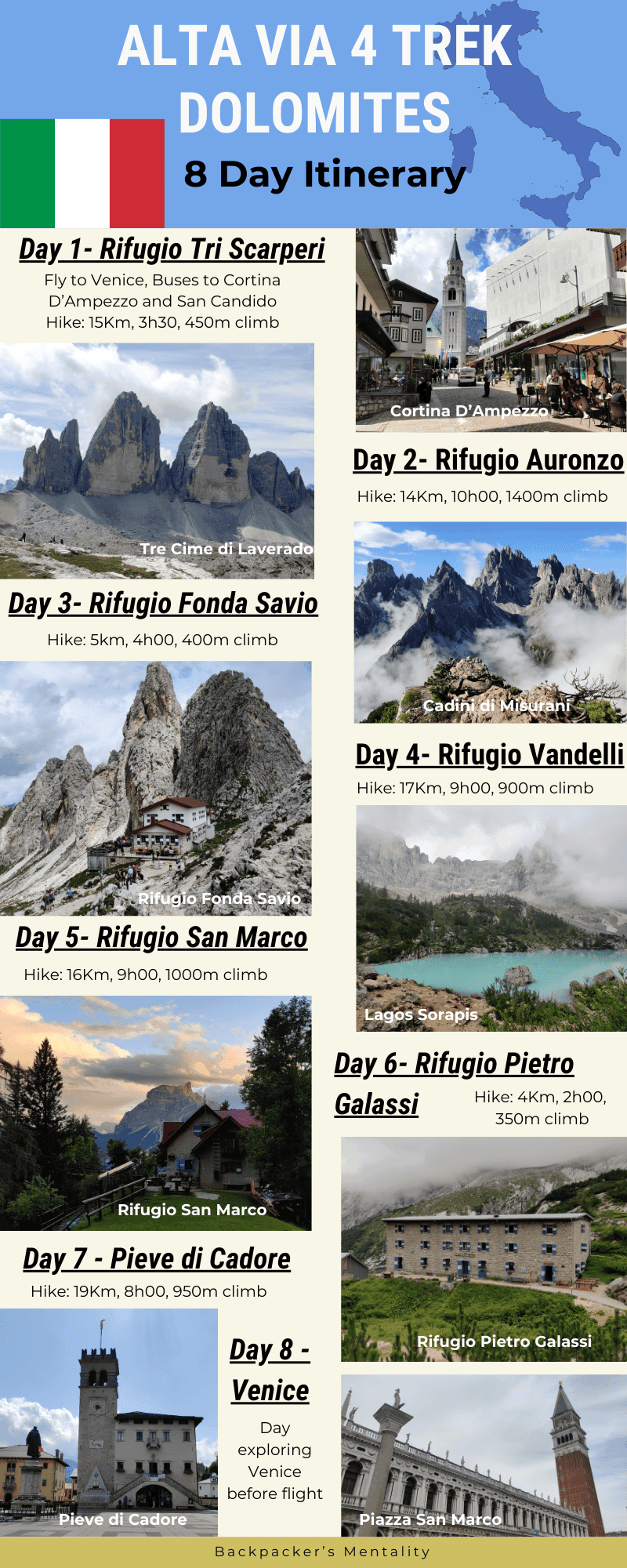
Alta Via 4 Overview
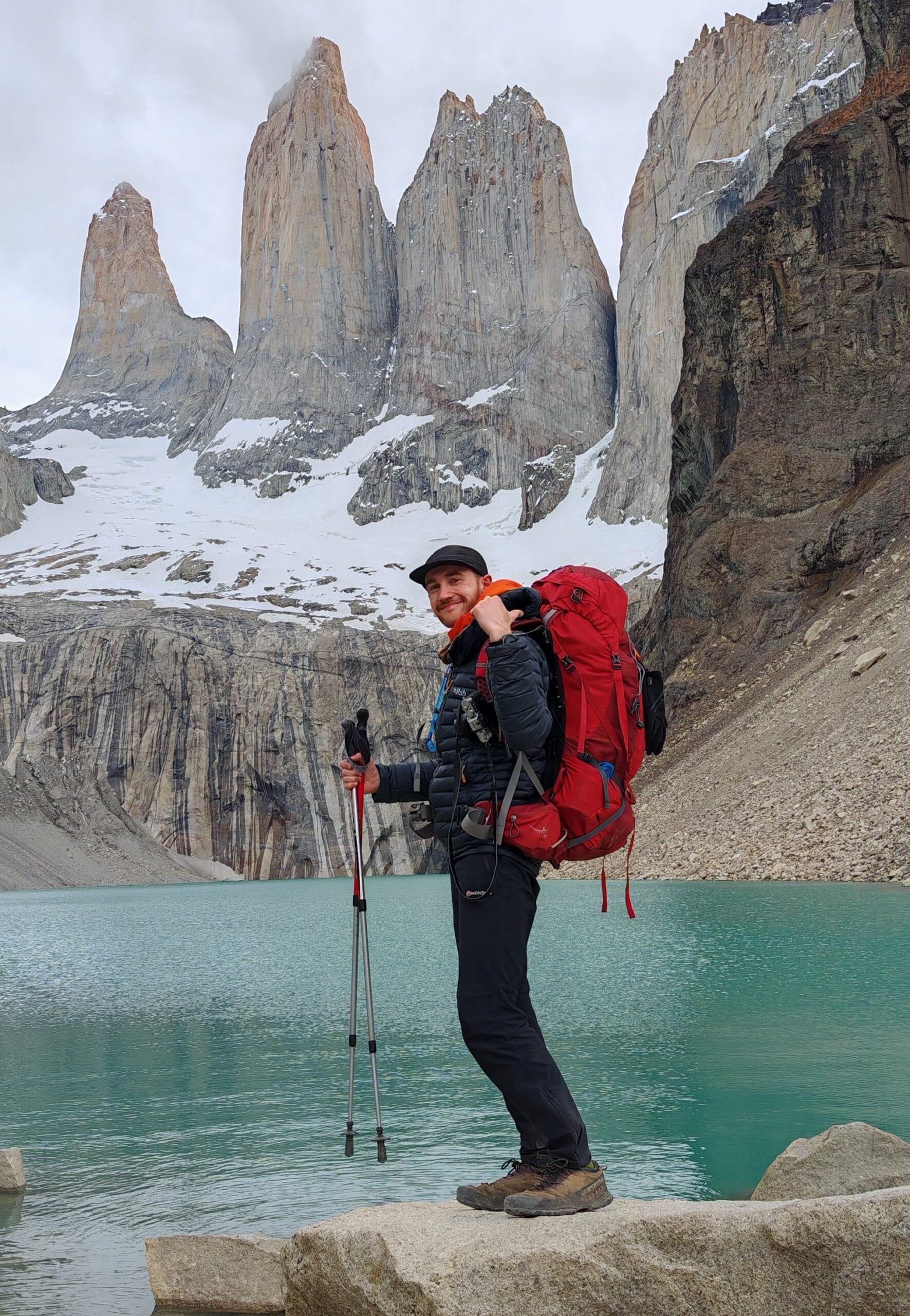
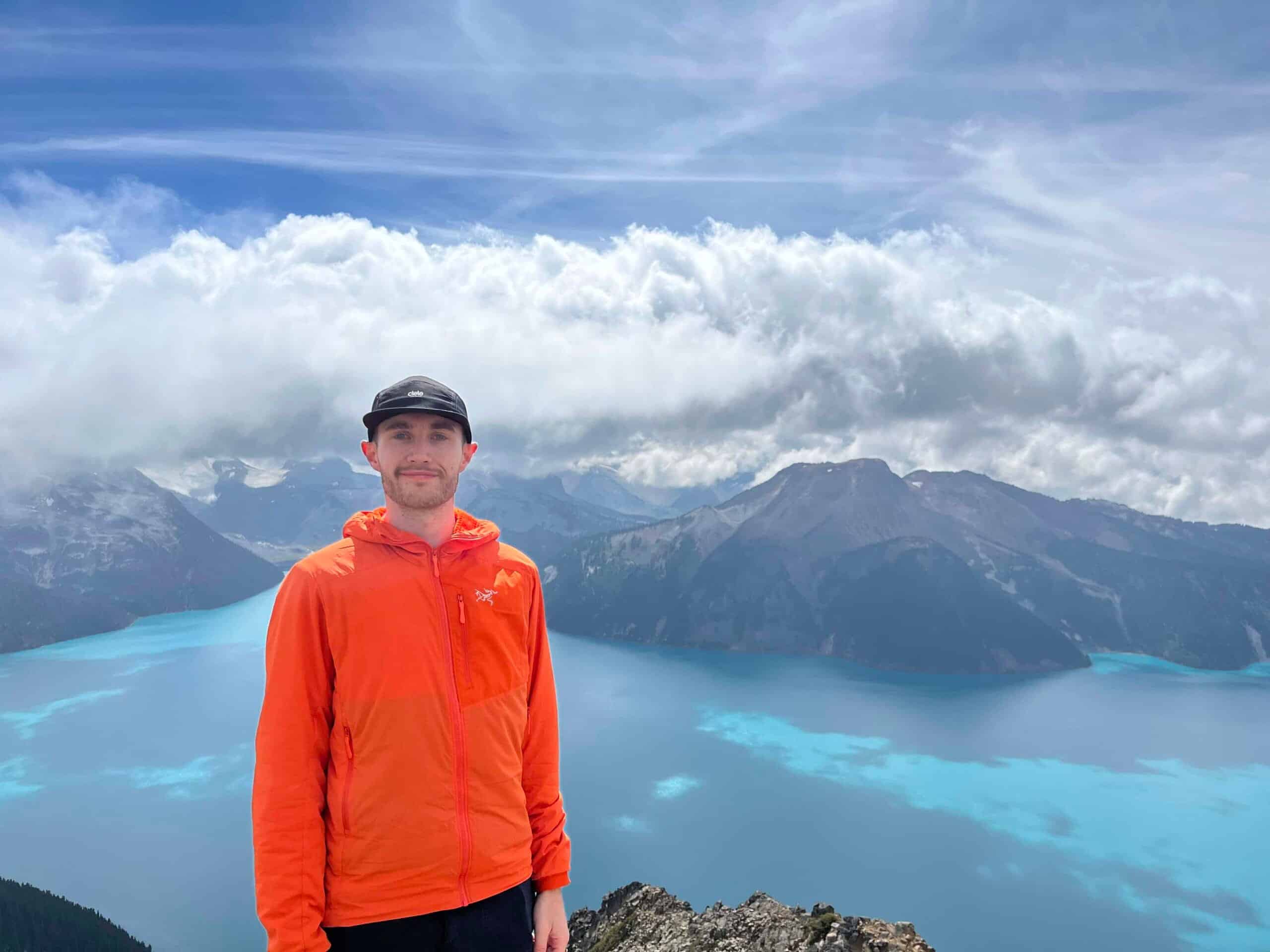
The hardest technically of the Dolomites Alta Via routes, Alta Via 4 takes in iconic must-see views such as the Tre Cime di Lavaredo, Cadini di Misurina and Lago Sorapis. I completed this challenging and rewarding high-altitude trek back in July 2023 with 2 friends (Sam and Rachel). I cover the complete circuit with a daily itinerary in The Complete Alta Via 4 7-Day Guide. Some people take up to 10 days to complete the 92 kilometres (57miles), but 7 days was a nice middle ground.
It’s possible to fast-pack the route in 5 days, traversing from San Candido (Innichen) in the north to Pieve di Cadore in the south. The trek incorporates Via Ferrata Dolomites sections requiring specialised equipment (see below). The Via Ferrata is hard, carrying heavy backpacks; however, it’s an exhilarating way to experience the Dolomites.
Alta Via 4 Stats
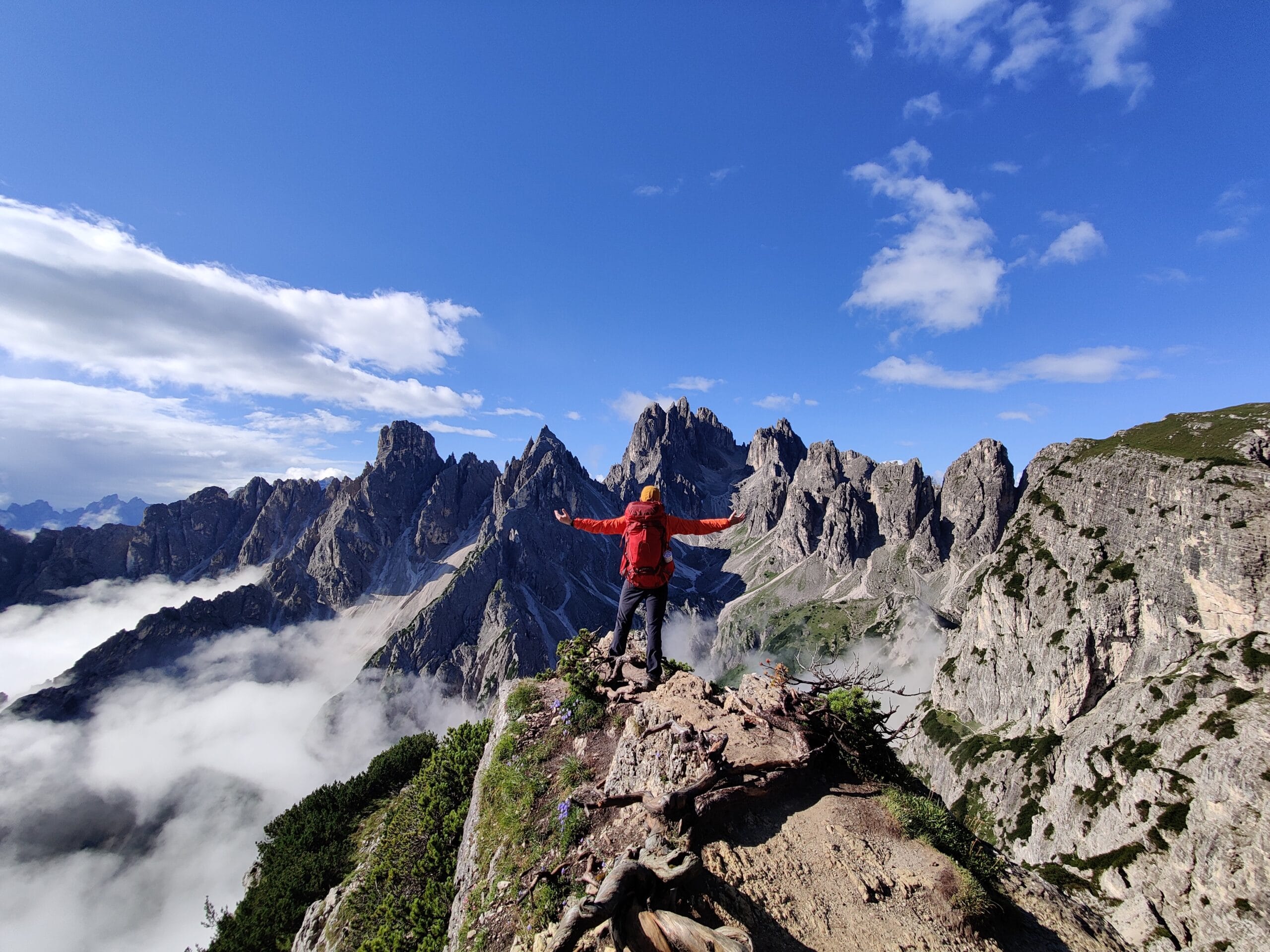
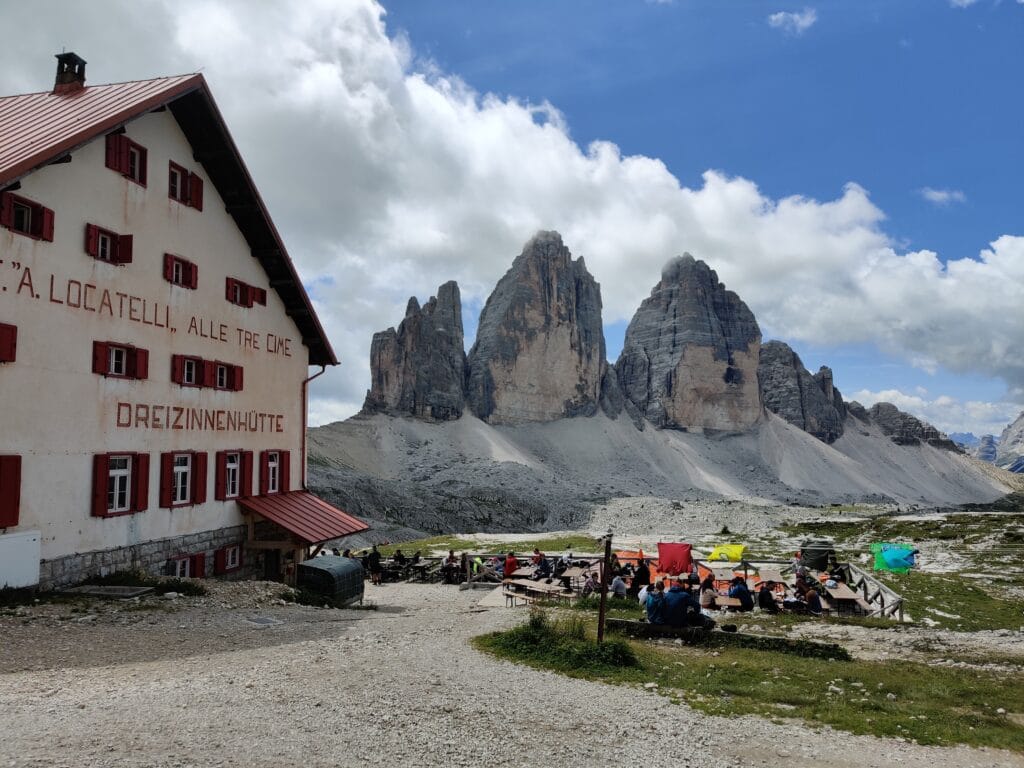
The accommodation along Alta Via 4 is in Rifugio mountain huts, perched on mountainsides with spectacular views and comforting food. Compared to the other Alta Via Treks, AV4 is much quieter at the Rifugios. You can get the best views of Cadini di Misurina before the day trippers arrive, too! And if possible, stay at Rifugio Locatelli (Dreizinnenhütte) for the best Tre Cime di Lavaredo views; it gets very busy during the day with hikers!
As this Dolomites Via Ferrata trek starts close to the Austrian Border, there are Italian and German signs, names and language spoken! The first few days feel more Austrian than Italian in the food served at the Rifugios. With the increasing popularity, why not see the wild, rugged and remote mountain trails and Via Ferrata on AV4. The mix of days hiking with Via Ferrata climbing offers a physical and mental workout. But the accomplishment at the end feels even sweeter, like the Italian ice cream!
Dolomites Alta Via Trekking Routes
There are 6 Dolomites Alta Via routes going from North to South, each with its own challenges and history attached. Our first choice was Alta Via 1, which is the most popular trek, over 120km long, but we found out quickly that reserving Rifugio (mountain hut) bookings was difficult. For the second most popular route, Alta Via 2, we debated doing half of the 2-week itinerary (187 km long), as I had only budgeted 6 days of annual leave, because I planned a Canadian Road Trip later that summer. We decided to wait to do Alta Via 2 in full another year.
In the end, after reading In a Faraway Land’s Guide to Alta Via 4 (AV4 for short), I was captivated by the idea of seeing Tre Cime di Lavaredo, Cadini di Misurina, Mount Antelao and Lake Sorapiss. This sounded like the most challenging of the Alta Via routes and involved thrilling Dolomites Via Ferrata. There was little information about AV4 back in 2023, whilst now there are several other blogs that have experienced this epic journey and helped share helpful information.
Plan smarter
with TrekMind
Most trek planning tools are built for tourists. I built TrekMind because nothing else let me properly compare routes before committing — interactive 3D globe, 100+ routes, full itineraries, and elevation data for the world’s best trails.
The Best Alta Via 4 Highlights
Tre Cime di Lavaredo
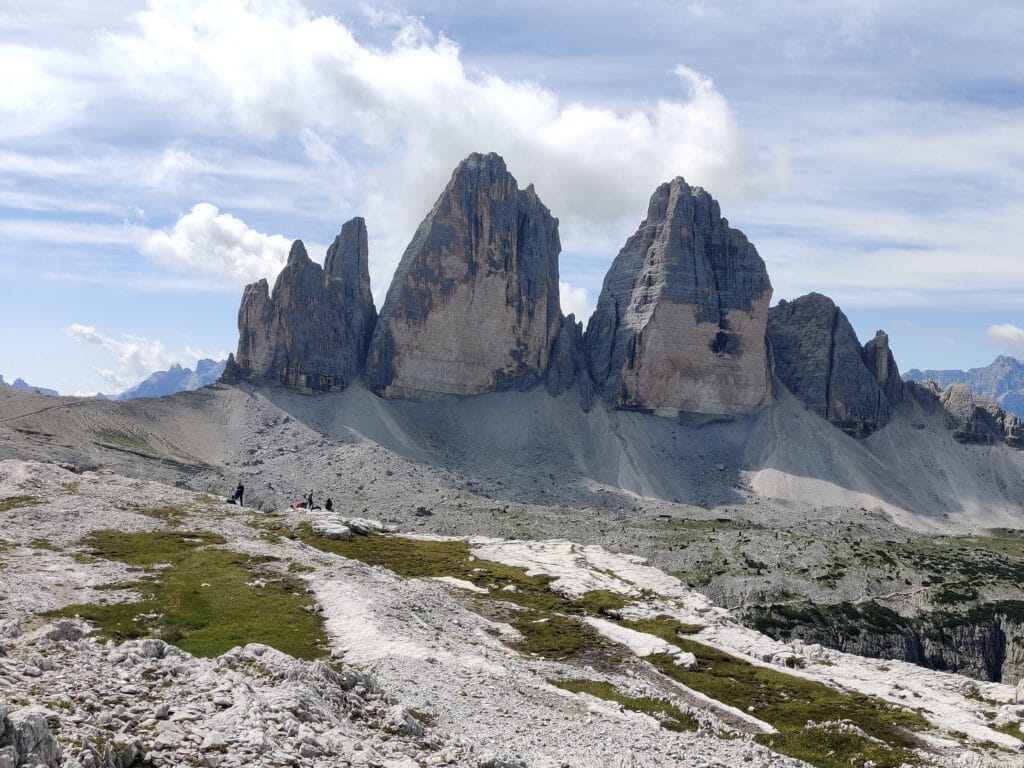
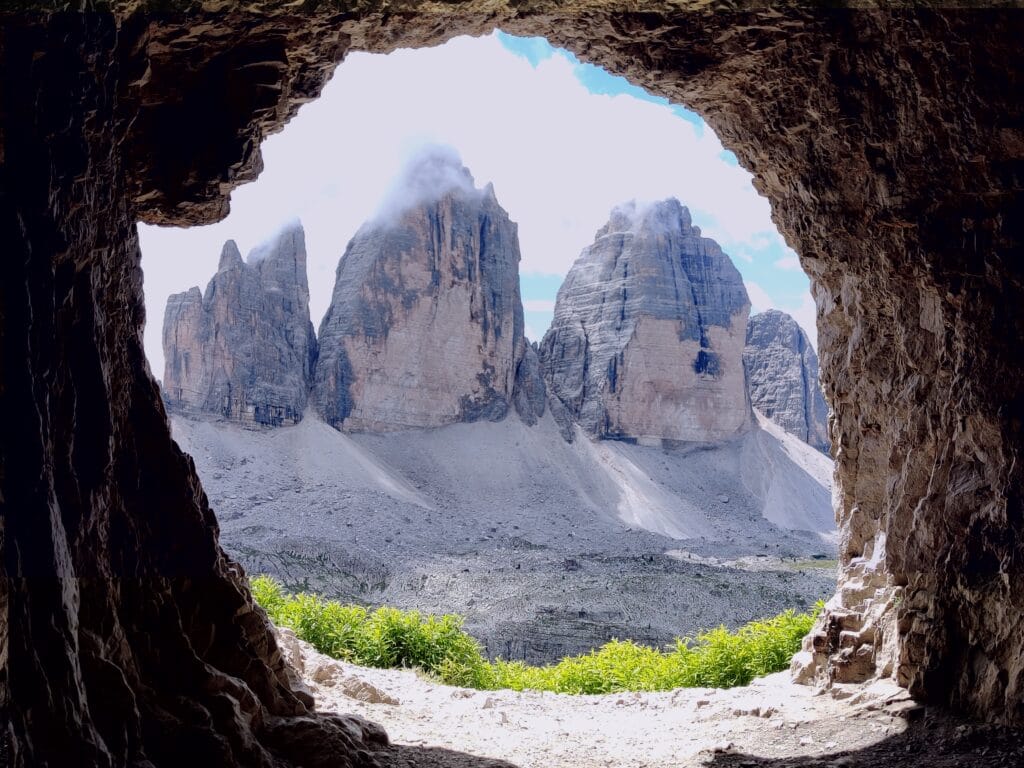
The most iconic triple spires of the Dolomites, Tre Cime di Lavaredo. One of the main reasons to do the Alta Via 4, Dolomites Via Ferrata Trek, is that the route passes via Rifugio Locatelli (very popular to reserve) and Rifugio Auronzo. The north faces offer the famous views with the Grotta delle Tre Cime and Sextenstein, providing the best photo opportunities away from the crowds.
Cadini di Misurina
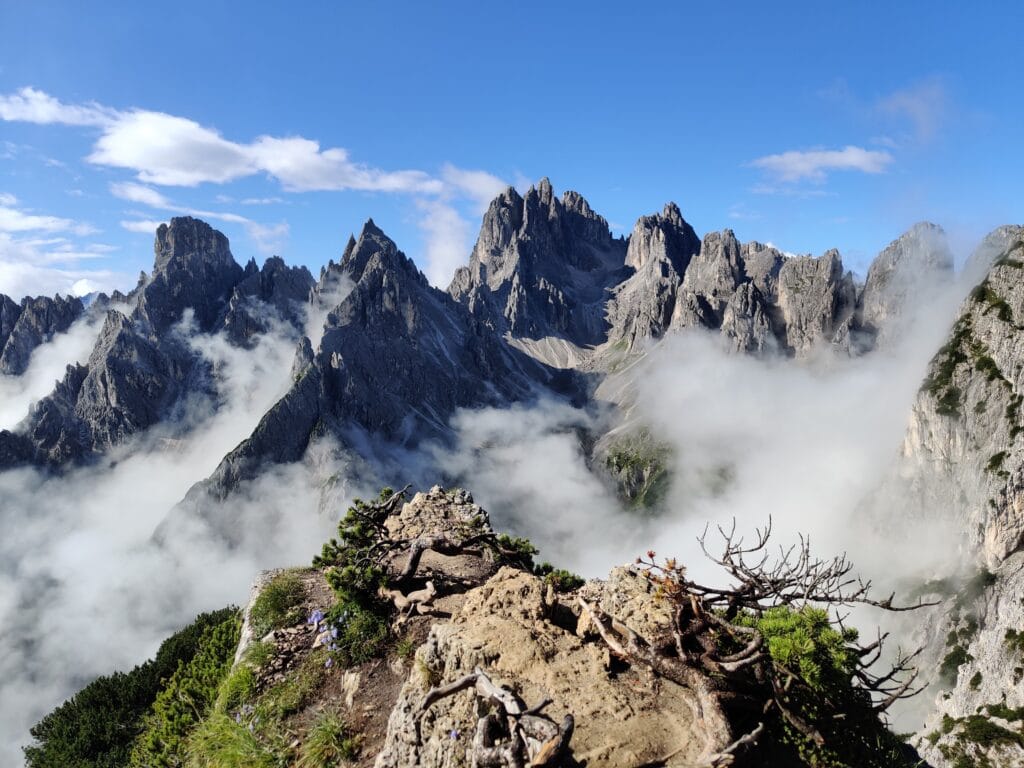
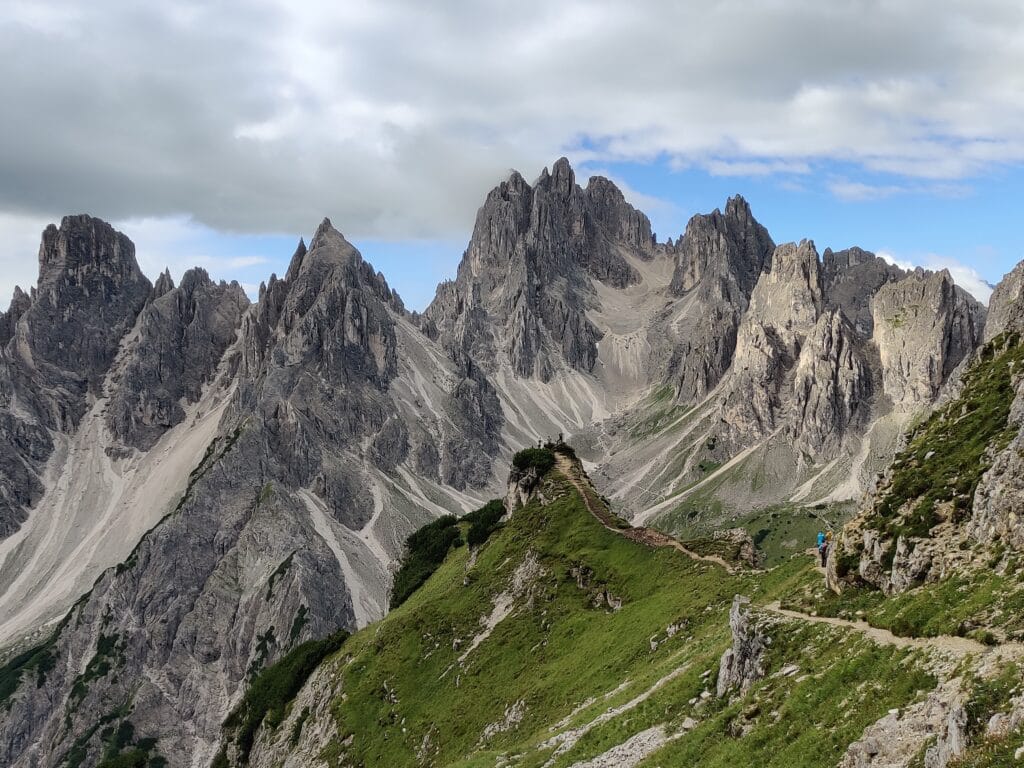
This viewpoint might be the most visited one in the Dolomites over the last year! I constantly see it on Instagram, and I realise how lucky we were to have a great view on Day 3. The jagged peaks and complex ridges have earned Cadini di Misurina the title: The Mordor of the Dolomites. You need to be patient, as the viewpoint is along a narrow ridge where not many people can stand. But the reward is one of the most photogenic sections of the Dolomites. And it’s perfectly on the Alta Via 4 route!
Lagos di Scorpais
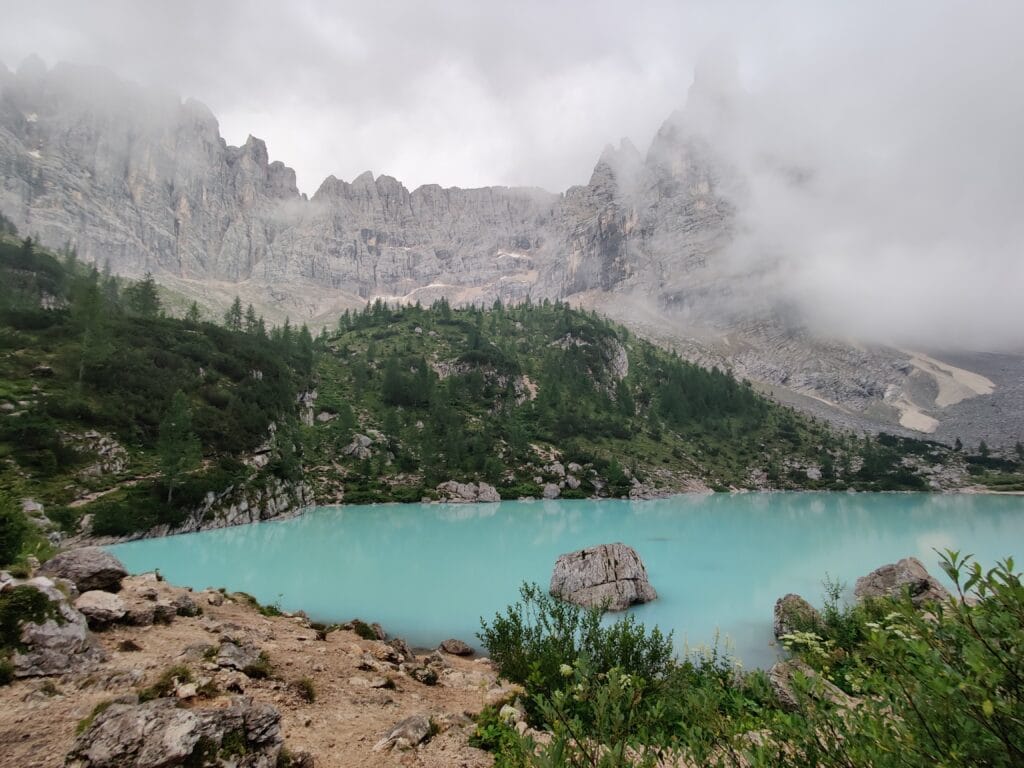
Lago Sorapis is a turquoise glacial lake surrounded by towering cliffs next to Rifugio Vandelli. The climb to reach the lake is brutal, but the majestic blue colour is mesmerising. Rifugio Vandelli was my favourite mountain hut we stayed at and offers sweeping panoramic valley views. There are multiple Via Ferrata routes around the Sorapis range with technical and challenging climbs, besides sheer drops.
Dolomites Via Ferrata Merlone
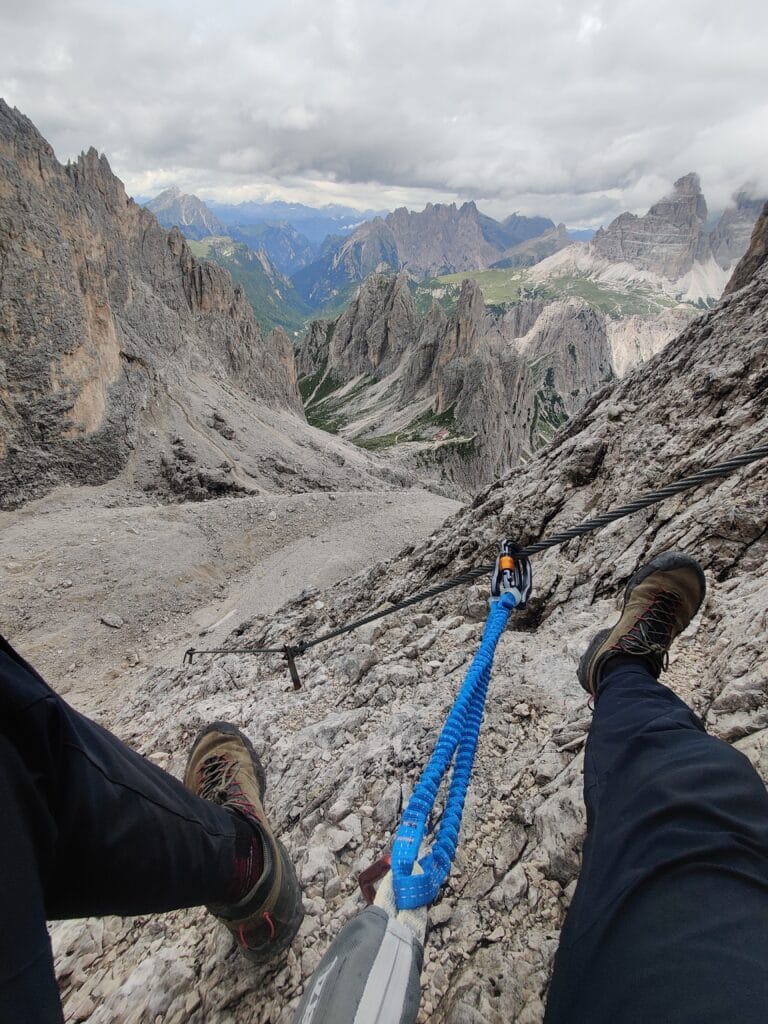
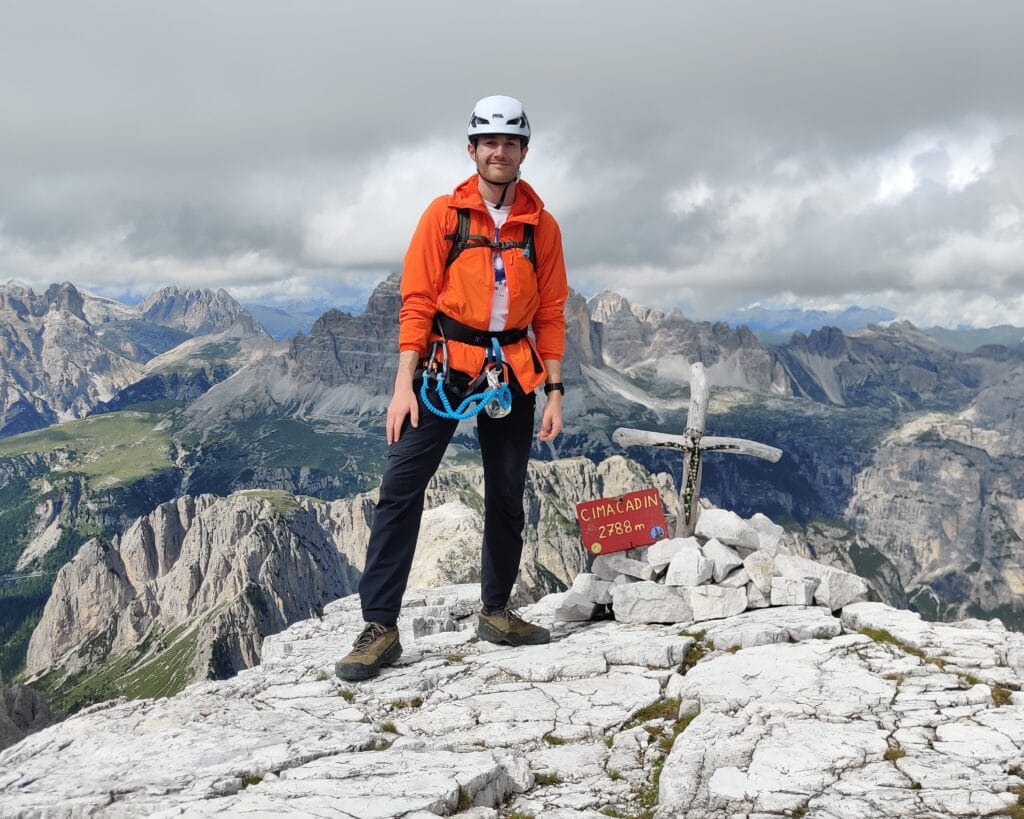
My favourite Dolomites Via Ferrata section was Merlone from Rifugio Fonda Savio. This short afternoon excursion allows the Trekking Backpacks to be swapped for lighter-weight day sacks, such as my Osprey Collapsible Dry Stuff Pack. The route scales a vertical wall with many long ladders and wire sections to navigate. It was the most technical and challenging Dolomites Via Ferrata we experienced, but the view from Cima Cadin at 2788m is stunning.
Monte Antelao
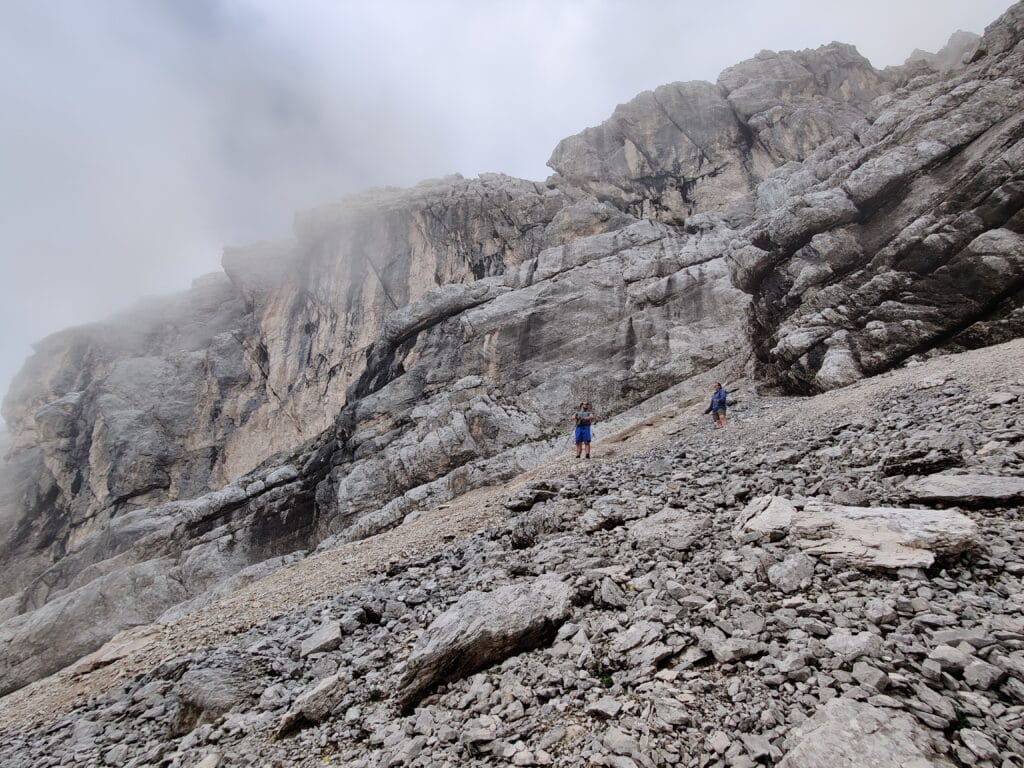
The Alta Via 4 route skirts Mount Antelao, standing at a colossal height of 3,263m. The closest accommodation is Rifugio Galassi, and it’s possible to climb to the summit, but only with the right experience, equipment and weather conditions (which we weren’t fortunate to have). Monte Antelao is known as the king of the Dolomites due to its prominent presence and towering height.
Rifugio San Marco
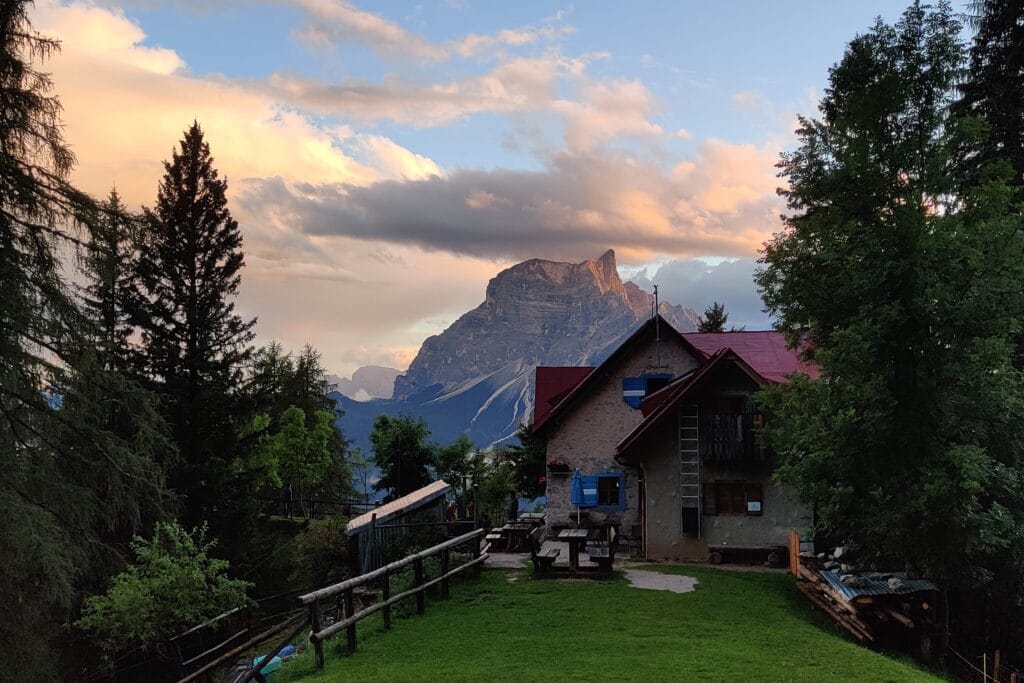
Staying at the Rifugios is the best authentic way to experience the Dolomites. These rustic mountain huts will provide hearty meals, a cosy atmosphere and a comfy bed to rest after a long day trekking. The evenings are a social event where you can swap stories with climbers, trekkers and Via Ferrata adventurers. Rifugio San Marco was particularly memorable for its communal feel and great service.
Dolomites Via Ferrata del Cadorin & Via Ferrata F.Berti
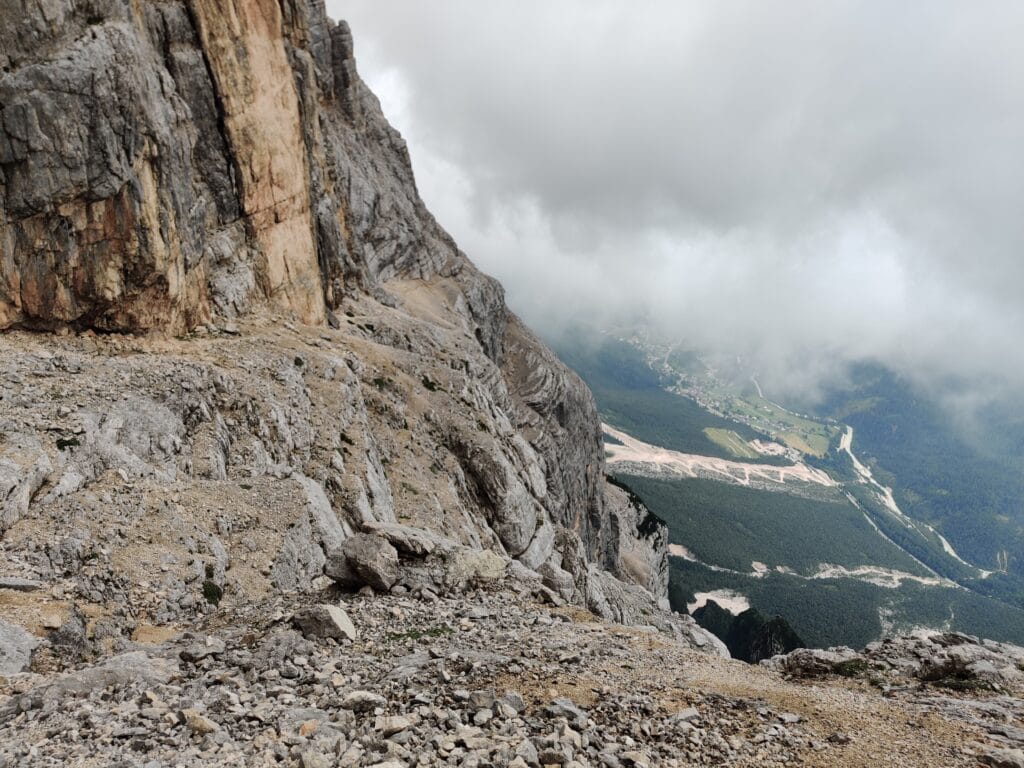
The Via Ferrata F.Berti is another challenging and long exposed section. The path traverses under a vertical rock face with a thousand-meter (no exaggeration) drop-off. There is loose scree to carefully cross before arriving at the fixed rope and ladder sections. There are a few tight spots, tricky climbing sections, and scary moments along V.F.Berti, so be safe and don’t look down! Whereas Via Ferrata del Cadorin was much safer, up a sloped rock face with easy climbing and no ladders. The Dolomites Via Ferrata on Alta Via 4 requires a mix of physical strength, stamina and mental focus in all weather conditions to complete this challenging trek.
Dolomites Via Ferrata- Half Climbing, Half Scrambling
1. What is the Dolomites Via Ferrata?
It translates as the “Iron Way”, and these ladders, cables and stemples were first built by soldiers in World War 1. Fast forward 100 years, and its popularity has exploded! This assisted scrambling climbing hybrid allows you to safely hang off a mountain without needing rope and attachments like Traditional Rock Climbing.
2. Dolomites Via Ferrata Equipment
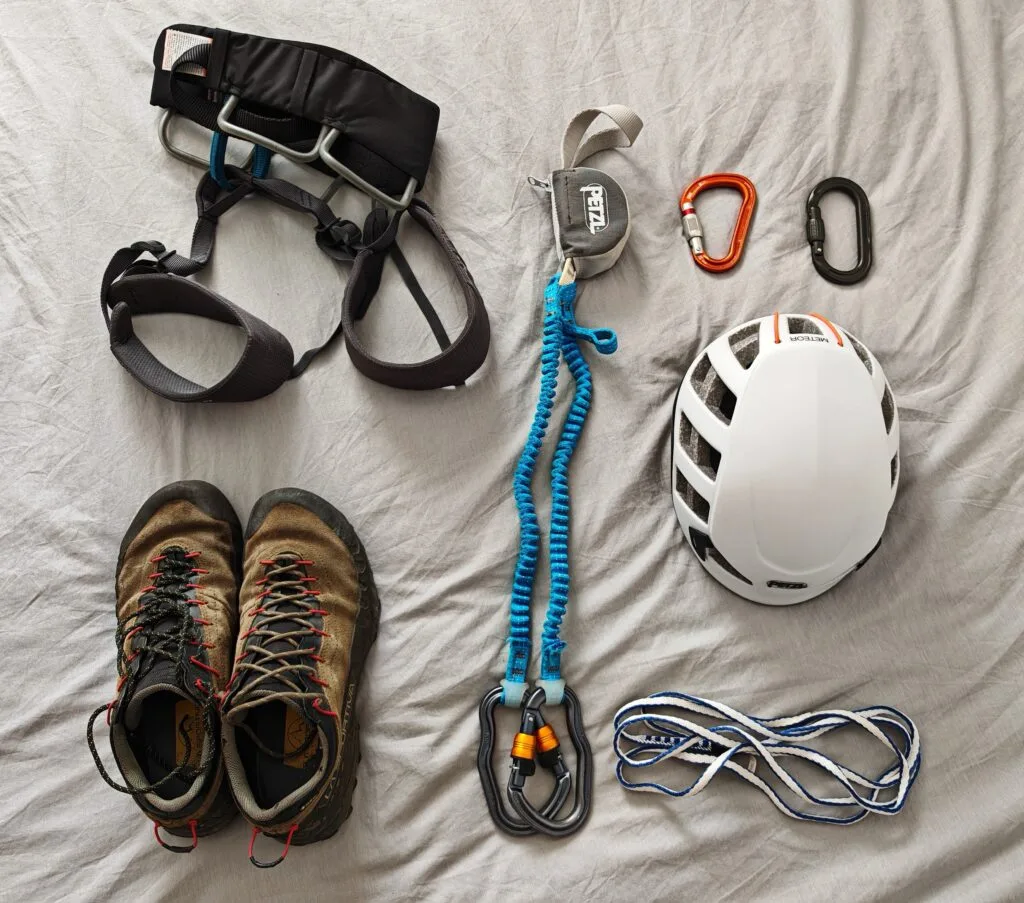
To do a Via Ferrata climb, you must have a harness, helmet and lanyard to safely ascend and descend the routes. I would also recommend another screw-gate carabiner, like the Petzl Attache, to help clip on close to the cable when stationary. You don’t need any advanced climbing technique, but you should be sure-footed and have a head for heights. We self-navigated the Via Ferrata sections, and I found much enjoyment in leading these, but if you prefer support, then a Guide can be hired.
I have seen climbing gloves be suggested, and I can understand why; they offer protection and grip on the cables, but we managed without them (I would be tempted next time, though). A head torch is very helpful as some sections go subterranean and into tunnels, so light would be pretty essential to escape again!
Dolomites Via Ferrata Planning
Rifugio Reservations
Reserve months ahead, especially in August. Many huts require cash (bring €20–50/day in coins/notes), and internet/WiFi is very patchy in the mountains. Having an Alpine or Mountaineering Membership can reduce the Rifugio price, too.
Tip: Be flexible with dates, as there is no single website to book accommodation. You need to email each Rifugio with a reservation request and only pay deposits once you have confirmation from each one.
Season
The best time is mid-July to mid-September. The Rifugios are open from the end of June to early September, but there is increased snow early in the season. We did AV4 in the last week of July and had sunny weather on most days. There were rainy days and low cloud cover on Days 5 and 6, where waterproofs and layers were needed.
Stay Connected Anywhere With Holafly eSIM
One of the easiest travel upgrades I’ve made is switching to an eSIM. Holafly provides unlimited data plans across Europe and many other destinations, allowing you to navigate, book transport, and stay connected without hunting for local SIM cards.
- Unlimited data in many destinations
- No physical SIM card required
- Ideal for Europe backpacking trips
- Activate before you travel
Fitness & Difficulty
The Alta Via 4 is a challenging trek for 7 continuous days. Some days have over 1000m of climbing and up to 20km distance whilst carrying a 15kg+ backpack. I recommend carrying the minimal amount of equipment possible to have better weight distribution on the Via Ferrata Sections. You should be comfortable with via ferrata gear (harness, helmet, lanyard) and exposure. At least one section per day may be steep, rocky, or cable-protected with some risk associated.
Carry a 1:25,000 Tabacco map for AV4 and a GPS app (e.g., Maps.me, AllTrails, Gaia GPS) — weather can change visibility in minutes. I brought a Kompass Dolomiten no. 672 Map 3. We also used AllTrails and Google Maps to check the routes, but I would recommend a physical map. The trail is marked with red/white paint blazes and cairns; in bad weather, they can be easy to miss.
Transport
To arrive at San Candido, there are buses from Venice to Cortina d’Ampezzo, then local buses to the trailhead. From Pieve di Cadore, there are buses/coaches back to Venice, but they need pre-booking, which is difficult when the exact trek end isn’t known (it’s a long 20Km final day). I would recommend flying to Venice as it gives the best options. Alternatively, fly to Verona and get a coach across the mountains to San Candido (Innichen).
Equipment and Kit List
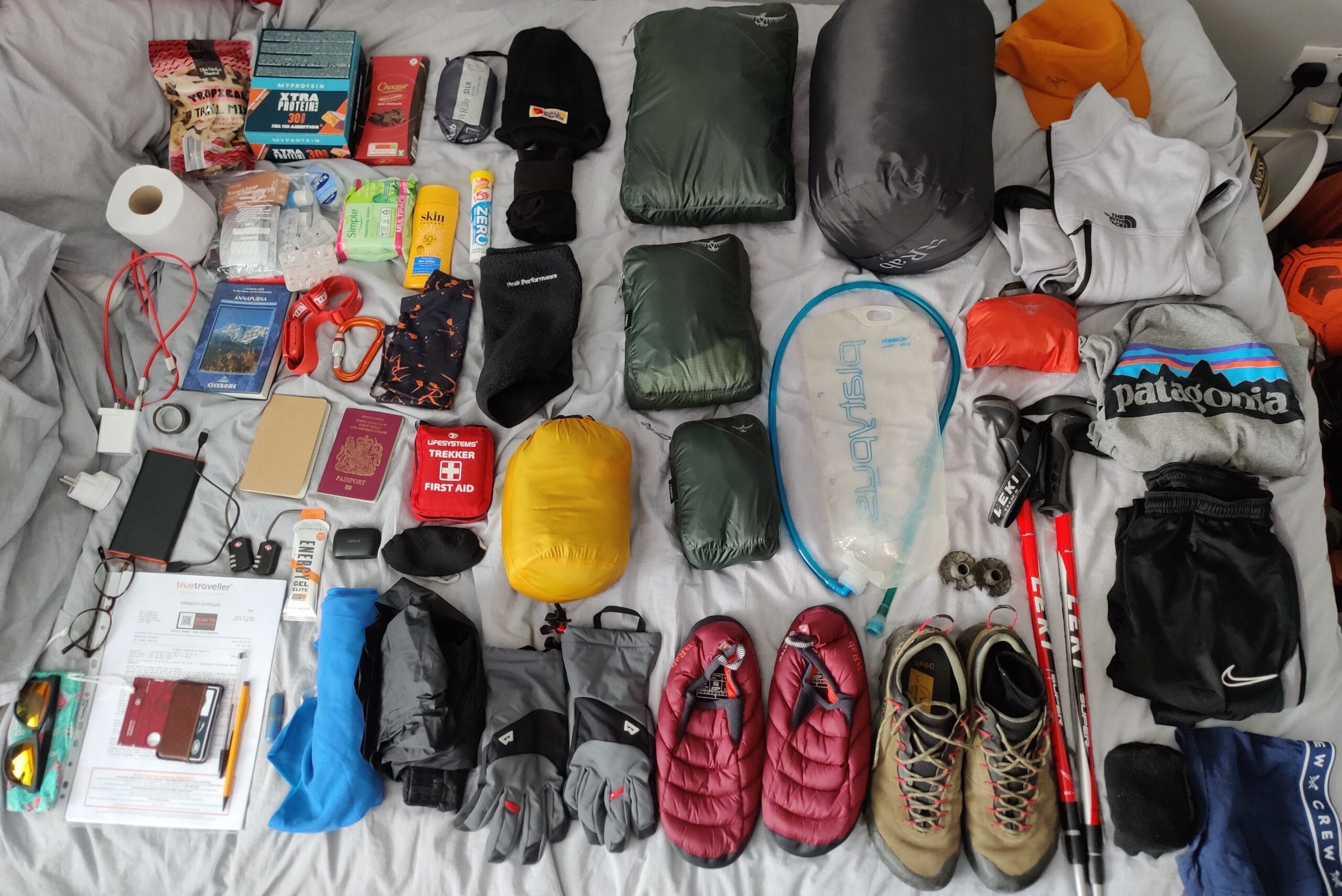
For the Dolomites Via Ferrata AV4 Trek, I used my Trekking Packing List from my Annapurna Circuit Trek. Then replaced the cold-weather gear and sleeping bag with the Via Ferrata gear. This includes the lanyard, helmet, carabiners and harness.
Gear we used on this route
Insurance
Get mountain rescue coverage — e.g., Alpenverein membership, CAI card, or travel insurance that explicitly covers via ferrata. The Multi-day trekking also needs to be covered, but the altitude won’t be an issue at under 3000m.
Language & Etiquette
Italian AND German are both spoken, given the proximity to Austria and the shared culture. Remove any wet or muddy gear before entering the Rifugios upon arrival. The English in the Rifugios is varied, so it’s a good idea to download Italian and German offline on Google Translate to help.
Guided vs Unguided
We had no guide as we were all experienced hikers with varying trekking and climbing abilities. Once the Rifugios were booked (the hardest part), the trail was simple to follow once started. The costs for an Alta Via 4 Tour are over £2000!!! Compared to our budget-style hut-to-hut multi-day trek for £850.
Rifugios
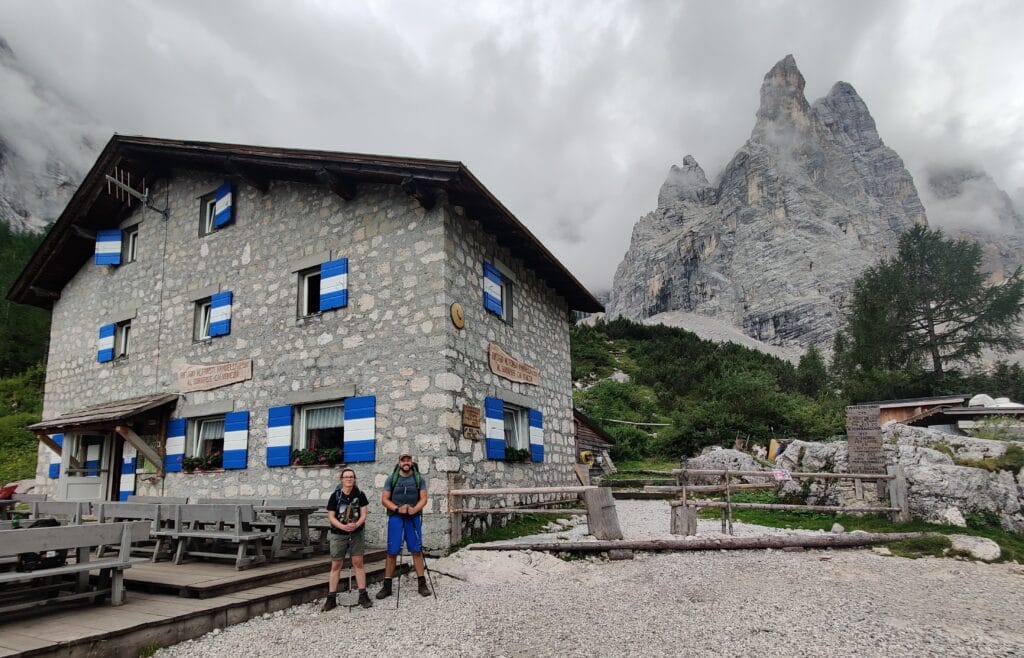
The best Rifugios were Vandelli and San Marco with 8.3/10 scores. If I had to pick one, Vandelli, with the proximity to Lago Sorapis and the fond memories, would top the list for me. All the Rifugios were run by locals, and the food was generally tasty and replenishing. It’s worth booking them via email or online as early as possible to reserve the dates you want.
The hardest part of the planning by far was contacting the individual Rifugios to book accommodation. The tour companies selling the Alta Via 4 package would cost more than £2000 each, so we booked everything independently. The Rifugios offered bed-only or Half-Board options, which were useful with Rachel being Gluten intolerant and saved Sam and me carrying extra weight for food. On average across 6 Rifugios, Half Board in shared dormitory rooms cost £60. We enquired with all the Rifugios on the planned dates and then paid the deposits once all confirmed availability. After the Rifugios were confirmed, we could then finally book flights, buses and the Venice hostel.
Trip Budget
The plan was for a low-budget trip to accommodate all 3 of us. However, the hardest part was finding dates that worked for each of us, which meant flights weren’t the cheapest. The Rifugios for Half-Board were reasonably priced, and after stocking up on snacks and lunch before the trek, we managed to keep the daily costs low. The Rifugios averaged out to £50 per night, with the Venice hostel being the most expensive.
Ready to tackle the Dolomites Via Ferrata?
The Alta Via 4 Trek is easily one of my favourite trips from the last few years. The Dolomites are becoming more popular every season, with many travellers choosing road trips, cable cars or single-day hikes. But if you want to experience the wilder, quieter and more adventurous side of the region, a Dolomites Via Ferrata trek like Alta Via 4 offers something completely different.
What makes this route so memorable is the mix of long hiking days, remote rifugios, dramatic limestone scenery and exposed via ferrata climbing. The via ferratas of the Italian Dolomites add a physical and mental challenge that makes the journey feel much more rewarding than a standard hut-to-hut trek. Some sections are tough, but the sense of achievement at the end is even sweeter because of it.
For me, Alta Via 4 is one of the best via ferrata Dolomites routes because it combines famous highlights with quieter mountain terrain. You get the postcard views of Tre Cime di Lavaredo, Cadini di Misurina and Lago Sorapis, but you also experience rugged trails, technical ferrata sections and remote mountain huts that feel much further from the tourist crowds.
Finishing the trek and heading to Venice afterwards creates a brilliant contrast: from wild mountain solitude to chaotic city celebration. If you are planning a Dolomites ferrata trip and want more than a simple day route, the Dolomites Alta Via 4 is a serious adventure worth considering.
If you have any questions about the Dolomites, Alta Via 4 or planning a Dolomites Via Ferrata trip, drop a comment below. And if you know someone interested in trekking or via ferrata in the Italian Dolomites, please share this guide with them.
FAQs
What is the best Dolomites Via Ferrata route?
One of the best Dolomites Via Ferrata routes for experienced hikers is Alta Via 4, because it combines famous locations such as Tre Cime di Lavaredo, Cadini di Misurina, Lago Sorapis, Via Ferrata Merlone and Monte Antelao with remote rifugio stays and technical cable-protected sections.
Is Alta Via 4 harder than Alta Via 1?
Yes, Alta Via 4 is generally more technical than Alta Via 1 because it includes via ferrata sections, steeper terrain, exposure and more demanding route-finding. Alta Via 1 is usually considered the more accessible classic hut-to-hut trek, while Alta Via 4 is better for confident hikers with via ferrata experience.
Do you need via ferrata gear for Alta Via 4?
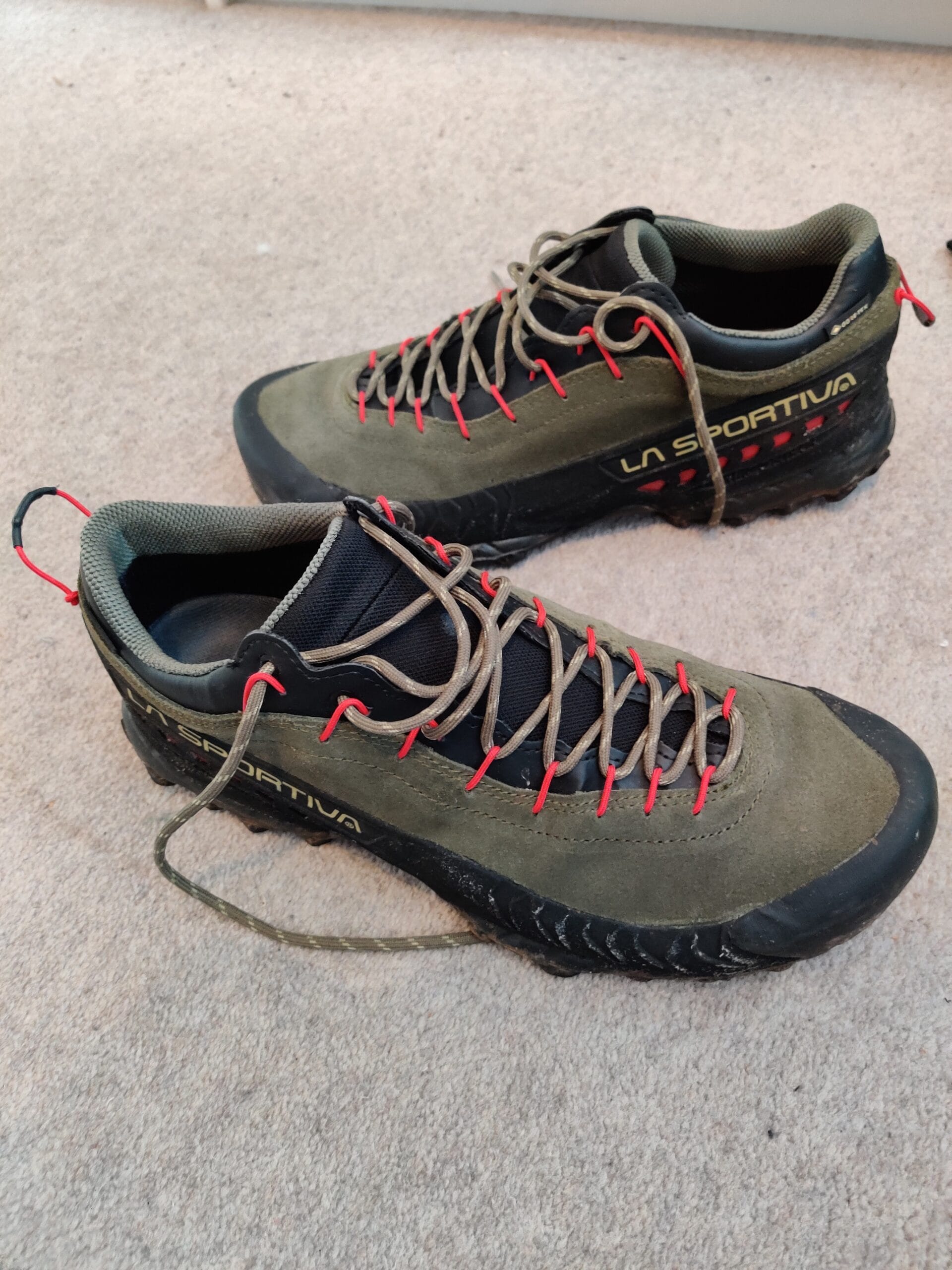
Yes, via ferrata gear is required for Alta Via 4. At minimum, you should carry a climbing helmet, harness and via ferrata lanyard. Gloves, a head torch, map, GPS app, waterproof layers and suitable hiking or approach shoes are also strongly recommended.
When is the best time for the Dolomites Via Ferrata?
The best time for Dolomites Via Ferrata routes is usually mid-July to mid-September, when most rifugios are open and high mountain routes are more likely to be clear of snow. Early summer can still have snow on higher passes, while late-season weather can become colder and less predictable.
Can you do the Dolomites Via Ferrata without a guide?
Yes, experienced hikers can do some Dolomites Via Ferrata routes without a guide if they are confident using via ferrata equipment, comfortable with exposure and able to navigate mountain terrain safely. Beginners or nervous hikers should consider hiring a qualified guide, especially for more technical routes.

Pingback: Alta Via 4: Complete 7-Day High Altitude Trail Guide - Backpacker's Mentality