Quick Verdict: The Arc’teryx Atom Hoody is the benchmark active mid-layer for high-output mountain pursuits—breathable enough to skin uphill in, warm enough to stand still at a belay. The 2026 update brings a cleaner environmental conscience without sacrificing the formula that made it famous.
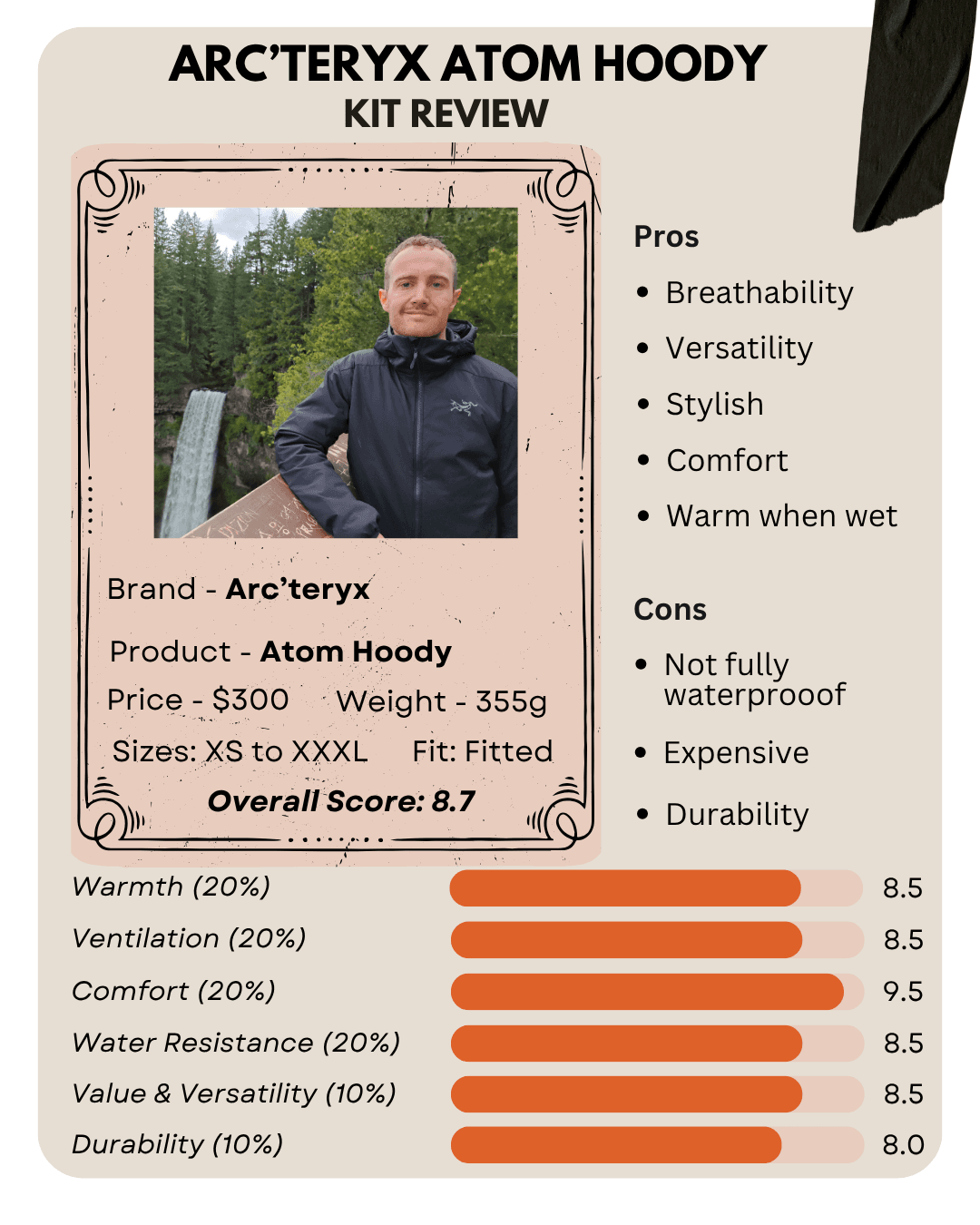
★★★★★ Overall Rating: ★ 8.8 / 10
Weight: 355g • Insulation: Coreloft™ Compact 60 • Waterproof: No (FC0 DWR treated) • RRP: CAD ~$360 / USD $300
Field Note: This guide contains affiliate links. If you purchase gear through these links, I may earn a small commission at no extra cost to you. I only recommend equipment I have personally mountain-tested and trust.

Few pieces of outdoor clothing have achieved the cult-like reputation of the Arc’teryx Atom Hoody. Especially living in Vancouver, the home of Arc’teryx, the jacket is a staple and is seen everywhere from coffee shops in the city to the toughest mountain climbs.
The popularity isn’t accidental. For years, the Arc’teryx Atom Hoody has been regarded as one of the most versatile synthetic insulated jackets ever made, striking a unique balance between warmth, breathability, comfort, and weather resistance. Unlike traditional insulated jackets that are either too warm or too specialised, the Atom aims to perform across a huge range of outdoor activities and climates. The clean and minimalist design with a variety of colours has made this jacket stylish for any outdoor lover.
I’ve used the Arc’teryx Atom Hoody extensively while hiking, backpacking, travelling and exploring destinations ranging from Yosemite camping, hiking, and backpacking, Canadians winters and where the jacket was designed and tested in the Coast Mountains in BC. This Arc’teryx Atom Hoody review examines how the Men’s 2026 jacket performs in real-world conditions after heavy use this year as my go-to midlayer.
Arc’teryx Atom Hoody Technical Specs
- Price $300 USD / approximately $360 CAD
- Weight 355g (12.5 oz) — Men’s
- Insulation Coreloft™ Compact 60 g/m² synthetic insulation made from 100% recycled polyester
- Face Fabric Tyono™ 20D recycled ripstop nylon with FC0 PFAS-free DWR finish
- Lining Dope Permeair™ 20D recycled nylon ripstop
- Side Panels Stretch fleece panels (94% polyester, 6% elastane) for breathability and mobility
- Hood Insulated StormHood™ with adjustable drawcord and structured mini brim
- Storage Two zippered hand pockets and one internal chest pocket
- Fit & Features Articulated regular fit with low-profile elastic cuffs and dual-adjustable hem
- Sizes Available XS to 3XL

Arc’teryx Atom Hoody Introduction
It’s a cool autumn morning, and I’m standing at Four Mile Yosemite trailhead ready to climb up to the famed Glacier Point from the Valley. The sun hasn’t peaked over the high-rising granite towers, so Roisin and I both need an insulated jacket. And like many other hikes, I reach for my Arc’teryx Atom with the plan to hike with it for the first half hour before warming up on the steep switchbacks. For early morning hiking prep and evenings around camp, the Atom provides reassuring comfort and warmth even on summer Californian days.
Roisin bought her Arc’teryx Atom hoody in summer 2025, and then I followed suit in early 2026, having seen how versatile and high-performing the Atom was. Especially in the home of Arc’teryx, you see the Atom everywhere around Vancouver, so was I just following the crowd, and where did the Atom fit in my packed wardrobe given I own an Arc’teryx Proton and Rab Microlight Jacket already?

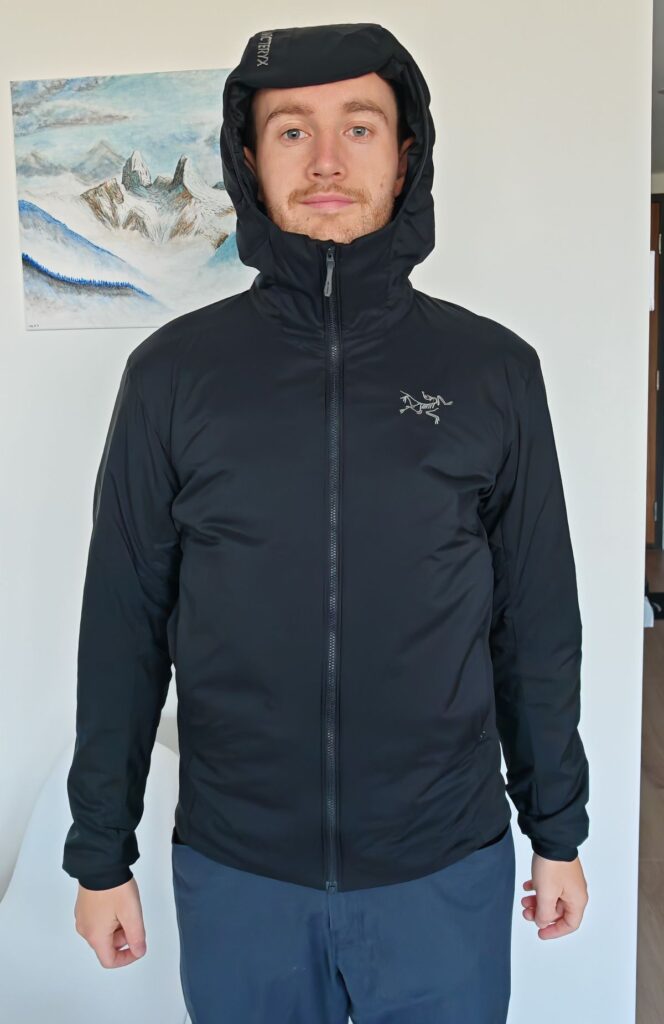
It fits the gap where the Proton is not exactly casual in bright orange and doesn’t offer warmth when camping (learned the hard way camping in Jasper), and my Rab Down Jacket is sometimes just too warm for shoulder season days. Since buying in winter, the mild winter-to-spring months have meant the Atom has become my go-to commuting jacket, as it will keep me warm and comfortable, looks sleek in the minimalist style in Black and can handle light rain.
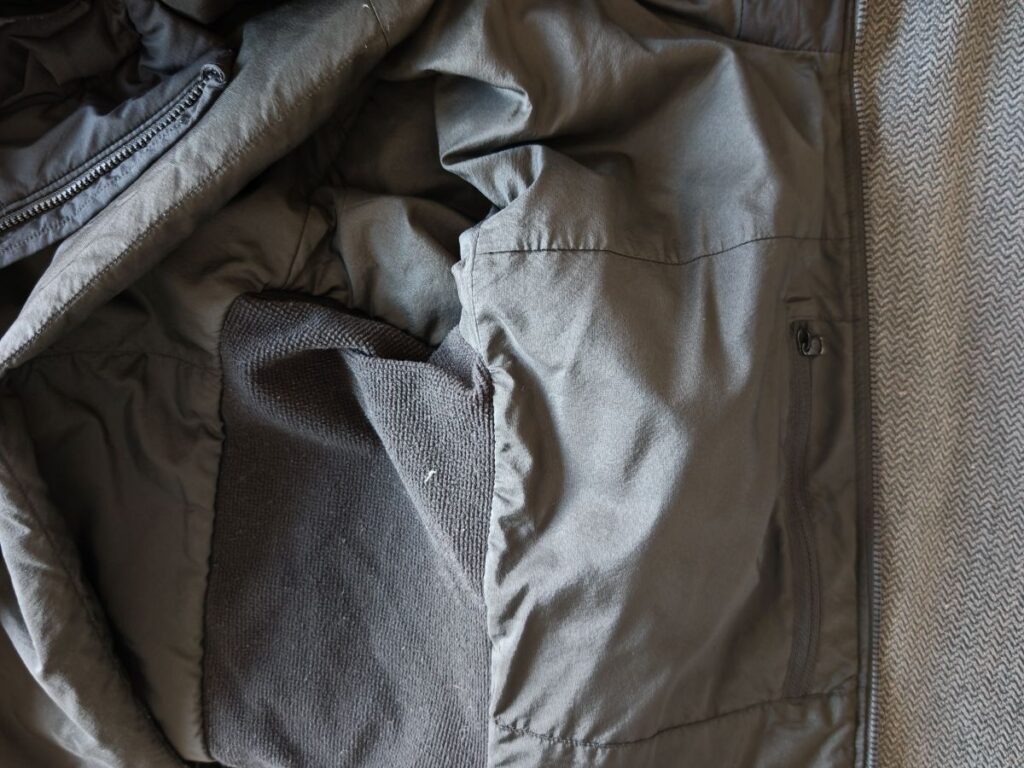
Some of the design features I appreciate are the 2 soft-lined hand pockets to keep hands warm when breezy and an internal chest pocket that can fit a phone. The elasticised cuffs and adjusted hem on the hood make this jacket super adaptable to different weathers and temperatures, adding to the versatility. Overall, I love the trim fit of the Atom Hoody, and the minimalist clean design means it looks great in photographs whether on top of a mountain or having coffee in town.

Arc’teryx Atom Family
The Arc’teryx Atom (previously marketed as the Atom LT) is arguably the most iconic synthetic insulated jacket series ever produced and has gained a serious reputation amongst outdoor lovers. Originally launched in the early 2000s, the Atom was designed to bridge the gap between a fleece and a traditional insulated jacket, providing warmth, breathability, and weather resistance in a single versatile layer. Over the years, it has become one of Arc’teryx’s best-selling products and is now a common sight everywhere from alpine trails and ski resorts to city streets and airports.
What has changed in the 2026 Arc’teryx Atom Hoody? The primary update for 2026 is the adoption of an FC0 (fluorocarbon-free) PFAS-free DWR finish, replacing the previous PFAS-based chemistry. This reduces the jacket’s environmental footprint. Core materials—Tyono 20D face fabric, Coreloft Compact 60 insulation, and stretch fleece side panels—remain unchanged, proving that Arc’teryx know that small incremental changes to the beloved product don’t annoy loyal fans of the Arc’teryx Atom range.
Today, the range centres around the Atom Hoody, Atom Jacket, and Atom Vest, with men’s and women’s versions available. Arc’teryx also offers a broad size range, typically spanning XS to 3XL in men’s models and XXS to XXL in women’s models, depending on colourway and seasonal availability. Women’s versions use the same materials and insulation but feature a tailored fit designed specifically around female body shapes. Roisin and I found that both Jacket fits were true to size. This was after my initial delivery issue where I was sent a women’s small, which, unsurprisingly, was a little snug, but it was super simple to exchange in person at an Arc’teryx Vancouver store.
One of the reasons the Atom remains so popular is the variety of colour options released each season, with the Black Jacket being the most common. Arc’teryx regularly rotates colours while maintaining a selection of core shades such as Black, Canvas, Forage, Solitude, and Tatsu. Seasonal colours often include brighter mountain-inspired options ranging from alpine blues and forest greens to burnt oranges and deep reds. This balance between technical performance and everyday aesthetics has helped the Atom appeal far beyond the outdoor industry and become a stylish item to wear.

Arc’teryx Jacket Range Explained
Arc’teryx, like most outdoor and mountain clothing companies, has a complex range of jackets to suit different activities and conditions. I will admit to being an Arc’teryx fanboy and have been lucky to use some heavy discounts from friends to help afford several premium jackets. My first was my much-loved Arc’teryx Proton LT Hoody before getting a Beta AR Waterproof jacket. These were trusted in the worst Alpine and Patagonian weather before recently adding the Arc’teryx Atom Hoody, Arc’teryx Alpha SV Jacket and an Arc’teryx Gamma Jacket (reviews to come on the Alpha and Gamma). So here is a summary of each of Arc’teryx’s product families.
Arc’teryx Atom
The Arc’teryx Atom is the ultimate all-round synthetic insulated jacket. It combines Coreloft insulation with highly breathable fleece side panels, creating a jacket that balances warmth, comfort, weather resistance, and versatility. It works equally well for hiking, backpacking, travel, commuting, and everyday wear and is generally a jacket for almost everything.
Arc’teryx Proton
The Proton is the Atom’s more athletic sibling. It uses a more air-permeable construction designed specifically for high-output mountain activities where moisture management is critical. While slightly less weather-resistant and often a little cooler than the Arc’teryx Atom, it breathes significantly better during sustained exertion. It’s best for steep hiking, alpine climbing, ski touring and active use.
Arc’teryx Gamma
The Gamma range sits in an entirely different category. Rather than being insulated, Gamma jackets are softshells designed to provide wind resistance, abrasion resistance, and excellent freedom of movement. They excel when you’re active in cool conditions but don’t need dedicated insulation. For warm and hot days, the Gamma works great for scrambling, hiking, and as a windbreaker.
Arc’teryx Alpha
The Alpha family represents Arc’teryx’s most technical hardshell collection. Built around Gore-Tex waterproof protection, Alpha jackets are designed for severe alpine environments where weather protection is the priority. Unlike the Arc’teryx Atom, they provide virtually no insulation and instead function as an outer shell layer specifically for mountaineering, alpine climbing and winter expeditions.
Arc’teryx Squamish
The Squamish Hoody is one of Arc’teryx’s most popular wind jackets. Extremely lightweight and packable, it provides wind protection with minimal insulation. Many hikers carry a Squamish during summer instead of a heavier softshell. It’s the only one I don’t own because I generally use the Montane Minimus Lite instead. However, the Squamish is great for trail running (along with the Norvan) and better for fast hiking or rock climbing.
Quick Breakdown
- Squamish = Ultralight wind layer
- Gamma = Durable softshell layer
- Atom = Versatile synthetic insulated jacket
- Proton = Breathable active-insulation jacket
- Alpha = Waterproof alpine shell
The Arc’teryx Atom sits at the centre of the Arc’teryx layering system, offering more warmth than a Gamma or Squamish, more weather protection & warmth than a Proton, and far greater everyday usability than an Alpha shell, making it the brand’s most versatile and popular jacket.
Design & First Impressions
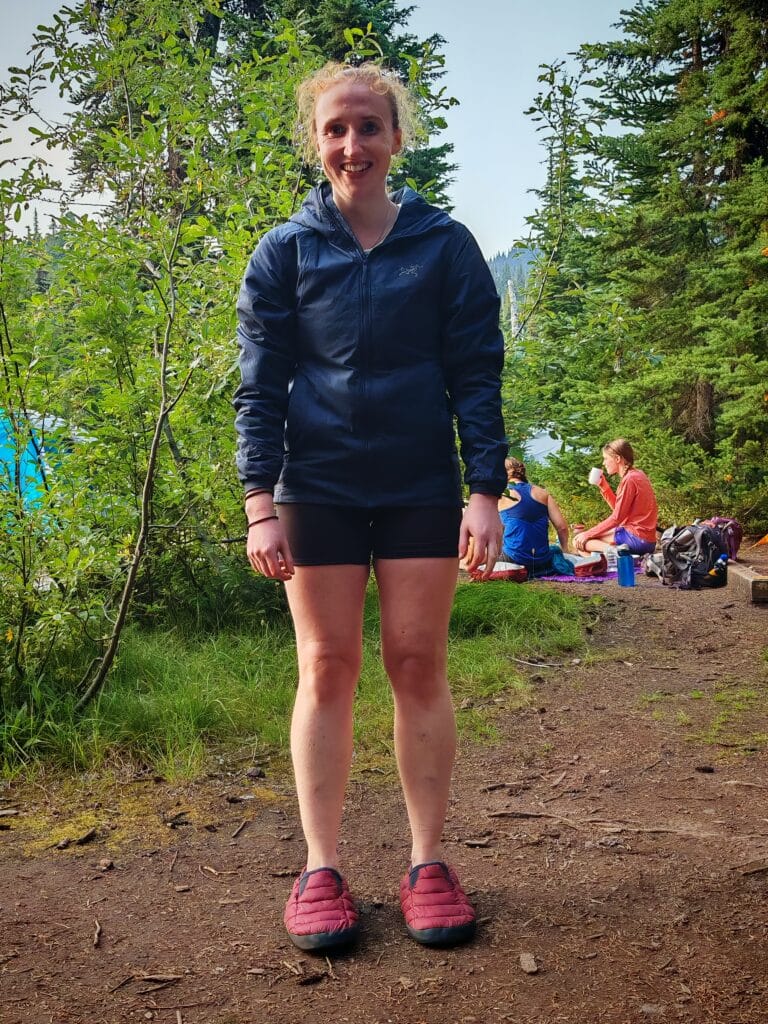
Pull the Arc’teryx Atom Hoody out of the box and your first instinct is to check it’s the right jacket—it feels too light for something that’s supposed to keep you warm in the mountains. That’s a deliberate engineering outcome, not an accident, and it’s the result of some genuinely considered material choices. Obviously, check the sizing, and it’s the right gender, as I found out the annoying way with exchanging the Women’s for the Men’s jacket I had actually ordered.
The Tyono™ 20-denier ripstop nylon face fabric feels light and soft, inviting you to try it on. Twenty denier is extremely fine—by comparison, a typical denim weave runs at 200–300 denier – which makes you want to take care of it and avoid any rips or scrapes immediately. Arc’teryx is threading the needle between weight savings and durability, and the 2026 version’s FC0 DWR finish replaces the older PFAS-based chemistry with a fluorocarbon-free water repellent. That’s a meaningful decision as PFAS compounds have a well-documented toxicity profile and damage the environment. Getting similar performance from a cleaner chemistry is a conscientious move even if the DWR performance envelope remains ‘good but not waterproof’—a distinction I’ll return to.
The stretch fleece side panels are immediately obvious from the outside. Visually, they’re a contrast texture against the smooth ripstop body—not subtle, but not ugly either, especially as they are not a contrast or 2-tone colourway thankfully. The Panels run from the underarm down to the hem, and together with the articulated patterning, which gives the Arc’teryx Atom a cut that sits somewhere between ‘fitted’ and ‘regular’. It layers under a shell like the Beta AR without bunching. The StormHood™ is insulated, helmet-compatible, and has a structured mini brim—small details that demonstrate the kind of obsessive functional design Arc’teryx is known for and prove it’s a mountain-ready jacket and not just for around town.
On-Trail Performance
The Arc’teryx Atom’s real design achievement is thermal regulation during variable-output activity. On a sustained ascent in cool, damp conditions—which describes a lot of my hiking days in North Vancouver—most insulated jackets force a binary decision: overheat with it on, or get cold with it off. The Atom blurs that line similar to how the Proton takes on heat management.
The Coreloft™ Compact 60 g/m² insulation does the warmth work in the body, sleeves, and hood. Sixty grams per square metre is a thoughtfully calibrated density—warm enough to serve as a standalone layer in cool temperatures, light enough not to roast you the moment you start moving. The fleece panels on the sides do something different: they act as passive vents, dumping excess heat through air-permeable stretch fabric while you’re moving. Think of them as a set of pit-zip mechanisms you never have to operate.
I won’t be using the Atom on steep climbs like the Grouse Grind, but for Quarry Rock-style hikes or cold weather days, it balances warmth and ventilation effectively. Especially once you summit and decide to have lunch with epic views overlooking mountains, lakes and forests, when the temperature dips at altitude and the exposed viewpoints cool off, the Atom is the best active midlayer for a hiking packing list.
Coreloft retains roughly 70–80% of its insulating value when wet—a meaningful advantage over traditional feather down, which collapses catastrophically in moisture. In the Coast Mountains near Vancouver, where sustained dampness is the default outside of summer, a synthetic fill that keeps performing in a damp shell is a necessity.

Weather Resistance — DWR, Wind, and Honest Limits
The Atom is technically weather resistant, but this certainly does not mean it’s waterproof. The Tyono face fabric with FC0 DWR will bead and shed light rain and drizzle effectively. In a light Coast Mountains mist—the kind that hangs in the trees for hours—it performs well and will not wet out. Walk into sustained precipitation without a hardshell waterproof jacket, and you will get wet, so this is where I pack a Montane Minimus Lite (summer hikes) or the Arc’teryx Beta AR Jacket for heavier rainy days. This is not a waterproof jacket and was not designed to be a fully waterproof active insulation jacket; there are other Arc’teryx jackets for this purpose.
In my testing, the DWR held up through roughly 20–30 minutes of light-to-moderate rain when walking to work before I noticed the face fabric starting to wet out at the arms. That’s consistent with what I’d expect from a PFC-free coating—slightly less hydrophobic than legacy PFAS-based DWR, but cleaner chemistry with acceptable performance. On an alpine hiking day in British Columbia, the Arc’teryx Atom is your mid-layer; the Beta LT/AR or equivalent is your outer shell, where both will pack easily into your day pack and keep you ready to layer if the weather changes suddenly.
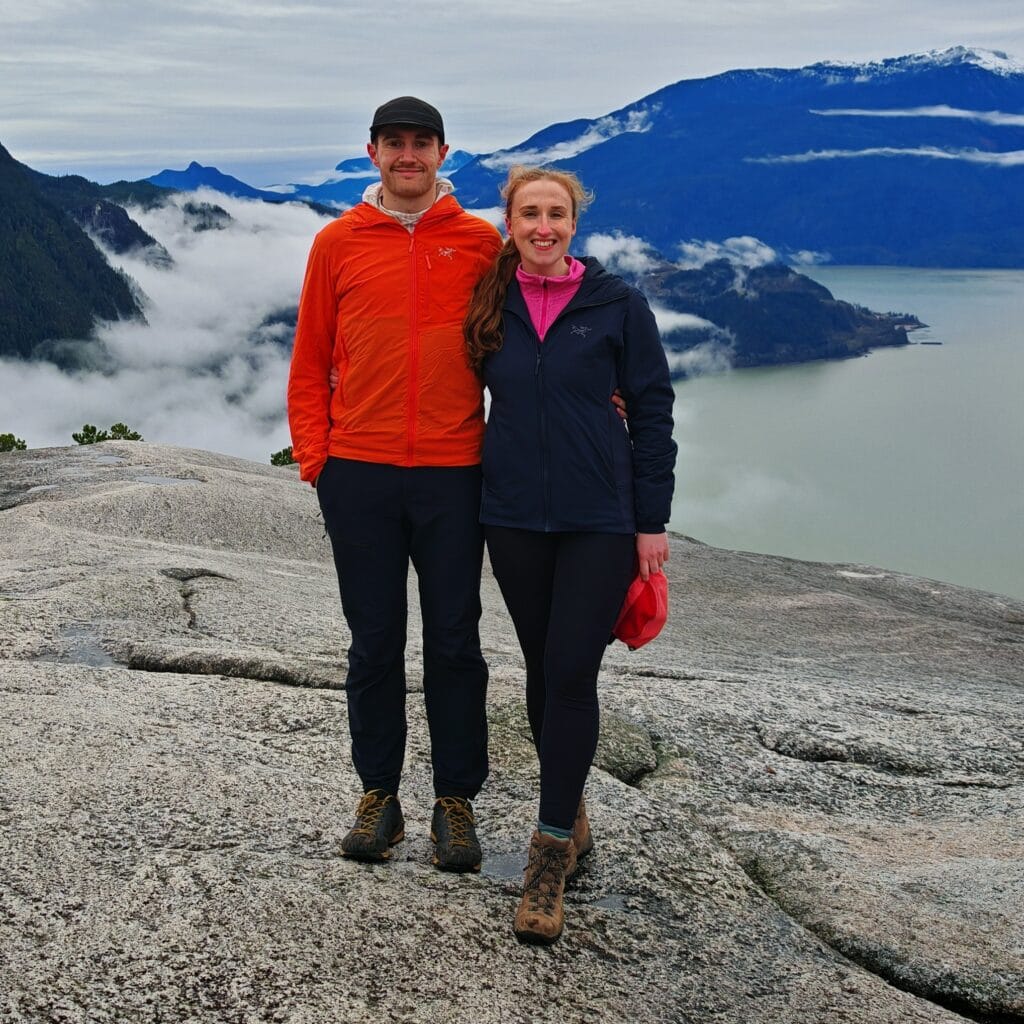
Wind resistance is more impressive than waterproofing. The Tyono ripstop combined with close elastic cuffs and the dual-cord hem seals heat effectively in high-output wind. The StormHood allows the outside elements to be kept at bay in strong winds and keeps your head warm. This was tested by Roisin on the Stawamus Chief in October, where strong winds blew down the Squamish Valley and kept Rosiin toasty whilst I was slightly cooler in my Proton LT.
Comfort & Fit
Arc’teryx describe the Atom’s fit as ‘fitted,’ which in practice means it sits closer to the body than a relaxed or regular fit—but with more breathing room than the slimmer Atom SL. I’m 175cm and 65kg currently, so have been wearing the Small Men’s Jacket with a perfect fit for being active and feeling good. When travelling internationally, I will happily wear my Atom through airports and on planes for comfort and will reach for it at campsites such as in Yosemite when relaxing after a long day’s hiking, such as Clouds Rest.
The recycled Dope Permeair™ 20D nylon ripstop lining is genuinely comfortable against a base layer—no clammy synthetic feel, no drag when pulling the jacket on or off. It’s not as comfortable as the Proton using the softer CoreLoft knit inner insulation. The elastic cuffs are minimal and low-profile, which matters when layering gloves or pulling the jacket off mid-pitch. The articulated patterning gives full range of arm movement without restriction—useful for easy climbing movements and essential for any dynamic mountain activity, but I would use the Proton for scrambling or rock climbing due to the abrasion-resistant outer fabric.
One known weak point: the Tyono face fabric’s low denier count means it’s susceptible to abrasion from backpack straps and rock surfaces. For climbers who spend time on granite or users who wear heavy packs frequently, this is a real-world durability consideration—not a product defect, but a material physics trade-off, which is where the Arc’teryx Proton Jackets are more suitable. Overall, it’s one of the comfiest jackets and the one I feel I look best in, which helps when needing a jacket that blends technical performance and style for those casual occasions.

Durability & Value
At USD $300 (approx. CAD $360), the Atom Hoody sits at the premium end of the active mid-layer market. The Patagonia Nano-Air costs approximately the same; the Rab Xenair Alpine Light undercuts it by $75. Is the premium justified?
For the fit, finish, and functional design quality—yes. The Coreloft insulation resists packing out over time, maintaining loft retention that cheaper synthetics lose within a season. The articulated patterning, StormHood construction, and overall build quality reflect the investment that Arc’teryx put into technical garment engineering. The absolute versatility of the Arc’teryx Atom for alpine hiking use, ski touring, climbing, backpacking and looking great around town means it’s easy to reach for most mountain or urban activities.
The caveat is face fabric durability. The Tyono 20D is optimised for weight and breathability, not abrasion resistance. Climbers who prefer stiffer, more protective shell fabrics—those accustomed to the tolerance of a Gore-Tex Pro layer—may find the Atom’s face fabric fragile in comparison. It’s a design trade-off, not a flaw, but it’s one worth pricing into the value assessment. So far, neither Roisin nor my Atoms show any sign of wear, rips or damage to the outer face fabric.
Where the Jacket earned their keep
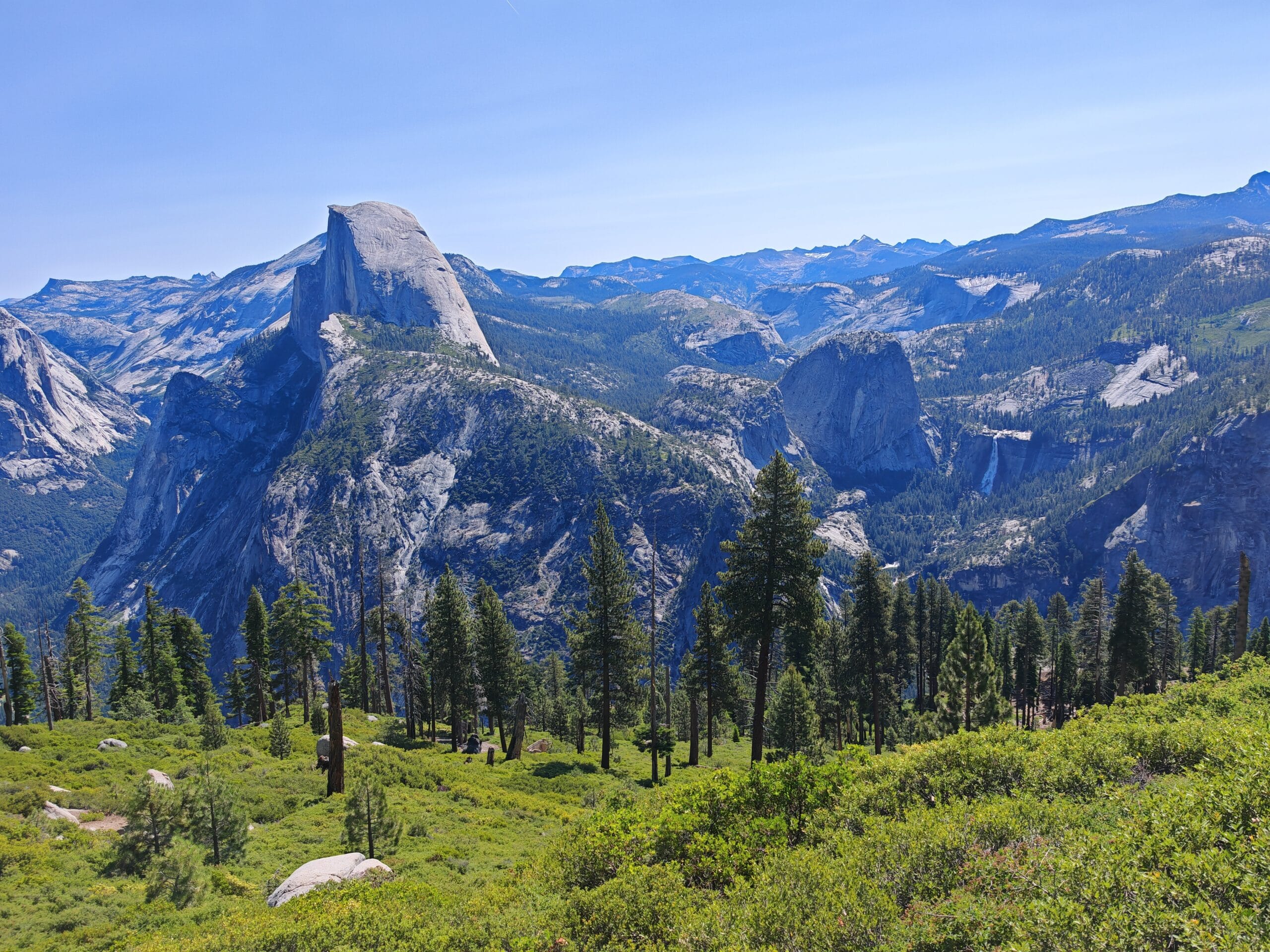
I don’t review gear out of a box. Read the full destination guides where the Men’s Arc’teryx Atom Hoody proved itself on steep ascents, technical scrambles, around camp, town and rugged trails.



Arc’teryx Atom Pros & Cons
✔ PROS
- Best-in-class breathability for an insulated jacket — the fleece side panels are a genuine performance differentiator.
- Coreloft Compact maintains ~75% warmth when wet — a critical advantage in wet PNW conditions.
- Trim, helmet-compatible StormHood — insulated, structured brim, stays put without catching wind.
- FC0 PFAS-free DWR — cleaner chemistry without a meaningful performance penalty for the category.
- Layers easily under a hardshell Jacket— no shoulder bunching, minimal friction against Gore-Tex laminates.
- Excellent warmth-to-weight ratio — 355g for a fully insulated hoody is impressive and packs down small
- Articulated patterning — full range of motion for climbing, skiing, and technical movement.
✘ CONS
- Tyono 20D face fabric is susceptible to abrasion — backpack straps and granite contact will cause pilling over time.
- Not waterproof — wets out in sustained rain; always pair with a shell in BC conditions.
- Fleece side panels retain moisture longer than Coreloft body panels — damp sensation on big sweat days.
- USD $300 is a real financial commitment — Rab Xenair Alpine Light undercuts by $75 with comparable active performance.
- Not self-stuffing — packs small but requires a stuff sack or compresses into its hood; less packable than UL down.
- Not ideal as a static belay or summit layer — the breathability that makes it active-friendly works against heat retention when stationary.
Arc’teryx Atom Kit Ratings
Competitor Comparison
The active mid-layer market has four genuine benchmarks. Here’s where the Atom sits against them.
Arc’teryx Atom Hoody vs. Patagonia Nano-Air
The Nano-Air is the Atom’s closest architectural rival. Both use ~60 g/m² synthetic insulation, both prioritise breathability, both target the same high-output mountain user. The key difference is construction approach: Patagonia’s FullRange insulation covers the entire jacket, including underarms, while Arc’teryx replaces underarm and side panels with stretch fleece. In practice, the Atom’s fleece panels provide slightly better active ventilation and more durable contact points at pack-strap zones. The Nano-Air is marginally lighter (328g vs 355g) and its all-insulation construction offers slightly more heat retention when stationary. Choose the Nano-Air if you run consistently cold or prioritise weight; choose the Atom if breathability and shell-layering performance are your primary metrics.
Arc’teryx Atom Hoody vs. Rab Xenair Alpine Light
The Xenair Alpine Light is the value play in this category. At USD $225, it uses PrimaLoft Gold Active+ insulation with a Pertex Quantum Air shell—a body-mapped design that delivers high airflow to sweat zones. Performance-wise, it’s an excellent active layer; testers consistently rate it a close second to the Atom for breathability. Where the Atom pulls ahead: overall build quality, layering system integration, and the StormHood design. The Xenair’s Pertex Quantum Air shell is also slightly less wind-resistant than Tyono ripstop. For budget-conscious alpinists who want 85% of the Atom’s performance at 75% of the price, the Xenair is a serious alternative. For those who demand the complete package, the Atom earns its premium.
Arc’teryx Atom vs Arc’teryx Proton LT
The Arc’teryx Atom Hoody and Arc’teryx Proton LT Hoody target slightly different users despite appearing similar on paper. The Atom is the more versatile jacket, offering greater warmth, better weather resistance, and significantly broader appeal for everyday wear, travel, backpacking, and general hiking. It’s the jacket I would recommend to most people.
The Proton LT, on the other hand, is designed with movement in mind. It breathes better, dries faster, and remains more comfortable during sustained high-output activities such as steep ascents, alpine climbing, and ski touring. If I’m carrying a pack all day and expect to be working hard, I’d reach for the Proton. If I want one insulated jacket that can handle Patagonia, British Columbia, city travel, and everyday use, the Atom Hoody remains the better all-rounder and deserves the higher overall score.
Atom vs Proton: Which Arc’teryx Mid-Layer Is Right For You?
The Atom Hoody may be Arc’teryx’s most versatile jacket, but the Proton Hoody is designed specifically for high-output mountain activities. Learn how the two compare for warmth, breathability, weather resistance, hiking, backpacking, climbing and everyday use.
Read the Proton Review
Arc’teryx Atom Hoody vs. The North Face Summit Series FutureFleece
The North Face Summit Series FutureFleece takes a very different approach to mountain layering. Instead of synthetic insulation, it relies on an advanced octa-yarn fleece construction that prioritises breathability, moisture management, and low weight. Performance-wise, it’s one of the best options available for high-output activities such as alpine climbing, trail running, and fast hiking. Where the Atom pulls ahead is versatility. Its Coreloft insulation and Tyono shell provide substantially more warmth, better wind resistance, and improved performance in variable weather.
The FutureFleece is the superior choice for athletes who are constantly moving, but it often requires additional layers once temperatures drop. For mountain users who prioritise breathability above all else, FutureFleece is an outstanding alternative. For those wanting a single jacket that can handle hiking, travel, everyday wear, and mountain adventures, the Atom remains the more complete package.
Who Is It For?
Ideal for: Alpinists, backcountry skiers, and mountain hikers who run warm and need a mid-layer that performs from approach to summit without becoming a heat chamber. If your days involve sustained output in cool-to-cold conditions—skinning, multi-pitch climbing, fast-and-light ridgelines—this is the jacket. It’s also a sharp enough piece to wear as a standalone in town, which adds real-world utility. I’ve used the Atom for Yosemite backpacking trips for wilderness camping and morning trekking. It’s engineered for a 3-layer system between a moisture-wicking technical T-shirt and a Gore-Tex waterproof hardshell (Beta AR).
Less suitable for: Static belayers who need maximum heat retention at a stance. For cold belay situations—particularly ice climbing or high-altitude mountaineering—the Atom’s ventilated design works against you when you stop moving. The Arc’teryx Atom SV, Rab Xenair Alpine, or Patagonia DAS Light are better tools for that role. Also less suitable for: anyone expecting it to handle sustained rain without a shell. Design your system, not around this jacket alone.

Arc’teryx Atom Hoody Summary
The Arc’teryx Atom Hoody is the benchmark because no one has bettered its core equation. It combines a well-calibrated synthetic insulator, integrated stretch ventilation, and a shell-system-ready cut that works across the full spectrum of mountain activity. The Arc’teryx Atom Hoody has earned its reputation as the best active mid-layer jacket for good reason due to this balance, and very few jackets manage to blend comfort, warmth, breathability and versatility as effectively.
The 2026 update is incremental—the FC0 DWR is the right call environmentally, and performance remains unchanged at the category’s highest standard. If you’re building or refining a mountain layering system and you don’t already own this jacket, the calculation is straightforward. What continues to impress me most is how often I reach for it. It works as a standalone jacket during cool mornings, as an active insulation layer on demanding hikes, and as part of a winter layering system when temperatures drop. That versatility makes it one of the hardest-working pieces of gear in my wardrobe.
The biggest obstacle is price. Arc’teryx products command a premium, and the Atom Hoody is no exception. The face fabric is not as suitable for rock climbing, and it’s not the absolute lightest or smallest packable jacket, but at this point I’m nitpicking. However, if you’re looking for a synthetic insulated jacket that can handle travel, hiking, backpacking and everyday use, the Arc’teryx Atom Hoody Mens remains one of the best investments you can make.
Arc’teryx Atom FAQs
Is the Arc’teryx Atom Hoody worth the money?
At USD $300, it is a premium investment. The build quality, performance, and long-term loft retention justify the price for active mountain users who will rely on it regularly. Budget-conscious buyers who still want strong active-insulator performance should evaluate the Rab Xenair Alpine Light at USD $225.
Is the Arc’teryx Atom Hoody warm enough for winter?
The Atom Hoody is warm enough for many winter conditions when paired with an appropriate layering system. In very cold climates, most users will combine it with a waterproof shell or heavier insulation layer.
Is the Arc’teryx Atom Hoody waterproof?
No. The Atom Hoody is water-resistant rather than waterproof. The Tyono 20D face fabric with FC0 DWR treatment provides effective resistance to light rain and drizzle, but the jacket will wet out in sustained precipitation. It is designed to be used as a mid-layer beneath a waterproof shell in heavy weather.
What’s the difference between the Arc’teryx Atom Hoody, Atom SL and Atom Heavyweight?
The Atom Hoody is designed as a versatile all-round insulated layer, while the Atom Heavyweight provides significantly more insulation for colder temperatures and winter conditions. The Atom SL is lighter and more breathable. It is the better choice for very high-output activity or warmer conditions with the Proton LT a better alternative.
Is the Arc’teryx Atom Hoody good for backpacking?
Absolutely. The Atom Hoody is particularly popular among backpackers because it balances warmth, packability and durability while performing well in a wide range of temperatures and weather conditions.
What are the best alternatives to the Arc’teryx Atom Hoody?
Popular alternatives include:
Patagonia Nano-Air Hoody
Patagonia Nano Puff
Rab Xenair Alpine
Outdoor Research Deviator
Mountain Equipment Kinesis
Montane Fireball Lite
North Face Summit Series FUTUREFLEECE™
Why is the Arc’teryx Atom Hoody so popular?
The jacket has become popular because it excels across a huge range of scenarios. It works equally well for hiking, travel, backpacking, commuting and everyday wear, making it one of the most versatile pieces of outdoor clothing ever produced.
Is the Arc’teryx Atom Hoody true to size?
Is the Arc’teryx Atom Hoody true to size? Generally yes, with one caveat: the fit is between regular and fitted. Taller or broader-shouldered wearers may want to size up. The jacket is designed to layer over a base layer and under a hardshell—if you plan to wear it primarily over heavier mid-layers, consider going up a size.