The Osprey Aura AG 50 Backpack has built an incredibly strong fanbase and a well-deserved reputation as one of the best women’s trekking backpacks on the market today. For many years, I have heavily relied on the men’s equivalent—the Osprey Atmos AG 50—on demanding multi-day routes. So, when my partner needed a dedicated pack capable of handling our upcoming high-altitude treks through the Andes and backcountry wilderness routes in the Yukon, I knew exactly where to start the search.
There is fierce competition between Osprey, Gregory, and other top-tier brands in the 40-60L space, which can make choosing the right bag feel overwhelming. In this comprehensive Osprey Aura AG 50 review, find out exactly why we chose this specific pack over the competition, including a breakdown of its technical specs, greatest strengths, hidden weaknesses, and my final kit rating.
Field Note: This guide contains affiliate links. If you purchase gear through these links, I may earn a small commission at no extra cost to you. I only recommend equipment I have personally mountain-tested and trust.

Introducing: Osprey Aura AG 50
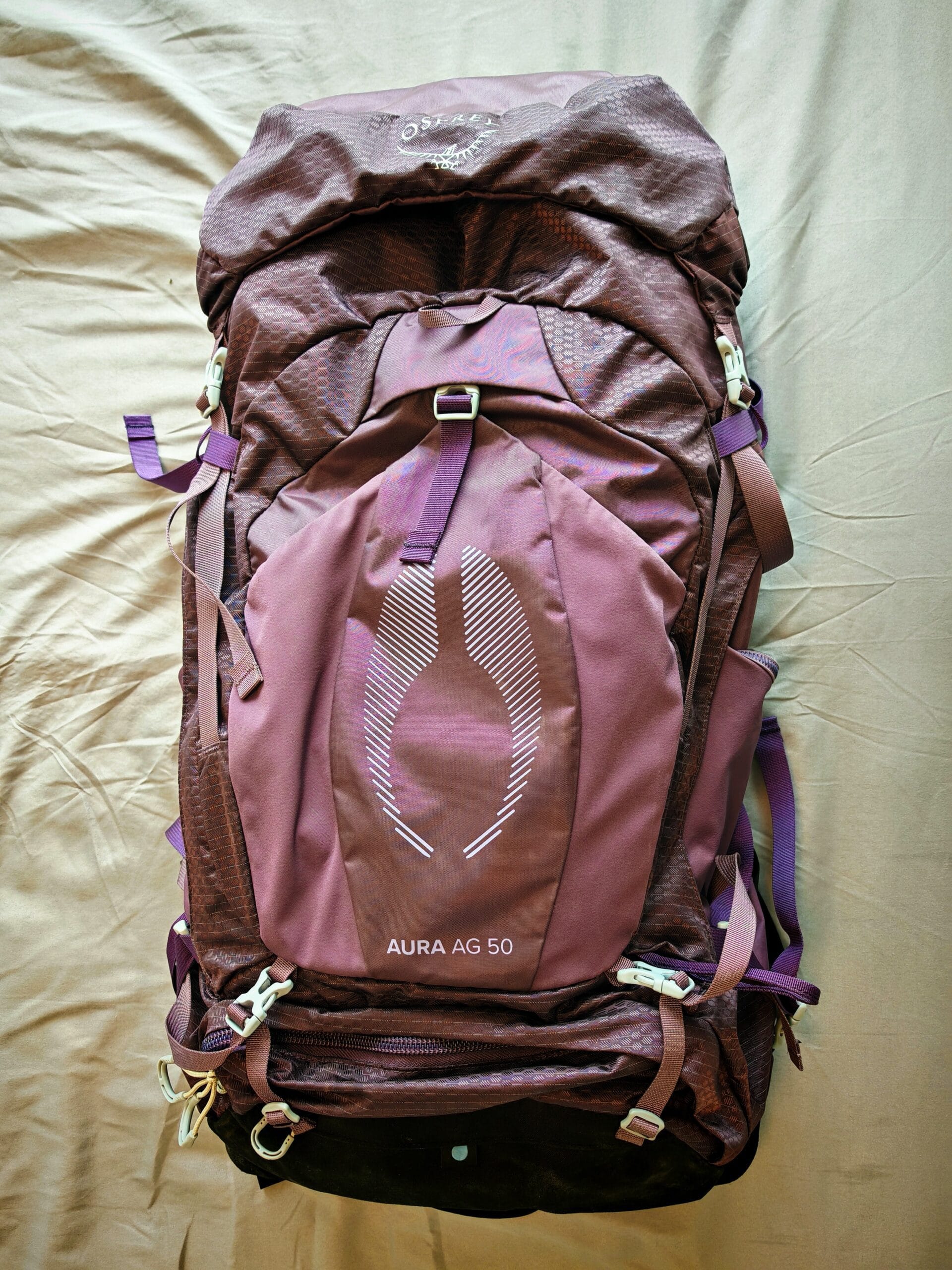
The Aura AG 50 Backpack is the women’s specific design of the Men’s Osprey Atmos AG 50 backpack (see full review here). The Osprey Aura AG 50 is built for backpacking, thru-hiking and trekking in mind. The key selling point is Osprey’s genius Anti-gravity system that supports the pack weight away from your back for added comfort. There is a wide range of pockets for the organisation of kit, including the dedicated sleeping compartment (a key difference to the Aura AG LT).
And there are compression straps to adjust the backpack silhouette along the journey. The main difference between the Atmos is that the women’s specific fit uses a shoulder and hipbelt design tailored to the anthropometrics of a woman’s neck, shoulder, chest and hips for optimal support and weight distribution. We debated whether to get the cheaper Osprey Aura AG LT (Lightweight) over the full-fat Osprey Aura AG 50, but the access to a dedicated sleeping compartment is very useful when camping.
And when my girlfriend tried on the Aura LT, there was a different back-mesh with an adjustable plastic frame, which digs into the back compared to the comfortable mesh on the Aura. The Osprey Aura AG 50 backpack is available in XS/S at 47litres volume (misleading from Osprey). And the larger M/L version is actually at 50Litres. Plus, there is a 65L version available for longer backpacking trips. The current colours available are Berry Sorbet Red, Enchantment Purple and Tungsten Grey.
Osprey Aura AG 50
Anti-Gravity Suspension
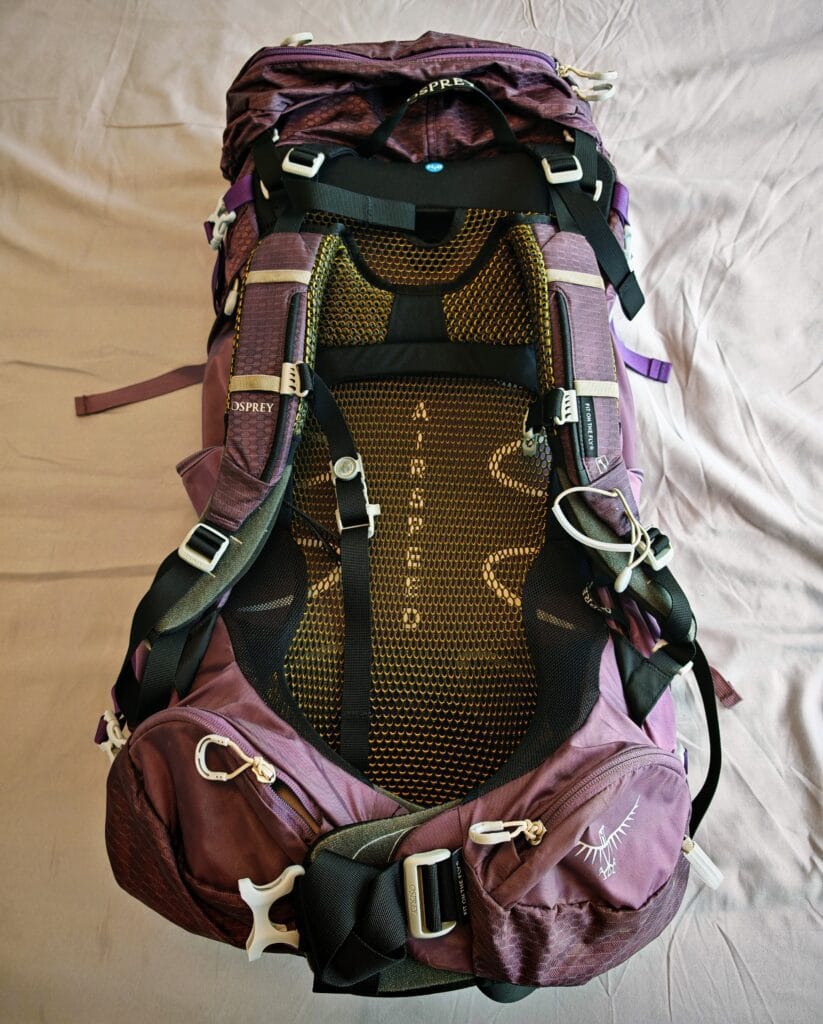
The Ant-Gravity technology on the Osprey Aura AG 50 backpack is the real differentiator from other backpacks. Whilst on paper the weight is not the lowest, the way the hipbelt and mesh anti-gravity system transfers the load from your shoulders to your hips means carrying heavier loads feels easy. Osprey have designed the suspension for 2 sizes per gender using a 4mm peripheral metal frame. On which the easy-to-operate cam-lock torso adjustment systems allow precise adjustments.
The AG Backpanel features a 2-tone spacer mesh for more strength, and a silicone print around the lumbar adds grip for load transfer. The Fit-on-the-Fly harness expands the fit range and adds comfort with the foams and mesh used around the waist. The AG system extends the tensioned backpanel into the hipbelt, which does make putting the backpack on a little trickier. With the hipbelt also integrated into the metal frame, it provides consistent load transfer along with the Crossbody ErgoPull design, which pulls weight into the lumbar when tightened.
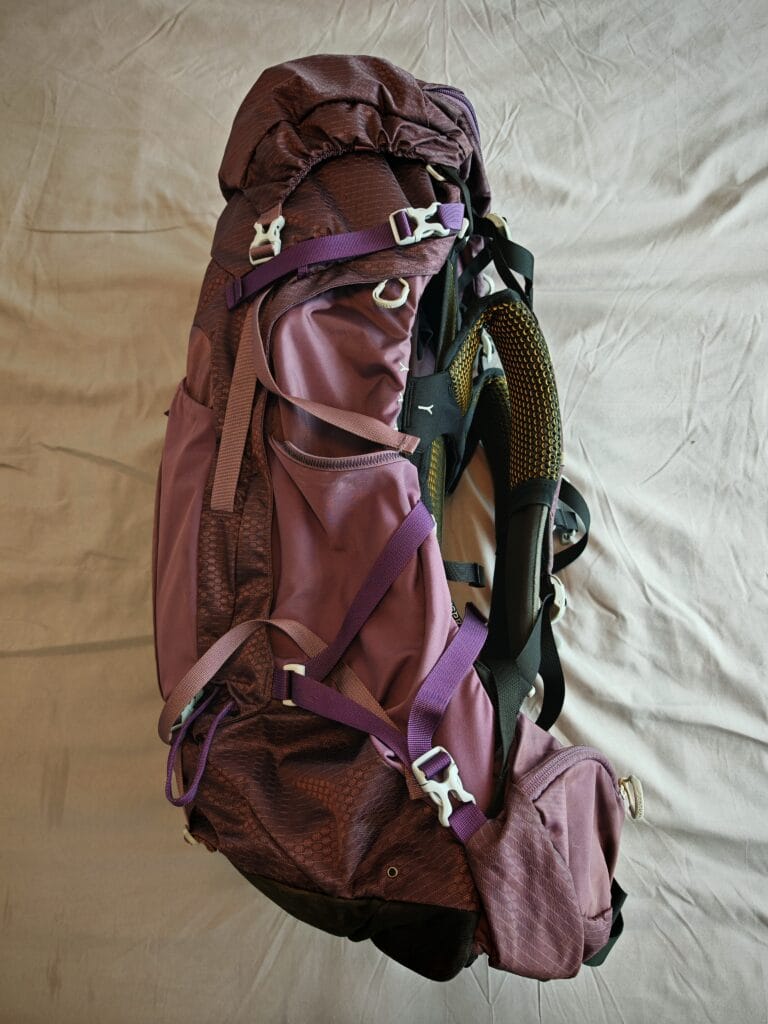
Key Features
| Feature | Description |
| Materials | Bluesign®-approved recycled 210D nylon with PFAS-free Durable Water-Repellent; bottom is 500D nylon |
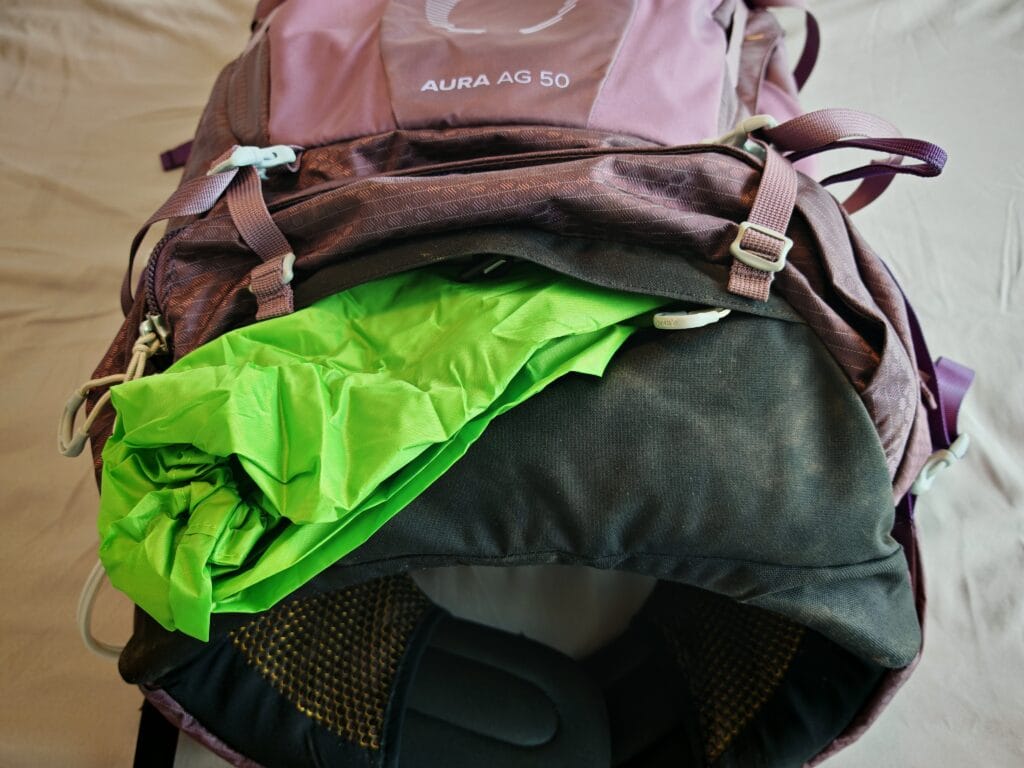
| Raincover | Made with PFC/PFAS-free DWR and bluesign® approved materials. A bright neon colour for safety and visibility that is stored in a bottom zip pocket. |
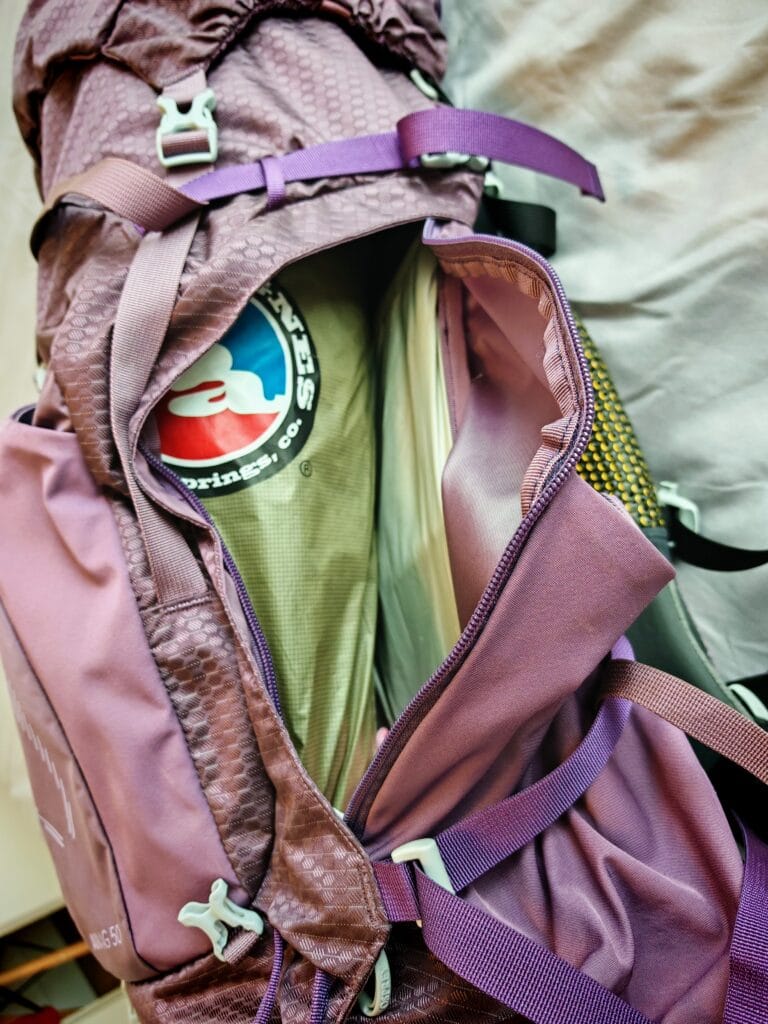
| Side Zip Access | Curved zip access on each side panel into the main compartment |
| Floating Lid | Dual Upper/Lower & side straps to adjust the pack stability and keep it streamlined. |
| Fit-on-the-Fly Harness | Hipbelt is made for improved comfort and a fine-tuned fit. Incremental length and angle adjustments allow for a fine-tuned fit. |
| Front Shove-it Pocket | The fabric-reinforced elasticated Kangaroo pocket is one of my favourite features and is handy for storing snacks, food and even jackets. |
| Water Bottle Pockets | An improved design with taller bottle pockets with easy dual access modes when on the trail. |
| Compression Straps | An improved design with taller bottle pockets and easy dual access modes when on the trail. |
| Ice Axe Loops | I’ve used it more for hiking pole attachments, hide away when not needed and very secure |
| Stow-on-the-Go Pole Attachment | Allows the poles to be attached to the shoulder straps and avoid arm swing when not needed |
| Removable Sleeping Pad Straps | Useful to attach roll mats or sleeping equipment |
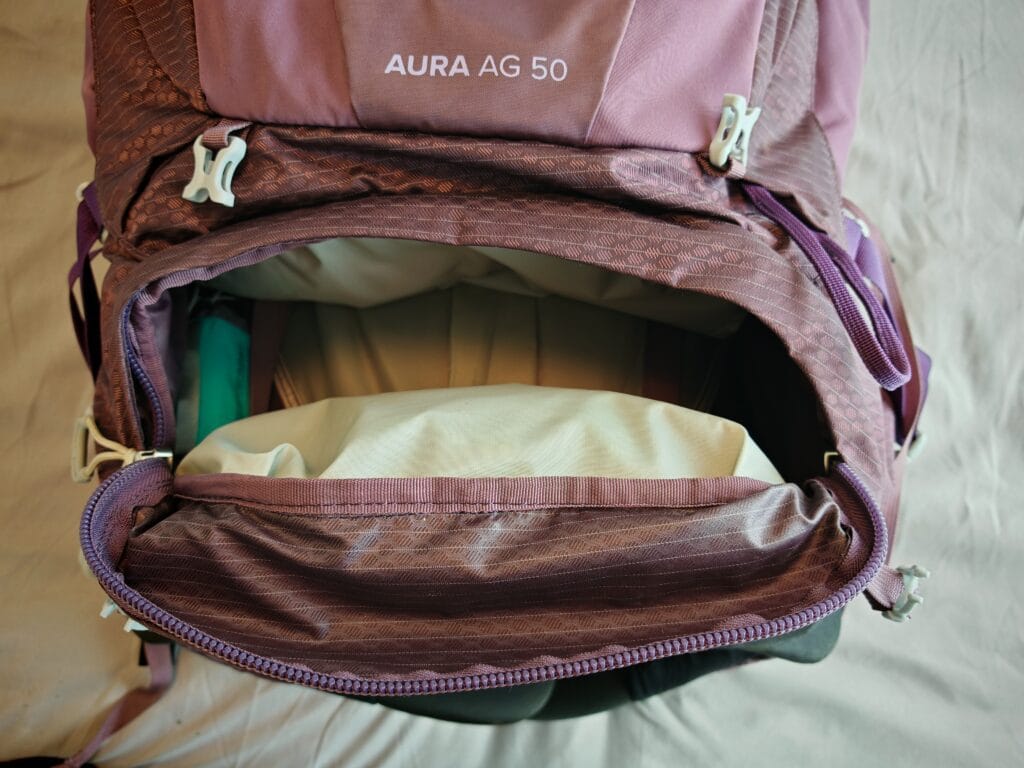
| Zippered Sleeping Compartment | A great feature when on a trek is to keep all the sleeping equipment in a dedicated compartment. The divider is removable as well for full-length stowage. |
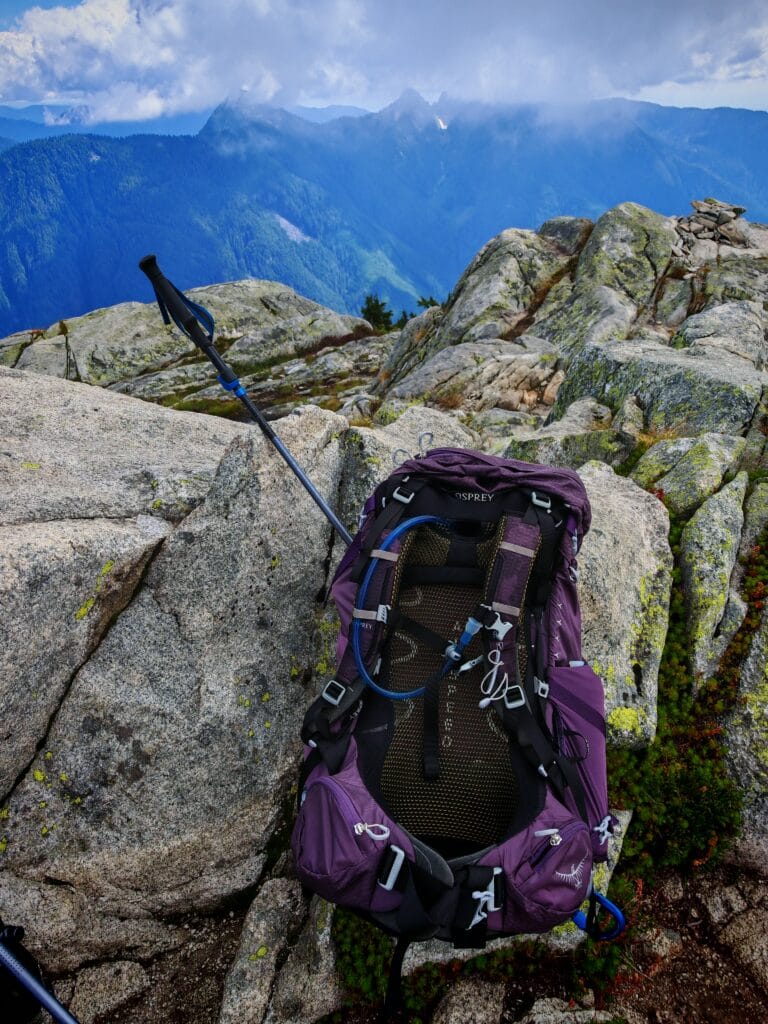
| Internal hydration reservoir sleeve | A large-sized bladder sleeve to fit up to 3L with a central back exit port for the hose to loop to the shoulder straps |
| Shoulder Straps | Die-cut foam for added comfort and a structural load lifter bar with an integrated whistle. |
Our Experience
Years ago, before trekking the Annapurna Circuit, I chose the Osprey Atmos AG 50 Men’s backpack because of the class-leading comfort and all-around capability thanks to the Anti-Gravity (AG) suspension and features. And since recommending it to my girlfriend, the minor design tweaks have improved the Backpack. The most noticeable is the quieter backpanel mesh, which was my biggest annoyance. And the addition of the side access zips and taller bottle meshes is welcomed. However, the non-removable floating lid and relocating the rain cover to the bottom are not as effective. The option to remove the lid and use the flap to lighten the Backpack was a handy feature.

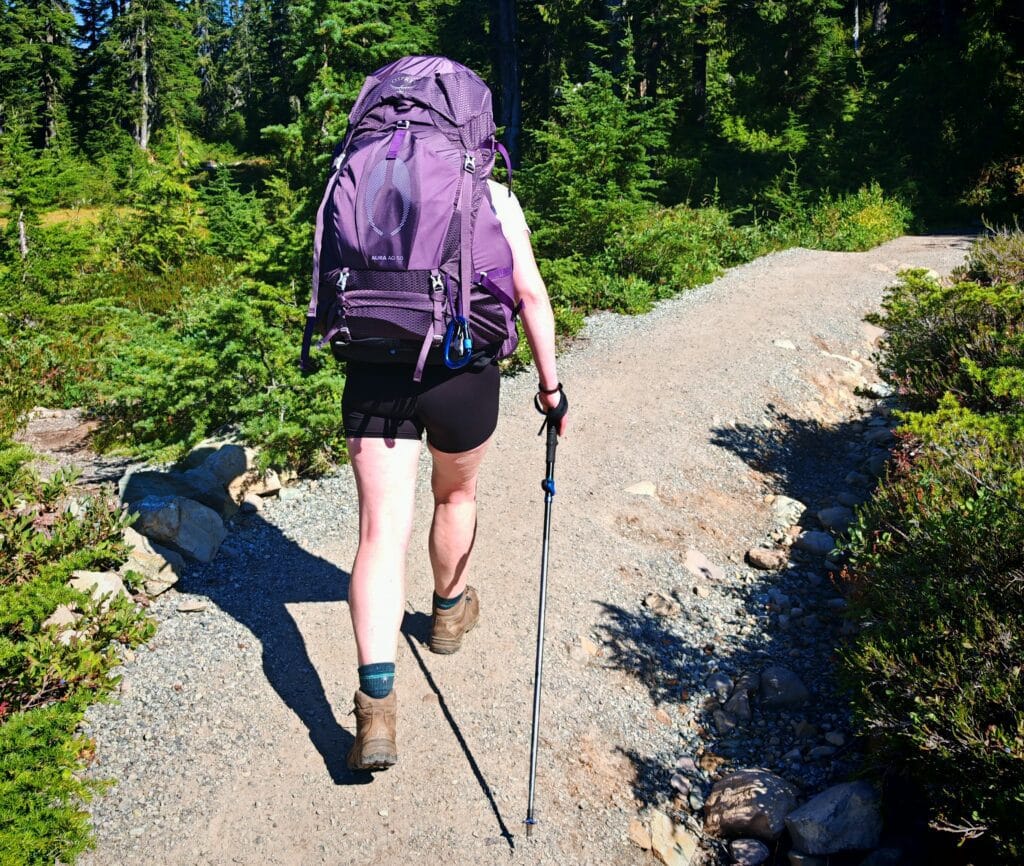
On the first backpacking test to Elfin Lakes, Taylor Meadows and Wedgemount Lake, Roisin was carrying her stuff in the Osprey Aura AG 50 Backpack as well as the Big Agnes Copper Spur Tent. Once the backpack had been adjusted to spread the load effectively onto the hips, the 14kg pack weight felt more like 10kg, thanks to the AG System.
The design and adjustability meant it was easy to change the frame, straps and hipbelt for maximum comfort. The 50L size was ideal instead of the larger 65 version, as it kept the centre of mass lower and avoided over-packing. The Osprey Aura AG 50 purple colour was a top-selling point, and the sleek style too. The only downside was the non-removable lid (despite the website claiming so).
Where this pack earned its keep
We don’t review gear out of a box. Read the full destination guides where the Osprey Aura AG 50 provided crucial support and comfort on the trail.


Osprey Aura AG 50: Strengths
Exceptional Comfort
The AntiGravity™ backpanel provides effective weight distribution onto the hipbelt. This helps save putting weight on the shoulders and upper back area. Plus, the straps and Fit-on-the-Fly hipbelt allow for quick adjustments on the trail when swapping between layers or terrains. This Anti-gravity system on the Osprey Aura AG 50 is the primary reason to get this pack over the competition, as it guarantees all-day comfort (within the load carrying capacity).
This means you barely feel the pack’s load over multiple days of trekking, and it eases the burden when doing ascents. The curved design of hip straps secures your waist like a hug, and the cushioned shoulder straps create amazing on-trail comfort. It’s a very ergonomic design once you’ve adjusted the back panel and shoulder straps.
Ventilation
The AG System and Airspeed mesh harness and backpanel offer impressive airflow. This is helped by the main body sitting away from the back, allowing air to travel through via the suspended mesh panel. Despite the close-fitting hipbelt design, it doesn’t add too much warmth as it uses a mesh panel.
Thoughtful Organization
The Osprey Aura AG 50 has a great variety of pockets in smart locations to help best divide up your gear. As listed above, the number of different attachments and pockets makes organisation much easier. The hipbelt pockets and dedicated compartments for bottles, sleeping bags and rain-covers make it much easier to stay organised at campsites.
Durable Build & Eco-friendly Materials
Osprey use recycled and high-durability materials to ensure the Aura Backpacks last on treks and backpacking trips. Despite the materials not being lightweight, the 210D Main body and lining with a 500D nylon bottom provide reliability, it won’t get ripped in the wild or on transport. Additionally, the bluesign® materials with PFAS-free DWR give it an environmental edge as well.
Women-Specific Fit & Adjustability
With an adjustable harness and hipbelt, the Osprey Aura AG 50 accommodates a range of torso and waist sizes—immersively tailored for women’s anatomy. The compression straps help keep the pack weight central and evenly distributed. The Fit-On-The-Fly system allows the curved hip straps to adjust easily for the optimum fit. This backpack has been engineered to focus on ergonomics and comfort with effective results.
Quiet Suspension Mesh
The biggest annoyance on Atmos AG 50 has been fixed! The trampoline-style back-mesh used to squeak, but the latest design has eliminated that, making it a silent companion on the trails.
Osprey Aura AG 50: Weaknesses
Hip Belt Adjustable
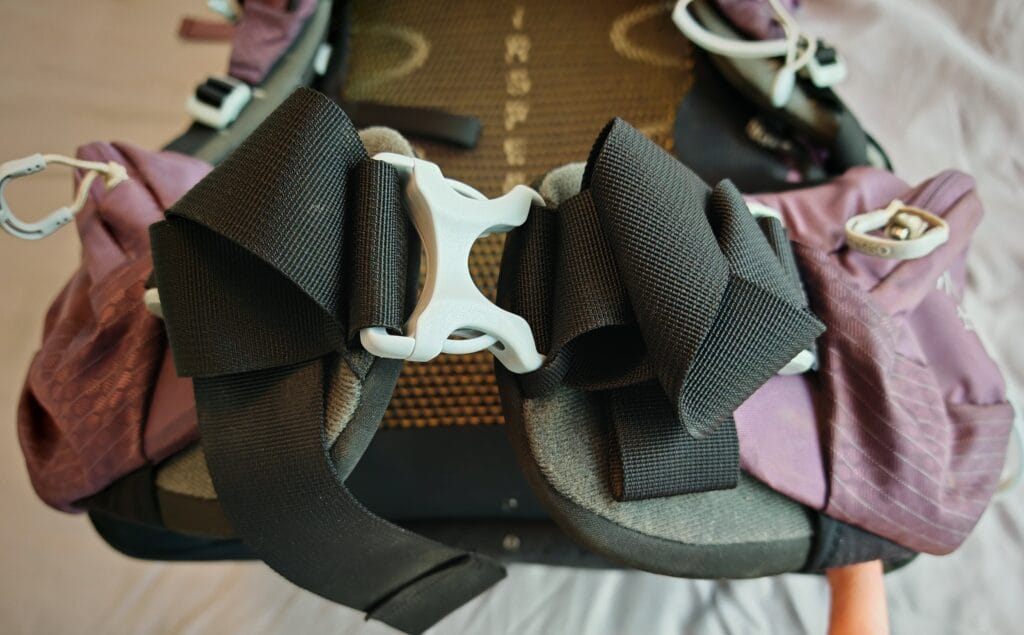
One slight change is for the Fit-on-the-Fly Hipbelt; the ends of the straps don’t have an obvious place to be stored. In the pic below, you can tie them on either side of the buckle, but it is not as effective as the older iteration, which allowed the straps to slot behind the hipbelts.
Re-Design Features
There were some not-so-successful redesigns in the newest Aura & Atom designs, in my opinion. The non-removable floating lid and relocating the rain cover to the bottom are not as effective. The option to remove the lid and use the flap to lighten the Backpack was a handy feature. The buckle and hip straps mentioned above are not as thought through as the older model, either.
Expensive
The Aura is a premium-priced backpack. It is more expensive than the LT version and some of the Gregory competitors. Yet with Osprey, you’re paying for a brand known for its quality products and providing a lifetime guarantee.
Tip: The end-of-season sales are the best time to grab a bargain or when new versions are being launched for a deal. That’s how we managed to save 30% off the Osprey Aura AG 50 at MEC. Check out Backcountry.com to get 15% off with the link above!
Weight to Capacity ratio
On the spec sheet, the Osprey Aura AG 50 is not a lightweight backpack. The LT version and Osprey Kyte 48 undercut it on weight. However, the heavier Anti-gravity system allows you to carry heavier loads than without it. There are other backpacks, such as the Ariel 55/65, that are better designed for heavy loads above 18kg.
Tip: The general rule of thumb for pack weight is around 20-25% of your body weight.
Alternatives
- Gregory Facet 45 – A Lighter (~2.5 lbs) backpack with a great hipbelt and minimalist design for shorter trips. The smaller volume is less versatile, but it’s competitively priced. I would recommend trying on both a Gregory and an Osprey, as people tend to prefer one fit over the other. We noticed the Facet & Maven were taller backpacks behind the head, which doesn’t suit all hairstyles.
- Osprey Aura AG LT 50 – Trimmed-down, lighter version of the Aura AG 50, retaining core features but with a slimmer design. Retains the signature AntiGravity suspension but in a more streamlined, lighter package. But it does not have the sleeping compartment, which is handy to access and organise.
- Gregory Maven 58 – The Gregory Maven offers 48, 58, or 68 L with a well-padded hipbelt; great load transfer and covers a wide range of body types. More feature-packed than the Facet with high ventilation. The Maven 48 is the closest competitor to the Aura AG 50.
- Osprey Ariel 65 – Often recommended for longer expeditions or for carrying food for a week. The Ariel 65 uses an Airscape backpanel and is designed for heavy loads. It uses front zipper access compared to the traditional top loading of the Aura.

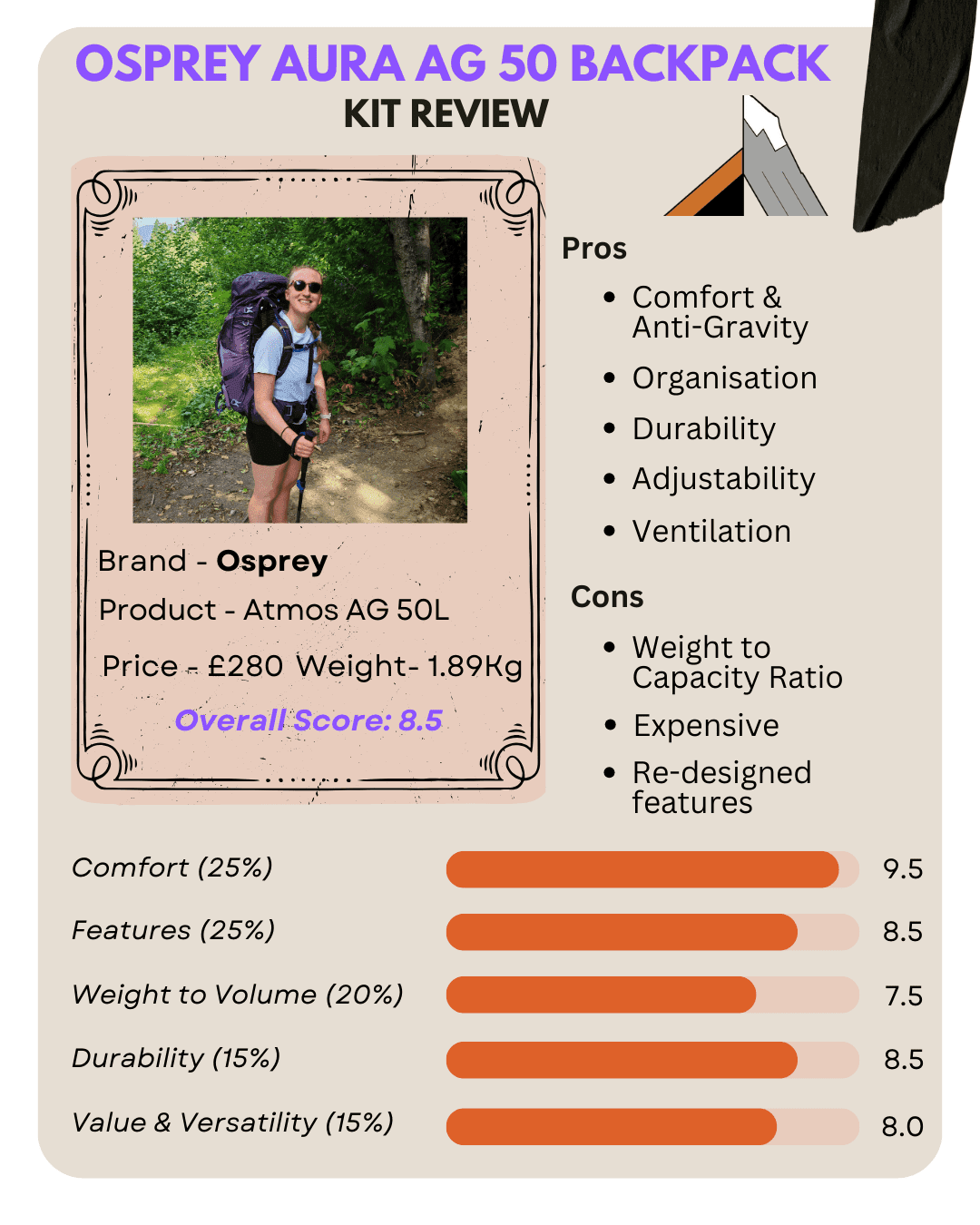
Osprey Aura AG 50: Kit Rating
Final Thoughts
If you are planning multi-day hikes and prioritise carrying comfort, heavy-load ventilation, and thoughtful organisational design, the Osprey Aura AG 50 is a top-tier choice—just be sure to get properly fitted before hitting the trail. The Osprey Aura AG 50 is a global best-seller for a reason, and I am incredibly happy my recommendation worked out perfectly for her. The decision to invest in the full AG version instead of the stripped-down LT model was undeniably wise, especially for the extra pockets and organisation needed when setting up and breaking down camp each day.
At 50 litres, the Osprey Aura AG 50 hits the absolute ideal sweet spot; it is perfectly sized for weekend-long trips, or even up to two weeks of trekking if you pack lightweight or rely on tea houses rather than carrying a full tent setup. I cannot highly recommend the Osprey Atmos and Aura backpacks enough for any thru-hiking, trekking, or backpacking trips thanks to their unmatched comfort, versatility, and signature trampoline-mesh ventilation.
What is the best trekking backpack in your opinion? And if you already own an Osprey Atmos or Osprey Aura AG 50 backpack, what are your thoughts on it? Please share this post with other backpackers, hikers, and trekkers looking to buy a new backpack for the season!
FAQs
Is the Osprey Aura AG 50 big enough for a multi-day trip?
Yes, 50 litres is the perfect sweet spot for 3-to-5-day backpacking trips, provided you have reasonably modern, packable gear. It easily holds a sleeping bag, a sleeping pad, a compact tent, clothing, and food. For week-long, unsupported expeditions where you need to carry massive amounts of food, you might want to size up to the 65L version.
What is the difference between the Osprey Aura and Osprey Ariel?
The Aura is built around the Anti-Gravity (AG) suspension system, which prioritises supreme ventilation and body-hugging comfort for loads up to about 40 lbs. The Ariel is Osprey’s heavy-haulier; it uses a stiffer, more traditional frame designed to handle much heavier loads (50+ lbs) for technical mountaineering or long winter expeditions, but it sacrifices some of that trampoline-mesh breathability.
How does the Osprey Anti-Gravity (AG) system work?
The AG system features a continuous panel of lightweight mesh that extends from the top of the back panel all the way down through the hip belt. This creates a seamless, tensioned trampoline effect that physically wraps around your body. It eliminates hot spots, drastically reduces back sweat, and makes the pack feel like an extension of your body rather than a heavy load hanging off your shoulders.
Does the Osprey Aura AG 50 come with a rain cover?
Yes. The current generation of the Aura AG 50 includes an integrated, fully waterproof rain cover stowed away in a dedicated pocket. This makes it incredibly easy to deploy in seconds when a sudden mountain storm rolls in.

Incredibly thorough and helpful post! Thank you 🙂 I used this to make my purchase decision.