Santiago is often overlooked by travellers rushing south to Patagonia and is more than just a logistical stopover en route to Torres del Paine. Chile’s capital is a destination worth exploring in its own right and has some incredible day trip options to suit everyone. Surrounded by the snow-capped Andes, Santiago combines historic plazas, vibrant neighbourhoods, hilltop viewpoints, world-class museums, and easy access to some of Central Chile’s most spectacular landscapes.
Whether you’re visiting for a dedicated city break or using the capital as a gateway to Torres del Paine, this guide covers the very best things to do in Santiago Chile, from climbing Cerro San Cristóbal and Cerro Santa Lucía to exploring Bellavista, discovering the city’s history, and taking unforgettable day trips into the Andes. If you’re planning a first-time visit, this itinerary will help you experience the highlights, the best things to do in Santiago, and planning tips while avoiding common travel mistakes.
This Santiago travel guide covers how to get here, where to stay, where to eat and drink, the hills and viewpoints worth climbing, a day trip into the Andes at Cajón del Maipo, plus transport, budget and general travel advice.
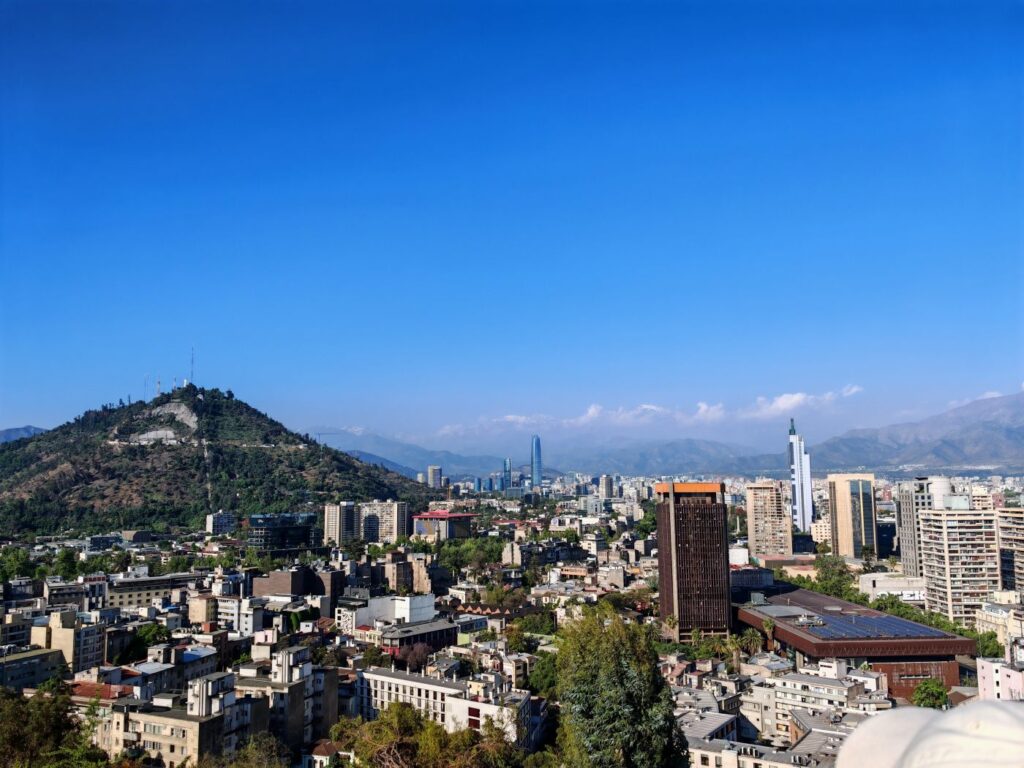
Santiago is an ideal base for a few days before or after a Patagonia trek if you’re sticking to Chile and not linking Argentina or Buenos Aires to the trip. It has a walkable centre, two excellent hills with sweeping views, and a strong food and wine scene. Two to three days is enough to see the highlights and best things to do in Santiago.
Santiago was both my first and last stop on the way to Torres del Paine and Puerto Natales. Most trekkers fly straight through and never leave the airport hotel, but I think it deserves a proper look. Honestly, I loved the views and architecture of Santiago, but I did feel unsafe at points. Another thing that stood out was the amount of waste and rubbish on the streets, which was a political issue at the time, but it didn’t give the best first impression.
When planning my Torres del Paine O Circuit trip, I didn’t spend anywhere near as long researching Santiago, which allowed me to have no expectations. I did pre-book a day trip tour to the Maipo Canyon Volcano and Hot Springs in the Andes. This is one of my favourite memories of my trip to Chile and a great experience after 8 days of trekking around the Torres del Paine Massif. I also decided to join a free walking tour on my first day to help orient myself and learn about the history of Chile and the city.
Santiago at a glance
| Quick fact | Details |
|---|---|
| Best for | City break before or after Patagonia; food, wine, hill viewpoints, Andes day trips |
| Ideal length | 2 to 3 days, or one night each side of a Patagonia trek |
| Getting in | Santiago Airport (SCL), around 30 to 40 minutes from the centre |
| Getting around | Metro with a Bip! card; walk the centre; rideshare apps after dark |
| Best time to visit | October to November and March to May |
| Currency / language | Chilean peso (CLP); Spanish, with limited English outside tourist areas |
Why Santiago Deserves More Than a Layover
Santiago sits in a broad valley framed by the Andes on one side and the coastal range on the other, and on a clear day the snow-capped peaks look close enough to touch. For this must-see view, head to either Cerro San Cristóbal or Cerro San Lucia for one of the best things to do in Santiago. It is Chile’s capital, home to around seven million people, and a modern, busy city that mixes colonial plazas, glass towers, street art and leafy neighbourhoods.
For anyone heading to Patagonia, it is also the practical gateway with good flight options for flying south. Most international flights arrive in Santiago, and onward flights to Punta Arenas and Puerto Natales leave from here. That makes it an ideal place to recover from a long-haul flight, sort out cash, SIM cards and any last-minute supplies, then enjoy a proper meal and hot shower when you return from the quiet mountains in Patagonia. I covered the next leg of the journey in my Puerto Natales guide.
One of the best things about Santiago is how easy it is to combine city life with the mountains. You can spend a morning on a hill above the city, an afternoon in a market, and be in the Andes within two hours. I visited Santiago at the end of October and returned 8 days later in November, so I enjoyed blue skies, warm temperatures and pleasant conditions.
Tip 1. Getting to Santiago
Santiago Airport (SCL), officially Arturo Merino Benítez International Airport, is the main international hub in Chile and the entry point for most Patagonia itineraries. It sits to the northwest of the city, and the transfer takes roughly 30 to 40 minutes outside rush hour.
| Route | Method | Duration | Notes |
|---|---|---|---|
| SCL to city centre | Airport bus | ~40 mins | Cheapest; services run to Metro stations such as Pajaritos and Los Héroes |
| SCL to city centre | Taxi or rideshare | ~30-40 mins | Door-to-door; agree on the price or use an app like Uber |
| SCL to Puerto Natales | Flight (seasonal) | ~3 hrs | Direct seasonal flights; see my Puerto Natales guide |
| SCL to Punta Arenas | Flight | ~3.5 hrs | Then bus to Puerto Natales, around 3 hours |
| Santiago to Valparaíso | Bus | ~1.5 hrs | Easy alternative day trip to the coast |
Bus companies such as Centropuerto and Turbus run frequent airport services, and tickets can be bought at the arrivals hall. If you arrive late at night or after a long flight, a pre-booked transfer or rideshare is worth the extra cost. I decided to book my first hotel next to the airport, where I got a shuttle upon arrival and then used Ubers and taxis to travel from my central hostel to the airport on the return trip.
Because Patagonia flights are not always daily, it is worth building your Santiago nights around your flight schedule. If you have a spare day before or after your trek, I would use it to see the city rather than waiting at the airport.
A practical note: stove fuel cannot go in luggage on flights, so buy it in Patagonia rather than carrying it through Santiago.
Hills, Viewpoints and Things to Do in Santiago, Chile
Santiago is surrounded by mountains, and the best way to understand the city is from above. Two hills rise out of the centre, and the Andes form a dramatic backdrop. Here is a list of the best things to do in Santiago.
1. Cerro San Cristóbal (Parque Metropolitano)
The biggest hill in the city and the best all-round viewpoint, this tops the list of free things to do in Santiago. It rises about 300 metres above the streets and is topped by a large statue of the Virgin Mary. You can ride the funicular from Bellavista, take the cable car across the park, or hike up, which takes roughly an hour from the Pío Nono entrance in Bellavista. Walking up makes a good test of your boots and legs before Patagonia, but it definitely hurts more after the trekking!
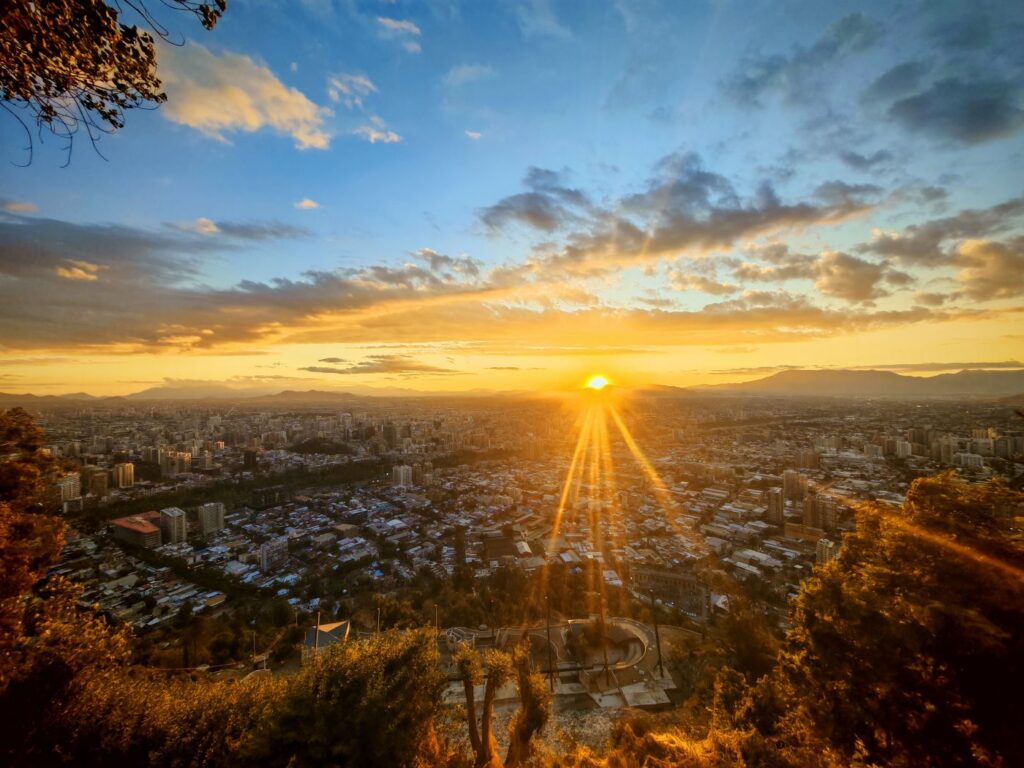
I took the walking route up, and it only took me 15 minutes, but it is steep, so leave yourself some time! The reward was a stunning sunset where the orange and red colours were beautiful. On the same evening, local football team Colo-Colo just won a trophy so the celebrations could be heard below, with fireworks popping off too.
2. Cerro Santa Lucía
A small, landscaped hill right in the centre, with stairways, terraces and a castle-like fort at the top. It is quick, free and easy to climb, and gives a good view over the old town and the skyscrapers, especially at sunset. It is a good first stop on a city walk and my first panoramic viewpoint of the city and surrounding mountains. It’s by far one of the must-see and best things to do in Santiago without too much effort.
3. Sky Costanera
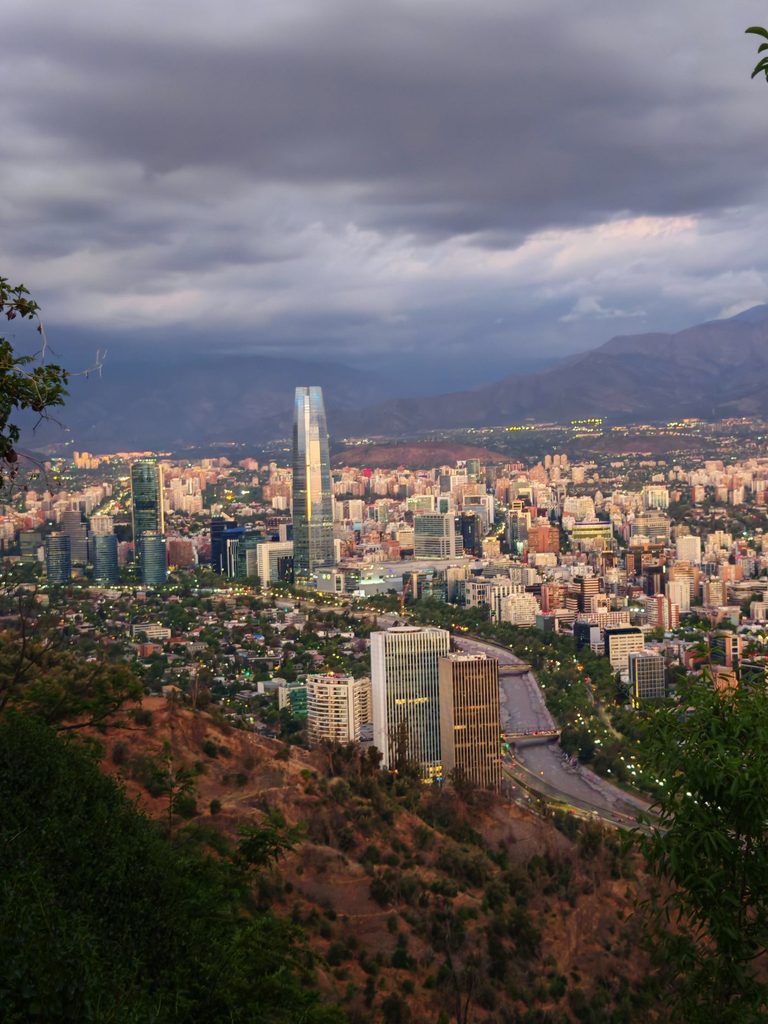
The Gran Torre Santiago is the tallest building in Latin America, and the observation deck near the top gives a 360-degree view of the city and the Andes. It is pricey, and it works best on a clear day, so check the visibility before you go. I was based too far away, so I did not go up the Skyscraper, and tickets cost CLP $25,000, equating $25USD approx. It’s one of the most popular things to do in Santiago.
4. Plaza de Armas and the Historic Centre
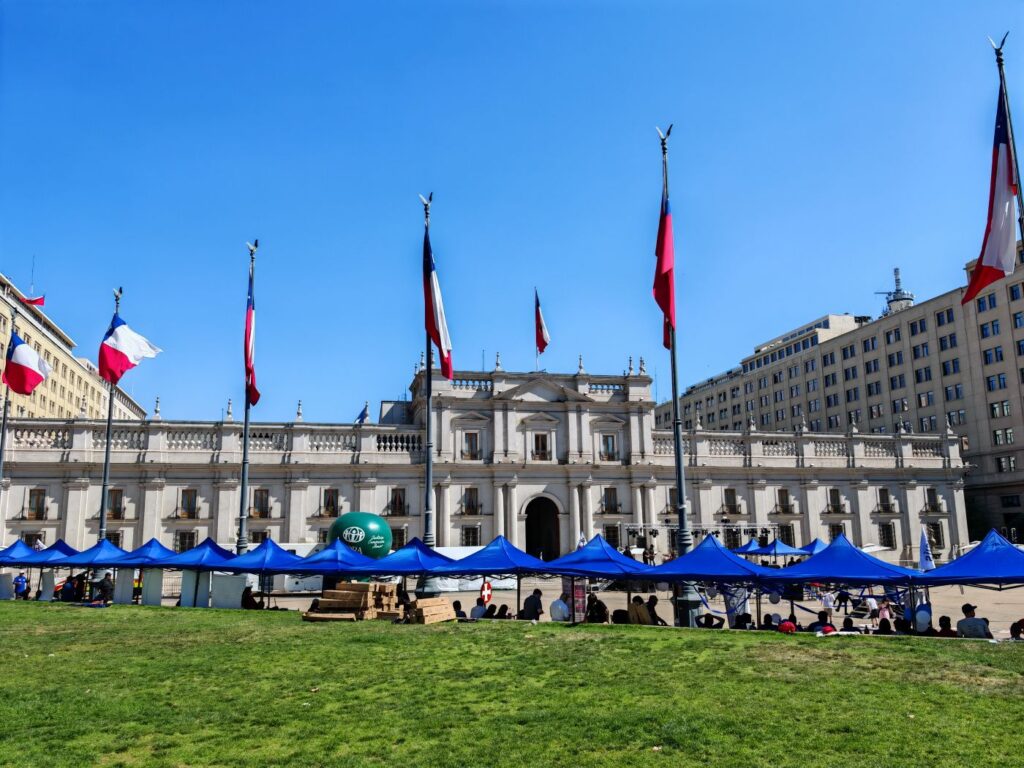
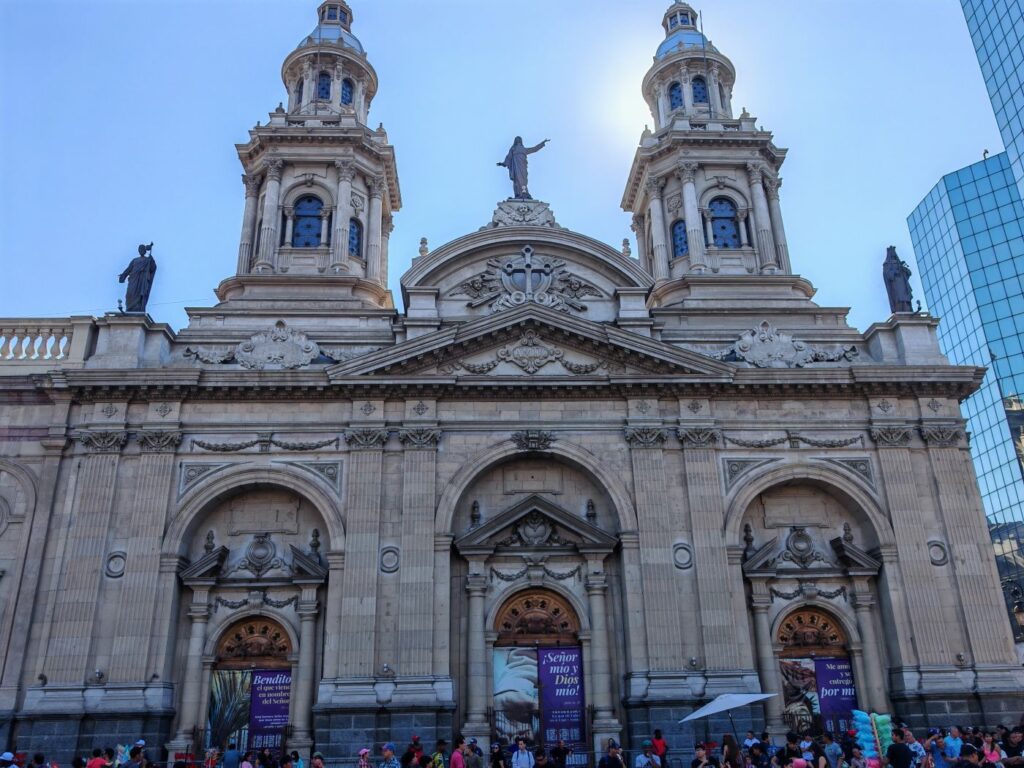
The old heart of Santiago, with the cathedral, the central post office and plenty of street life. From here you can walk to the Palacio de La Moneda, the presidential palace, and the cultural centre beneath it. It is busy during the day, so keep a close eye on your bag as there are pickpockets around. If you have a free half day, then it’s worth doing a free walking tour if you are curious about the city’s history, culture and want some recommendations. I was fortunate enough to meet a young Canadian couple who I met later on whilst trekking in Patagonia.
5. Lastarria and Bellavista
These two neighbourhoods are the best places to wander. Lastarria is full of cafes, bookshops and small museums, while Bellavista is known for its street art, bars and La Chascona, the house of poet Pablo Neruda. They are close to each other and make a natural half-day walk.
6. Museo de la Memoria y los Derechos Humanos
This free museum covers the human rights violations of the Pinochet dictatorship between 1973 and 1990. It is moving and important context for understanding modern Chile, and well worth the time. Give it at least an hour and a half.
7. Barrio Italia and Street Art
A quieter district of antique shops, design studios and courtyard cafes, which is a pleasant way to spend an afternoon. Street art covers walls throughout Bellavista, Yungay and Barrio Brasil.
8. Andes Day Trip: Cajón del Maipo, Volcanoes and Hot Springs
San Jose Volcano & Maipo Canyon
The best day trip from Santiago is into the Andes at Cajón del Maipo, a deep river valley running southeast of the city. It is only about 1.5 to 2 hours from Santiago, but it feels like a different world, with high mountain scenery, glacial rivers, volcano views and natural hot springs.
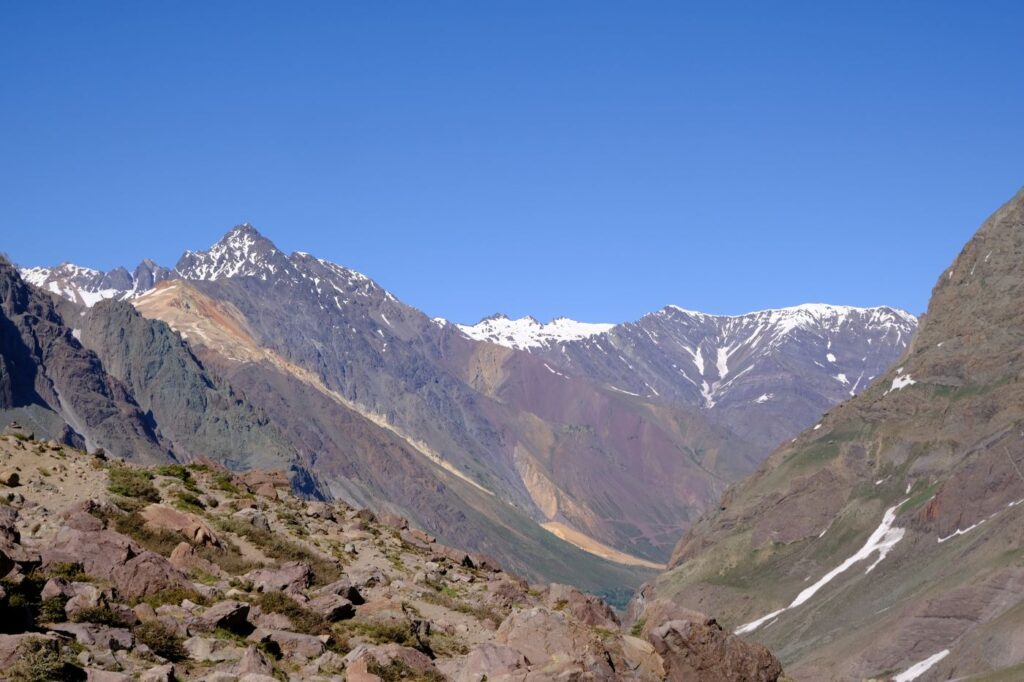
I took a slightly different itinerary to include San Jose Volcano for better hiking instead of going to the Cajon del Maipo. For a trekker, it is the perfect way to stretch your legs and see some mountains very different to Patagonia. I booked with AndosAndes via GetYourGuide and was picked up from my Hostel bright and early in the morning. This day trip was my favourite of the things to do in Santiago and would highly recommend.
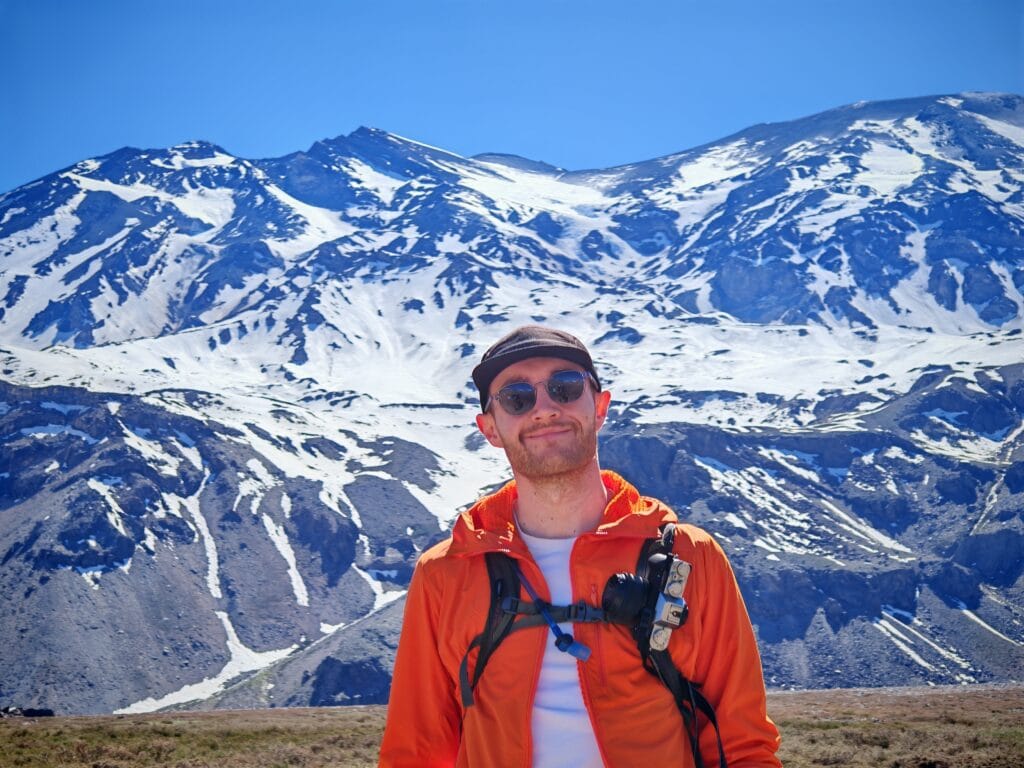
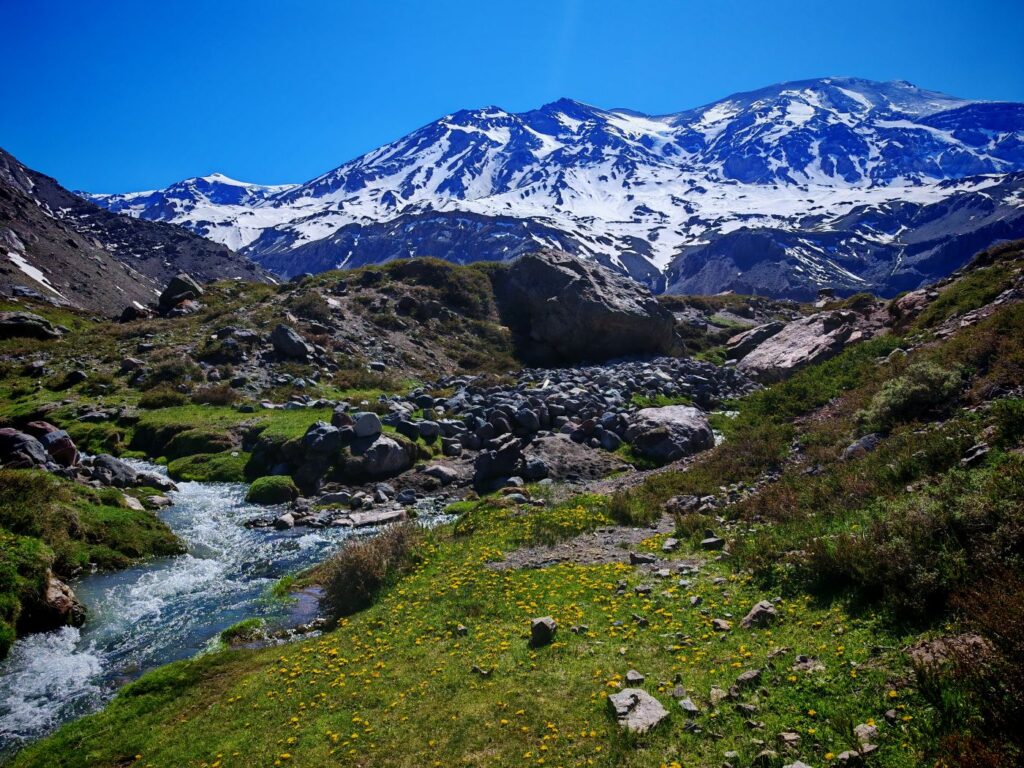
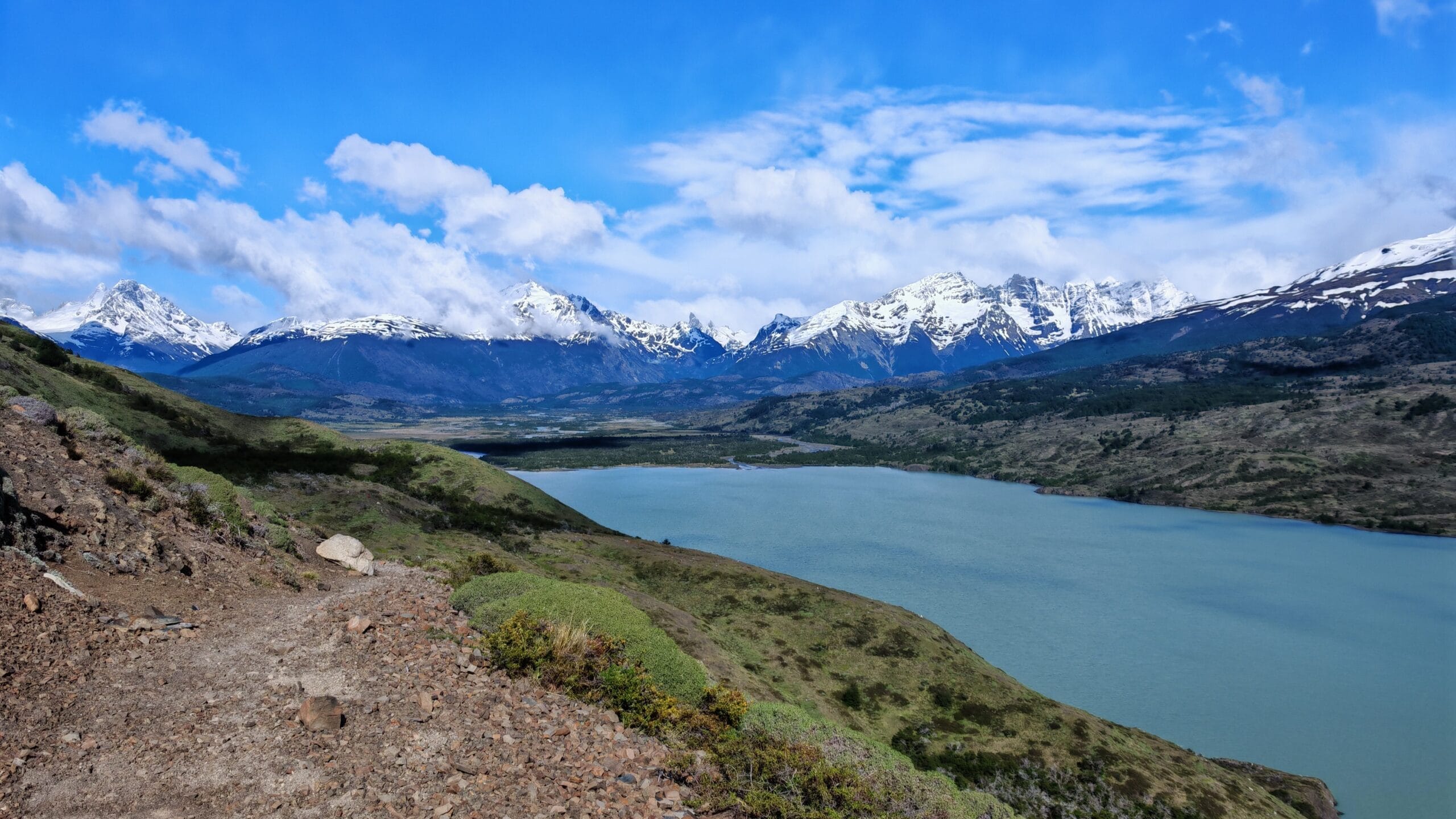
The valley is dominated by the Volcán San José, which rises to around 5,800 metres, and the Volcán Maipo, which sits on the border with Argentina. Depending on your route, you can visit Embalse El Yeso, a turquoise reservoir at about 2,500 metres, or the Monumento Natural El Morado, which has a hiking trail to a glacial lake with views of the hanging glacier. We took a short hike near the base of the volcano before driving on to Termas Valle de Colina Hot Springs. A nice, relaxing, easy hike which was appreciated after 8 days of hard trekking.
Termas Valle de Colina
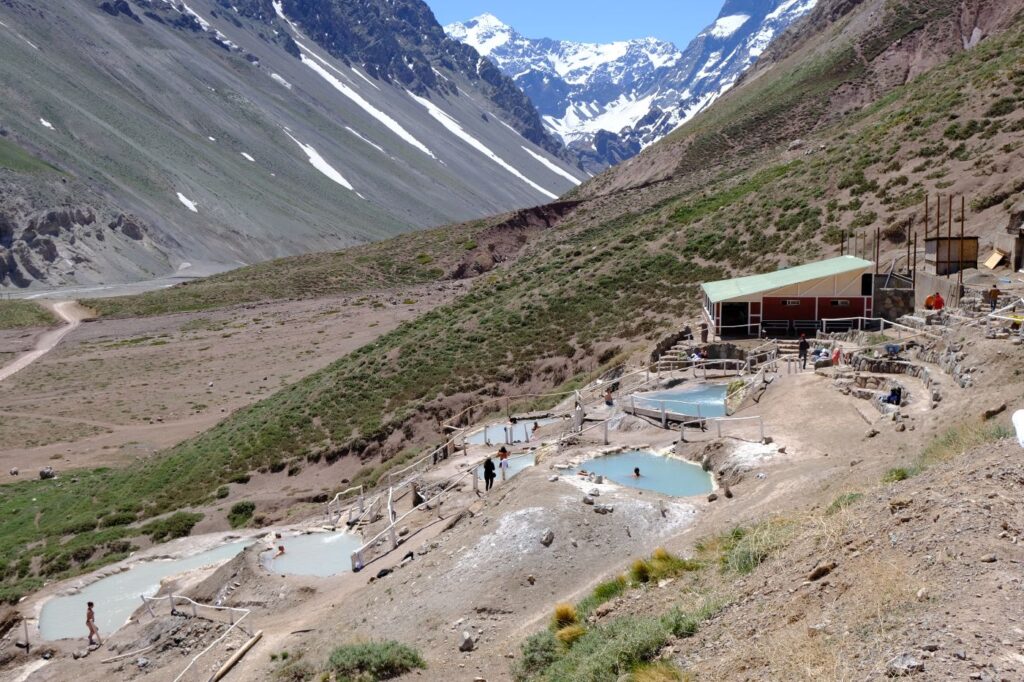
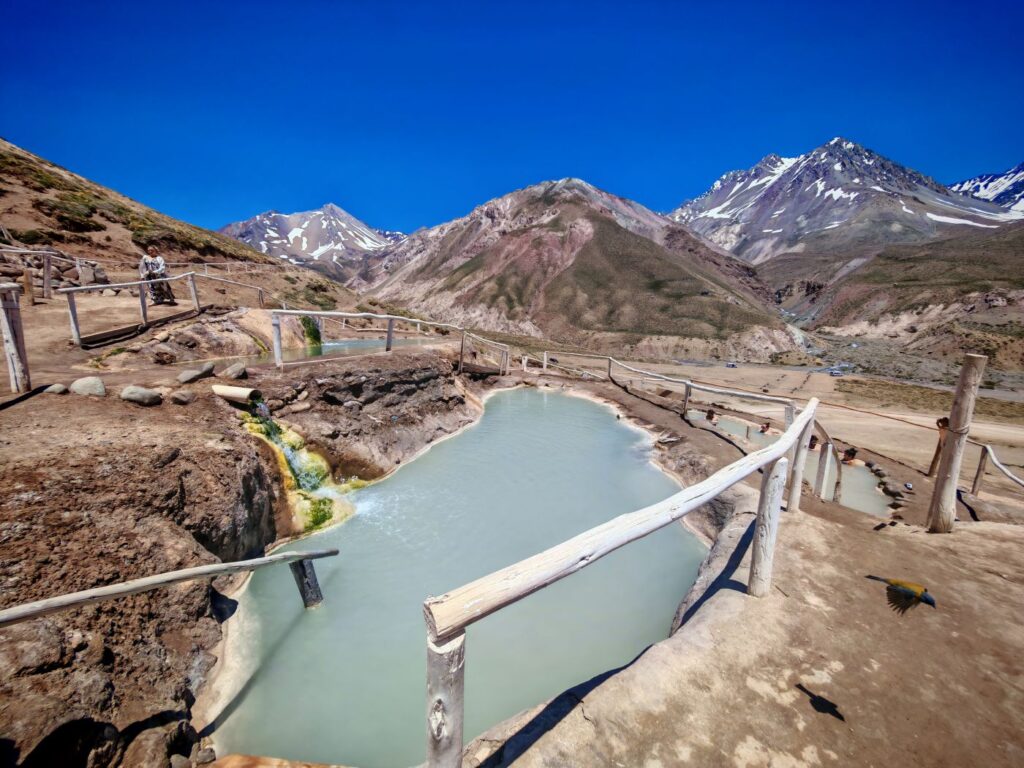
The valley has several thermal springs, such as Termas Valle de Colina and the baths near Baños Morales. They make a great end to a day of walking, with warm pools set against mountain views. We visited Baños Colina, which had the most awe-inspiring mountain views seen from the piping hot baths. The pools at the top were the hottest, and the lower pools were naturally cooler, giving plenty of options. Outside of Torres del Paine, the hot springs were one of the best things to do in Santiago (well, near) on the trip.
How to Get There
- Guided tour – The easiest option, with transport, a guide and a planned route. Look for small-group tours that include a hike and the hot springs. I used AndosAndes, where I had an incredible experience and booked straight via GetYourGuide.
- Rental car – Gives you flexibility, but the mountain roads can be narrow, and you need to start early. Check road conditions, especially in winter.
- Public transport – Possible but slow. Buses run from the south-east of Santiago to San José de Maipo, but reaching the high-altitude sights usually needs a tour or a car.
9. Maipo Valley Wine Region
Chile is famous for its wine, and the Maipo Valley is one of the country’s premier wine-producing regions. Located less than an hour from Santiago, visitors can tour historic vineyards, learn about the winemaking process, and sample some of Chile’s best Cabernet Sauvignon wines. It’s an easy and relaxing escape from the city, particularly for food and wine lovers.
10. Valparaíso & Viña del Mar
A trip to Chile’s Pacific Coast is one of the most rewarding day trips from Santiago. The UNESCO-listed port city of Valparaíso is famous for its colourful hillside houses, street art, funicular railways, and bohemian atmosphere. Nearby Viña del Mar offers a completely different experience, with broad beaches, oceanfront promenades, gardens, and a more relaxed seaside feel. Together, they make for the perfect coastal day trip from Santiago.
Where to Stay in Santiago
Santiago is large, so the neighbourhood you pick matters. For a first visit, I would stay in or near Lastarria or Bellas Artes, where you can walk to most of the main sights, restaurants and the Metro.
- Lastarria and Bellas Artes – The best base for visitors. Cobbled streets, cafes, bars and museums, and walking distance to Cerro Santa Lucía and the Plaza de Armas.
- Bellavista – Lively and colourful, with street art, restaurants and nightlife, and the foot of Cerro San Cristóbal. It can be noisy at night.
- Barrio Italia and Providencia – Quieter, leafier areas with design shops, cafes and a more local feel, connected by Metro. I stayed at Hostal Providencia, which allowed great access to the centre and had a friendly vibe! The hostel cost me CLP38760 ($40USD) for 2 Nights in a private room. After trekking and staying in tents or hostels, it was a pleasant luxury to have some warmth and privacy. Honestly, I didn’t make the most of the Hostel or events, as I was pretty tired and had a long day tour. The room was spacious and comfy, but it wasn’t the quietest of hostels due to the old building with thinner walls & doors.
- Centro and Yungay – Cheap and close to the sights, but it feels rougher at night, so I would choose carefully.
- Las Condes and El Golf – The business district, with modern hotels and fewer sights nearby.
- Airport – Hotel La Quinta by Wyndham Santiago Aeropuerto: This was a tactical choice due to flying out early on Day 2 to Puerto Natales, so it made sense to be close to the airport. The compromise was getting an Uber to the centre for the free Walking Tour, as I didn’t want to risk public transport and my camera so early on.
| Tier | Pick | Approx. price per night | Best for |
|---|---|---|---|
| Budget | Hostal Providencia | $16 Dorm $30 Private (2026) | Solo travellers, backpackers, and Patagonia trekkers looking for a sociable base. |
| Mid-range | Hotel Boutique Tremo Bellas Artes | US$80-140 | Comfortable stays near Lastarria, Bellas Artes, museums, cafés, and the historic centre. |
| Luxury | The Singular Santiago | US$250-450+ | Post-trek recovery with a rooftop pool, excellent breakfast, spa facilities, and views over Santiago. |
If you are flying early or arriving late, a hotel near the airport or a night in the city before a morning flight can save stress. Most hostels and hotels will store luggage for free, which is useful if you are heading to Patagonia and want to leave city clothes behind.
Where to Eat and Drink in Santiago
Santiago has a very strong food scene, from cheap street snacks to some of the best restaurants in South America. Lunch is traditionally the main meal of the day, and many restaurants offer a fixed-price menu del día that is much cheaper than dinner.
Chilean classics to try
- Completo – Chile’s answer to the hot dog, loaded with avocado, tomato and mayonnaise. A cheap, filling snack, and a good way to start.
- Empanadas de pino – Baked pastries filled with minced beef, onion, egg and olive, one of the best cheap bites in the city. It was the first thing I ate in Santiago: it was very good and cheap!!
- Pastel de choclo and cazuela – A baked corn and beef pie, and a hearty soup of meat, potato and corn. Comfort food after the trail.
- Ceviche and seafood – With the Pacific coast so close, the fish and shellfish are excellent, and the Mercado Central is the classic place to try them. It is touristy, so choose carefully.
- Mote con huesillo – A summer street drink of peaches and wheat, sweet and refreshing.
Places to eat
- Fuente Alemana – A busy, no-fuss counter famous for its giant lomito sandwiches. Expect a queue at lunch.
- Mercado Central – The historic fish market, with restaurants inside. It is atmospheric, though prices are higher, so go for the experience and pick a stall with locals.
- La Vega Central – A giant market for fruit, vegetables and cheap lunches, much more local and a good place to stock up on snacks.
- Confitería Torres – One of the oldest cafes in the city, dating to the 1800s, and the home of the Barros Luco sandwich of beef and melted cheese.
- Peumayén – A restaurant in Bellavista focused on Chilean and indigenous ingredients, good for a special dinner.
- Emporio La Rosa – Excellent ice cream with several branches, including Lastarria. A good post-walk treat.
- Chipe Libre – República Independiente del Pisco – By far my favourite restaurant in Santiago and the most traditional, with a selection of pisco Sours and Chilean steak, which was appreciated as my final meal in Chile.
- Bombo Burger Santiago – A surprisingly good burger joint with unlimited fries and soft drink refills! The burger was rather tasty, and it showed live sports where I watched Colo-Colo win a Football trophy in the city!
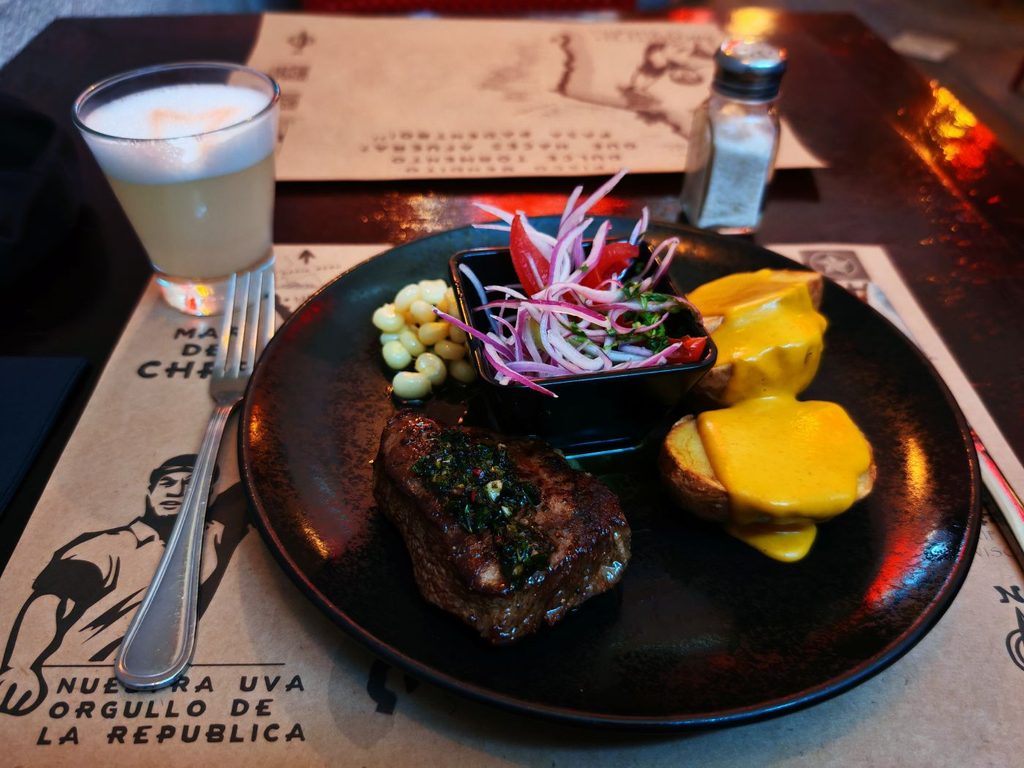
Drinks
Chile is a major wine producer, and Carménère is the signature grape. You can try it by the glass at wine bars such as Bocanáriz in Lastarria, or visit a vineyard on a half-day tour, with Concha y Toro and Cousiño Macul being the best-known. For something stronger, order a pisco sour, a drink both Chile and Peru claim as their own. The terremoto, a sweet mix of wine, pineapple ice cream and fernet, is a local curiosity best enjoyed carefully.
For coffee, the independent cafes in Lastarria and Barrio Italia are the best bet. I’ve been a fan of Pisco sours for years, so it’s a must-try when in Santiago! My favourite beers were from Cerveza Austral (from Puerto Arenas, near Patagonia. This craft brewery produced my favourite Calafate Ale, which I enjoyed in Torres del Paine & Puerto Natales and is available in Santiago.
5 Days in Santiago & Patagonia
| Day | Activity |
|---|---|
| Day 1 | Arrive in Santiago, join a free walking tour of the historic centre, then climb Cerro Santa Lucía for panoramic city views. |
| Day 2 | Fly south to Patagonia and begin your trekking adventure in Torres del Paine or the surrounding region. |
| Day 3 | Return to Santiago and spend the evening at Cerro San Cristóbal for sunset views across the city and Andes Mountains. |
| Day 4 | Take a day trip into the Andes, exploring Cajón del Maipo, Embalse El Yeso, Maipo Valley, or the San José Volcano area. |
| Day 5 | Visit Santiago’s museums, explore the neighbourhoods of Lastarria and Bellavista, enjoy a final Chilean meal, and fly home. |
Getting Around Santiago: Transport Tips
Santiago has a clean, efficient Metro network that is the best way to cover long distances. To use it, you need a rechargeable Bip! card, which you can buy at station ticket offices and top up at machines. Fares vary by time of day, and a single card can be shared between travellers. I didn’t use any public transport as Ubers were cheap to get around and safer for a solo backpacker.
- Metro – Fast and cheap, and it reaches most of the sights. Avoid the peak hours from around 7.30 to 9.30am and 5.30 to 7.30pm, when carriages are very crowded, and pickpockets are active.
- Buses – The bus network uses the same Bip! card but is harder to navigate for visitors. Use Google Maps or the Moovit app.
- Rideshare and taxis – Uber, Cabify and DiDi all operate. They are cheap by Western standards and the safest option late at night. Taxis should use the meter, so check before getting into a cab.
- Walking – The central neighbourhoods are walkable, and the pavements are generally in good condition. Distances can be bigger than they look on a map.
- Intercity buses – Comfortable and frequent services run to the coast and other cities from the bus terminals. Book online in advance for long journeys.
Budget and General Travel Advice
Santiago is not a bargain destination by South American standards, but it is cheaper than most European capitals and North America. Costs vary widely depending on how you travel, so here is a rough guide. These are estimates, so check current prices and exchange rates before you go.
| Spend | Backpacker | Mid-range | Comfort |
|---|---|---|---|
| Accommodation | $15-25 dorm bed | $70-130 hotel | $150+ boutique hotel |
| Food and drink | $15-25 | $35-60 | $70+ |
| Transport | $3-8 Metro and buses | $8-20 incl. some rideshare | $20+ taxis and tours |
| Activities | $0-15 | $15-40 | $60+ tours and wine |
| Daily total | ~$45-65 | ~$110-170 | ~$250+ |
A day trip to Cajón del Maipo with a guide typically costs more than a normal sightseeing day, so factor that in. That trip cost me around $150 USD, with transport from Santiago, snacks, a wine tasting, the tour guide and ticket entry into the Hot Springs included.
Money
- Currency – Chilean pesos (CLP). Cards are accepted in most restaurants, hotels and shops, but carry cash for markets, small cafes and transport. Roughly 950 CLP equals 1 USD, though rates vary. [verify current rate]
- ATMs – Available throughout the city, but many charge a withdrawal fee. Withdraw larger amounts less often, and use ATMs inside banks or malls.
- Tipping – Around 10 per cent is customary in restaurants and is often suggested on the bill, but it is voluntary.
Safety
Santiago is generally safe in the main tourist areas, but petty crime is common. Phone snatching and pickpocketing happen on the Metro, around Plaza de Armas and in Bellavista, so keep valuables out of sight and bags zipped. Avoid walking alone late at night in quieter areas, and use rideshare after dark. Check current travel advice before your trip. [ADD: your own experience and any tips]
Stay Connected While Travelling
Avoid expensive roaming fees and stay connected from the moment you land. Holafly eSIMs work in destinations worldwide and make it easy to access maps, transport, accommodation bookings and travel information without needing a physical SIM card.
Other Practical Tips
- Earthquakes – Chile is seismically active, and small tremors are common. Locals are well prepared, so follow hotel guidance if one happens.
- Weather and seasons – The seasons are reversed from the Northern Hemisphere. Summer is hot and dry, and winter is cool with occasional smog.
- Altitude and sun – The sun is strong, so wear sunscreen and a hat, especially if you are hiking or heading to the Andes.
- Language – Spanish is the main language, and English is limited outside tourist areas. Learn a few basic phrases, and use a translation app for menus.
- Stay connected – An eSIM or local SIM helps with maps, rideshare and booking.
- Before Patagonia – Use your Santiago time to withdraw cash, check your flights, sort luggage storage and pick up any last supplies.


Final Thoughts
Santiago is far more than a stopover. It is a modern, walkable city with excellent food, great viewpoints and the Andes on the doorstep, and it makes a perfect bookend for a Patagonia adventure. A couple of days is enough to see the highlights, and a day trip to Cajón del Maipo gives you a proper taste of the mountains.
Santiago exceeded my expectations, and upon reflection, the best things to do in Santiago were the hilltop viewpoints and the day trip to San Jose Volcano & hot Springs. While most visitors focus on Patagonia, the city offers a fascinating combination of mountain scenery, culture, history, food, and outdoor adventure that deserves several days of exploration. From panoramic viewpoints and colourful neighbourhoods to museums and day trips into the Andes, Santiago provides an excellent introduction to Chile.
For most travellers, three to five days in Santiago is enough to experience the city’s main attractions while leaving time for excursions into the surrounding mountains and wine regions. Combined with a Patagonia adventure, Santiago offers the perfect balance of urban exploration and wild outdoor landscapes, making it one of South America’s most underrated capital cities.
Key takeaways:
- Stay in Lastarria or Bellas Artes for walkable access to the sights
- Climb Cerro San Cristóbal and Cerro Santa Lucía for the best city views
- Spend a day in the Andes at Cajón del Maipo, with volcano views and hot springs
- Keep valuables secure and carry some cash alongside your card
What are the best things to do in Santiago?
Some of the best things to do in Santiago include visiting Cerro San Cristóbal, Cerro Santa Lucía, Plaza de Armas, Bellavista, Lastarria, the Museum of Memory and Human Rights, and taking a day trip into the Andes.
Is Santiago worth visiting?
Yes. Santiago is one of South America’s most underrated capitals, combining mountain views, historic landmarks, museums, excellent food, and easy access to hiking, skiing, wineries, and the Andes Mountains.
How many days do you need in Santiago?
Most visitors spend 3-5 days, but two full days cover the main sights in Santiago, including the Plaza de Armas, Cerro San Cristóbal, Cerro Santa Lucía, Lastarria, Bellavista and the Museum of Memory and Human Rights, which cover the main things to do in Santiago. Add a third day for a day trip into the Andes at Cajón del Maipo or a wine tour. If you are passing through on the way to Patagonia, splitting a night before and a night after your trek works well.
What is the best time to visit Santiago?
Spring (October to November) and autumn (March to May) offer the best weather, with mild temperatures and clearer skies. Summer (December to February) is hot and dry, with highs often above 30 degrees Celsius. Winter (June to August) is cooler and can bring smog, though it is the season for skiing in the nearby Andes.
Can you do Santiago and Patagonia in one trip?
Absolutely. Most travellers pass through Santiago when visiting Patagonia, making it easy to combine a few days in the capital with a trek in Torres del Paine, Puerto Natales, or other destinations in southern Chile.
What are the best day trips from Santiago?
The most popular day trips from Santiago include Cajón del Maipo, Embalse El Yeso, Maipo Valley wineries, the San José Volcano region, Valparaíso, and the coastal city of Viña del Mar.
Is Santiago, Chile safe for tourists?
Santiago is generally safe for tourists in popular areas such as Lastarria, Bellavista, Providencia, and the city centre. As with any major city, remain aware of your surroundings and take normal precautions against pickpocketing and petty theft.
Can you see the Andes Mountains from Santiago?
Yes. On clear days, the Andes Mountains dominate Santiago’s skyline and can be seen from many viewpoints throughout the city, particularly Cerro San Cristóbal, Cerro Santa Lucía, and Sky Costanera.
What neighbourhoods should you visit in Santiago?
First-time visitors should explore Bellavista, Lastarria, Providencia, Barrio Italia, and the historic city centre. Each offers a unique mix of restaurants, architecture, museums, nightlife, and local culture.
Is Santiago expensive?
Santiago is one of the more expensive cities in South America, but it is still good value compared with Western Europe or North America. A backpacker can get by on roughly 45 to 65 USD a day, a mid-range traveller on 110 to 170 USD, and a comfortable trip with nicer hotels and restaurants will cost more.
How do I get from Santiago airport to the city centre?
Santiago Airport (SCL) is roughly 30 to 40 minutes from the centre. The cheapest option is an airport bus to a Metro station such as Pajaritos or Los Héroes, while taxis and rideshare apps are faster and door-to-door. Agree on the fare or use an app, and allow extra time at rush hour.
Do I need cash in Santiago and is tipping expected?
Cards are widely accepted in restaurants, hotels and shops, but carry some Chilean pesos for markets, small cafes and transport. A tip of around 10 per cent is customary in restaurants and is often suggested on the bill, though it is voluntary.