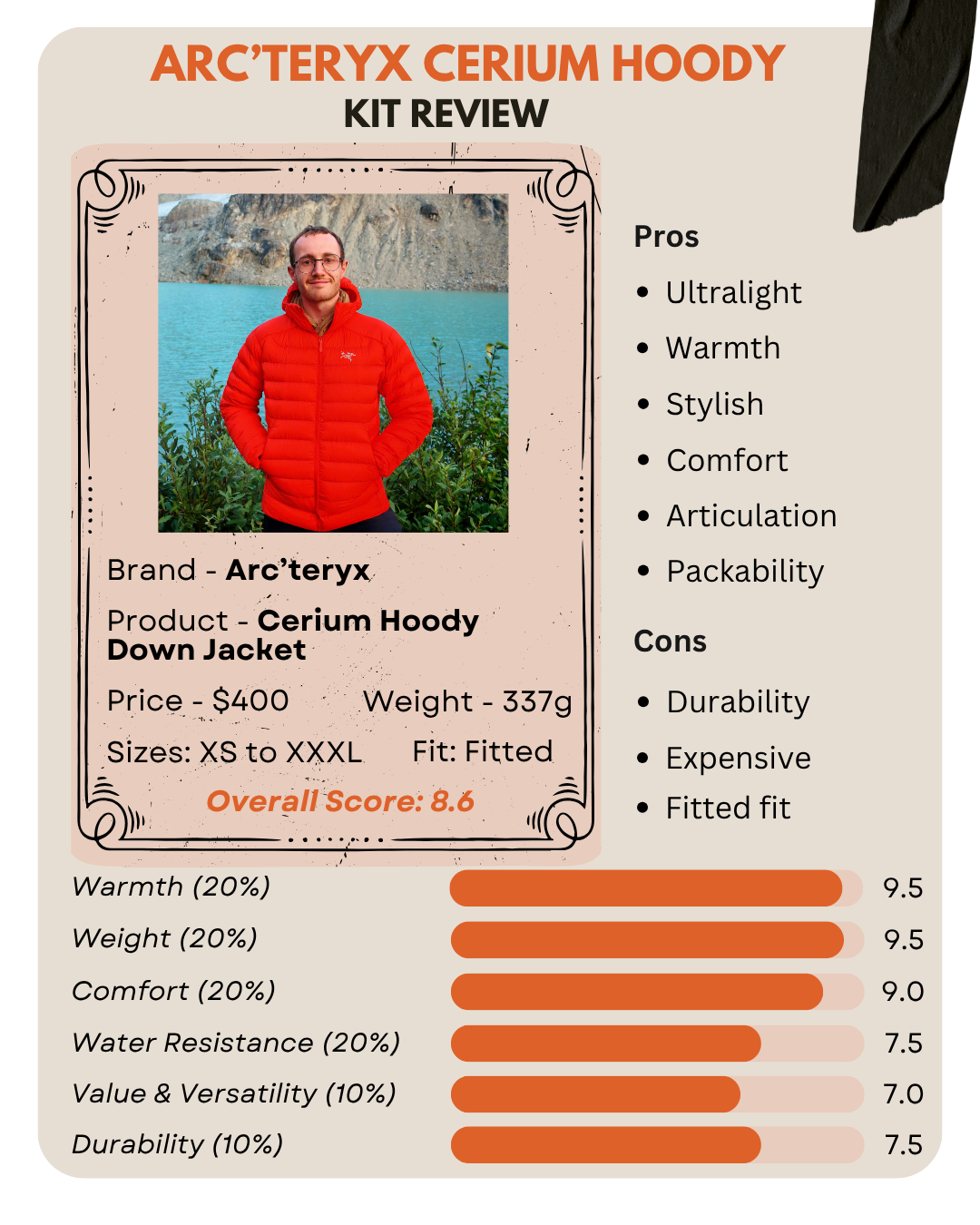
| QUICK VERDICT – The Arc’teryx Cerium Hoody is Arc’teryx’s answer to a difficult engineering problem: how do you get real, three-season down-jacket warmth into something you barely notice at the bottom of a pack? Its 850-fill down core with strategically placed Coreloft synthetic panels is a considered, well-executed solution—this is a static-warmth layer, not an active mid-layer, and it knows exactly what it is. The trim fit and delicate shell fabric are the honest trade-offs for the weight savings. |
| Weight: 337g / 11.9 oz (men’s medium) • Fill: 850-fill-power goose down + Coreloft™ synthetic • Waterproof: No (DWR treated) • RRP: USD $400 / approx. CAD $520 Overall Rating: ★ 8.6 / 10 |
Field Note: This guide contains affiliate links. If you purchase gear through these links, I may earn a small commission at no extra cost to you. I only recommend equipment I have personally mountain-tested and trust.

Arc’teryx Cerium Hoody – Intro
A lightweight down jacket is one of the hardest-working pieces of gear in any outdoor kit. Whether you’re layering up on an alpine summit, staying warm around camp after sunset, or throwing an insulating layer into your daypack “just in case,” it’s often the piece of gear that turns an uncomfortable day into an enjoyable one.
The Arc’teryx Cerium Hoody has become one of the most recognisable premium down jackets on the market, promising exceptional warmth, minimal weight, and impressive packability in a package designed for mountain adventures. Combining responsibly sourced 850-fill down with strategically placed synthetic insulation in moisture-prone areas, it’s built to maximise warmth while addressing some of the traditional weaknesses of down insulation.
After extensive use across the mountains of British Columbia, alpine hikes, backpacking trips, and cold-weather travel, I’ve developed a clear picture of where the Arc’teryx Cerium Hoody excels and where its lightweight design demands a few compromises. This review covers everything from comfort and warmth to durability, packability, and whether it justifies its premium price tag.
Arc’teryx Cerium Hoody Technical Specs
- MSRP USD $400 / approximately CAD $520
- Weight 337g / 11.9 oz (Men’s Medium Listed)
- Down Fill 850 Fill-Power RDS-Certified Goose Down (Approx. 4 oz)
- Synthetic Fill Coreloft™ Synthetic Insulation (100g & 80g)
- Down Composite Mapping™ Synthetic Insulation In Moisture-Prone Areas, Down Elsewhere For Maximum Loft
- Outer Fabric Recycled 15D Arato™ Nylon, Dope-Dyed
- Liner Fabric 20D Plant-Based Arato™ Liner With Castor Bean Oil Content
- Hood Adjustable Helmet-Compatible StormHood™ Style Design
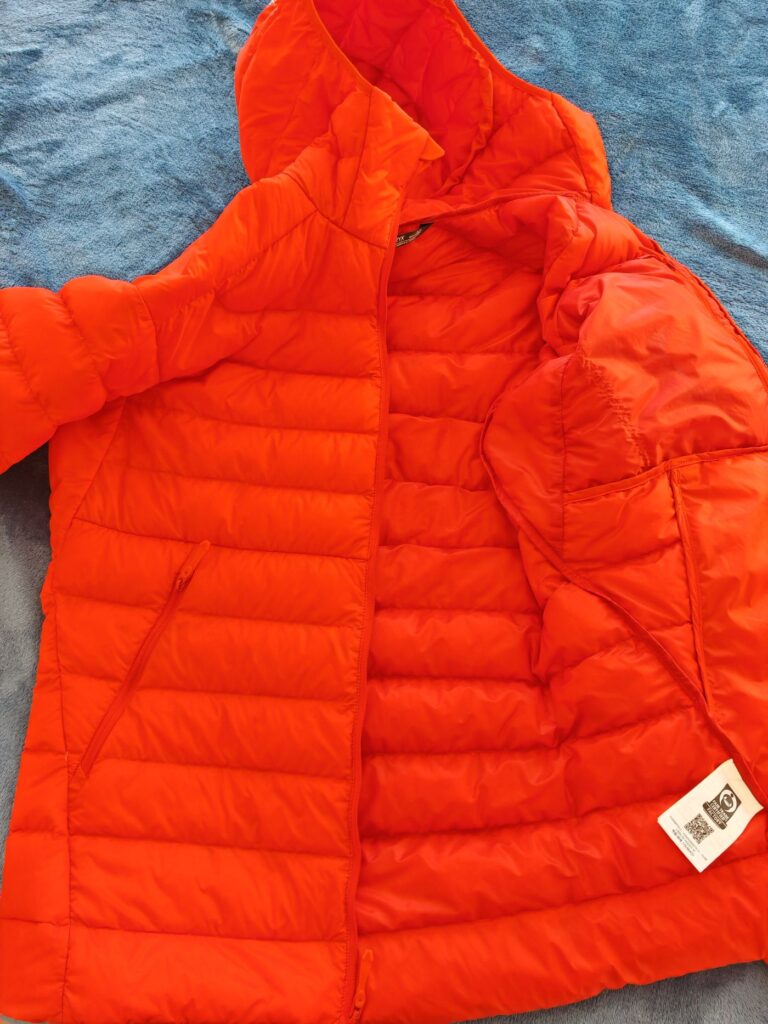
- Storage 2 Zippered Hand Pockets & 1 Internal Chest Pocket (Stuff Sack)
- Fit Trim Athletic Fit For Layering Or Standalone Use
- Warmth Rating Comfortable To Approximately -6°C / 20°F In Static Use
- Water Resistance DWR-Treated Shell With Strategic Synthetic Insulation For Wet Conditions
- Sizes Available XS – 3XL
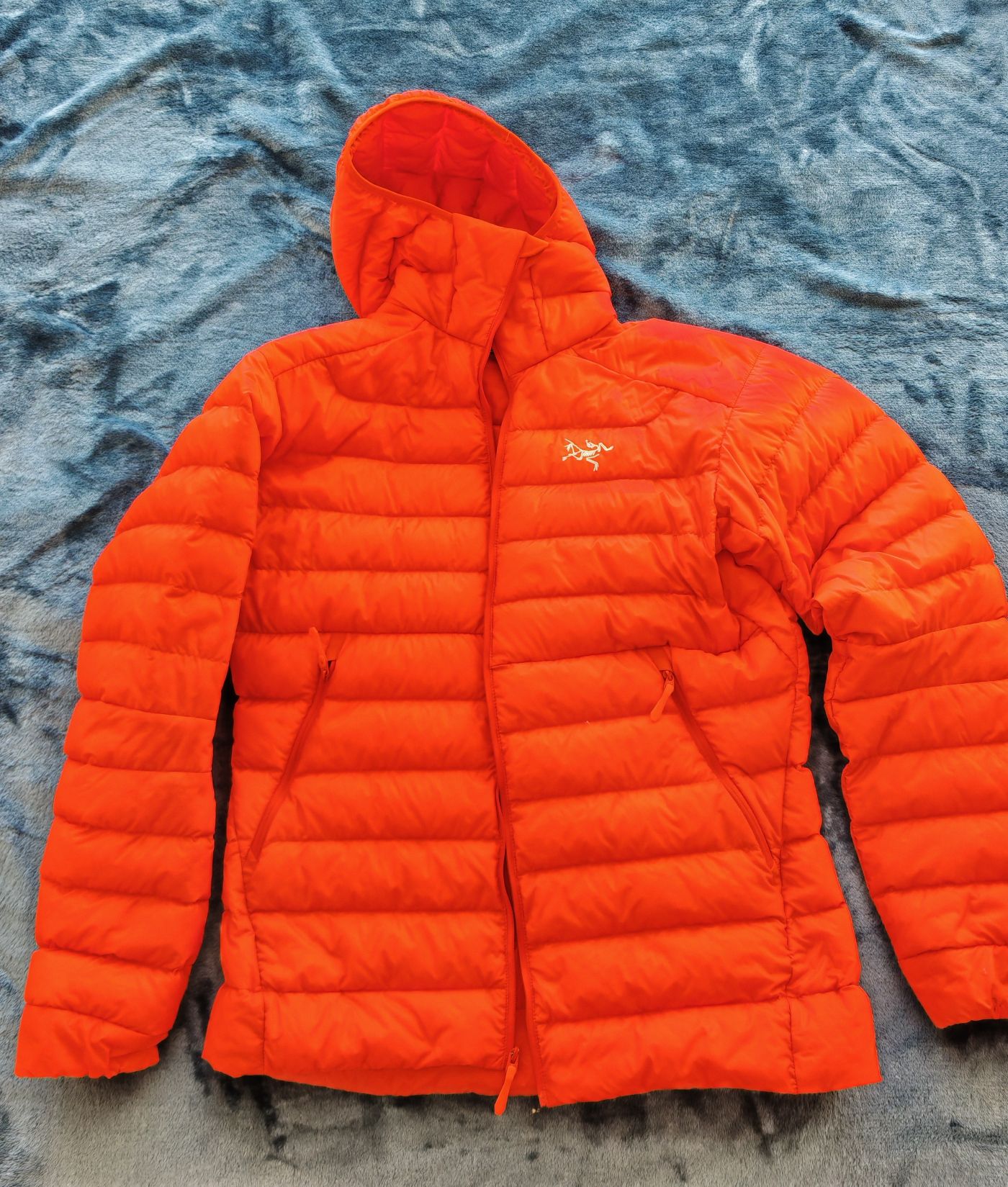
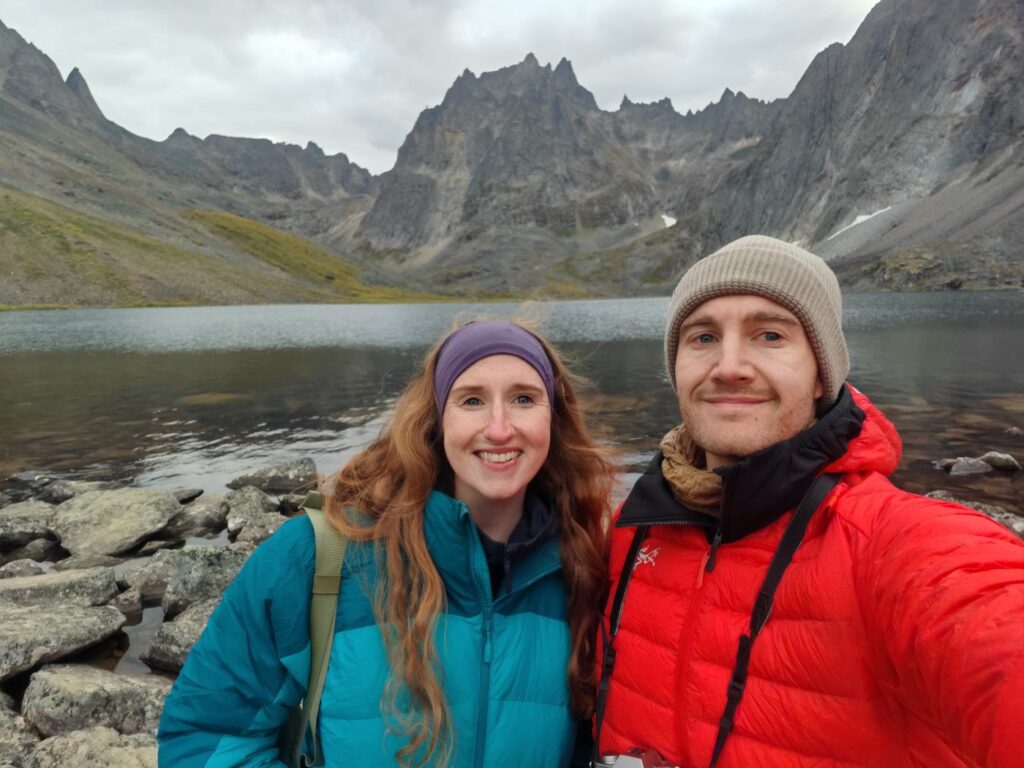
I’ve owned the Arc’teryx Cerium Hoody for over a year now, and it has complemented my worn and cooler Rab Microlight Alpine Down Jacket excellently. Initially, I thought moving to Canada would require very cold winter gear, hence buying the Arc’teryx Cerium Hoody from their outlet in the summer. In reality, the winter was warmer than expected, so my Patagonia Retro-X Fleece Jacket and Arc’teryx Atom got more regular use. That said, there have been specific moments when backpacking in Garibaldi, Yosemite and Yukon where a freezing wind makes you reach for a Down Jacket. It’s in those times that the difference between a good static-warmth layer and a mediocre one becomes very clear very quickly.
This isn’t an active mid-layer review such as the Arc’teryx Proton or Atom Reviews I’ve written. The Cerium occupies a specific and important role in a layering system because it’s the jacket you put on when you stop moving, not the one you hike in. Understanding that distinction matters, because a lot of the criticism this jacket gets online comes from people expecting it to do a job it was never designed for. For me, the higher quality and more insulating 850 down fill meant it had a significant performance advantage over my Rab Microlight Alpine, which would be better suited for backpacking but maybe not around town.
Arc’teryx Cerium Family
The Arc’teryx Cerium family is designed to provide streamlined, minimalist, and lightweight technical insulation with an exceptional warmth-to-weight ratio. Built to serve as an alpine-proven midlayer or a standalone jacket for backcountry rest periods, the collection utilises Down Composite Mapping to strategically blend 850-fill European white goose down with Coreloft synthetic insulation in areas prone to moisture.
The lineup is offered in dedicated men’s and women’s athletic fits. While the core features remain identical, the men’s Cerium Hoody weighs 11.9 oz (337g), while the women’s version weighs 10.2 oz (289g). Across both genders, the collection comes in a wide colour selection—including options like Black, Blurple, Mongoose, and Nightscape/Glacial. Beyond the popular Hoody, the Cerium family also includes a Jacket, Vest, matching pants, the ultralight Cerium SL, and the heavy-duty Cerium SV for colder conditions.

Design & Material Engineering
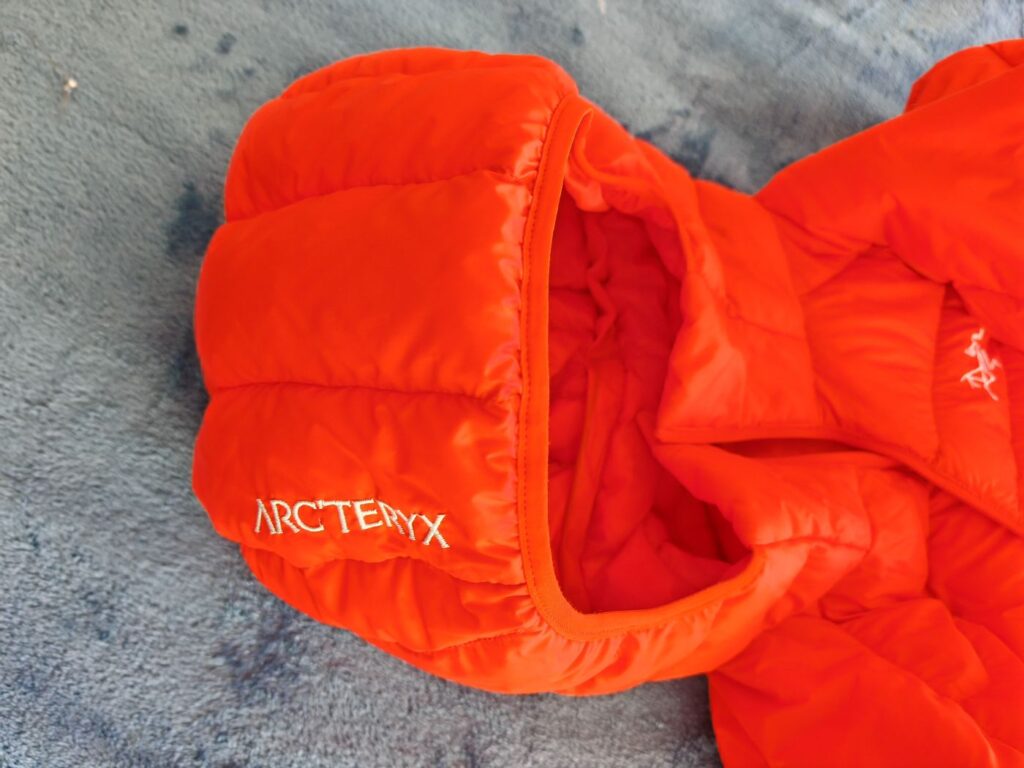
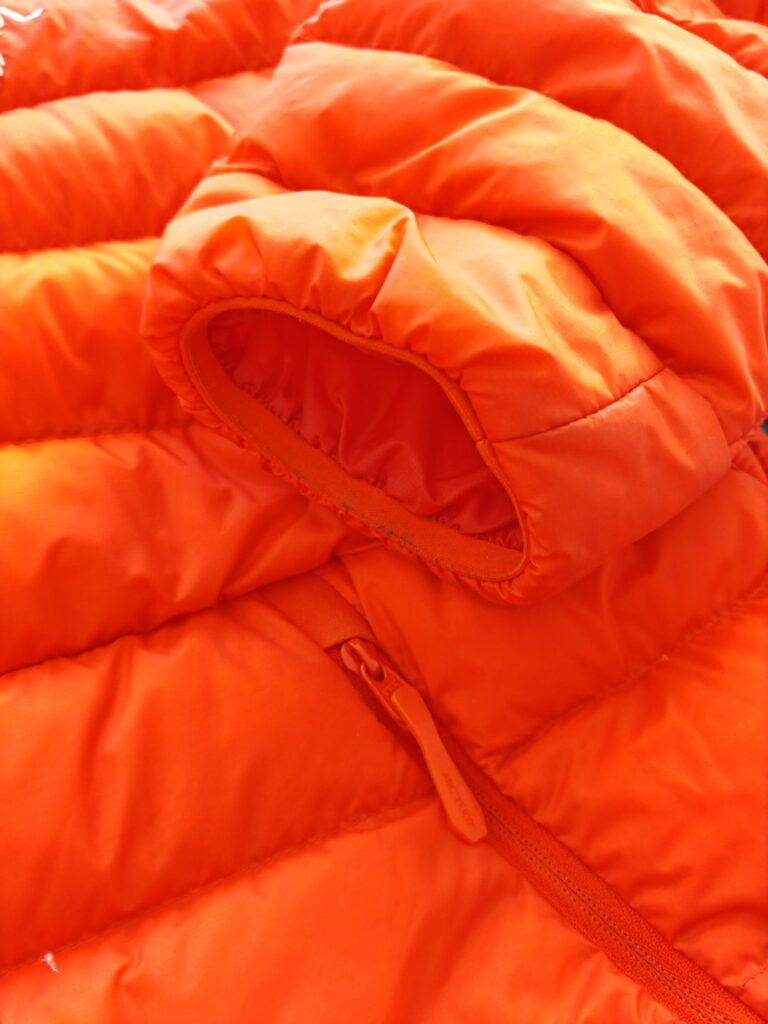
The Cerium’s core technology is Arc’teryx’s Down Composite Mapping™, which places 850-fill-power goose down through baffles in the body and hood for maximum loft, while substituting in Coreloft™ synthetic insulation specifically at the underarms, cuffs, shoulders, and collar- the areas most prone to sweat and moisture buildup. This is a considered materials decision that balances weight, insulation, and weather performance, as down loses its insulating capability when wet, so putting synthetic fill exactly where moisture is most likely to accumulate is a targeted engineering solution rather than a marketing gimmick.
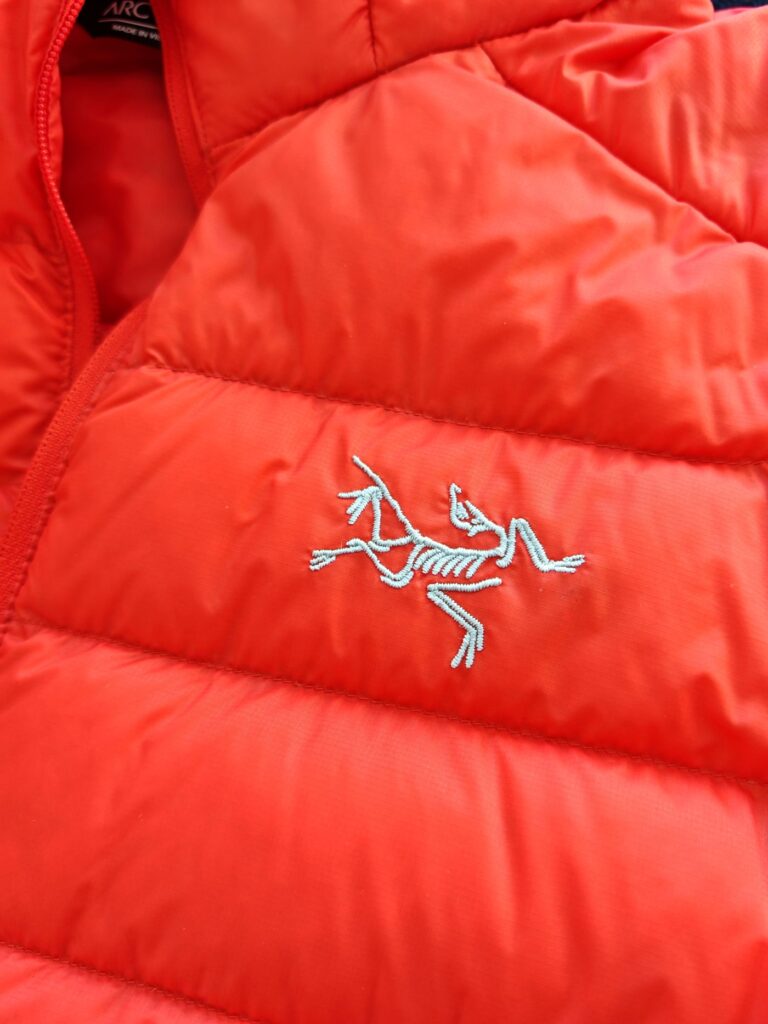
The 15-denier recycled Arato™ outer fabric on the Arc’teryx Cerium Hoody is where the weight savings really come from. At roughly a third of the denier of a typical midweight softshell, it’s delicate to the touch, and Arc’teryx’s dope-dyed production process (which uses significantly less water and energy than traditional dyeing) is a welcome sustainability detail without a performance compromise. The liner uses a bio-derived material sourced from castor bean oil, which is an interesting and increasingly common move toward reducing fossil-fuel-derived synthetics in technical apparel without sacrificing weight or performance.
The result, in a men’s medium, is 337g provides remarkable for the level of warmth on offer, and noticeably lighter than the Patagonia Down Sweater Hoody or Rab Microlight Alpine, both of which use more total fill weight to achieve comparable warmth. That’s the entire trade-off in a single sentence: less material, lower fill-power grade down doing more work per gram, at the cost of shell durability.
Warmth Performance
From experience, I’ve used the Arc’teryx Cerium Hoody comfortably down to around 20°F (-6°C) stationary with moderate wind. Preferably, I layer with Merino wool and even my Atom when seriously cold or sitting around a campsite, but it does a fantastic job at maintaining warmth given the weight! Arc’teryx explicitly markets this as an ‘alpine mid-layer,’ designed to be worn with additional layers on top in severe cold, rather than as a standalone outermost piece for sub-freezing, high-wind conditions. That’s where a Down Jacket like Roisin’s Rab Infinity Alpine has the edge.
Where the jacket shines is in exactly the scenario it’s built for when you’re stopping to rest, take photos, or wait at altitude, where you need immediate, significant warmth without the bulk of a heavier expedition-weight parka. On a cold, windy pass, I’ve layered the Arc’teryx Cerium Hoody under a hardshell and found the combination warm without feeling overstuffed or restrictive. This is also down to the trim fit and added articulation, making it a versatile mountain companion.
Packability & Weight
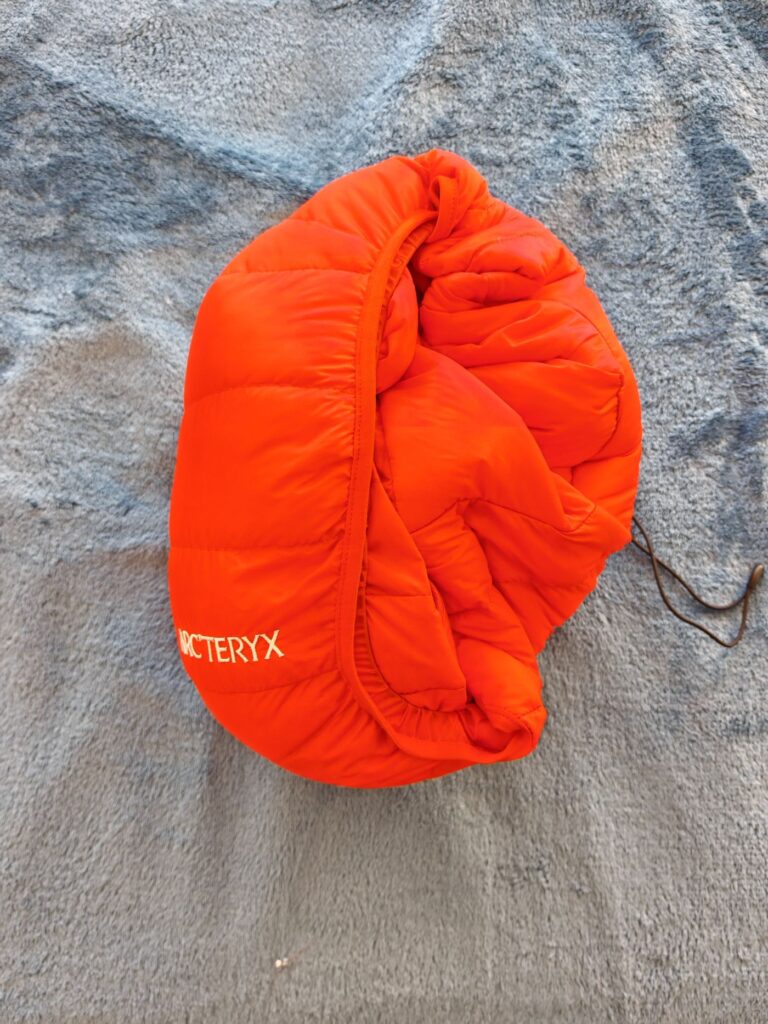
This is where the Arc’teryx Cerium Hoody separates itself from the competition. The internal chest pocket doubles as a stuff sack, yet I use the Hood more often, and the packed jacket compresses down to roughly the size of a 1L water bottle. This is impressive for the level of warmth on offer. For anyone counting grams on a multi-day trek or alpine objective, the Cerium’s warmth-to-weight ratio remains one of the best in its class, an engineering achievement worth the premium if packed weight and volume are a real priority in your kit list.
Compared to the Patagonia Down Sweater Hoody (422g) and Rab Microlight Alpine (467g), the Cerium’s 337g is a meaningful difference over a multi-day itinerary, particularly at altitude where every gram in the pack matters more. I notice the difference between the Rab Microlight Alpine, which I reach for when it’s slightly warmer or I’m looking for a more comfortable and casual look.
Durability & Weather Resistance
Here’s where I want to be direct rather than diplomatic, because it’s the most consistent theme across other reviews and my own experience. The 15-denier shell fabric is slightly delicate and needs to be thought about when using. This is not a jacket to wear as an outer layer while scrambling over rock, bushwhacking through dense brush, or doing anything that puts abrasive contact against the fabric. It’s still a quality premium Down Jacket; however, the super lightweight jacket is due to the ultralight outer fabric and should be cared for accordingly. So far, I’ve not had any rips in the fabric of the Arc’teryx Cerium Hoody.

On weather resistance, the DWR-treated shell handles light drizzle and snow adequately, and the strategic Coreloft placement means the jacket retains meaningful warmth even if the shell surface gets damp — an advantage over an all-down jacket in variable mountain weather. It is not, however, a substitute for a proper waterproof shell in sustained rain; I combine it with the Arc’teryx Cerium Hoody with an Arc’teryx Alpha SV or Arc’teryx Beta AR. You can see a pattern of having a good friend who works at Arc’teryx and living in Arc’teryx’s home in Vancouver.
Fit & Everyday Use
The Cerium’s fit is trim and athletic by design, built specifically to layer well under a shell rather than to be worn loose over bulky mid-layers. Arc’teryx has reportedly made sizing adjustments in recent updates after previous versions ran inconsistently between sizes. In the current iteration, true-to-size fit is accurate, with my Men’s Small being snug but still able to get a layer under if needed. The jacket has good hip length and surprisingly good articulation given the athletic, close-fitting trim.
For everyday and travel use, the packed size and low weight make the Arc’teryx Cerium Hoody an easy jacket to always have in a daypack as insurance against a cold snap, without the bulk penalty of a heavier daily-wear puffy like the Patagonia Down Sweater.
Arc’teryx Cerium Hoody Pros & Cons
✔ PROS
- Best-in-class warmth-to-weight ratio — 337g delivers impressive static warmth using 850-fill down.
- Moisture Management – Down Composite Mapping™ is an engineering solution to the down-and-moisture problem using Coreloft synthetic insulation in the cuffs, underarms and shoulders
- Weather Resistance – The hybrid composition of natural down and synthetic insulation means targeted areas to protect against precipitation and a DWR coating to bead water away.
- Exceptional packability — compresses into its own chest pocket to roughly the size of a 1L water bottle
- Sustainability – Responsibly sourced 850-fill down and bio-derived liner material reflect sustainability effort without a performance trade-off
- Superior Articulation and Fit – Trim, athletic fit layers cleanly under a hardshell without excess bulk, with superior articulation for climbing under a hardshell.
- Helmet-compatible hood adds real versatility for alpine and mountaineering use
✘ CONS
- Fragility – The 15D Arato shell fabric is an upgrade from the old 10D version, but it is slightly delicate. Definitely not suited to scrambling, bushwhacking, or abrasive contact
- Price Point – USD $400 is a real premium over the Patagonia Down Sweater ($329) and Rab Microlight Alpine ($295)
- The Zippers – The centre-front zip is noted as thin and fragile relative to the rest of the build quality, and to save weight, the side zippers are hard to operate with bulky gloves.
- Not waterproof — DWR handles light drizzle only; pair with a shell in sustained rain
- Trim fit doesn’t accommodate bulky layers underneath — designed specifically as a mid-layer, not a standalone loose-fit winter expedition jacket or size up to use as outer layer with more insulation underneath.
Arc’teryx Cerium Hoody Kit Rating
Competitor Comparison
The lightweight down hoody category has three popular benchmarks. Here’s where the Arc’teryx Cerium Hoody sits against them.
Arc’teryx Cerium Hoody vs. Patagonia Down Sweater Hoody
The Down Sweater is the widely regarded gold standard in this category, and for good reason: at $329, it uses more total down fill (5.3 oz. of 800-fill versus the Cerium’s 4 oz. of 850-fill) for superior overall warmth and better daily-wear durability, at the cost of an extra 85 grams. If your priority is all-round value and warmth for general use, the Down Sweater remains the more sensible choice for most people. The Cerium pulls ahead specifically when packed weight and volume are the priority — alpine objectives, multi-day treks, or anyone counting grams seriously.
Arc’teryx Cerium Hoody vs. Rab Microlight Alpine
The Microlight Alpine, at $295, uses a lower fill-power (700-fill) down but more of it by weight, resulting in a heavier jacket (467g) with a notably better hood and superior DWR performance in wet conditions — it’s the more weather-worthy option of the three. If you’re trekking or mountaineering in consistently damp or mixed-precipitation climates, the Microlight Alpine’s wet-weather credentials are an advantage. The Cerium remains the lighter, more packable option for drier alpine conditions where weight matters more than sustained wet-weather performance.
| Arc’teryx Cerium Hoody | Patagonia Down Sweater Hoody | Rab Microlight Alpine | |
| Price | USD $400 | USD $329 | USD $295 |
| Weight | 337g / 11.9 oz | 422g / 14.9 oz | 467g / 1 lb 0.5 oz |
| Down Fill | 4 oz. of 850-fill | 5.3 oz. of 800-fill | 5.4 oz. of 700-fill |
| Warmth-to-Weight | Best in class | Warmer overall, heavier | Warm but heaviest of the three |
| Durability | Delicate 15D shell | More robust, better daily-wear durability | Sturdy, weather-resistant DWR shell |
| Best Feature | Unmatched packed weight and loft | Best all-round warmth and value | Best hood and wet-weather DWR performance |
| Best For | Weight-conscious alpine and backcountry use | Daily wear, all-round value, warmest of the three | Wetter climates and mountaineering use |
Who is the Arc’teryx Cerium Hoody For?
Ideal for: Weight-conscious trekkers, alpinists, and backcountry travellers who need a genuinely warm static layer for breaks, camp, and cold passes without the packed bulk of a heavier down jacket. If you’re building a layering system where every gram in the pack is a deliberate decision, the Cerium’s warmth-to-weight ratio is difficult to beat.
Also well-suited to: Cold-weather commuters and everyday users who want a packable insurance layer for unpredictable weather without carrying a bulky puffy in a daypack.
Less suitable for: Anyone planning to wear this jacket as an outer layer in abrasive terrain — scrambling, bushwhacking, or general rough use will accelerate wear on the delicate 15D shell. Also less ideal for consistently wet climates, where the Rab Microlight Alpine’s superior DWR & Pertex Shield performance is the more sensible choice, or for budget-conscious buyers, where the Patagonia Down Sweater delivers excellent warmth at a meaningfully lower price.
Where the Jacket earned its keep
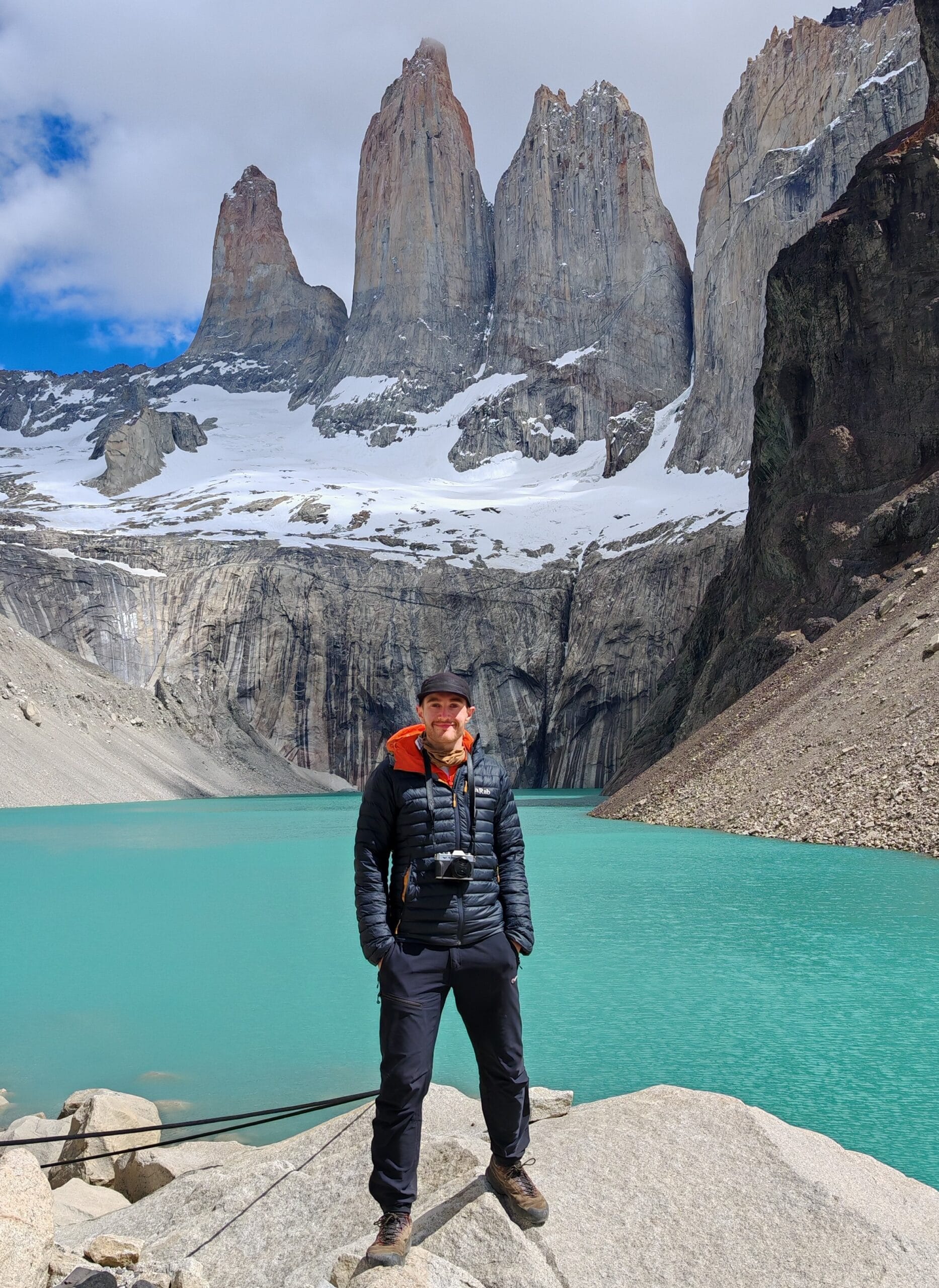
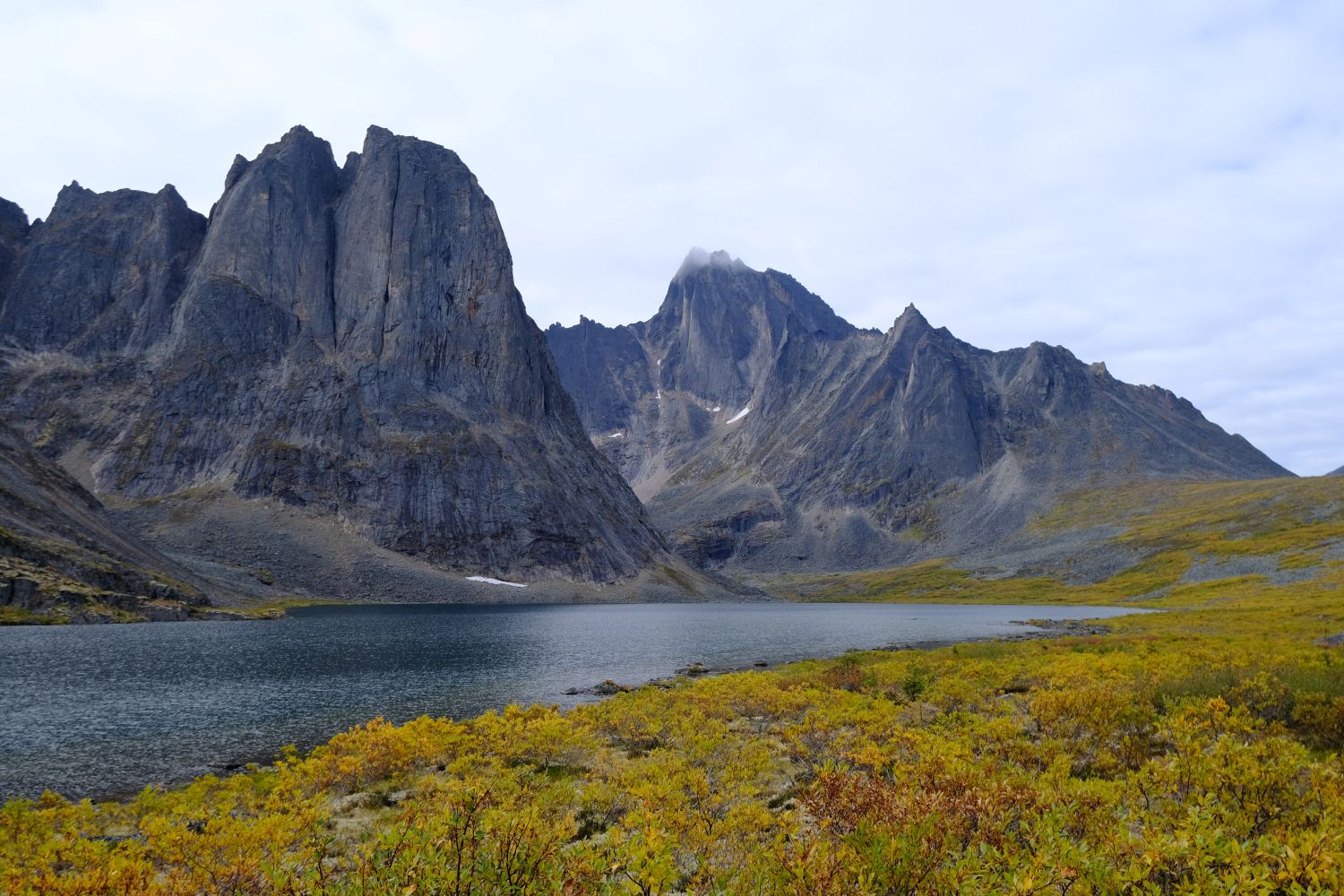
I don’t review gear out of a box. Read the full destination guides where the Men’s Arc’teryx Cerium Hoody proved itself on backpacking trips, cold winter days out and in the mountains.



The Verdict
The Arc’teryx Cerium Hoody excels at one specific job: delivering maximum static warmth at an absolute minimum weight and pack volume. Built for the “fast and light” crowd, it utilises premium 850-fill down and engineered Down Composite Mapping to compress small enough to disappear into your pack until needed for cold breaks, mountain summits or freezing alpine campsites.
This exceptional warmth-to-weight ratio comes with a calculated trade-off—a delicate outer shell that requires treating the jacket as a precision layer. If your itinerary involves heavy bushwhacking or consistently wet environments, heavier alternatives like the Patagonia Down Sweater or Rab Microlight Alpine are more sensible choices. However, for hikers and backpackers who prioritise unmatched packability and reliable three-season insulation, the Cerium Hoody justifies its premium price tag. I would say it’s worth looking for a deal or sale for the Cerium, as the Rab Microlight Alpine is cheaper, comfier and more durable.
Frequently Asked Questions
Is the Arc’teryx Cerium Hoody worth it?
Yes. For hikers, backpackers, climbers, and travellers looking for maximum warmth with minimum weight, the Arc’teryx Cerium Hoody remains one of the best lightweight down jackets available.
Is the Arc’teryx Cerium Hoody warm enough for winter?
The Cerium is comfortable down to approximately 20°F (-6°C) while stationary with moderate wind. Arc’teryx markets it as an alpine mid-layer, meaning it’s designed to be worn with additional layers in severe winter cold rather than as a standalone outer piece in sub-freezing, high-wind conditions. For prolonged exposure to very cold temperatures, a heavier insulated jacket may be more appropriate.
Is the Arc’teryx Cerium Hoody waterproof?
No. The 15-denier shell is treated with a DWR finish that handles light drizzle and snow, but it is not waterproof. The Coreloft synthetic panels at the underarms and cuffs help retain warmth even if the shell gets damp, but a proper waterproof shell is still needed in sustained rain.
What’s the difference between the Arc’teryx Cerium and Atom?
The Cerium uses primarily down insulation and prioritises warmth-to-weight ratio, while the Atom uses synthetic insulation and performs better in damp conditions.
Is the Arc’teryx Cerium Hoody good for backpacking?
Absolutely. Its combination of low weight, excellent packability, and impressive warmth makes it one of the best down jackets for backpacking and multi-day hiking trips.
How does the Arc’teryx Cerium Hoody fit?
The Cerium Hoody has a trim athletic fit designed for efficient layering. Most users find it fits true to size, although those planning to wear thicker layers underneath may prefer sizing up.
What is Down Composite Mapping™?
Down Composite Mapping is Arc’teryx’s technique of strategically placing synthetic Coreloft insulation in areas of a garment prone to moisture buildup — typically the underarms, cuffs, shoulders, and collar — while using premium down everywhere else for maximum loft and warmth-to-weight performance.
Is the Arc’teryx Cerium Hoody true to size?
Arc’teryx has made sizing adjustments in recent versions after inconsistent fit reports on earlier iterations. Current reviewer feedback suggests more consistent true-to-size fit, though the cut remains trim and athletic — sized to layer under a shell rather than to fit loosely over bulky mid-layers. Trying before buying, or checking Arc’teryx’s detailed size chart, is recommended.
How does the Arc’teryx Cerium Hoody compare to the Cerium LT?
The Cerium LT is the lighter-weight sibling, using less down fill (roughly 3.4–3.6 oz. of 850-fill versus the standard Cerium’s 4 oz.) for a lighter, slightly less warm jacket geared toward three-season use and weight-sensitive applications. The standard Cerium Hoody offers more warmth at a modest weight penalty, making it the better choice for colder conditions or year-round alpine use.