
Photography is more than just pressing a button — it’s about capturing light, mood, and moments in a way that tells a story. With so many cameras and technical terms out there, getting started can feel confusing, but the camera basics are surprisingly simple once you break them down.
At its core, every camera works the same way: light enters through the lens and hits a sensor, creating an image. How that image looks is controlled by a few key settings — ISO, aperture, and shutter speed — along with the type of camera and lens you’re using. Whether you’re shooting on a phone, an instant camera, or a mirrorless system, these fundamentals shape every photograph and set up the camera basics in this blog.
This blog will guide you through the essential camera types, core photography settings, and key things to consider when choosing a camera. The goal isn’t to overwhelm you with technical jargon, but to give you a clear, practical foundation so you can shoot with confidence and enjoy the creative process from the very first photo and understand the camera basics to make an informed purchase.

Camera Basics
Types of Cameras
Stepping into photography can feel overwhelming at first, with technical terms and specs thrown around like a different language. But once you understand the core concepts, it makes choosing the right camera for you much simpler. First off, a summary of the different camera types to build a picture of why it’s worth investing in a DSLR/Mirrorless camera over a phone or cheaper digital compact camera. Phone cameras have improved significantly over the last few decades, with high megapixel camera phones that can capture professional-level photos.
The main difference is that a phone uses different built-in zoom lenses, whereas a DSLR uses interchangeable lenses, offering a higher quality of focus and clarity. Consider a phone the jack of all trades where you can point, shoot and be happy with the results. It’s harder to get the artistic license or get professional-level photographs without understanding the basics. On the other hand, the high-quality video and easy-to-share nature of phone photography are making photography more accessible to everyone.
Compact & Film
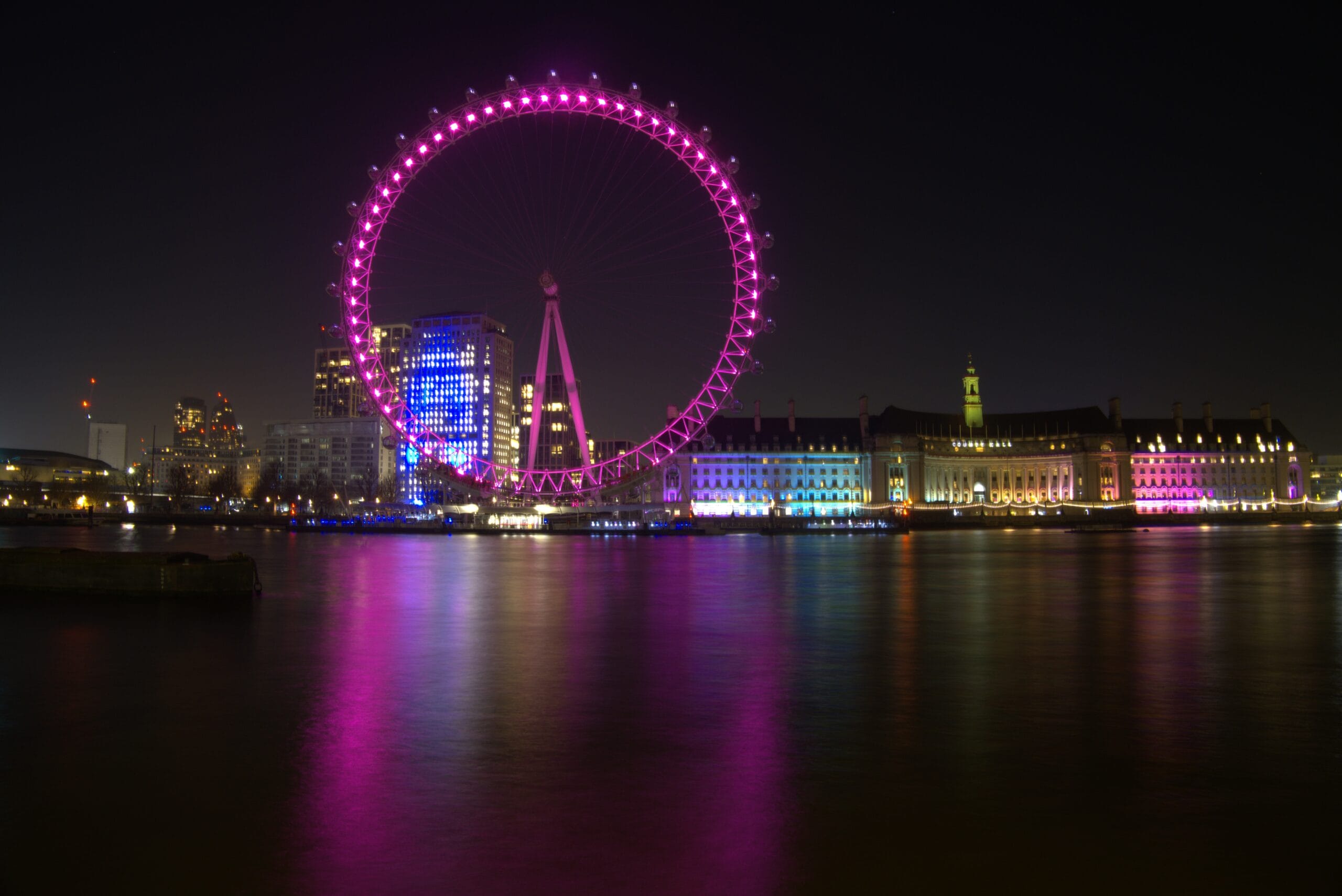
There are many different types of photography, from portraits, landscapes, nature, sport, night time, long exposure, wildlife, architecture, food and many more. Whilst my main enjoyment is nature and travel photography, I have enjoyed the challenge of learning differenttypes and the techniques needed for low light or long exposure, for example. Most people start with a phone as the entry point, but for others, Digital Compact Cameras offer better quality than most phones with their point-and-shoot simplicity. They are fully automatic cameras with optical zoom, and simple controls bridge the gap to more premium and higher quality cameras.
Then the Polaroid Cameras offer a fun, nostalgic style with print photos that make a great momento, but are less versatile and lower quality. Now onto the interchangeable lens cameras, where the endless debate about which is better between DSLR and Mirrorless continues. Don’t worry, I won’t even try to persuade you, but highlight the key differences to help inform you when buying a camera.
Mirroless vs DSLR Cameras
A DSLR (Digital Single-Lens Reflex) Camera uses a mirror inside the camera body. The Light enters through the lens, hits the mirror, and reflects into an optical viewfinder—so you see exactly what the lens sees. The benefits are a greater battery life and a manual optical viewfinder. These cameras use interchangeable lenses similar to Mirrorless Cameras, and both offer fantastic image quality. The disadvantage is they’re bulkier and heavier, hence less suited to travel or backpacking, where space and weight matter.
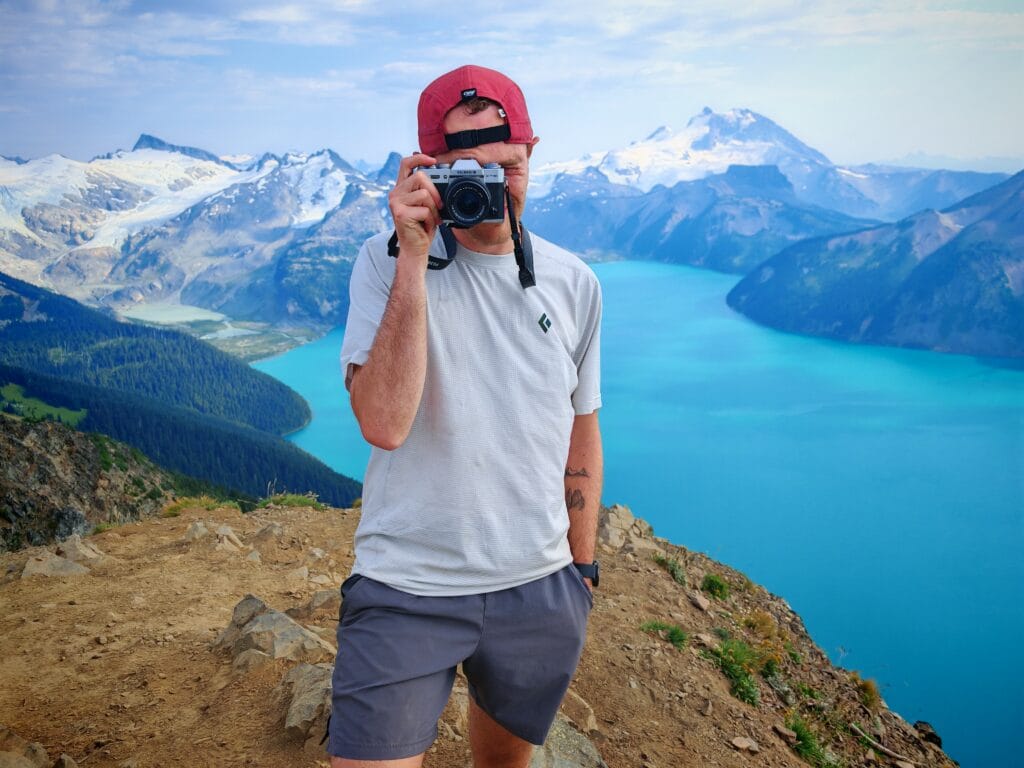
Mirrorless Cameras remove the mirror and allow light to go into the sensor directly, and an electronic viewfinder (EVF) or screen to compose the shot. The result is a more compact and advanced camera that is more suited for travel photography and video due to the technology of not having to package a mirror inside. The advantages are smaller, lighter, with faster autofocus and modern features like eye tracking, silent shooting and better video. On the otherhand, the battery life is slightly shorter due to the advanced power consumption. The general trend is that most new cameras are mirrorless, and this is the future of photography. For more details on the key differences, check out Canon’s explanation.
Camera Settings
These three settings control how much light reaches your camera’s sensor and how your photos look. Understanding them unlocks creative control. ISO is the light sensitivity, with a Low ISO (100–400) producing Clean, high-quality images; best for bright conditions. Whereas a High ISO (800–6400+) is better for low light conditions, as it can introduce grain/noise. Advice: keep the lowest ISO possible while keeping the photo bright enough
Aperture controls the depth of field, which can achieve background blur and light control, which is achieved by adjusting the size of the lens opening. This is measured in f-stops (f/1.4, f/2.8, f/5.6, etc) with the low f-numbers (f/1.4-f/2.8) letting more light in, creating a blurry bokeh background. The lower aperture number is ideal for portraits or low-light scenes. The high f-number (f/8-f/16) allows less light in with more of the image in focus, which makes it better for landscapes or multiple people photos.
Finally, Shutter Speed determines how long the sensor is exposed to light. Fast shutter speeds of 1/500-1/4000 are snapshots and great for sports, wildlife and moving subjects. Whereas slow shutter (1/2-1″) allows motion blur, which is perfect for waterfalls, night photography and light tracing.
Key Things to Know When Buying a Camera
- Sensor Size– Full-frame sensors are the best for low-light performance and detail; therefore are the most expensive. APS-C is a cropped sensor image processor which gives high-quality images and high pixel count, but is lighter and cheaper, so better suited for mirrorless cameras. The full-frame will capture more of the scene, whereas the crop factor means the APS-C looks more zoomed in.
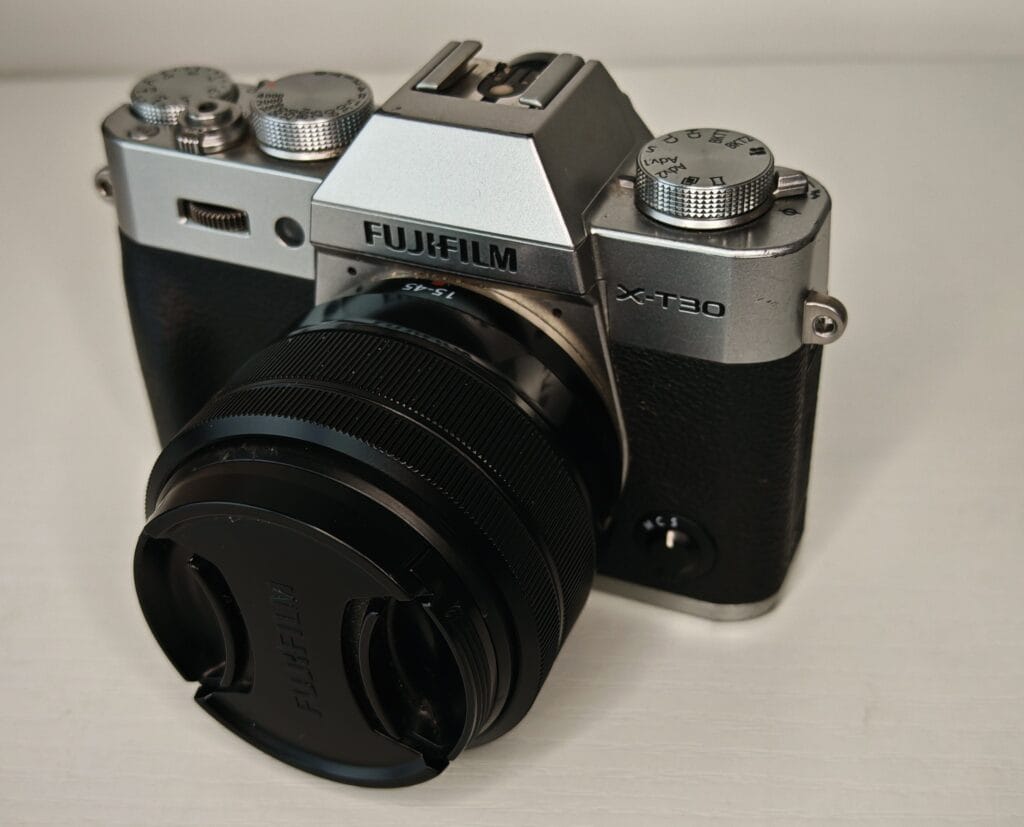
- Lens ecosystem – A good lens can compensate for an average camera, whereas a poor lens can ruin a great camera. Be sure to check the various zoom and prime lenses available by the manufacturer and other companies for the desired photography type. Most zoom lenses have a range that can cover the majority of photographers’ needs when getting started. For travel, a compact prime lens (27mm) and a zoom 15mm-45mm is my go-to choice for the Fujifilm X-T30.
- Size & Weight– Relevant for travellers as a heavy, bulky camera feels awkward for exploring. This is where mirrorless cameras have the advantage and will be even better for backpacking, where weight matters.
- Autofocus Performance– An essential must for photography, and the lens will have an impact on the autofocus as well. Look for eye detection, face tracking and continuous autofocus to help shoot people, moving objects and low light scenes.
- Video Features– With vlogging and film making becoming ever more popular, you don’t need a separate video camera and a still photography one. Look for 4K video, good autofocus, stabilisation and an articulating screen.
- Budget– It’s best to wait for sales or discounts for new camera bodies and lenses. However, the used camera market is massive, so it’s worth checking reliable retailers for older cameras with fantastic performance. Budget for extra lenses, batteries, straps, and bags as well. It’s worth considering whether the camera matches the long-term photography goals.
Need a recommendation?
Now you know the photography and camera basics, are you looking for the Best Travel Camera? Then check out my review of the Fujifilm X-T30 Camera.