A Sea to Summit sleeping pad can completely change the way you sleep outdoors, especially if you are moving on from cheap foam roll mats. For years, I used basic sleeping mats similar to a yoga mat, and while they were affordable and simple, they offered almost no warmth, very little cushioning and made camping far less comfortable than it needed to be.
Before my Patagonia adventure in 2024, I needed a quality inflatable sleeping pad for tent camping, trekking and lightweight backpacking. Therm-a-Rest is probably the most popular sleeping pad brand, but many of its best models sit at a premium price point. I wanted something that was lightweight, compact, insulated enough for 2.5 to 3-season camping and still good value.
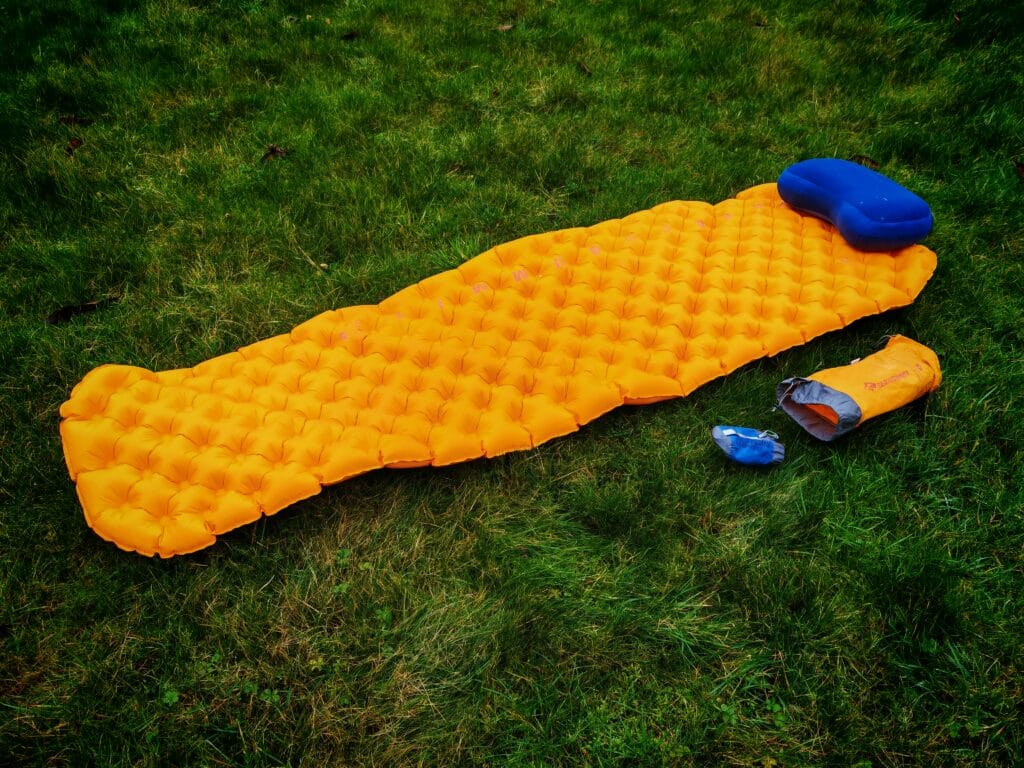
That search led me to the Sea to Summit Ultralight Insulated Sleeping Pad, which ticked almost every box. It packed small, weighed just 480g in the regular size, had an R-value of 3.1, and offered far more comfort than the basic foam mats I had used before.
In this Sea to Summit sleeping pad review, I’ll cover the technical specs, comfort, warmth, packability, durability, strengths, weaknesses, destinations where I’ve tested it, alternatives and whether I’d recommend it for lightweight backpacking and 3-season camping.
Field Note: This guide contains affiliate links. If you purchase gear through these links, I may earn a small commission at no extra cost to you. I only recommend equipment I have personally mountain-tested and trust.

Sea to Summit Ultralight Insulated Sleeping Pad – Kit Review
Overview
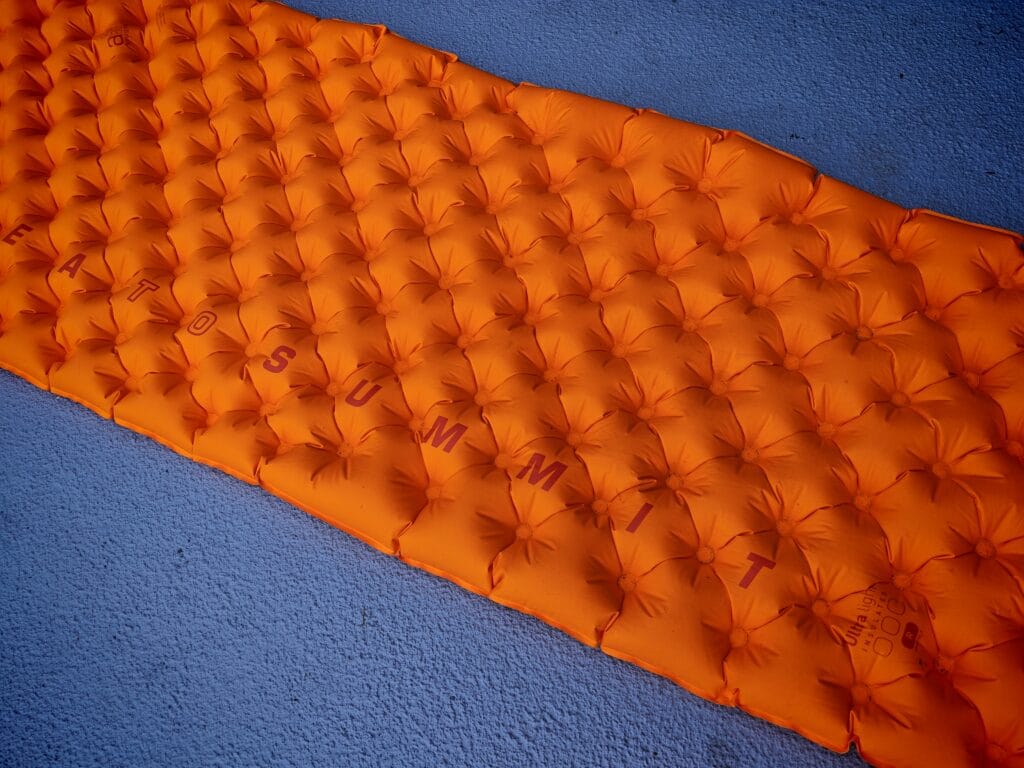
The Sea to Summit Ultralight Insulated Sleeping Mat is designed for backpackers, trekkers, bikepackers, and minimalist campers who need a small, packable, lightweight sleeping pad. The insulated version adds warmth for use in the shoulder seasons. The Ultralight Insulated Sleeping Pad uses Air Sprung Cell™ technology to improve stability and comfort whilst minimising weight and excess material. As the baffles form a matrix, they can adjust to the body’s shape more easily than vertical or horizontal baffles.
Sea to Summit has focused on durability for this ultralight sleeping pad, using extruded TPU Lamination to reduce delamination and high-quality welds for robustness. The combination of Thermolite® and Exkin Platinum® insulation gives an R-Value of 3.1, which is ideal for 3 seasons (spring and fall). There is a women’s-specific version which has a wider shape at the hips and narrower at the shoulders.
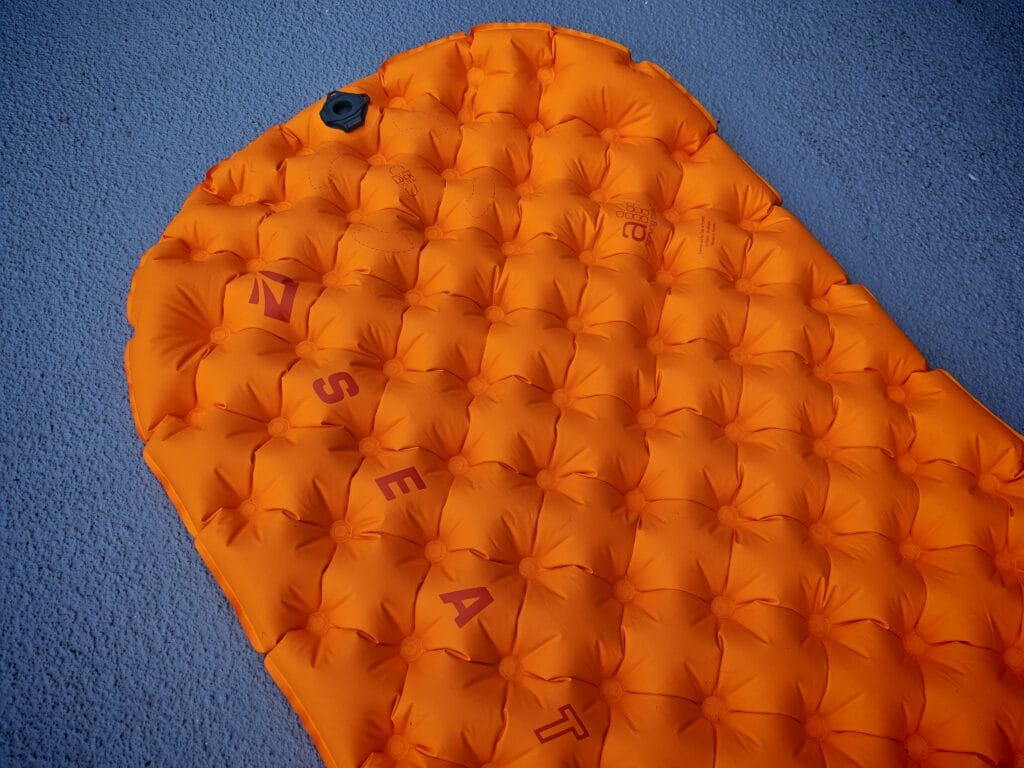
Sea to Summit Ultralight Insulated Sleeping Pad
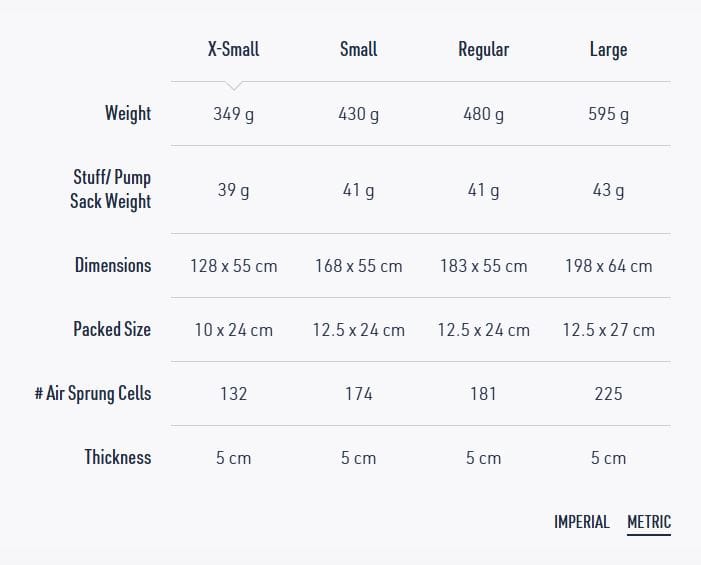
- Weight 480g — Regular size
- Performance 2.5 season backpacking and camping
- Thickness 5cm / 2in
- R-Value 3.1 ASTM F3340-18 — suitable for 3-season use
- Packed Size 12.5 x 24cm
- Best Use Lightweight backpacking, trekking and 3-season camping
- Price £140 / $159
Key Features
- 3.1 R-Value is effective for 2.5-3 season camping (late spring to early fall).
- Exkin Platinum® insulation reflects your radiant heat to you, while Thermolite® insulation prevents convective heat loss.
- Lighter, quieter and durable 30D/40D face fabric, along with Sea to Summit’s liquid-extruded TPU lamination, is extremely reliable and durable.
- Quick and easy inflation, deflation and adjustment thanks to the genius multi-function valve with a high-flow one-way valve setting.
- Anti-microbial treatment added to the TPU lamination formula prevents internal mould growth inside.
- PillowLock system prevents your Sea to Summit Aeros Pillow from slipping.
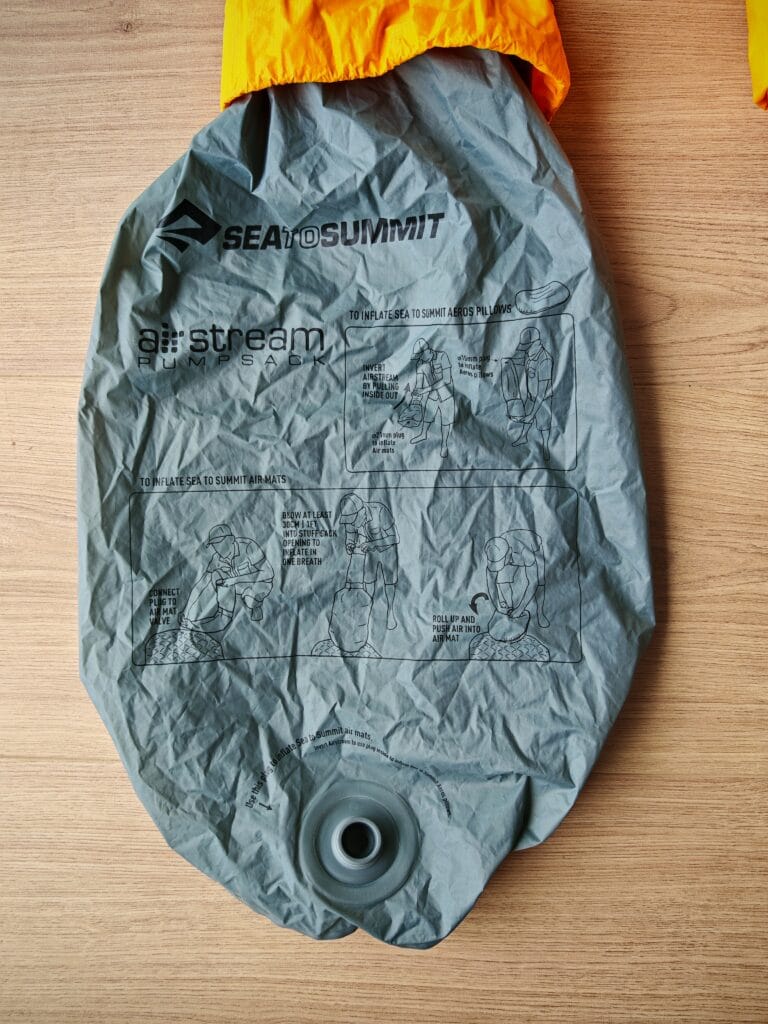
- Airstream Pump Sack uses a clever integrated design to pump air into the sleeping pad, store the pad when rolled up and includes a repair kit (plus spare valve insert). The Airstream Pump can be used on the Aeros Pillows, too, when turned inside out.
My Experience
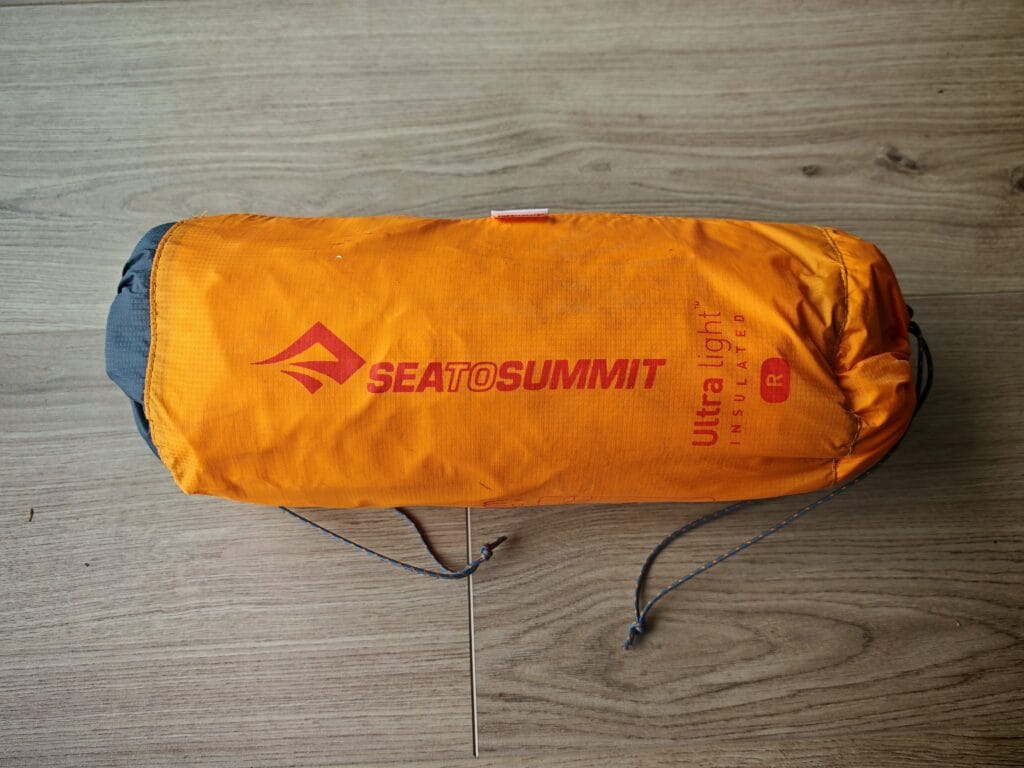
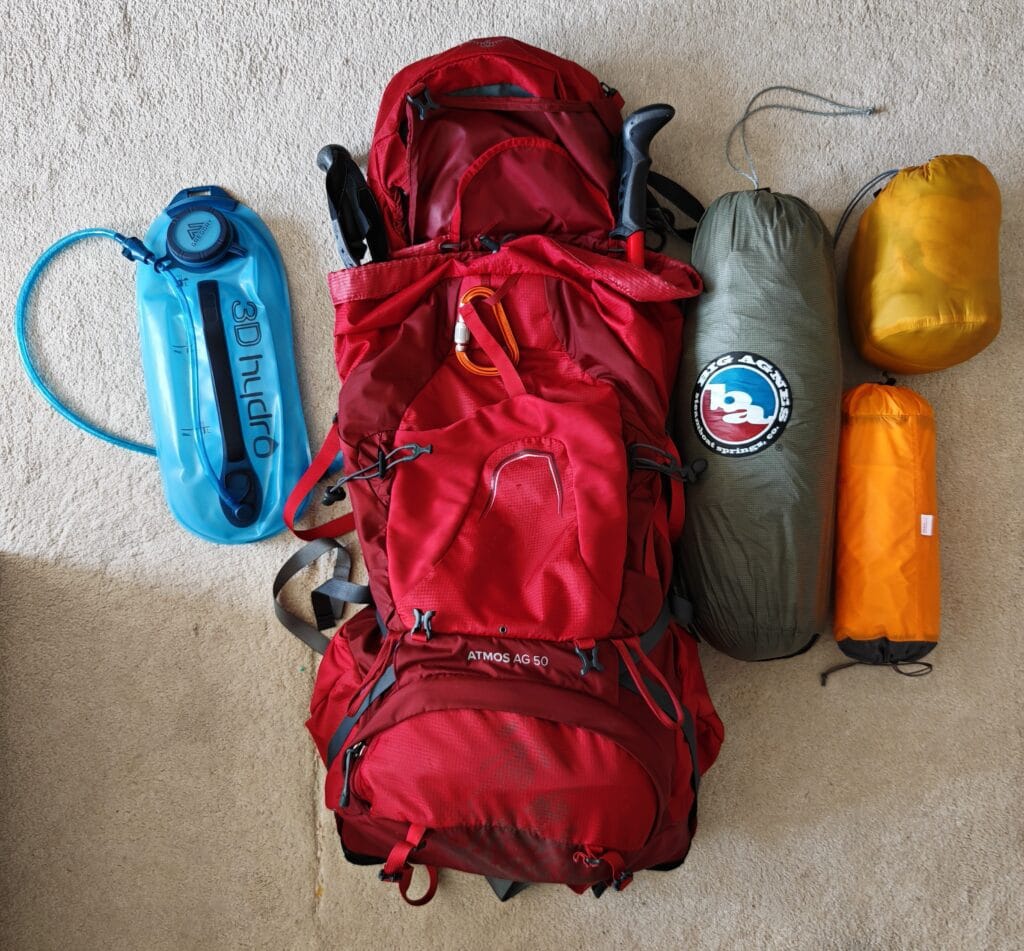
I bought the Sea to Summit Ultralight Insulate Sleeping Pad at a discounted price of £82, down from the £140 RRP. For this bargain price within my budget, I was excited to test out the new camping addition. My first impression was how light and compact the sleeping pad was when I unboxed it! It truly lives up to the ultralight name in a Regular size and helps when packing inside my Osprey Atmos Backpack. When using it for camping in the UK, trekking in Patagonia or backpacking in British Columbia, I’ve been impressed by the R3.1 warmth provided and protection from the ground.
Despite only being 5cm in height, I don’t tend to bottom out on the sea to summit sleeping mat much unless I am pushing weight on one point. I tend to notice the noise of the baffles (Air Sprung Cells) when I move around, but it’s a comfortable sleeping pad for sure. One feature I really appreciate is the integrated AirStream pump stuff sack, as it removes the need for another part to carry.
Sea to Summit’s multifunctional valve is very effective at quickly inflating and deflating the sleeping pad. So far, I have never had a puncture or any durability concerns on any of my many nights away camping. This sleeping pad has become an essential part of the Camping Packing List.
Sea to Summit Ultralight Insulated Sleeping Pad Strengths
- Excellent Weight-to-Warmth Ratio – At under 500 g for the Regular size, this sleeping pad is definitely lightweight. It’s warm enough for spring to autumn camping with an R-value of 3.1, thanks to its Exkin Platinum® and Thermolite® insulations.
- Compact Packed Size – Packs down to a small cylinder, easily rolls and stashes in a side pocket of a backpack and inside the AirStream Stuff Sack for quick packing.
- Comfortable for an Ultralight Pad – Air Sprung Cell™ design feels more stable and less “bouncy” than standard horizontal baffles.
- Quick Inflation & Deflation – The multi-function valve with the Airstream Pump Sack makes inflation fast and avoids moisture buildup inside the pad, along with the anti-bacterial treatment.
- Durable for Weight Class – The 30D/40D nylon construction is abrasion-resistant enough for careful backcountry use. The baffles get a little dirty, but they feel robust even when leaned on.
- Great Value – A subjective one, as it depends on your budget, but the Ultralight Insulated Pad gives a sub-500 g weight, an R Value of over 3 and great comfort for under £150. This combination makes it very competitive in the mid-range category. If you have more money, then consider the Therm-a-rest and Nemo alternatives below.
Sea to Summit Ultralight Insulated Sleeping Pad Weaknesses
- Narrower Than Some Alternatives – 55 cm width may feel tight for side sleepers or restless movers. I haven’t experienced this too much as a side sleeper, but you have to be careful when rolling over. If the pad were larger, then it likely wouldn’t be lightweight, or it would be more expensive.
- Not Ideal for Winter – R-value of 3.1 is insufficient for cold-weather or winter camping without extra insulation. A combination of a 3-season sleeping bag (Rab Alpine 800 Down Sleeping Bag) and a sleeping bag liner with some base layers can help you push to lower temperatures.
- Slight Noise – Not as loud as some ultralight pads, but still has a crinkly sound when moving.
Best Use Cases for the Sea to Summit Sleeping Pad
The Sea to Summit sleeping pad is best suited to lightweight backpackers, trekkers and campers who want a compact, dependable mat for 2.5 to 3-season adventures. It is ideal when pack size and weight matter, but you still want enough warmth and comfort to sleep properly after a long day outside.
It works especially well for:
- Lightweight backpacking: Small packed size and 480g regular weight make it easy to carry.
- 3-season camping: The 3.1 R-value is suitable for most spring, summer and early autumn trips.
- Trekking and wild camping: Compact enough for multi-day routes where space is limited.
- Travel-focused camping: A good balance of comfort, durability and packability for mixed adventures.
- Campers upgrading from foam mats: A huge comfort improvement over cheap roll mats.
It is not the best choice for deep winter camping, very broad sleepers who need extra width, or campers who prioritise luxury comfort over low weight. But for most lightweight adventures, it is a reliable and well-balanced sleeping pad that earns its place in a backpacking kit list.
Where this sleeping pad earned its keep
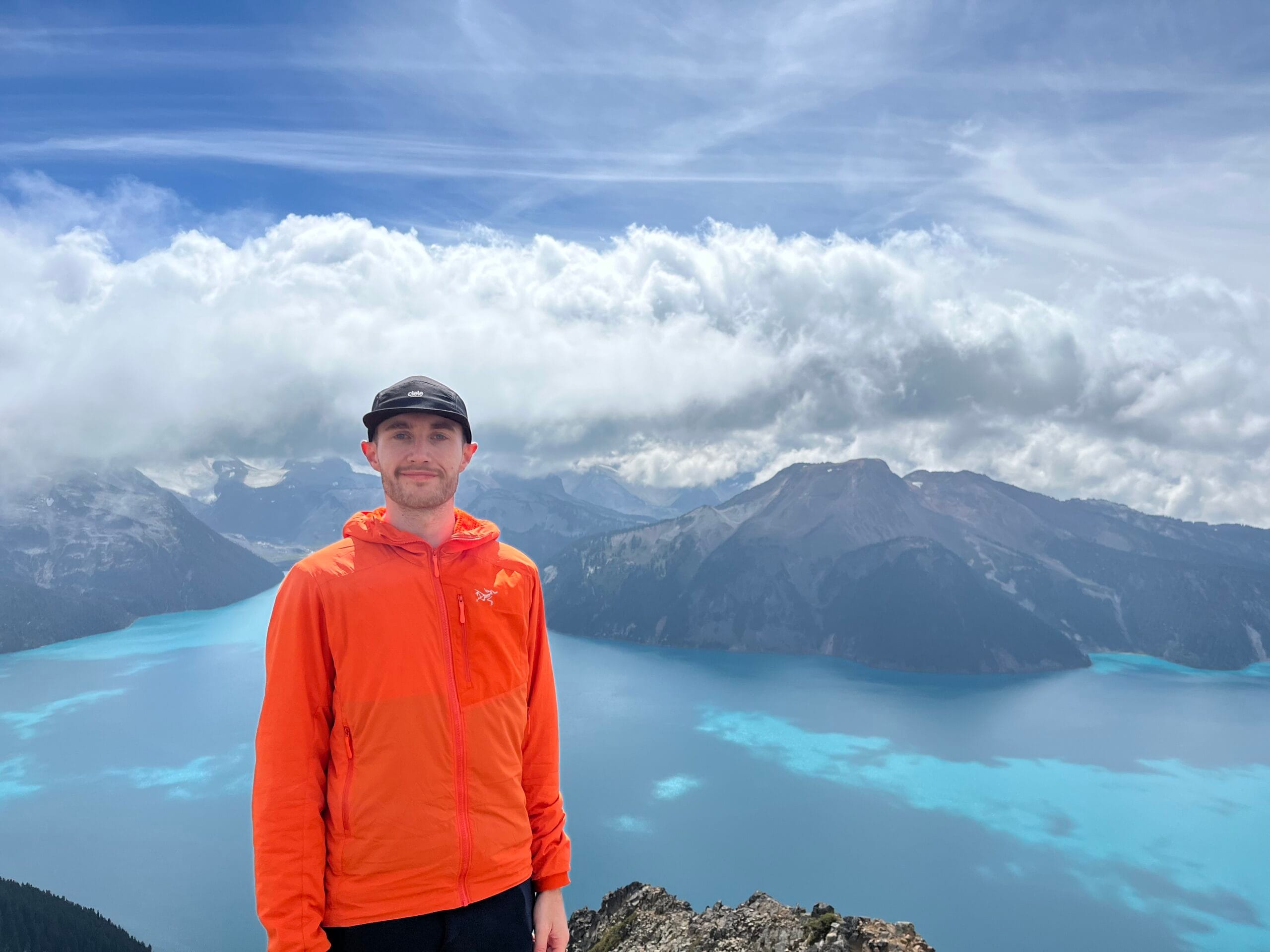
I don’t review camping gear from a spec sheet. This Sea to Summit sleeping pad has been packed, inflated and slept on across trekking, backpacking and mountain camping trips.


Best Alternatives
The Sea to Summit sleeping pad sits in a competitive space between premium ultralight mats and more budget-friendly insulated sleeping pads. It offers a strong balance of comfort, packability, warmth and value, but depending on your priorities, there are several alternatives worth considering.
Therm-a-Rest NeoAir XLite NXT
The Therm-a-Rest NeoAir XLite NXT is probably the most obvious premium alternative. Therm-a-Rest has long been one of the leading names in backpacking sleeping pads, and the XLite NXT is aimed squarely at hikers who want one of the best warmth-to-weight ratios available.
Compared with the Sea to Summit Ultralight Insulated Sleeping Pad, the NeoAir XLite NXT is warmer, with an R-value of around 4.5, making it more suitable for colder 3-season trips and shoulder-season camping. It can also be lighter in certain sizes, which makes it very appealing for ultralight backpackers and long-distance hikers trying to save every gram.
The downside is the price. Therm-a-Rest pads are usually more expensive, and some users still find the fabric noisier than quieter alternatives. If warmth and weight are your top priorities, the XLite NXT is excellent. But if value, comfort and a slightly softer price point matter more, the Sea to Summit sleeping pad remains a strong choice.
Best for:
- Ultralight backpackers
- Colder 3-season trips
- Hikers prioritising warmth-to-weight ratio
Main drawback:
More expensive and can be noisier than some competitors.
NEMO Tensor Insulated
The NEMO Tensor Insulated is one of the best alternatives if comfort and quietness are high priorities. It is known for its softer, quieter fabric and more plush sleeping feel, which makes it especially appealing for light sleepers or people who move around a lot at night.
At around 7.5cm thick, the Tensor Insulated offers more cushioning than the Sea to Summit Ultralight Insulated Sleeping Pad. This extra thickness can make a real difference if you are a side sleeper or if you often camp on uneven ground. It is still relatively lightweight, so it works well for backpacking, trekking and wild camping.
The trade-off is price. The NEMO Tensor Insulated often costs more, and while it is very comfortable, it may not feel quite as compact or simple as the Sea to Summit option. If sleep comfort is your main priority, the Tensor is a great upgrade. If you want a more balanced pad for lightweight backpacking, Sea to Summit still makes a lot of sense.
Best for:
- Side sleepers
- Light sleepers
- Campers who want a quieter sleeping pad
Main drawback:
Higher price tag than many comparable pads.
Big Agnes Zoom UL Insulated
The Big Agnes Zoom UL Insulated is another strong lightweight backpacking pad, especially for hikers who want a comfortable sleeping surface without going too heavy. Its warmth is similar to the Sea to Summit Ultralight Insulated Sleeping Pad, making it suitable for typical 3-season use.
The main appeal of the Zoom UL Insulated is comfort. Big Agnes uses larger baffles that create a more cushioned sleeping platform, which can feel more supportive than thinner or more minimal pads. This makes it a good option for backpackers who want lightweight performance but do not want to sacrifice too much sleep quality.
However, the Zoom UL Insulated can be bulkier when packed. If your biggest priority is having a compact sleeping pad that disappears into a backpack, the Sea to Summit sleeping pad may pack down more neatly. But if you value a more cushioned sleep surface, the Big Agnes is worth considering.
Best for:
- Backpackers wanting more comfort
- 3-season camping
- Hikers who dislike narrow or minimal-feeling pads
Main drawback:
Bulkier packed size compared with more compact ultralight pads.
Klymit Static V Lite Insulated
The Klymit Static V Lite Insulated is the budget-friendly alternative. It is heavier than the Sea to Summit Ultralight Insulated Sleeping Pad, but it is usually much cheaper, making it a good entry point for newer campers or backpackers who do not want to spend premium money straight away.
The unique V-baffle design is the most distinctive feature. It creates a different sleeping feel compared with the smaller air cells on the Sea to Summit pad or the horizontal baffles used by many competitors. Some people find the design supportive and stable, while others prefer a flatter sleeping surface.
The biggest compromise is weight and packability. The Klymit is not the best option for ultralight backpacking, but it can be excellent value for casual campers, festival use, car camping or shorter overnight hikes where saving every gram is less important.
Best for:
- Budget-conscious campers
- Occasional backpackers
- Short overnight trips
Main drawback:
Heavier and less compact than premium ultralight sleeping pads.
Rab Stratosphere
The Rab Stratosphere is a strong 3-season sleeping pad option if warmth and comfort matter more than ultralight packability. With a warmer 3.8 R-value and a thickness of over 8cm, it offers more insulation and cushioning than the Sea to Summit Ultralight Insulated Sleeping Pad.
This makes the Rab Stratosphere a good choice for campers who sleep cold, side sleepers who want more padding, or anyone who camps in cooler spring and autumn conditions. It feels more comfort-focused than minimalist, which can be a huge advantage after long hiking days.
The main downside is weight. With the stuff sack and pump system, it can weigh close to 1kg, which is almost double the regular Sea to Summit pad. That makes it less appealing for ultralight backpacking, fastpacking or long-distance trekking. However, as a budget-friendly and warmer option, it is very competitive.
Best for:
- Cooler 3-season camping
- Side sleepers
- Campers prioritising comfort over low weight
Main drawback:
Much heavier and bulkier than the Sea to Summit sleeping pad.
If you want the best warmth-to-weight ratio, choose the Therm-a-Rest NeoAir XLite NXT. If you want the quietest and most comfortable option, the NEMO Tensor Insulated is one of the best choices. If you want a plush but still lightweight backpacking pad, look at the Big Agnes Zoom UL Insulated.
For budget buyers, the Klymit Static V Lite Insulated gives good value, while the Rab Stratosphere is a great option if you want more warmth and thickness without paying top-end prices. However, for lightweight backpacking, trekking and 2.5 to 3-season camping, the Sea to Summit Ultralight Insulated Sleeping Pad still hits a brilliant middle ground between weight, comfort, warmth, durability and price.
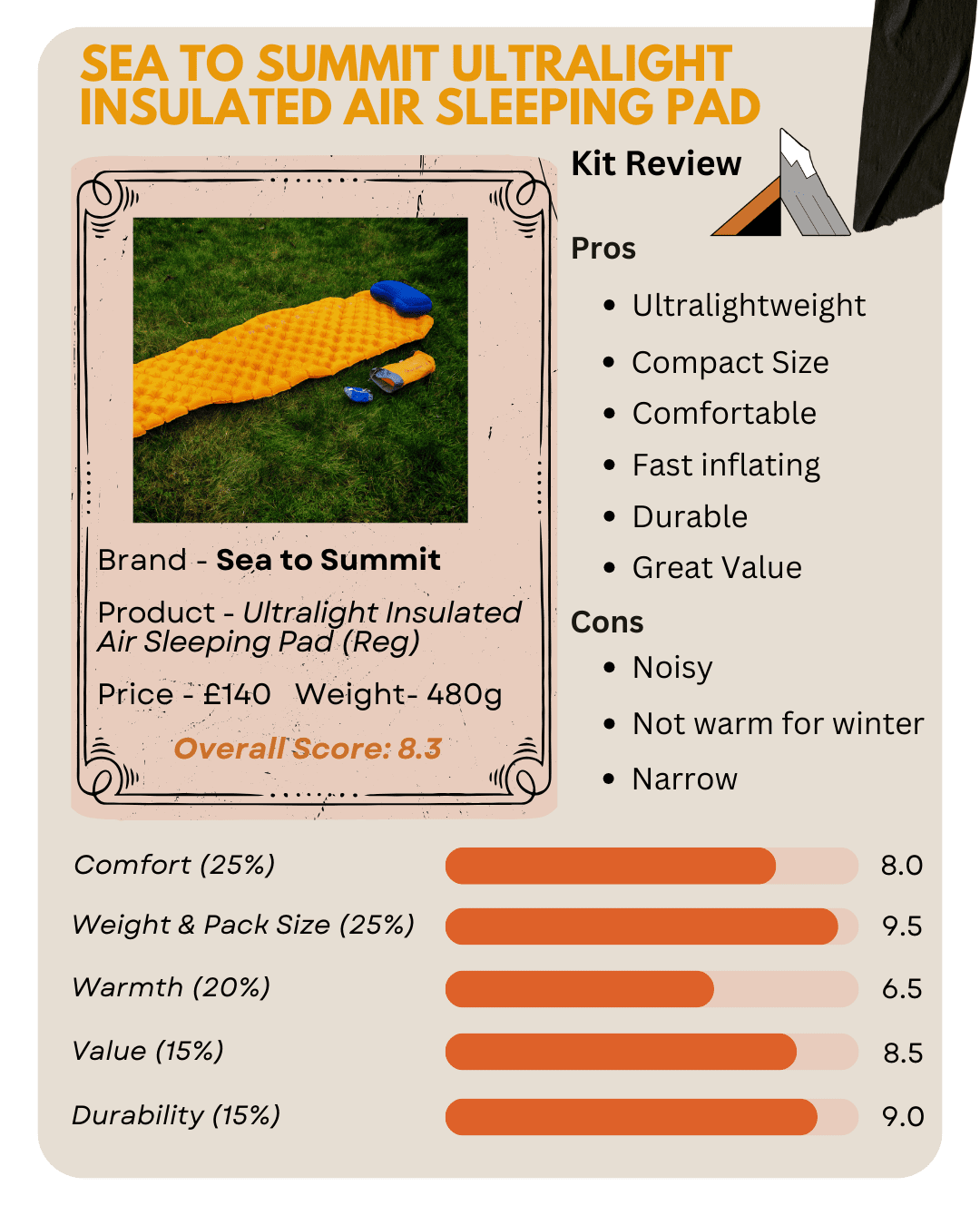
Sea to Summit Ultralight Insulated Sleeping Pad Kit Rating
Sea to Summit Ultralight Insulated Sleeping Pad: Final Thoughts
The Sea to Summit sleeping pad is a superb choice for lightweight backpackers who want a strong balance of warmth, comfort and packability for 2.5 to 3-season trips. The Ultralight Insulated model packs down small, weighs just 480g in the regular size, and offers enough insulation for most spring, summer and early autumn camping adventures.
It loses some points for the narrow width in the regular size and the slightly noisy baffles when moving around at night. The warmth rating is also better suited to 3-season use rather than proper winter camping. However, for lightweight adventures where space and weight matter, it is a highly dependable sleeping pad.
I would highly recommend the Sea to Summit Ultralight Insulated Sleeping Pad for campers, trekkers and backpackers who need a lightweight, durable and compact sleeping mat without spending premium Therm-a-Rest money. It has made a huge difference compared with cheap foam roll mats and has become one of my most important pieces of camping gear.
Overall, this Sea to Summit sleeping pad hits a great sweet spot: light enough for backpacking, warm enough for most 3-season trips, comfortable enough for real sleep, and compact enough to disappear into a trekking pack.
FAQs
Is the Sea to Summit sleeping pad good for backpacking?
Yes, the Sea to Summit sleeping pad is a strong backpacking option if you want a lightweight, compact and insulated inflatable mat. The Ultralight Insulated model weighs 480g in the regular size, packs down small and has a 3.1 R-value, making it suitable for most 2.5 to 3-season camping trips.
What is the R-value of the Sea to Summit Ultralight Insulated Sleeping Pad?
The Sea to Summit Ultralight Insulated Sleeping Pad has an R-value of 3.1, which makes it suitable for spring, summer and early autumn camping. It is not designed as a full winter sleeping pad on its own.
Is the Sea to Summit sleeping pad comfortable?
Yes, the Sea to Summit sleeping pad is comfortable for a lightweight backpacking mat. The 5cm thickness gives far more cushioning than a basic foam roll mat, although the regular size may feel narrow for restless sleepers or those who prefer extra space.
Is the Sea to Summit sleeping pad good for winter?
No, the Sea to Summit Ultralight Insulated Sleeping Pad is better suited to 2.5 or 3-season use. For winter camping, you would usually want a sleeping pad with a higher R-value or combine it with extra insulation.
What are the best alternatives to the Sea to Summit sleeping pad?
Good alternatives include Therm-a-Rest NeoAir models, Nemo Tensor Insulated, Exped Ultra sleeping mats and newer Sea to Summit Ultralight XR Insulated mats. Therm-a-Rest is popular for premium warmth-to-weight performance, while Nemo and Exped are strong comfort-focused options.