| Quick Verdict – Overall Rating: ★ 8.5 / 10 The Peak Design Capture Clip solves a genuinely annoying trekking problem: how to carry a real camera somewhere between ‘bouncing off my chest on a neck strap’ and ‘buried at the bottom of my pack when the light gets good.’ It puts a mirrorless body rigidly on your shoulder strap, accessible in about two seconds, and out of your hands the rest of the time. The trade-offs are a genuine learning curve, some strap-width fussiness, and a clip that isn’t shy about announcing its presence on a technical scramble. |
| Weight: 89g (clip 84g + standard plate ~14g) • Load Rating: Up to 200 lbs / 90kg quick-release lock • Strap Compatibility: Up to 2.5″ wide, 0.9″ thick • RRP: USD $79.95 (with plate) |
Field Note: This guide contains affiliate links. If you purchase gear through these links, I may earn a small commission at no extra cost to you. I only recommend equipment I have personally mountain-tested and trust.

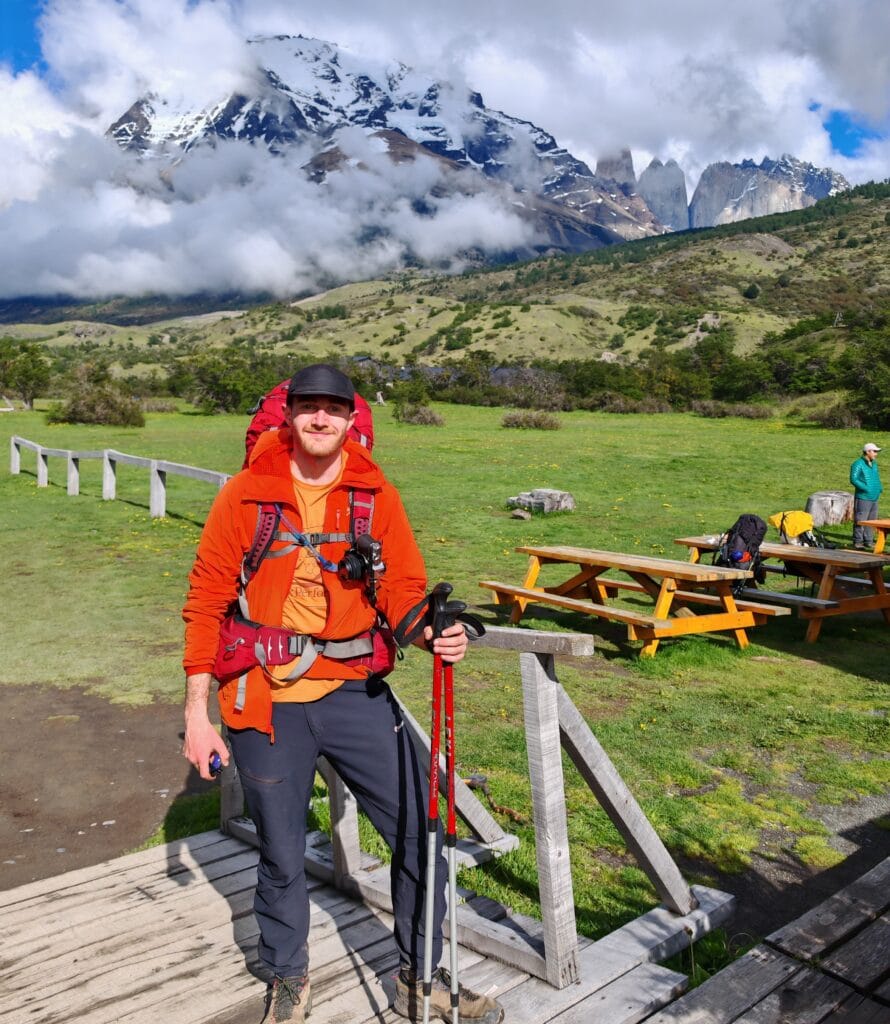
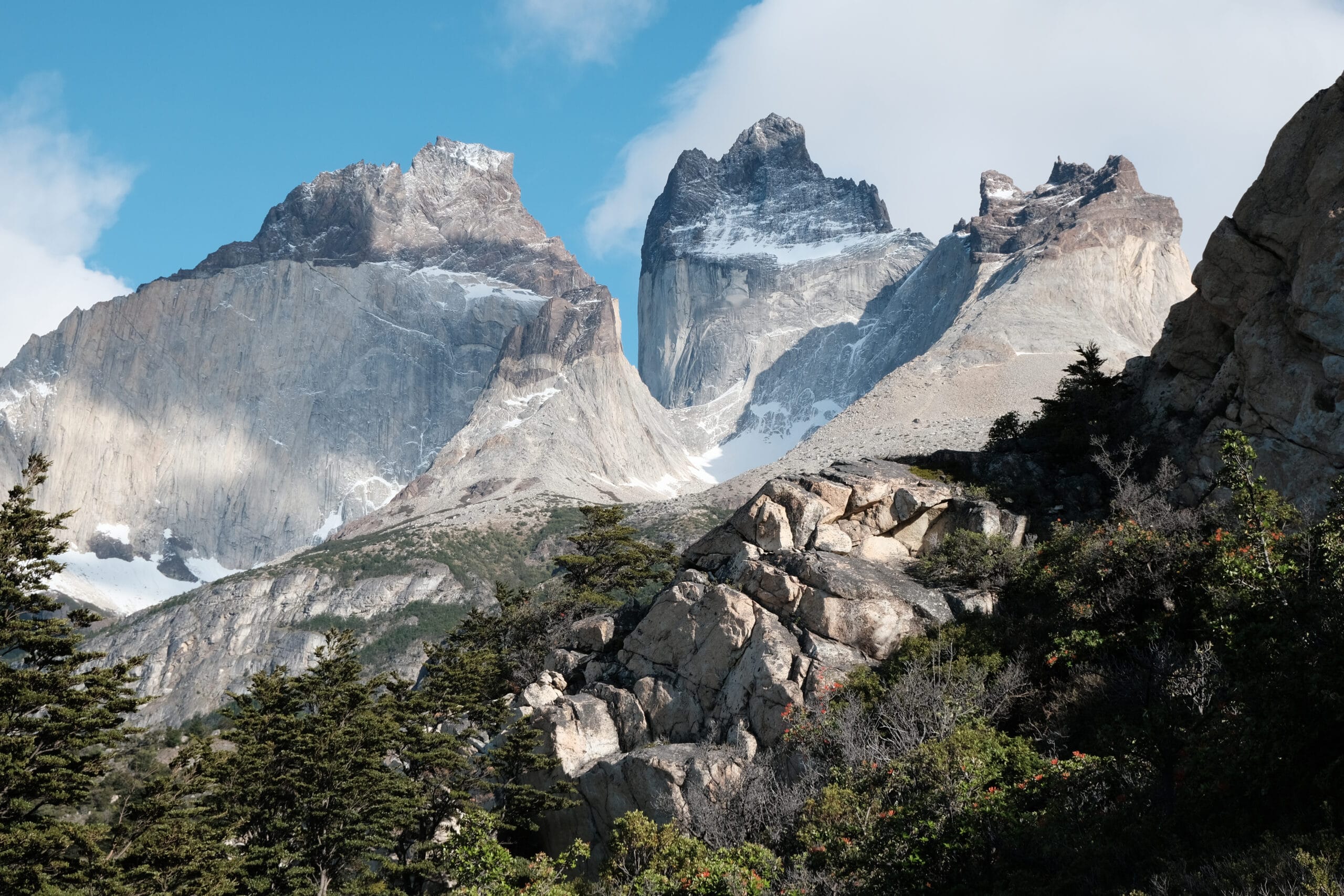
Every trekking photographer runs into the same unsolved problem eventually. You want a real camera with you to capture landscapes and travel properly—not just a phone—and you never know when an incredible photo opportunity can arise. A mirrorless camera around your neck bounces with every stride, gets in the way of your trekking poles, and becomes dangerous when scrambling. It was growing annoying to keep stopping at the side of a trail to unload my Camera from the backpack and then repack time and time again. This was also frustrating for Roisin with the stop-start nature of these hikes, which she managed to solve before my trek to Torres del Paine in Patagonia.
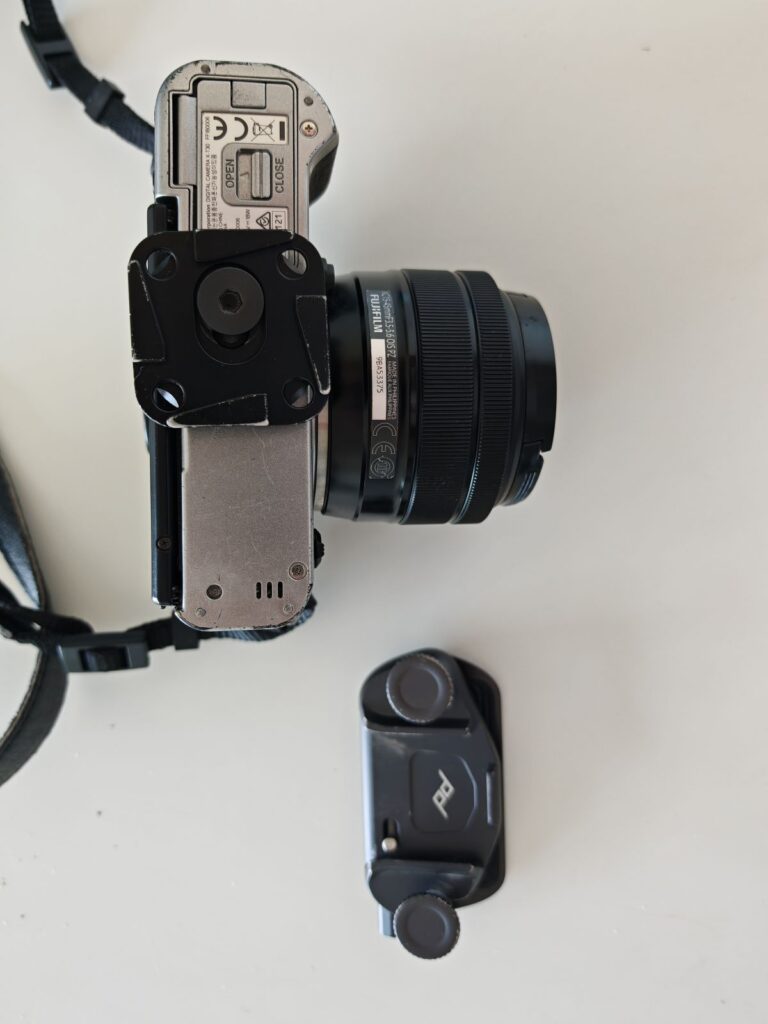
An early gift was the Peak Design Capture Clip with its diminutive size but significant problem-solving design. I’ve carried the Peak Design Capture Clip on my Fujifilm X-T30 across multi-day treks in Patagonia, Yosemite, and on Canadian mountain adventures to thoroughly test it out. The premise is simple: a metal clip clamps onto your backpack shoulder strap, a small plate screws into your camera’s tripod socket, and the two click together with a one-handed release. Camera on, camera off, in about two seconds, with your hands free the rest of the time for poles, scrambling, or just not thinking about it.
It’s not a flawless system, and it takes some learning and patience early on. But after a few years of hiking use, it’s become one of those pieces of kit I don’t think twice about packing and has seriously elevated my photography!
Peak Design Capture Clip: Introduction
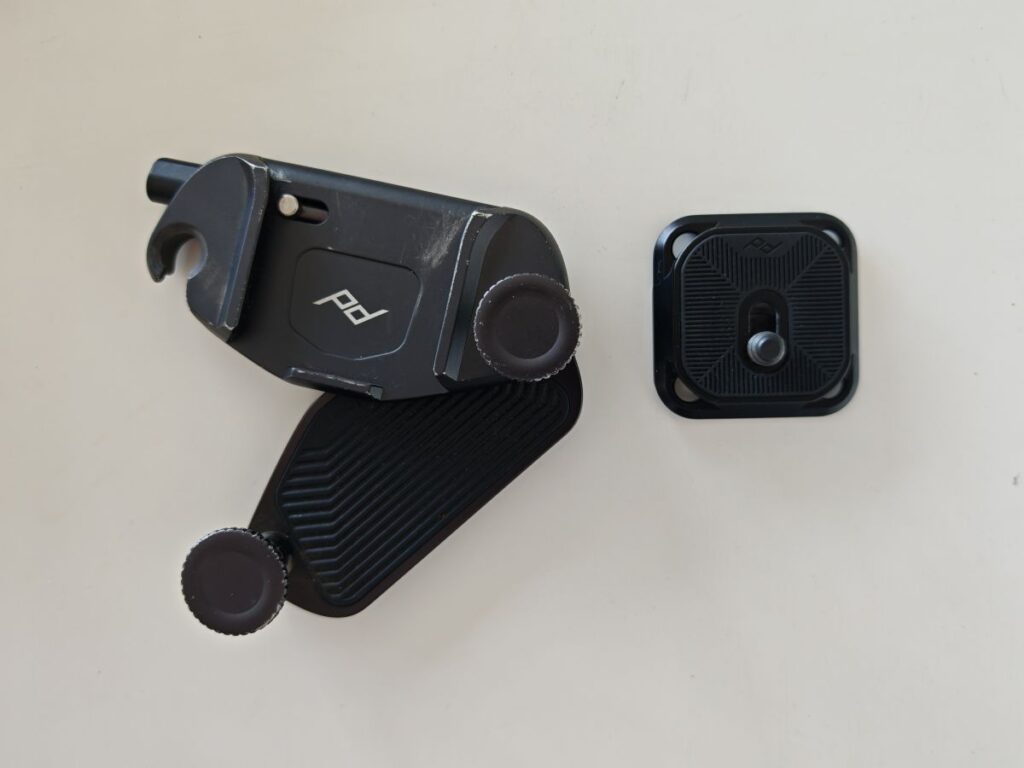
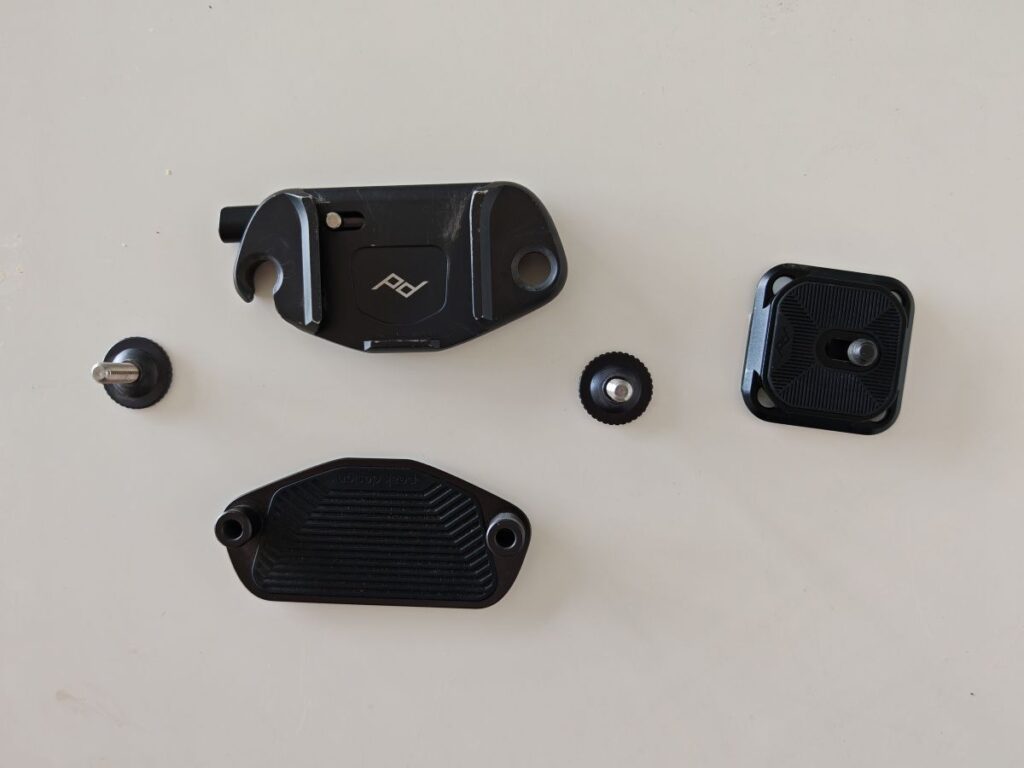
The Peak Design Capture Clip V3 is a deceptively simple solution to one of outdoor photography’s most persistent problems: keeping a camera secure without burying it in a backpack. By mounting directly to a backpack strap, belt, or harness, the Capture Clip keeps your camera locked firmly in place while remaining instantly accessible with a single press of the quick-release button.
Unlike a traditional camera strap, there’s no bouncing, swinging, or neck strain when hiking, scrambling, or travelling. And unlike a camera bag, your camera is always ready for the next shot without stopping to unpack gear. The latest V3 version is smaller, lighter, and entirely machined from anodised aluminium, giving it a premium feel that matches its reputation among outdoor photographers.
Peak Design Capture Clip V3
Design & Build Quality
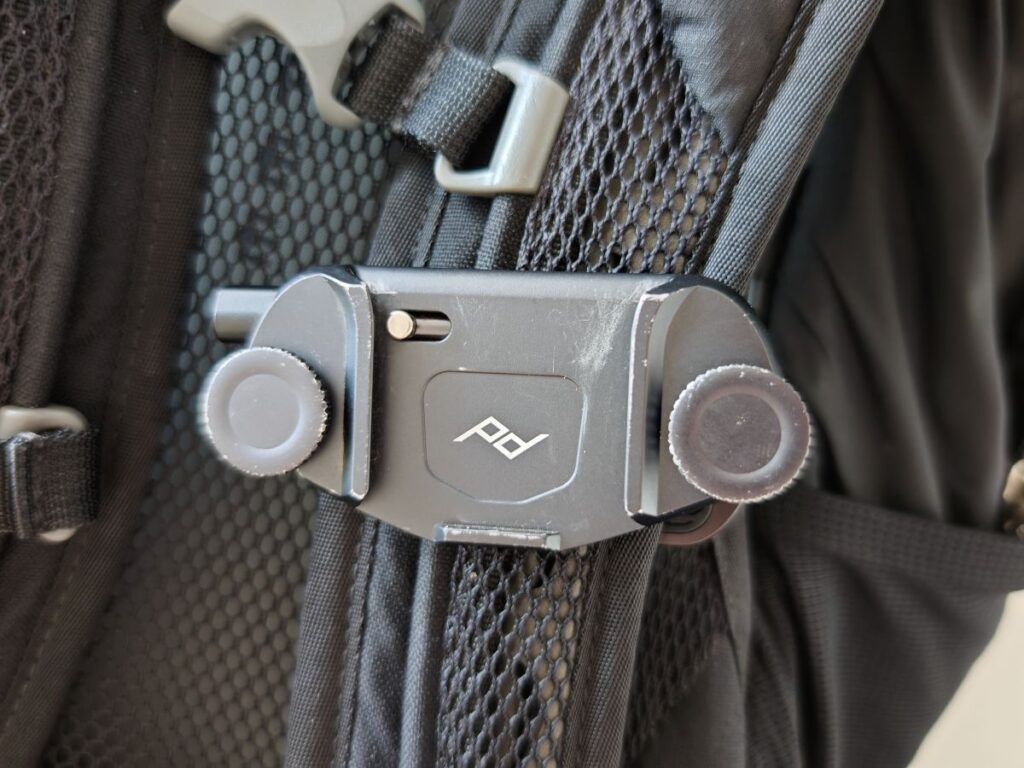
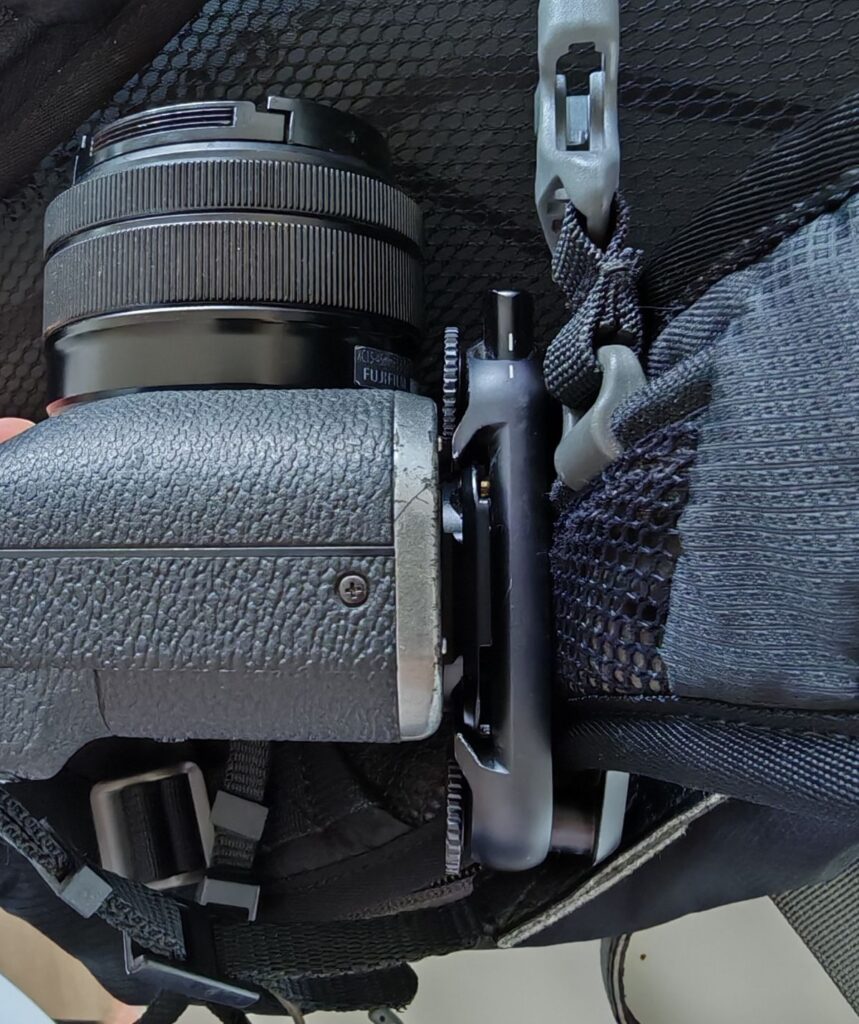
The Capture Clip is a two-part system: a base clamp that sandwiches your backpack strap between an inner and outer plate, tightened down with either knurled thumbscrews (for quick removal) or hex screws (for a more permanent, secure fit), and a small Arca-Swiss compatible plate that screws into the base of your camera. The plate slides into the clip in four directions, which is a small detail that does real work — point a longer lens downward to reduce swing, or mount a compact body sideways to keep it tucked closer to your torso.
Everything is machined aluminium with a rust-resistant, weatherproof anodised finish. As someone who spends a lot of time thinking about material tolerances and build quality from my automotive design background, this is the part of the Capture Clip that immediately reads as ‘engineered’ rather than ‘manufactured to a price point.’ The quick-release lock is rated to withstand over 200 lbs of force — comically overbuilt for a camera body, but a genuinely reassuring number when that camera is a few thousand dollars of glass and sensor swinging near granite.
On-Trail Performance — BC Trail Days
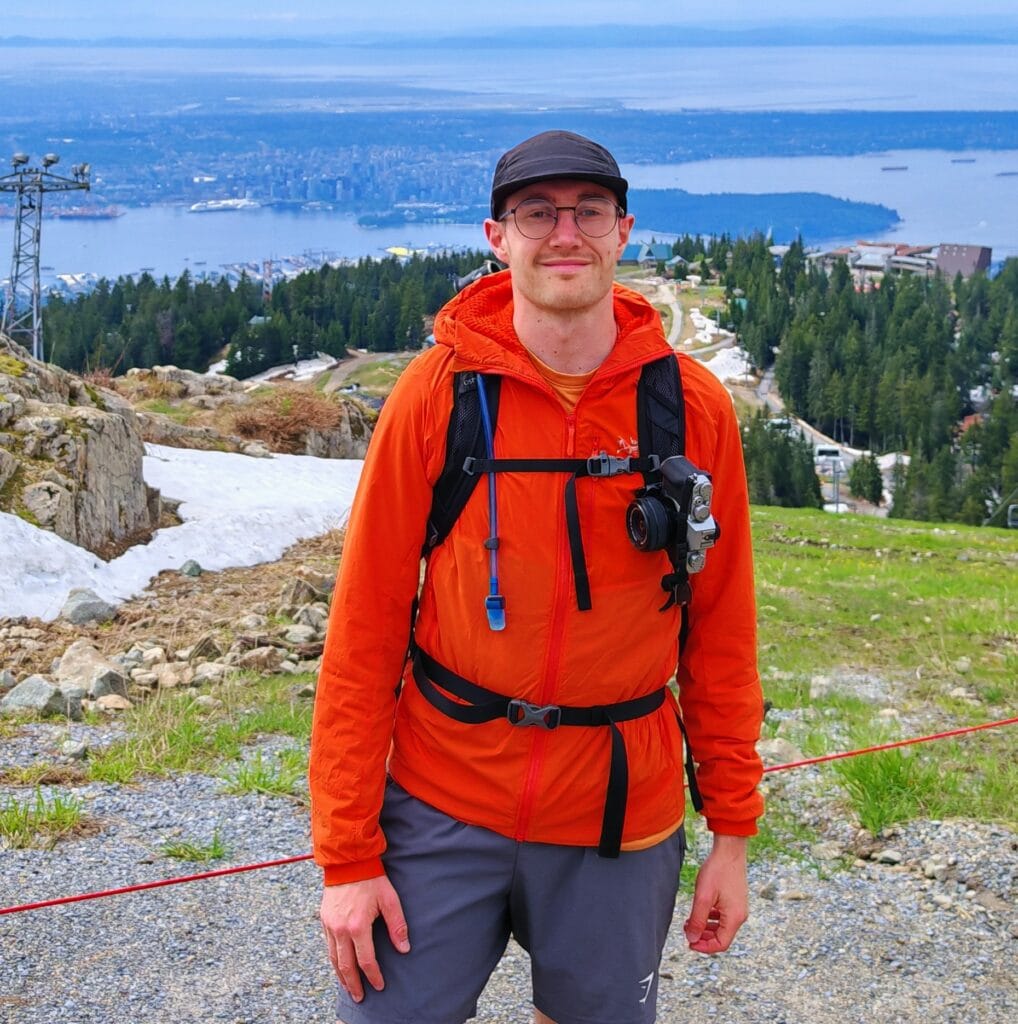
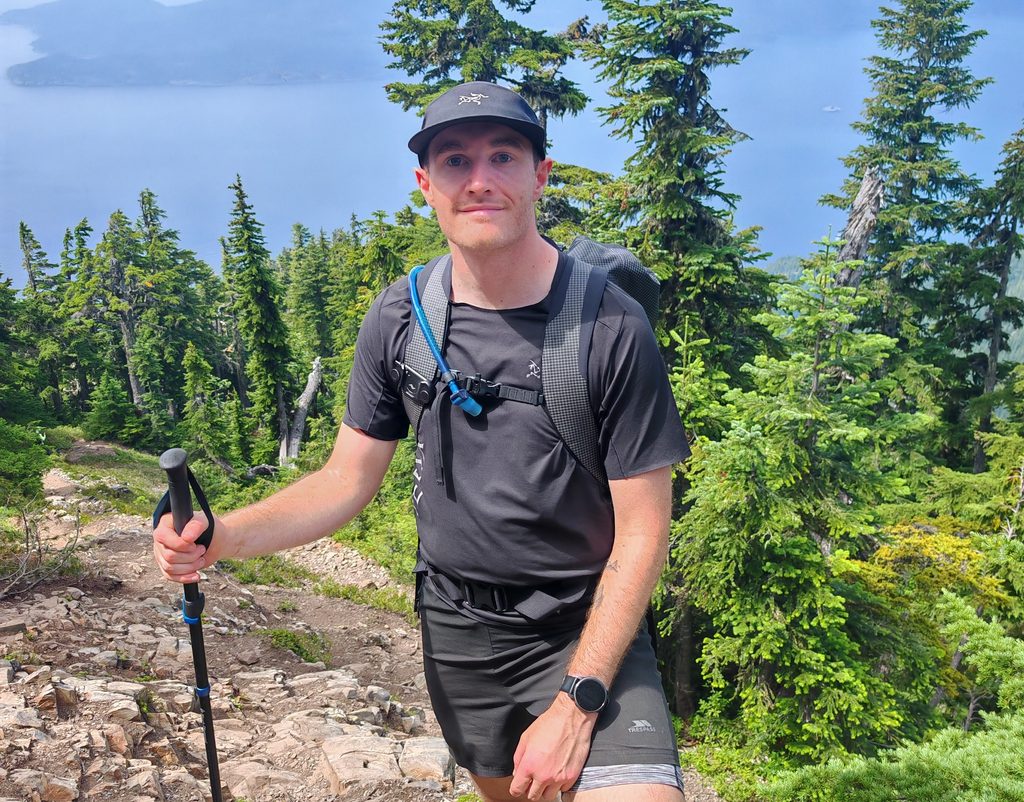
On rooty, technical singletrack in the Coast Mountains, the value proposition is obvious within the first hour. With the X-T30 clipped to my right shoulder strap — release button facing outward, which took a day or two to become second nature — I could go from hands-free hiking to a stabilised shot in roughly two seconds, one-handed, without breaking stride or fumbling with a lens cap. On a descent where I needed both trekking poles for balance, the camera stayed locked to my chest rather than swinging into my hip or catching on branches, which is precisely the failure mode of a standard neck strap on technical terrain.
The one-handed release mechanism does have a genuine learning curve. My first day out, I fumbled the release angle more than once and missed a shot or two figuring out the right thumb position. By day two, sliding the camera up and out with a smooth motion had become close to automatic — consistent with what other long-term trekking reviewers report as well. It’s a system that rewards a bit of patience up front.
On-Trail Performance — Yosemite Backcountry
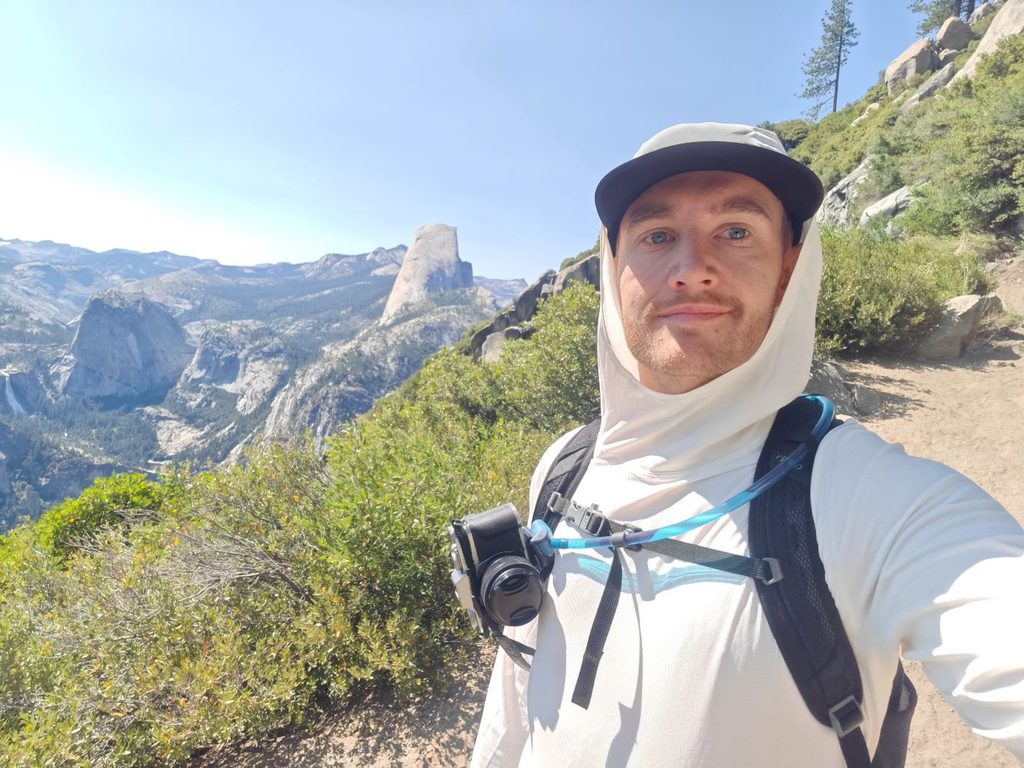
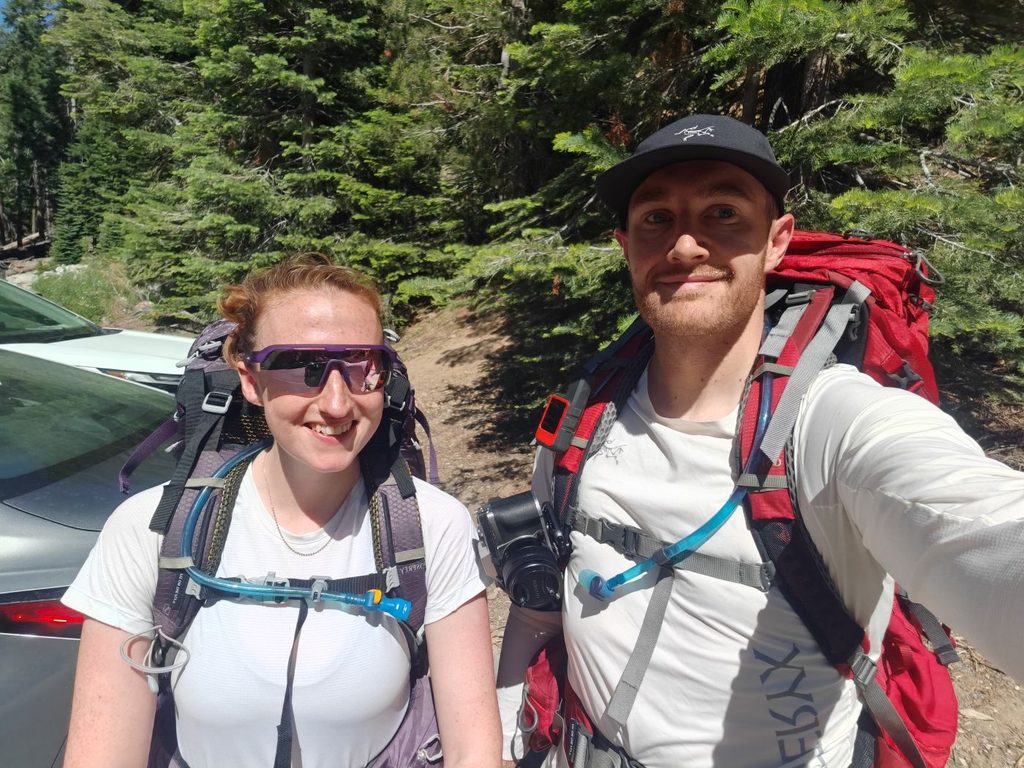
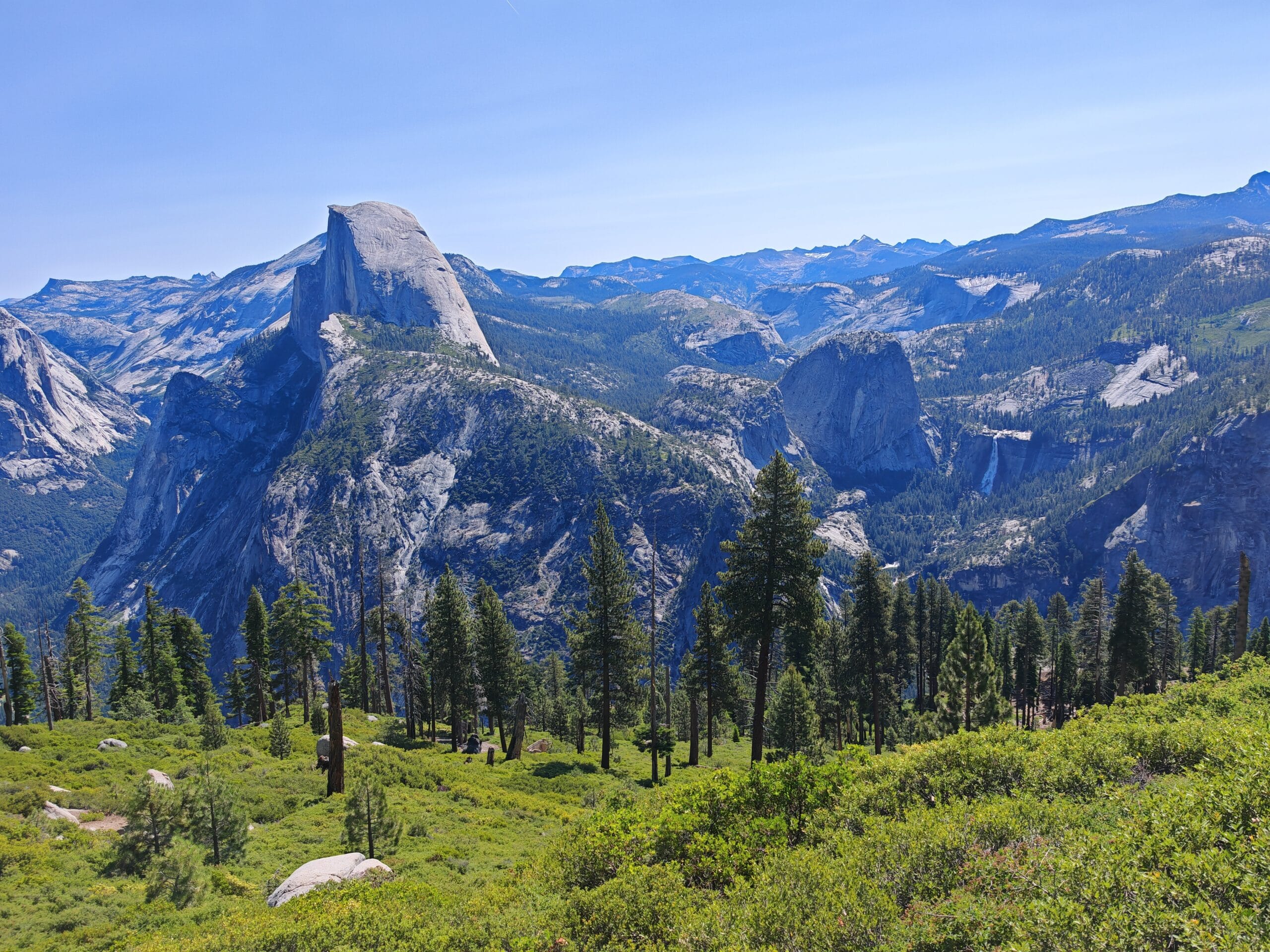
Hiking the Yosemite trails with a loaded pack and the Capture Clip mounted on the shoulder strap, the system performed consistently well on established trails, though I was noticeably more cautious with it on exposed granite scrambling sections. The clip keeps the camera rigid and stable rather than swinging — a genuine advantage over a strap in terms of protecting the gear from impact against rock — but a rigidly mounted camera on your chest is still a rigidly mounted camera on your chest if you take a fall on technical terrain.
I found myself unclipping it and stowing it in my pack’s lid pocket for the more exposed scrambling sections and re-clipping once back on stable trail, which felt like the sensible compromise. Where the clip genuinely shone was on long approach hikes and established trail with variable light — exactly the scenario it’s built for. Golden hour on a granite dome approach, camera instantly accessible without breaking stride, hands free for poles the rest of the time. That’s the core use case, and it delivers on it convincingly.
Backpack & Strap Compatibility
This is the area where I’d flag the most caveats, and where independent reviews consistently agree. The clip is rated for straps up to 2.5″ wide and 0.9″ thick, which covers most hiking daypacks and backpacking packs comfortably. Where it gets fussy is at the extremes: very thin, minimalist daypack straps don’t always give the clamp enough surface area to bite securely, and heavily cushioned, thick shoulder straps on some loaded overnight packs can make it genuinely difficult to clamp the mechanism shut without some determined effort.
A Fit Note Worth Testing Before You Buy: If you’re running a minimalist daypack or an overnight pack with thick, heavily padded shoulder straps, test the clip on your specific pack before committing to it as your primary carry method for a big trip. It works excellently on the mid-weight straps found on most daypacks and standard backpacking packs — the compatibility issues tend to show up at the thin or extra-thick extremes of the strap-width spectrum.
On my own daypack and mid-size trekking pack, fit has been consistently solid across a season of use. Peak Design also sells a ProPad accessory — a thicker cushioned pad — specifically for users running heavier camera and lens combinations who want additional stability and comfort against the strap.
Durability & Long-Term Wear
The clip itself has genuinely held up. Machined aluminium construction shows no signs of degradation after regular trail use across varied weather. The wear point worth flagging, echoed consistently across multi-year user reviews, is the plate rather than the clip: after extended use, the plate’s grip surface can wear slightly, requiring a bit more fiddling to slide the camera in and lock it securely. This is a minor, gradual issue rather than a functional failure, and replacement plates are sold separately if it becomes bothersome — a sensible design choice that avoids replacing the whole system over one worn component.
Where the Capture Clip earned its keep
I don’t review gear out of a box. Read the full destination guides where the Peak Design Capture Clip was tested in the field.

Peak Design Capture Clip: Pros & Cons
✔ PROS
- Genuinely fast, one-handed access — camera ready to shoot in roughly two seconds
- Keeps the camera fully stable against your body — no swing, bounce, or interference with trekking poles
- Overbuilt, machined aluminium construction with a 200 lb-rated quick-release lock
- Four-direction plate insertion allows sensible positioning for different lens weights and lengths
- Arca-Swiss compatible plate doubles as a tripod quick-release — no need to unscrew anything to go from trail to tripod
- Frees both hands for poles, scrambling, or stream crossings without stowing the camera entirely
✘ CONS
- Genuine learning curve — expect a fumbled release or two before the one-handed motion becomes natural
- Compatibility issues at strap extremes — very thin daypack straps or thick, heavily padded overnight pack straps can be fussy to clamp
- A rigidly-mounted camera on your chest is still exposed on technical scrambles or falls — stow it for genuinely exposed terrain
- Plate wears faster than the clip over years of use, requiring occasional replacement
- Adds noticeable weight to a shoulder strap even before a camera is attached
- USD $79.95 is a real cost on top of an already expensive camera setup
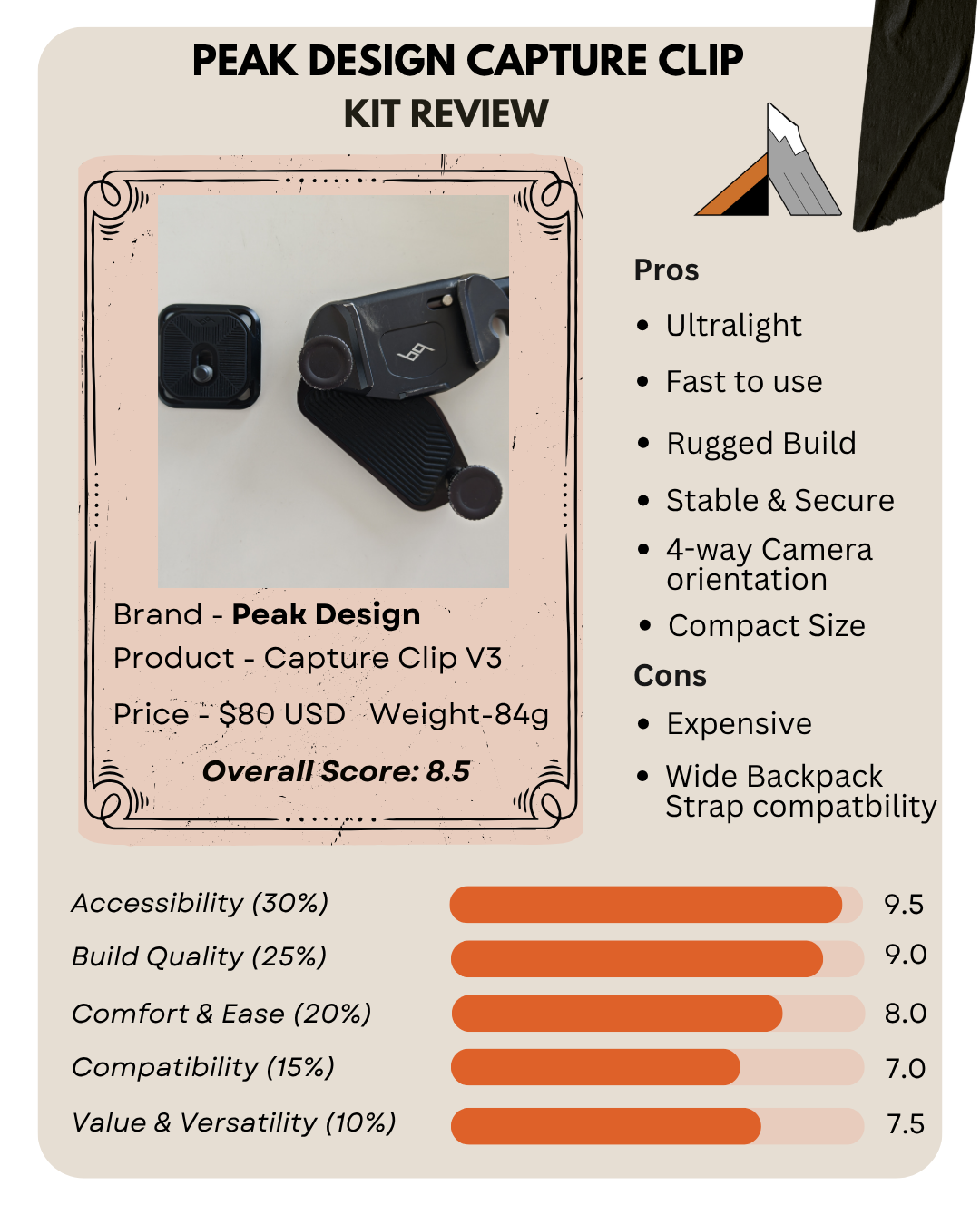
Peak Design Capture Clip: Kit Rating
Capture Clip vs. Other Ways to Carry a Camera While Trekking
The realistic alternatives for trail photography aren’t other clips — they’re the two methods most trekkers default to without really thinking about it. Here’s how the Capture Clip stacks up against both.
Capture Clip vs. Neck or Shoulder Strap
A neck strap gives you the fastest possible access — the camera is already in your hands, more or less. But that convenience comes at a real cost on the trail: constant bounce and sway, particularly on descents, and a genuine hazard when you need both hands for poles, a scramble, or a stream crossing. The Capture Clip trades a fraction of a second of access speed for a rigid, stable mount that stays out of the way until you actually want it.
Capture Clip vs. Packing It Away
Stowing your camera fully in your pack is the safest option for the gear, but it’s also the method most likely to cost you shots — by the time you’ve stopped, dropped your pack, and dug out the camera, the light or the moment has usually moved on. The Capture Clip is built specifically to close that gap for trekkers who shoot regularly enough that the extra accessibility outweighs the modest extra exposure risk.
| Peak Design Capture Clip | Neck / Shoulder Strap | Packed in Bag | |
| Access Speed | ~2 seconds, one-handed | Instant, but always in the way | 20–60+ seconds, pack off, digging |
| Bounce/Sway | None — rigid mount | Constant, especially descending | None — fully stowed |
| Hands-Free Trekking Poles | Yes, fully compatible | Awkward — camera swings into poles/body | Yes, fully compatible |
| Fall/Impact Risk | Moderate — exposed on chest/strap | High — swinging weight, exposed | Low — camera protected inside pack |
| Cost | USD $79.95 | Often included with camera | Free (no extra gear) |
| Best For | Trekkers who shoot regularly and want speed without sacrificing protection | Casual day walks, short outings | Multi-day treks where photography is occasional, not a priority |
Who Is It For?
Ideal for: Trekkers and hikers who carry a mirrorless or compact DSLR regularly and want fast access without sacrificing hands-free trekking pole use. If you’re the person who stops constantly to shoot changing light and terrain — street photography habits carried onto the trail — this closes the gap between convenience and protection better than the alternatives.
Also well-suited to: Anyone running a mixed daypack/overnight-pack setup, since the clip transfers easily between bags provided the strap width and thickness fall within spec.
Less suitable for: Trekkers tackling sustained technical scrambling or exposed climbing sections, where a rigidly mounted camera on the chest becomes a genuine liability in a fall — stow it for those stretches specifically. Also less ideal for occasional photographers who only bring a camera out a few times per trip; a simple neck strap or packed carry may be simpler and cheaper for infrequent use.
Peak Design Capture Clip Summary
The Peak Design Capture Clip solves a problem every hiking and travel photographer eventually encounters: how to carry a camera securely without sacrificing accessibility. It won’t replace good judgment on exposed scrambling terrain, and compatibility can vary slightly depending on your backpack strap design, but for its core purpose it performs exceptionally well.
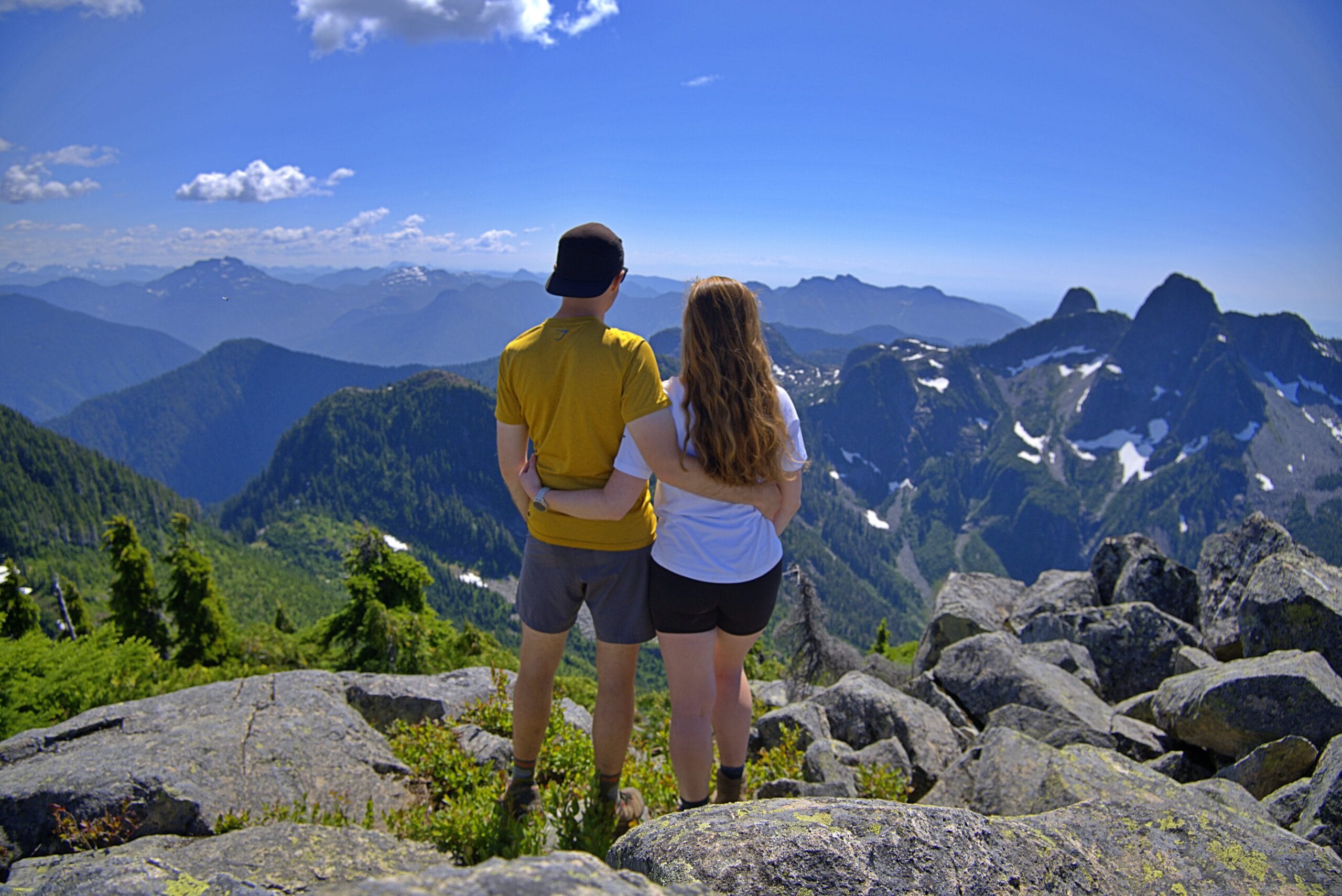
After a season of use across BC singletrack, alpine trails, city breaks, and Yosemite’s granite landscapes, the Capture Clip has earned a permanent place on my pack. More importantly, it has removed the frustrations that come with traditional camera carry systems: swinging neck straps, missed photo opportunities, and repeatedly stopping to dig a camera out of a backpack.
The latest V3 design is compact, impressively engineered, and robust enough to trust with expensive camera gear in demanding environments. It’s not the cheapest photography accessory you’ll buy, but few pieces of gear have a greater impact on how often you actually use your camera.
If you regularly hike, travel, or photograph outdoors, the Peak Design Capture Clip is one of the best camera accessories available today and an easy recommendation for anyone looking to keep their camera secure, comfortable, and always within reach.
Peak Design Capture Clip FAQs
Is the Peak Design Capture Clip good for hiking?
Yes, with some caveats. It keeps a camera stable and quickly accessible on a backpack shoulder strap, which is a genuine improvement over a bouncing neck strap on technical trails. For sustained exposed scrambling or climbing, it’s worth stowing the camera in your pack instead, since a rigidly mounted camera is still exposed on your chest during a fall.
Is the Peak Design Capture Clip secure?
Absolutely. The machined aluminium clip and locking quick-release system are designed to withstand more than 200 lbs (90kg) of force, making it far stronger than any load a camera setup will realistically generate during hiking, scrambling, or travel.
Does the Peak Design Capture Clip work with mirrorless cameras?
Yes. The Capture Clip works exceptionally well with mirrorless cameras such as the Fujifilm X-T30, Sony A7 series, Canon R-series, and Nikon Z-series. It’s also compatible with most DSLRs and compact cameras using the included Arca-Swiss-compatible mounting plate.
Can the Peak Design Capture Clip hold a heavy camera and lens?
Yes, although comfort becomes a factor with heavier combinations. The quick-release lock is rated to withstand over 200 lbs (90kg) of force, which comfortably covers any DSLR or mirrorless camera and lens combination a trekker would realistically carry. Mirrorless cameras and standard zoom lenses are ideal, while larger telephoto lenses may benefit from Peak Design’s optional ProPad accessory to spread the weight more comfortably across your backpack strap.
Does the Peak Design Capture Clip work with all backpacks?
The clip is rated for straps up to 2.5″ wide and 0.9″ thick, which covers most daypacks and backpacking packs. Very thin minimalist straps or very thick, heavily cushioned overnight pack straps can be fussy to clamp securely — it’s worth testing on your specific pack before relying on it for a big trip.
Can you use the Peak Design Capture Clip with a tripod?
Yes. The included Standard Plate is Arca-Swiss compatible and attaches via any standard 1/4″-20 tripod mount, allowing you to move quickly between the Capture Clip and most modern tripods without changing plates.
Peak Design Capture Clip vs Camera Strap: Which is Better?
A traditional camera strap is simpler and cheaper, but the Capture Clip provides significantly better stability and accessibility while hiking. For outdoor photography, the Capture Clip rigidly locks the camera to your pack’s shoulder strap, eliminating bounce while keeping access to roughly two seconds via a one-handed release.