
| QUICK VERDICT |
| ★★★★Overall Rating: ★ 8.7 / 10. The Garmin inReach Mini 2 is a piece of safety equipment disguised as a gadget — the smallest, lightest two-way satellite communicator that still delivers genuine global coverage, interactive SOS, and basic navigation backup. It’s not cheap once you factor in the subscription, and the messaging experience won’t spoil you the way a smartphone does. But clipped to a shoulder strap on a multi-day trek far outside cell coverage, it’s the single most reassuring 100 grams you can carry. |
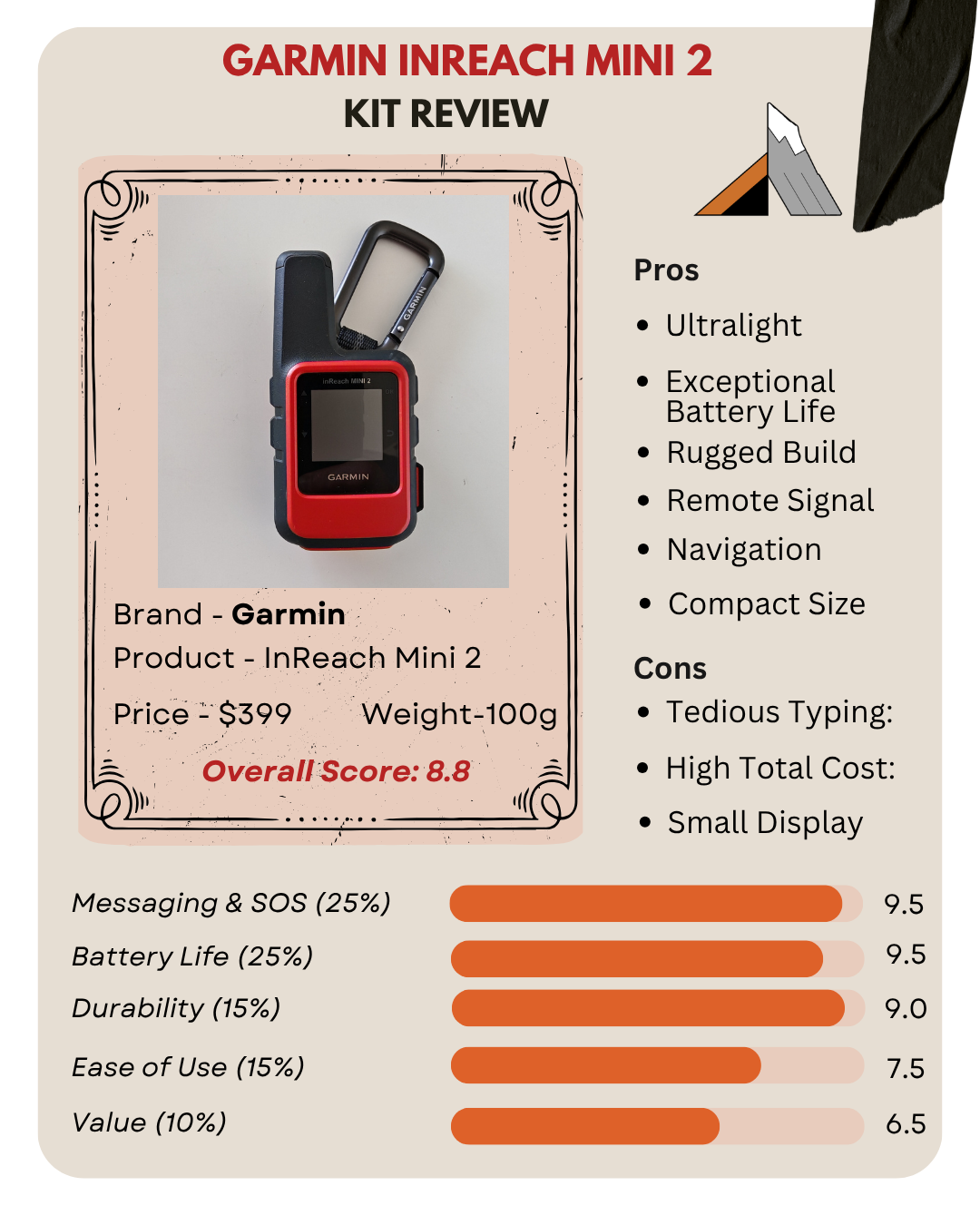
| Weight: 100g / 3.5 oz • Battery: Up to 14 days (10-min tracking) / 30 days (30-min tracking) • Coverage: Global (Iridium) • RRP: USD $349.99 hardware + subscription plan |
Field Note: This guide contains affiliate links. If you purchase gear through these links, I may earn a small commission at no extra cost to you. I only recommend equipment I have personally mountain-tested and trust.

There’s a particular kind of quiet that sets in a few hours out of mobile signal coverage. No bars, no reception, just you, the trail, and beautiful nature. Since moving to Canada, I’ve explored those remote mountain trails where wildlife and dangerous terrain are a real risk. The only realistic rescue options are helicopter evacuation, with the only lifeline being a device like the Garmin InReach Mini 2.
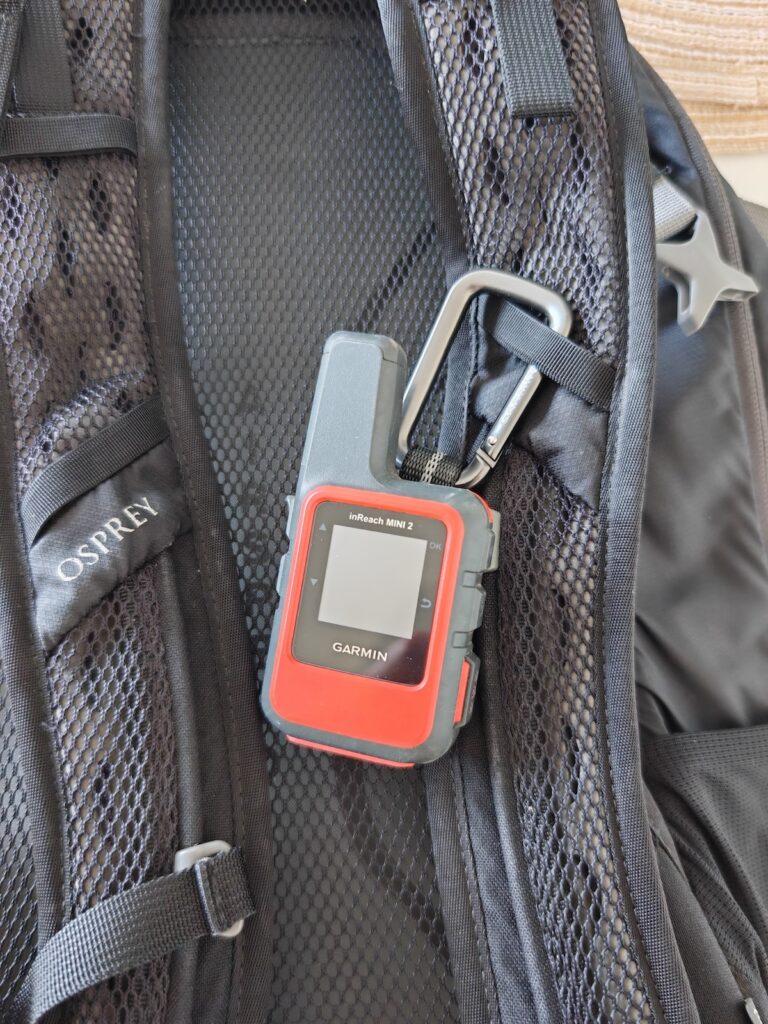
There are few pieces of outdoor gear that you hope you’ll never need as much as a satellite communicator. Unlike a backpack or a pair of trail runners, the Garmin InReach Mini 2 isn’t something you buy for comfort or performance. You carry it for the moments when things stop going to plan, or you need to contact civilisation again. It sits clipped to my shoulder strap, tracking quietly, and the value it provides is entirely about the one day it might matter. Reviewing safety equipment means being honest about that asymmetry—this isn’t a device you buy for the 99% of trips that go fine. It’s for the 1% that don’t and it could save your life.
What immediately stood out wasn’t the emergency SOS feature everyone talks about; it was the peace of mind that comes from being able to send a message home from almost anywhere on Earth. After months of use, this review covers the features that actually matter in the field: messaging reliability, battery life, navigation tools, subscription costs, and whether the Garmin InReach Mini 2 deserves a permanent place in your pack.
Garmin InReach Mini 2 Introduciton
Garmin InReach Mini 2 is a common sight when hiking on challenging routes and backpacking in remote out of reach palces where there’s no signal for help. I first started carrying the Garmin InReach Mini 2 over the past year in challenging and rugged BC mountains, backpacking trips in Bear country and in Yosemite. I used it for routine check-ins with family when I’m out of cell range and wilderness camping where having messaging, navigation and weather forecasts are vital for safety. I haven’t had to trigger the SOS function myself—touch wood—but I’ve read enough real-world accounts from other users who have to have a clear-eyed view of how it performs when it actually counts.
On paper, it’s an investment with a starting price of $400, and that’s before the activation fee and monthly subscription. It can all add up quickly, but can you put a price on safety when an emergency hits and you’re out of range of phone signal? The Garmin InReach Mini 2 packs a surprising amount of usability into a small, compact package, with a miniature screen and durable design. It excels in coverage using the Iridium Satellite technology to maximise coverage in the most remote places. Then combined with a mega battery life, this little gadget is easy to forget about until it’s needed.
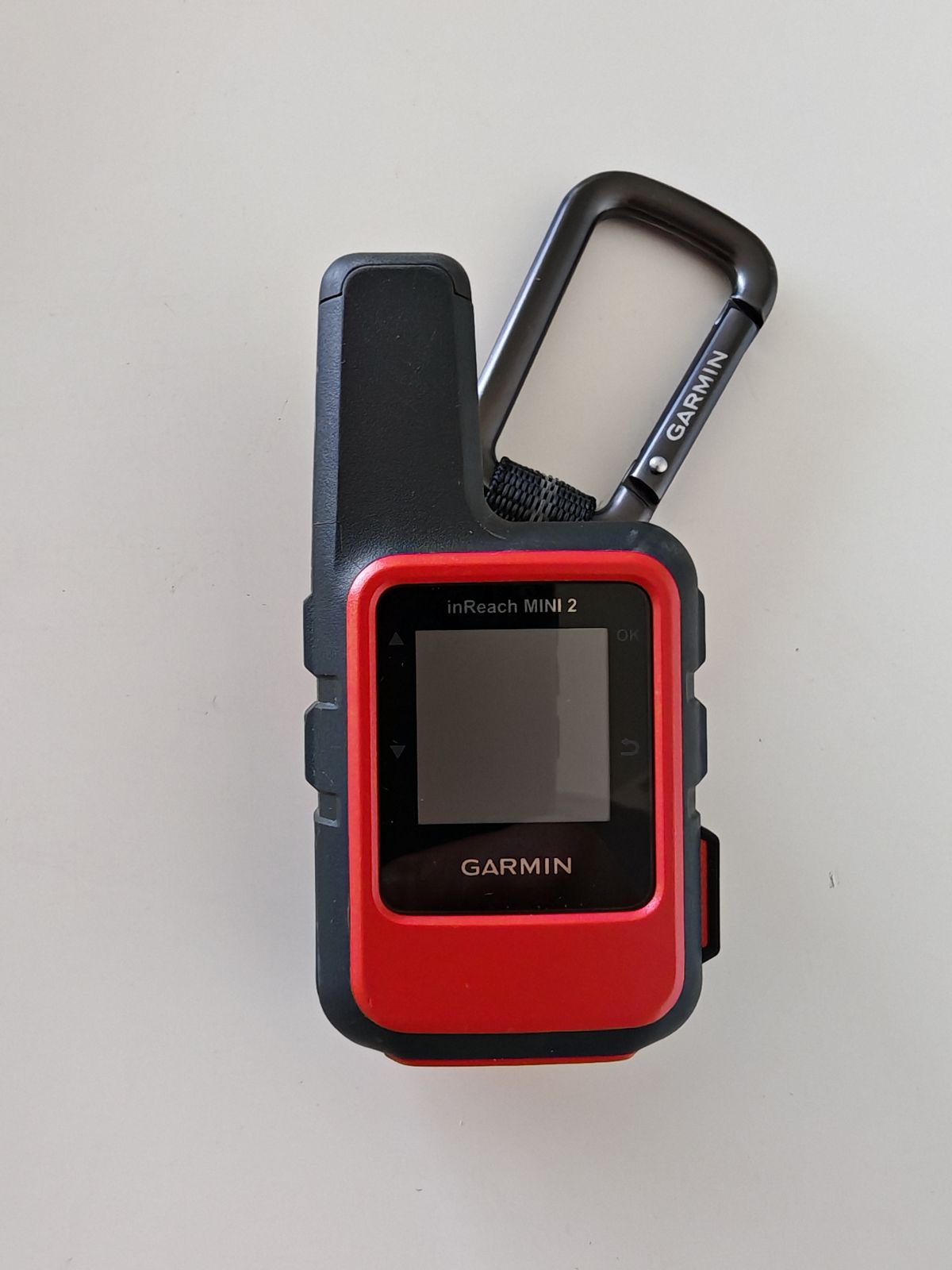
Garmin inReach Mini 2
Garmin inReach Mini 2 vs Garmin inReach Mini 3
Note: Garmin released the inReach Mini 3 in March 2026, which has effectively superseded the Mini 2 in Garmin’s current lineup. The Mini 2 is being phased out at retailers, though it remains available at a discount at the time of writing and is still a fully supported, capable device. This review covers the Mini 2 specifically — if you’re shopping today, it’s worth cross-checking current pricing and stock, since a discounted Mini 2 may represent better value than a full-price Mini 3 depending on your needs.
At first glance, the Garmin inReach Mini 3 looks more like an evolution than a revolution. The core features remain unchanged: global Iridium satellite coverage, two-way messaging, interactive SOS, location sharing, and navigation tools all carry over from the Mini 2. Most backcountry users won’t notice a dramatic difference in real-world safety functionality between the two devices.
Where the Mini 3 improves is refinement. Garmin has introduced a brighter display, improved user interface, and tighter integration with the Garmin Messenger ecosystem. However, if you already own a Mini 2, there is little reason to upgrade purely for safety or communication features. The Garmin InReach Mini 2 remains one of the most capable satellite communicators available and continues to offer excellent value when purchased on sale.
Understanding Garmin’s Subscription Plans
Like previous Garmin inReach devices, the Garmin InReach Mini 2 requires an active subscription to access satellite messaging, tracking, and weather forecast features. Plans range from occasional-use packages suitable for seasonal hikers through to unlimited plans designed for expedition travel and professional use. Explore the Garmin InReach Subscription Plans here.
One of the most significant recent changes is that SOS functionality is now available even without a traditional messaging plan, helping ensure users can still access emergency assistance in a genuine life-threatening situation. Paid plans unlock the features most backcountry travellers actually purchase the device for, including two-way satellite messaging, location tracking, weather forecasts, and location sharing with friends and family. For most hikers and trekkers, Garmin’s mid-tier plans offer the best balance between cost and functionality. The ability to activate and suspend plans seasonally also helps reduce costs for those who only need satellite coverage during specific trips rather than year-round.
| Plan | Cost ($ USD) | Cost ($ CAD) | Cost (£ GBP) |
| Enabled | $7.99 | $10.99 | £7.99 |
| Essential | $14.99 | $24.99 | £14.99 |
| Standard | – | $39.99 | £29.99 |
| Premium | $49.99 | $69.99 | – |
| Activation Fee | $39.99 | $54.99 | £39.99 |
Design & Build Quality
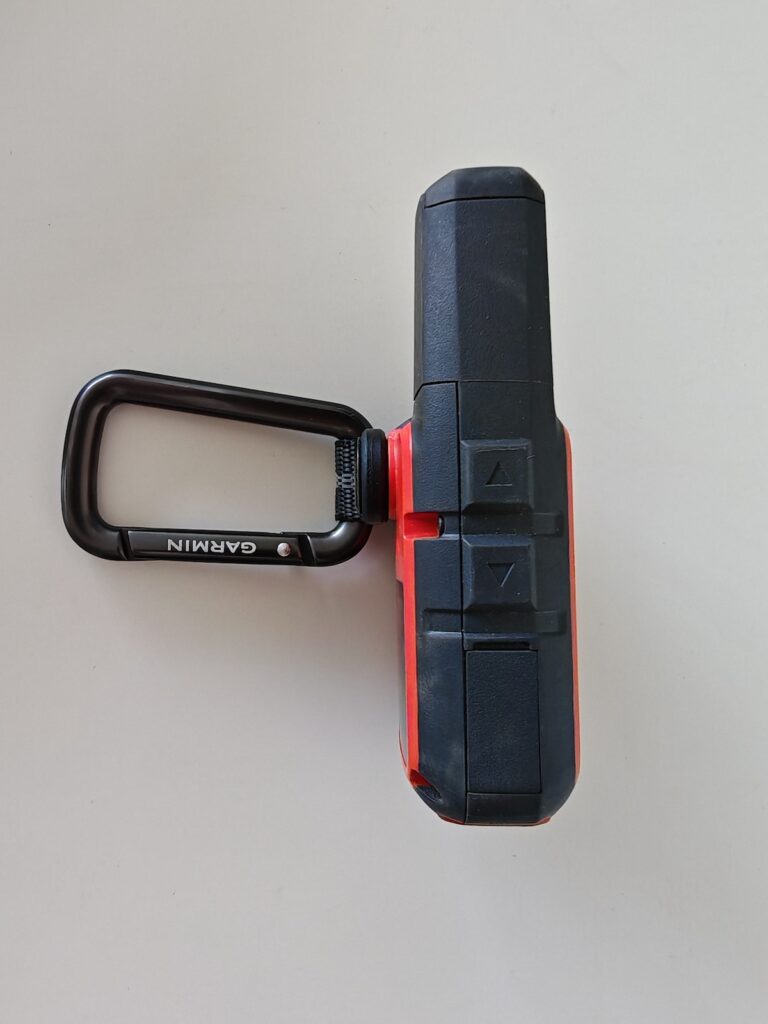
The headline engineering achievement here is size and weight: 100 grams, roughly the footprint of a matchbox, and yet it delivers genuine two-way global satellite messaging — a functional category that, a decade ago, required equipment several times this size and weight. Clipped to a shoulder strap, the Garmin InReach Mini 2 disappears so much that I regularly forget it’s there until a scheduled check-in reminds me. It fits seamlessly next to my Fujifilm Camera on the Capture Clip or next to my hydration bladder valve.
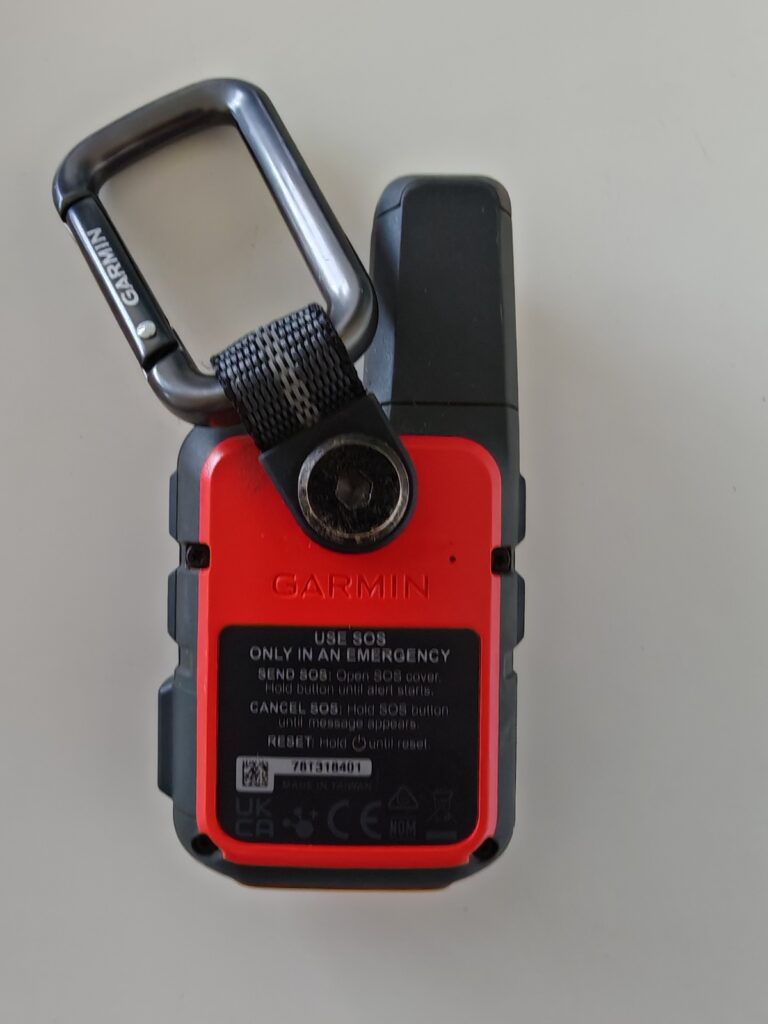
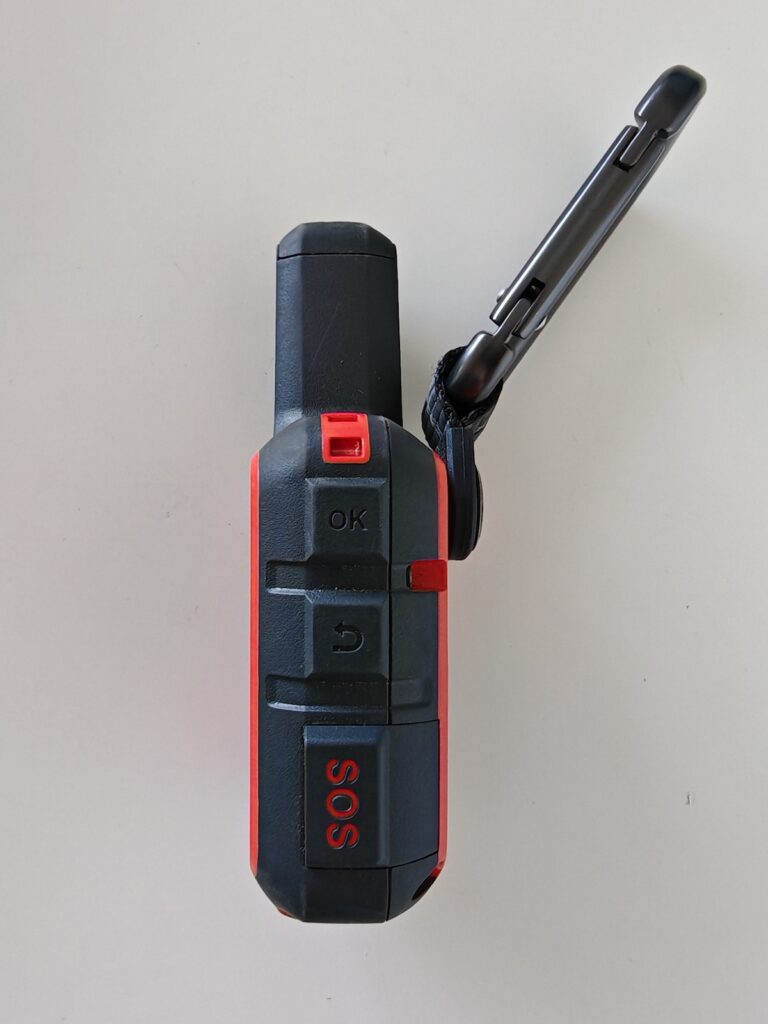
The build quality punches well above what the compact size suggests. The rubberised exterior has survived drops onto rock, cold exposure well below freezing, and general scraps that come with venturing into the remote and tough backcountry. The physical buttons are a deliberate and correct design choice for a device meant to function in gloved hands, cold conditions, or when you’re not in a state to fumble with a touchscreen. It’s a genuinely reassuring piece of industrial design once you understand what it’s built to survive, and even if you lose speed typing compared to a touchscreen, reliability wins here.
SOS & Emergency Performance
This is the feature the entire device exists to support, and it’s where the Garmin InReach Mini 2 earns its reputation. The interactive SOS function connects to Garmin’s 24/7 emergency response coordination centre via the Iridium satellite network — not a one-way distress ping, but genuine two-way communication that lets responders ask questions, relay information about incoming help, and coordinate an evacuation with actual context rather than guesswork. That two-way element is the meaningful upgrade over older personal locator beacons (PLBs), which only support one-way signals.
I haven’t had to use this function myself, but multiple independent long-term reviewers have documented real emergency activations. Just have a look at the reviews on Garmin’s website at real-life accounts of people using the Mini 2 when disaster hit to save them. The consistent theme across these accounts is that the system worked as designed under genuine pressure, which is really the only metric that matters for a piece of safety equipment.

Battery Life
The battery life is genuinely good, with one caveat worth noting. Garmin rates the Mini 2 at up to 14 days in 10-minute tracking mode and up to 30 days at a 30-minute interval — a significant jump over the original Mini, reportedly up to three times the battery life. In my own conservative use — tracking enabled only on multi-day treks, otherwise left in a low-power standby mode — that estimate has tracked accurately in practice. This is great in reality where you won’t be charging it up for weeks from a pwoerbank un like a phone, camera or smart watch.
The caveat is that battery life degrades significantly in heavy tree cover, since the unit works harder to maintain a satellite connection through dense canopy. On forested BC trail sections this was noticeable compared to open alpine terrain, though it never came close to threatening a multi-day trip’s battery budget in my experience. USB-C charging is a welcome, overdue update from the original Mini’s charging cable.

Messaging Experience
Here’s where I want to be honest rather than diplomatic, because it’s the most common friction point reported across the board. The small monochrome screen is built for glanceable status updates, not comfortable message composition — for anything beyond a quick preset message, you’ll want to pair the device via Bluetooth to the Garmin Messenger or Explore app and type on your phone’s keyboard instead. Message latency also requires a genuine mindset shift: expect 1 to 3 minutes or more between sending and delivery, which is a world away from instant smartphone texting.
It takes patience, but when sitting at camp after a long day’s hike, it’s not a bad thing to relax and send a quick check-in. There are some pre-built messages to select as well, which have been handy for sending to family. The Mini 2 isn’t trying to be a smartphone replacement, and treating it as one leads to frustration. Treat it as a safety and check-in tool with occasional messaging capability, and it performs exactly as intended.
The Mini 2 includes a basic breadcrumb basemap, TracBack routing (retracing your exact path back to a start point), waypoint marking, and a digital compass — genuinely useful backup navigation features, though this is explicitly a backup system, not a primary GPS unit. I will always use a downloaded AllTrails map first and only resort to the Garmin map as an alternative. The basemap has scant detail, and there’s no onboard topographic mapping or altimeter; if serious navigation is a priority, the larger Garmin GPSMAP 67i is the more appropriate tool. Weather forecasting via the satellite connection is a feature I used occasionally when planning our descents from camp the next day.
Where the InReach Mini2 earned their keep
I don’t review gear out of a box. Read the full destination guides where the Garmin InReach Mini 2 Satellite Communicator was tested in the backcountry and away from urban areas




Garmin InReach Mini 2 Pros & Cons
✔ PROS
- Reliable two-way SOS with global Iridium coverage — the category benchmark for backcountry emergency response
- Exceptionally small and light at 100g — easy to forget it’s there until you need it
- Rugged build quality – survives drops, cold, and extended outdoor exposure with no degradation
- Strong battery life across 14–30 days depending on tracking interval
- Useful backup navigation — TracBack, waypoints, and digital compass — plus reliable weather forecasting
- Physical buttons work reliably in gloves, cold, or high-stress situations where a touchscreen would frustrate
✘ CONS
- Subscriptions on top of the hardware cost significantly raise total cost of ownership
- Small screen and message latency of 1–3+ minutes require a real mindset shift from instant texting
- No voice or photo messaging — text only (the inReach Messenger Plus handles those, at a different price point)
- Battery life degrades under heavy tree cover versus rated specs
- Now superseded by the Mini 3 in Garmin’s current lineup, though still fully functional and often discounted
Garmin InReach Mini 2 Kit Rating
Competitor Comparison
The satellite communicator category has three genuine reference points. Here’s where the Garmin InReach Mini 2 sits against them.
Garmin inReach Mini 2 vs. Zoleo
Zoleo is the closest direct rival — a genuine two-way messenger with global coverage at a lower hardware cost. The trade-off is that Zoleo has no screen at all; it’s purely a messaging “puck” that requires constant smartphone pairing to compose or read anything, and it offers no navigation features whatsoever. If you always have your phone charged and paired and don’t care about basic backup navigation, Zoleo’s simplicity and often smoother on-device messaging experience is a legitimate reason to choose it. The Garmin InReach Mini 2 is the better choice for anyone who wants standalone functionality — a working screen, compass, and TracBack — without total dependence on a paired phone.
Garmin inReach Mini 2 vs. SPOT Gen4
SPOT Gen4 is the budget play, and the distinction is fundamental rather than incremental: SPOT offers one-way messaging only — preset check-ins and SOS — with no ability to receive a reply or have an actual two-way conversation with rescuers. For preparedness use cases where the main requirement is simply letting people know you’re okay (or that you’re not), SPOT is a cheaper, capable option. For anyone who wants real two-way communication during an emergency — which matters enormously for triage and coordinating the right kind of help — the Mini 2’s interactive SOS is a meaningful, arguably essential upgrade.
| Garmin inReach Mini 2 | Zoleo | SPOT Gen4 | |
| Price | USD $399.99 | USD $199–225 | USD $150–250 |
| Messaging | Two-way, global | Two-way, global | One-way only (preset + SOS) |
| Subscription | From ~$7.99/month | From ~$19.95/month | From ~$11.95/month |
| Navigation | Basemap, TracBack, waypoints, compass | None — messaging-only “puck” | None |
| Screen | Small monochrome display | No screen — phone pairing required | Small status display |
| Battery | 14–30 days | 200+ hours, often better | Weeks, varies by mode |
| Best For | Users who want standalone navigation backup + messaging | Simpler two-way messaging at lower subscription cost | Budget-conscious users who only need one-way check-ins + SOS |
Who Is the Garmin InReach Mini 2 For?
Ideal for: Multi-day trekkers, thru-hikers, backcountry skiers, and anyone regularly operating well outside cell coverage who wants genuine two-way emergency communication and the peace of mind that comes with it. If your trips regularly put hours or days between you and the nearest evacuation point, this is close to non-negotiable safety equipment.
Also well-suited to: Solo trekkers, backpackers and endurance athletes who want routine check-in capability with family back home — this has become part of how I keep Roisin updated on long training days and multi-day trips without relying on patchy cell signal. For future Mountaineering plans and Expedition travel, the Garmin InReach Mini 2 will bring peace of mind.
Less suitable for: Occasional users doing fewer than 10 remote days a year, for whom a free iPhone satellite SOS feature (on compatible recent iPhones) or a cheaper one-way device like the SPOT Gen4 may cover the actual risk profile at a fraction of the cost. Also less ideal for anyone expecting smartphone-like messaging speed and convenience — that’s simply not what this category of device is built to deliver.
Garmin InReach Mini 2 Summary
The Garmin inReach Mini 2 does the one job that actually matters — getting a real, two-way message out when there’s no cell signal for miles — better than almost anything else in its size and weight class. It asks you to accept a genuine subscription cost and a messaging experience built around reliability rather than speed. For anyone spending real time in the backcountry, that’s an easy trade to make. The ability to send and receive messages, share your location, and trigger a global SOS response from areas with no mobile signal fundamentally changes how you approach remote travel.
It’s since been superseded by the Mini 3, and if you’re shopping today it’s worth comparing current pricing on both — a discounted Mini 2 can represent excellent value if the core feature set here covers what you need. But don’t let the newer model make you think the Mini 2 has become obsolete. The core technology — Iridium coverage, interactive SOS, solid battery life — remains exactly as capable as the day it was released. For solo backpackers, trekkers, mountaineers, and anyone regularly travelling in remote terrain, it’s one of the easiest gear recommendations I can make.
Its compact size, excellent battery life, and reliable Iridium satellite coverage make it easy to forget it’s even in your pack until you need it. While the ongoing subscription cost remains the biggest drawback, the InReach Mini 2 delivers exactly what it’s designed to provide: communication, safety, and peace of mind when you’re far beyond the reach of cell towers. This is one of the rare pieces of gear I’d genuinely call essential rather than nice-to-have, for the specific use case it’s built for. Clip it to your shoulder strap, set up your check-in routine, and mostly forget it’s there — until the one day it matters.
Garmin InReach Mini 2 FAQs
Is the Garmin InReach Mini 2 worth it?
Yes. For anyone hiking, backpacking, mountaineering, or travelling beyond reliable mobile coverage, the Garmin InReach Mini 2 provides satellite messaging, emergency SOS access, and location sharing in a device small enough to live permanently in your pack.
Can the Garmin InReach Mini 2 send messages without a phone?
Yes. The Garmin InReach Mini 2 can send and receive messages directly from the device using the Iridium satellite network. Pairing with the Garmin Messenger app makes messaging faster and more convenient, but a phone is not required. The device has physical buttons and a small screen that allow you to send preset messages, trigger SOS, and check basic status without a paired phone. However, composing custom text messages is far easier through the Garmin Messenger or Explore app on a paired smartphone via Bluetooth.
Does the Garmin InReach Mini 2 require a subscription?
Yes. All satellite messaging, SOS, and tracking features require an active Garmin inReach subscription plan, starting from around $7.99/month on the entry-level Freedom plan up to roughly $65/month for the Expedition plan, plus a one-time activation fee. The hardware alone does function without an active plan, with SOS now free to all users.
What satellite network does the Garmin InReach Mini 2 use?
The Garmin InReach Mini 2 uses the Iridium satellite network, which provides global coverage including remote mountain regions, polar areas, and ocean crossings where traditional mobile networks are unavailable.
How long does the Garmin InReach Mini 2 battery last?
Garmin claims up to 14 days for the InReach Mini 2 in 10-min standard tracking mode and significantly longer in power-saving modes (up to 30 days at 30-min tracking). Real-world battery life depends on tracking intervals, weather conditions, navigation use, and message frequency, but most backpackers can comfortably complete multi-day trips without recharging. Battery life can degrade meaningfully under heavy tree cover, where the device works harder to maintain a satellite connection.
Yes. While it isn’t a replacement for a dedicated GPS unit, the device offers basic navigation functions including waypoint marking, route following, breadcrumb tracking, and back-to-start guidance, making it a useful backup navigation tool in remote terrain.
Should I buy the inReach Mini 2 or wait for the Mini 3?
Garmin released the inReach Mini 3 in March 2026, which has effectively replaced the Mini 2 in the current product lineup. The Mini 2 remains a fully capable device and is often available at a meaningful discount as retailers clear remaining stock. If budget matters and you don’t need the Mini 3’s specific upgrades, a discounted Mini 2 can represent better value.
How does the inReach Mini 2 compare to a PLB (personal locator beacon)?
A traditional PLB sends a one-way distress signal only, with no ability to communicate further with responders. The inReach Mini 2 provides interactive, two-way SOS communication with Garmin’s emergency response coordination centre, which allows for genuine dialogue during an emergency — a meaningful advantage for accurate triage and coordinating the right kind of help.